
Blue Economy
NSW LAUNCH ON MARCH 27: GBAJABIAMILA SAYS SINGLE WINDOW WILL REVOLUTIONIZE NIGERIA’S PORTS AND TRADE OPERATIONS AS TOP OFFICIALS PLEDGE FULL SUPPORT



NSW LAUNCH ON MARCH 27: GBAJABIAMILA SAYS SINGLE WINDOW WILL REVOLUTIONIZE NIGERIA’S PORTS AND TRADE OPERATIONS AS TOP OFFICIALS PLEDGE FULL SUPPORT
By Okeoghene Onoriobe | Waterways News Correspondent | Lagos
Nigeria is set to go live with its long-awaited National Single Window (NSW) platform on March 27, in a move that promises to fundamentally reshape how cargo is processed at the country’s seaports, airports, and border points.
Chief of Staff to the President, Femi Gbajabiamila, who made the announcement at a high-level stakeholders’ meeting at the State House, Abuja, described the initiative as a “monumental” fiscal reform that will streamline trade procedures, close efficiency gaps, and sharpen Nigeria’s competitive edge in maritime commerce.

The meeting, attended by ministers, agency heads, and key government officials, was convened to review progress made so far and secure firm commitments from all agencies ahead of the go-live date.
“We are about to launch yet another reform, fiscal reform by this administration, which in its nature will be very transformational,” Gbajabiamila said, adding that the NSW replaces the current fragmented system of multiple single windows with one unified national platform.
“We are about to launch yet another reform, fiscal reform by this administration, which in its nature will be very transformational” Gbajabiamila
For Nigeria’s ports and maritime sector, the implications are significant. The Nigerian Ports Authority (NPA) and the Nigerian Maritime Administration and Safety Agency (NIMASA) — both central to cargo clearance operations — were among the agencies represented at the meeting and are key participants in the first phase of the rollout.
NSW Coordinator, Mr Tola Fakolade, told the gathering that the platform’s first phase will enable online processing of import permits, electronic submission of cargo manifests, and the deployment of a centralised risk management system. Critically for port operators and shipping agents, cargo manifests will be submitted electronically and automatically transmitted to all relevant agencies — eliminating the current burden of manual, duplicated documentation.
“Documents will be submitted once and shared with all relevant agencies without duplication,” Fakolade said, noting that nationwide user training is underway and pilot testing is imminent to ensure a seamless rollout.
He urged agencies to intensify their support in the remaining 23 days before launch, describing this final stretch as the most critical phase of implementation.
Coordinating Minister of the Economy and Finance Minister, Wale Edun, reaffirmed government backing, calling the NSW “a growth-enhancing and growth-enabling project.” Minister of Industry, Trade and Investment, Jumoke Oduwole, described it as a long-overdue pillar of the Renewed Hope Agenda and pledged to spend the next three weeks sensitizing traders, importers, and exporters on the new system.
Central Bank Governor Olayemi Cardoso pledged the bank’s full support, stressing the urgency of closing Nigeria’s trade facilitation gap with peer economies. Nigeria Revenue Service Chairman Zacch Adedeji called for stronger political will and coordination, while Comptroller-General of Customs, Bashir Adeniyi, described the NSW as a historic milestone and committed to direct stakeholder engagement to guarantee its success.
At the close of the meeting, Minister Oduwole was formally mandated to lead the 23-day implementation phase through to the March 27 launch.
Beyond NPA and NIMASA, other agencies represented at the meeting included the Standards Organisation of Nigeria (SON), the National Agency for Food and Drug Administration and Control (NAFDAC), the Federal Airports Authority of Nigeria (FAAN), the Nigeria Agricultural Quarantine Service (NQS), and the National Environmental Standards and Regulations Enforcement Agency (NESREA).
The NSW, first initiated by President Bola Ahmed Tinubu nearly two years ago, is widely regarded in the maritime and trade community as one of the most consequential digital reforms to hit Nigeria’s ports in decades.


Blue Economy
FROM OCEAN TO ENGINE: How Seawater-to-Hydrogen Technology Could Reshape the Future of Maritime Fuel
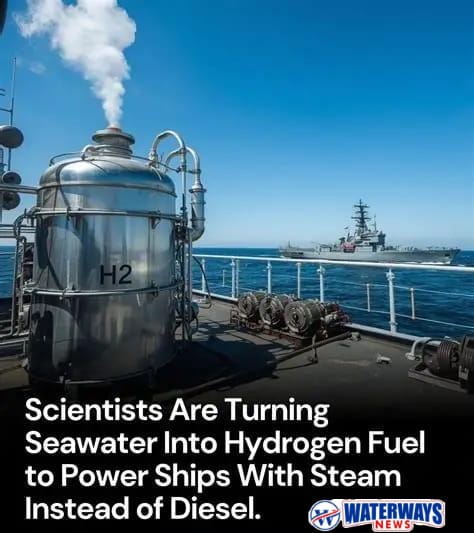
FROM OCEAN TO ENGINE: How Seawater-to-Hydrogen Technology Could Reshape the Future of Maritime Fuel
Breakthrough electrolysis systems promise to turn the world’s most abundant resource into clean shipping energy — and the implications for global shipping are profound
By Raymond Gold | Co-publisher and Research Reporter| Waterways News, Lagos
For centuries, the sea has been both highway and hazard for the world’s merchant fleets — a vast, untameable resource that ships cross but cannot consume. That relationship may now be on the verge of a fundamental transformation. Engineers and clean-energy researchers are advancing technology that converts seawater directly into hydrogen fuel, potentially allowing vessels to generate their own power from the very ocean beneath their hulls.
The concept, long theorised in academic and engineering circles, has in recent years moved closer to practical application. And for an industry under mounting pressure to decarbonise — shipping accounts for nearly three percent of global greenhouse gas emissions annually — the implications could hardly be more consequential.
What the Technology Does
At its core, seawater-to-hydrogen conversion exploits a deceptively simple chemistry: water, whether fresh or saline, is composed of hydrogen and oxygen atoms that can be separated through electrolysis — the application of electrical current to drive a chemical reaction. In conventional electrolysis, this process uses purified water. The innovation driving current research is the ability to perform this separation efficiently using raw seawater, bypassing the costly and energy-intensive step of desalination.
The challenge is considerable. Seawater is not merely water with dissolved salt; it is a complex mineral solution containing chlorides, sulphates, magnesium, calcium, and dozens of trace elements that aggressively corrode standard electrolysis equipment and compromise catalytic efficiency. Overcoming this requires specialised membrane materials, corrosion-resistant electrode coatings, and advanced catalyst designs capable of selectively extracting hydrogen without triggering the destructive chlorine evolution reactions that plague conventional systems.
Several research institutions — including teams at Stanford University and in China’s leading materials science faculties — have demonstrated functional seawater electrolysis cells in laboratory conditions. The next frontier is ruggedising these systems for the rolling, salt-spray environment of an operational vessel on an ocean crossing.
Once extracted, the hydrogen can be deployed aboard ship in two primary ways: through hydrogen fuel cells, which generate electricity through an electrochemical reaction between hydrogen and oxygen with water as the only byproduct; or through combustion in modified engine systems, including hydrogen-driven steam turbines — a technology that echoes the steam age of maritime history but points firmly toward a zero-emission future.
Why This Matters for Shipping
The global shipping industry moves approximately 90 percent of world trade by volume. It runs almost entirely on heavy fuel oil and marine diesel — fossil fuels that produce sulphur oxides, nitrogen oxides, particulate matter, and carbon dioxide at scale. The International Maritime Organisation (IMO) has set a target of net-zero greenhouse gas emissions from international shipping by or around 2050, with intermediate milestones that are already forcing operators and flag states to act.
Alternative fuels — LNG, methanol, ammonia, and green hydrogen — are being explored across the industry. Each carries its own infrastructure challenge. LNG requires cryogenic bunkering terminals. Ammonia is toxic and demands careful handling protocols. Green hydrogen, produced from renewable electricity, depends on an entirely new supply chain that does not yet exist at the scale shipping requires.
Onboard seawater electrolysis sidesteps this infrastructure dependency entirely. A vessel equipped with the technology would, in principle, generate its own fuel continuously during a voyage, powered by renewable energy sources — solar arrays, wind-assisted propulsion, or wave energy convertors — installed on the ship itself. The bunkering port visit, one of the central logistics events in any ocean voyage, could eventually become optional rather than obligatory.
“The vision is genuine maritime energy autonomy,” one marine engineer familiar with current research described it. “You leave port, and the ocean provides.”
The Engineering Obstacles
The path from laboratory demonstration to commercial deployment is rarely short, and seawater electrolysis faces specific engineering obstacles that require resolution before any shipowner will commit capital to a retrofit or newbuild specification.
Foremost among these is the corrosion problem. The electrolytic cell, the filtration system, and all downstream hydrogen handling components must withstand not only the mineral aggressiveness of seawater but also the physical stresses of a marine operating environment — vibration, temperature cycling, and the mechanical demands of continuous operation over voyages measured in weeks. Catalysts and membranes that perform well in controlled conditions may degrade rapidly under these stresses, driving up maintenance costs and reducing reliability.
Filtration is a related challenge. Seawater must be processed through multi-stage filtration to remove particulates, biological matter, and the heaviest dissolved minerals before it reaches the electrolysis cell. The design and maintenance of these filtration trains — compact enough to fit within a vessel’s existing hull footprint without displacing cargo capacity — is itself an active area of engineering research.
Energy efficiency is perhaps the most critical metric. Electrolysis is not thermodynamically free; splitting water requires energy input, and on a vessel where every kilowatt-hour must be generated or stored, the round-trip efficiency of the fuel generation cycle determines whether the system is economically viable. Current state-of-the-art electrolysers operate at between 60 and 80 percent efficiency in ideal conditions. Marine seawater systems are not yet at the upper end of that range.
Scale is the final variable. A research cell producing grams of hydrogen per day is a proof of concept. A commercial system capable of fuelling a Panamax bulker or a large container vessel across the Pacific must produce hydrogen at a rate orders of magnitude higher, consistently and safely, in a package that integrates with existing ship systems and satisfies classification society and flag state safety requirements.
Nigeria Watch: What This Means for West Africa’s Maritime Sector
For Nigerian shipping stakeholders — from the Nigerian Maritime Administration and Safety Agency (NIMASA) to the Nigerian Ports Authority (NPA), private shipowners, and the Federal Ministry of Marine and Blue Economy — seawater-to-hydrogen technology warrants close attention even at this early stage of development.
Nigeria’s maritime sector is undergoing a strategic pivot. The revival of a national carrier through partnerships with DP World and AD Ports Group, the deepening of Lekki Deep Sea Port operations, and the Federal
Government’s blue economy agenda all signal ambitions to position Nigeria as a maritime hub rather than merely a transit market. The vessels and fleets that will carry those ambitions — whether coastal tankers, offshore support vessels, or deep-sea cargo ships — will be subject to increasingly strict international emissions standards as they operate in foreign ports and trade lanes.
The European Union’s Emissions Trading System now applies to shipping, and vessels calling at European ports are already paying a carbon price on their voyages. The IMO’s Carbon Intensity Indicator (CII) regulations are tightening year on year. Nigerian-flagged vessels, and Nigerian operators trading internationally, cannot remain insulated from these requirements indefinitely.
A technology that enables onboard fuel generation from seawater would be particularly valuable for the offshore oil and gas support sector — a significant component of Nigeria’s maritime economy — where vessels operate far from shore for extended periods and fuel logistics represent a meaningful proportion of operating costs. Patrol and surveillance vessels operated by NIMASA and the Nigerian Navy, which must sustain extended coastal and offshore operations, represent another potential application domain.
The immediate priority for Nigerian maritime regulators and industry associations is awareness and engagement: monitoring the development trajectory of seawater electrolysis systems, participating in IMO technical working groups on alternative fuels, and ensuring that when commercial systems begin to reach the market — an eventuality most analysts place in the 2030s — Nigerian operators and shipyards are positioned to adopt rather than adapt belatedly.
Looking Ahead
The conversion of seawater into hydrogen fuel will not decarbonise global shipping overnight. The technology faces real, unresolved engineering challenges, and the capital cycle of the shipping industry — where vessels are built to operate for 25 years or more — means that transformation is necessarily gradual. But the direction of travel is clear, and the pace of research is accelerating.
What was speculative a decade ago is now demonstrable in laboratory conditions. What is demonstrable today will, with sustained investment and engineering ingenuity, be deployable at sea within the decade. For an industry that has powered itself with fossil fuels since the coal age, the prospect of drawing energy from the ocean itself represents not merely a technical advance but a philosophical one: a shift from consuming the earth’s finite reserves to harvesting the planet’s most inexhaustible resource.
The sea, in other words, may one day fuel the ships that sail in it.
Raymond Gold is Co-publisher and Research Reporter for Waterways News
Waterways News covers the Nigerian and West African maritime sector. For enquiries, advertising, and editorial submissions, visit www.waterwaysnews.ng
Oron Marine Hub: Akwa Ibom’s Bold Bid to Reclaim Its Waterfront Legacy
By Okeoghene Onoriobe, Waterways News Correspondent
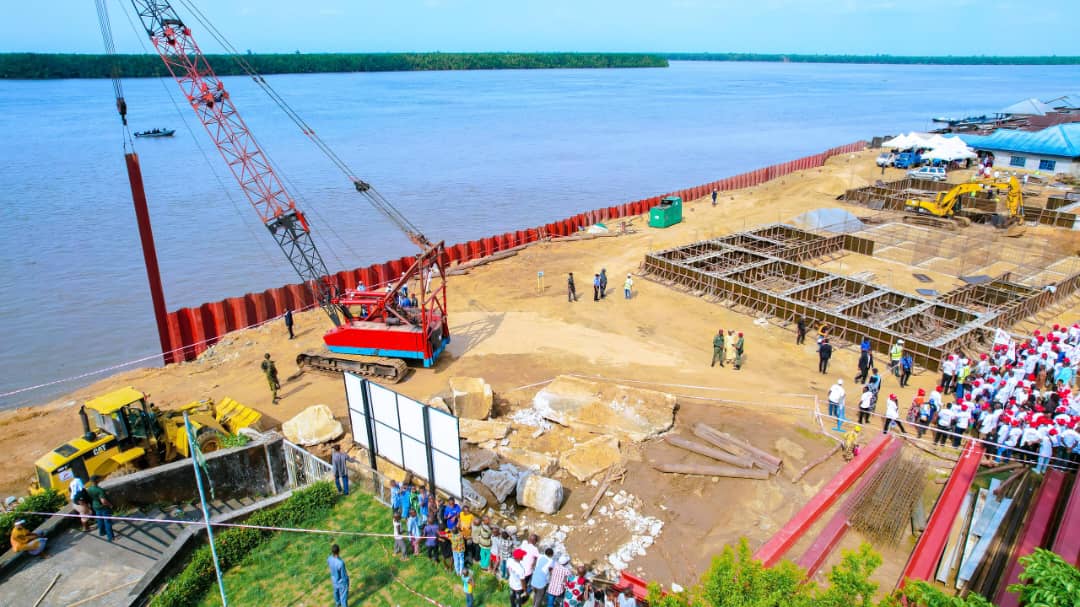
There is a certain quiet confidence building along the waterfront of Oron, the ancient coastal town that sits at the southeastern tip of Akwa Ibom State, where the Cross River empties into the Atlantic and where, for generations, fishermen and traders have made their living from the sea. That confidence has a name: the Oron Marine Hub — a sweeping, multi-component marine development project that, when completed, promises to fundamentally transform not just the physical landscape of Oron, but the economic fortunes of an entire coastal corridor in southern Nigeria.
Ongoing construction at the site signals that this is no pipe dream. For a town whose maritime heritage once made it one of the most strategically important waterfront communities in the Niger Delta region, the hub represents something long overdue: a structured, modern infrastructure investment that takes the sea seriously.
More Than a Jetty
It would be a mistake to describe the Oron Marine Hub simply as a jetty project. The development is taking shape as a fully integrated marine terminal and economic complex — one designed to simultaneously address the needs of passengers, cargo operators, fishermen, security agencies, tourists, and traders.
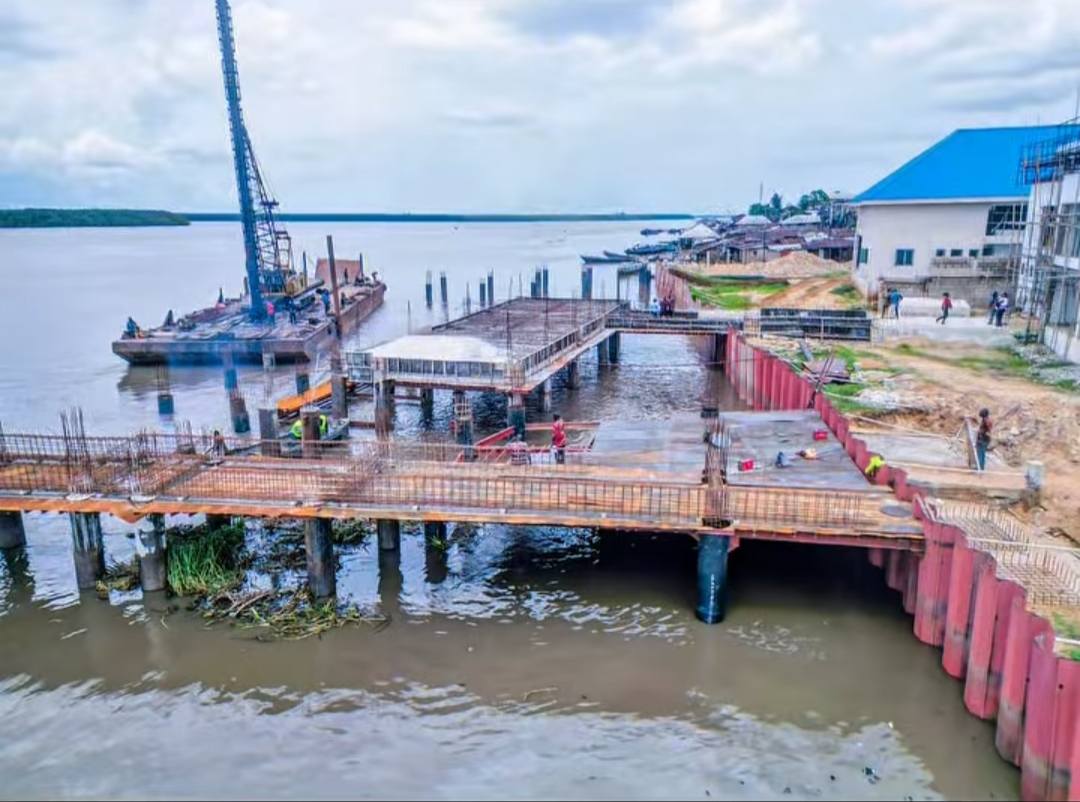
At its core are four modern jetties, purpose-built to accommodate different categories of vessels. Passenger boats, cargo craft, and security and patrol vessels will each have dedicated berths, ending the chaotic informality that has long plagued waterfront operations across the Niger Delta. Alongside these jetties, a central terminal building is under construction to manage the flow of passengers — providing proper ticketing infrastructure, waiting areas, and the kind of organized movement that modern marine transport demands.
For too long, Nigeria’s inland and coastal waterways have operated as an afterthought to road transport, underfunded and underserved. The Oron Marine Hub is a direct challenge to that status quo.
Logistics, Trade, and the Cold Chain
Perhaps the most commercially significant aspect of the project lies in its cargo and trade infrastructure. A network of warehouses and cargo handling facilities is being integrated into the hub, designed to support marine-based trade and logistics along the Akwa Ibom coastline and beyond.
But it is the inclusion of cold storage systems, dry storage units, and fish processing facilities that may prove most transformative for the local economy. Oron sits in one of Nigeria’s most productive fishing zones, yet for decades, post-harvest losses have eaten deeply into the incomes of artisanal fishermen who lack the infrastructure to properly store or process their catch. With these facilities in place, the hub will create a direct value chain — from catch to processing to market — that could significantly increase revenues across the fishing sector, reduce waste, and open new export possibilities.
For fishing communities in Oron, Ibeno, and the broader coastline, this is not a small detail. It is potentially life-changing.
A Recreational and Tourism Offer
The Oron Marine Hub is also being designed with an eye on tourism — a sector that Nigeria’s coastal states have chronically underinvested in, despite possessing some of West Africa’s most scenic and culturally rich waterscapes.
Plans include a recreational waterfront zone, complete with leisure spaces and floating facilities that will offer residents and visitors an experience currently unavailable anywhere along this stretch of the Akwa Ibom coastline. Waterfronts, when properly developed, become magnets for economic activity — drawing restaurants, hospitality businesses, boat hire services, and cultural tourism.
Oron has history on its side. Home to one of Nigeria’s oldest and most significant traditional museums — the Oron Museum — and with a cultural identity deeply tied to water, the town has the raw ingredients for a compelling tourism offer. The Marine Hub gives it the platform.
Built to Last: Shoreline Protection and Infrastructure
Development along Nigeria’s coastline carries inherent risks. Erosion, tidal surge, and the long-term effects of climate change are real concerns for any coastal infrastructure project. The developers of the Oron Marine Hub appear to have accounted for this, incorporating shoreline protection works into the design — a feature that will be critical to the facility’s long-term viability.
Supporting the terminal operations are internal road networks, dedicated parking areas, and security infrastructure — provisions that speak to the operational complexity of running a busy marine hub and the importance of ensuring safety and order within the facility.
Restoring the Corridors
Beyond its physical footprint, the Oron Marine Hub carries significant strategic weight. Analysts and transport observers have long noted that marine routes connecting communities across the Niger Delta and the Gulf of Guinea coastline remain vastly underutilised, despite offering faster and often cheaper alternatives to road travel.
The hub is strategically positioned to restore key marine transport routes — most notably the Oron–Calabar corridor, a historically important waterway link between Akwa Ibom and Cross River States. Reviving this corridor alone would reduce travel times, ease pressure on road infrastructure, and reconnect communities that share deep commercial and cultural ties.
Wider connectivity to waterway routes in Rivers State and beyond is also within the project’s long-term vision, which could eventually reposition this corner of southern Nigeria as a genuine hub in the regional maritime network.
A Gateway City in the Making
When Nigerian leaders and planners speak of harnessing the country’s 853-kilometre coastline and vast inland waterway network, they are often speaking in abstractions. The Oron Marine Hub is concrete — literally and figuratively. It is bricks, steel, jetties, cold rooms, and warehouses rising from the waterfront of a town that has waited a long time for this moment.
When completed, Oron will not merely be a coastal town tucked into the southeastern corner of Akwa Ibom. It will be a functioning marine gateway — a point of departure and arrival for passengers, goods, and vessels; a processing hub for the fishing industry; a leisure and tourism destination; and a commercial node connecting southern Nigeria’s waterways in ways they have not been connected in a generation.
The sea has always defined Oron. With the Marine Hub, Oron is finally building something worthy of it.
NIGERIA WATCH: Tracking the ministries, departments, and agencies with a stake in this story
The Oron Marine Hub sits at the intersection of several federal mandates, making it one of the most regulatory-dense infrastructure projects currently underway in southern Nigeria. Here are the key government bodies whose oversight, policy direction, and funding priorities are directly relevant to this development:
Federal Ministry of Marine & Blue Economy — As the apex ministry for Nigeria’s maritime sector following its establishment by the Tinubu administration, this ministry holds primary federal interest in a project of this nature. The Oron Marine Hub aligns directly with the Blue Economy agenda, which seeks to monetise Nigeria’s coastal and inland water resources. The ministry’s engagement — or absence — in supporting and coordinating this project will be closely watched.
National Inland Waterways Authority (NIWA) — NIWA holds statutory responsibility for the development, maintenance, and regulation of Nigeria’s inland waterways, including the river and creek routes that connect Oron to Calabar, Warri, and Port Harcourt. The restoration of the Oron–Calabar corridor in particular falls squarely within NIWA’s operational mandate, and the agency’s role in dredging, charting, and regulating traffic on these routes will be essential to the hub’s commercial viability.
Nigerian Ports Authority (NPA) — To the extent that the Oron Marine Hub handles cargo and commercial vessel traffic, it may fall within the NPA’s licensing and regulatory jurisdiction. The NPA’s framework for recognising and regulating smaller regional terminals and marine hubs will determine how smoothly the facility integrates into Nigeria’s broader port ecosystem.
Nigerian Maritime Administration and Safety Agency (NIMASA) — NIMASA’s mandate covers vessel registration, seafarer certification, and maritime safety enforcement. With passenger and cargo vessels set to operate from Oron’s new jetties, NIMASA’s safety standards and enforcement presence will be critical to ensuring that the hub operates to international benchmarks and that lives on the water are protected.
Federal Ministry of Agriculture & Food Security — The hub’s fish processing facilities, cold storage systems, and post-harvest infrastructure connect directly to federal agricultural policy, particularly initiatives targeting aquaculture development and the reduction of post-harvest losses in the fisheries sub-sector. Federal support through this ministry could significantly accelerate the fishing industry components of the project.
Federal Ministry of Tourism — With a dedicated recreational waterfront zone forming part of the hub’s design, the Federal Ministry of Tourism has a clear interest in ensuring that the Oron Marine Hub is incorporated into Nigeria’s national tourism development framework and promotional campaigns.
Nigerian Meteorological Agency (NiMet) & Nigerian Hydrological Services Agency (NIHSA) — For a coastal infrastructure project that incorporates shoreline protection works, accurate weather forecasting and hydrological data are non-negotiable. Both agencies have roles to play in providing the environmental intelligence needed to protect the hub’s long-term structural integrity against tidal and climate risks.
Akwa Ibom State Government — While not a federal body, the state government is the most proximate authority driving and financing this project. Its relationship with federal agencies — particularly NIWA, NIMASA, and the Ministry of Marine & Blue Economy — will largely determine how quickly approvals, corridor licensing, and regulatory clearances are obtained.
Waterways News will continue to monitor federal agency engagement with the Oron Marine Hub project. Relevant ministries and agencies are invited to share updates, policy positions, and timelines with our editorial team.
Send tips and reports to the Waterways News editorial desk at www.waterwaysnews.ng
NIWA Eyes West Coast Cargo Jetty as Nigeria-Ghana Trade Corridor Takes Shape
Authority commits waterfront infrastructure to sub-regional push; Calabar–Cameroon route cited as proof of concept
By Okeoghene Onoriobe | Waterways News Correspondent | Lagos
The National Inland Waterways Authority (NIWA) has signalled its readiness to anchor the development of a proposed West Coast cargo jetty, positioning Nigeria’s inland waterways network as the backbone of a new sub-regional trade corridor linking Lagos to Accra.
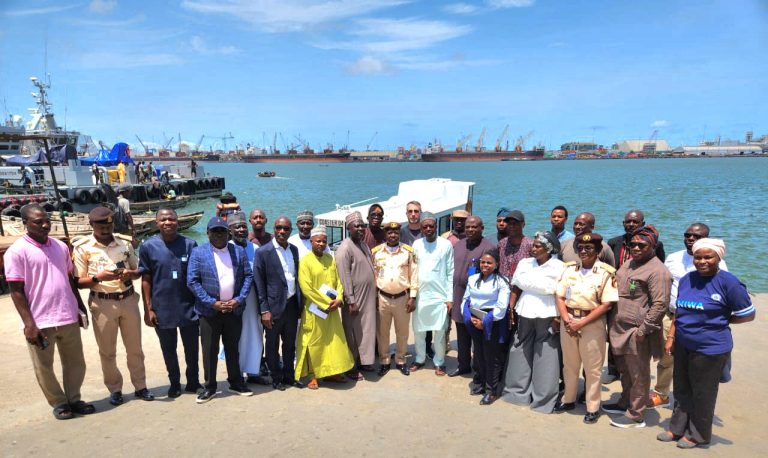
The disclosure came during a joint inspection of the Marina Jetty in Lagos on Thursday, attended by officials of the Nigerian Ports Authority (NPA), the Nigeria Immigration Service (NIS), NIWA, and a trade delegation from Ghana comprising corporate and private sector representatives.
Leading the NIWA delegation, Acting Managing Director Mr. Yusuf Girei confirmed that the Authority is prepared to operationalise select existing jetties as a pilot phase, targeting smoother cargo movement between Nigeria and Ghana. He pointed to NIWA’s sprawling waterfront infrastructure as a ready platform for technology-driven, hassle-free cargo operations with direct market access across Lagos.
Girei, flanked by the Authority’s General Manager (Marine), Engr. Horsefall Dakio, and Lagos Area Manager, Engr. Sarat Braimah, said NIWA’s waterways network makes it a critical enabler of inland cargo movement across West Africa.
“We are committed to leveraging our infrastructure and expertise to facilitate regional trade. Our experience on the Calabar–Cameroon route demonstrates the viability of inland water transport in boosting market access within Nigeria and across West Africa,” Girei stated.
The Authority noted that its operational track record on the Calabar–Cameroon corridor provides a scalable model for extending similar services across the West Coast, with the Lagos–Accra axis as the next logical frontier.
Nigeria Watch
The Marina Jetty inspection signals something larger than bilateral trade logistics — it marks a quiet but consequential repositioning of Nigeria’s inland waterways as an instrument of regional economic integration. For years, NIWA’s vast infrastructure has sat underutilised relative to its potential, while road-dependent trade remained the default model for West African commerce.
A functioning Nigeria–Ghana cargo corridor via water would benefit Nigerian shippers, freight forwarders, and port-adjacent businesses directly, while easing pressure on congested land routes. It would also lend weight to the Federal Government’s broader blue economy ambitions under Minister Adegboyega Oyetola, which have consistently emphasised turning waterways into productive economic assets rather than administrative liabilities.
The critical test now is whether Thursday’s inspection translates into concrete infrastructure activation — with timelines, investment commitments, and regulatory clarity from both NIWA and NPA on operational modalities. Nigerian maritime stakeholders will be watching closely.
-

 Oil and Gas2 months ago
Tantita’s Pipeline Deal: $144m Contract, Rising Output, and the Questions that Deserve Answers
-
 Blue Economy2 months ago
Nigeria’s Coast Guard Bill: A Solution in Search of a Problem?
-
 MARITIME TRADE & SHIPPING2 months ago
World’s Largest Container Ship Sets New Maritime Record with 22,233 TEUs on Single Voyage