
Featured
Oman, Iran Propose a Service-Fee Plan for the Strait of Hormuz


Oman, Iran Propose a Service-Fee Plan for the Strait of Hormuz
By Raymond Gold | Waterways News
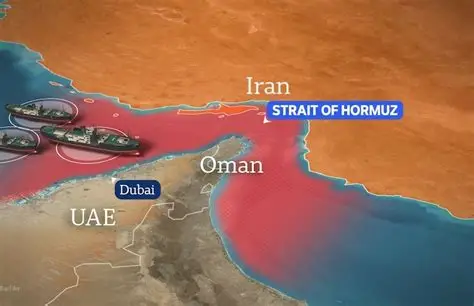
Oman and Iran are edging closer to a formal arrangement under which shipping companies transiting the Strait of Hormuz could be charged service fees, in a development that has set global shipping circles on edge and could carry knock-on consequences for Nigeria’s crude export trade and freight costs.
According to a proposal Muscat is reported to have delivered to Washington, ships passing through the strait would pay for navigational aid, environmental protection and emergency-response services, with Iran and Oman jointly collecting the payments. The proposal is said to be partly modelled on arrangements in the Straits of Malacca and Singapore, where a private foundation in that Asian waterway collects voluntary contributions toward safe navigation.
The framing matters. Rather than a toll on passage itself, which would imply territorial control over an international strait, the proposal is being pitched as payment for discrete services rendered, an arrangement its backers argue sits more comfortably within the United Nations Convention on the Law of the Sea (UNCLOS). Oman’s Foreign Minister, Badr al-Busaidi, drew that distinction explicitly, stressing that Muscat opposes any toll on transit passage but is open to discussing maritime, environmental and navigational service fees on a voluntary basis with the states and companies that benefit from them, citing the Malacca and Singapore model as precedent for fees that fund navigational safety, pollution control and accident preparedness.

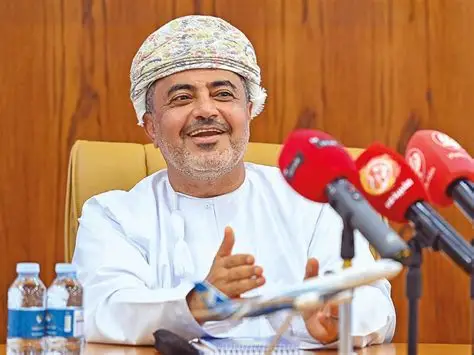
Oman’s Foreign Minister, Sayyid Badr bin Hamad Al-Busaidi
Where Tehran and Muscat Differ
The sharpest disagreement in the talks is not over whether fees should exist, but whether ships would be compelled to pay them. Iranian officials have signalled the charges would be mandatory, while Omani officials have described them as voluntary, a gap a regional diplomat said remains unresolved even as both sides move the framework forward.
That gap has produced a confusing run of public statements over the past several weeks. Oman’s Transport Minister, Said al-Maawali, told the Shura Council that no fees could legally be imposed on transit through the strait, describing it as a natural passage governed by international agreements Muscat has signed, and noting pointedly that Iran and the United States are among states that have not signed those same agreements, a gap he called a legal grey area. Days later, however, al-Busaidi appeared to back Iran’s service-fee plan in remarks carried by Oman’s Foreign Ministry, following the first meeting of a newly formed Iran-Oman joint committee on Hormuz governance.
Washington’s position has hardened against any payment scheme. United States President Donald Trump dismissed the idea of tolls on the waterway as unacceptable, insisting the strait must remain a free international route, while Secretary of State Marco Rubio said a fee regime would make a diplomatic deal unfeasible if Tehran continued to pursue it, and separately argued the dispute over charges amounted to little more than semantics given no Gulf state supports tolls. French President Emmanuel Macron met Sultan Haitham bin Tariq in Paris to press the case for free and unconditional passage through the strait, reflecting European unease, even as Brussels has focused more on ensuring any eventual fee structure does not breach international law than on blocking it outright.
The Numbers Behind the Proposal
Reports of the fee structure under discussion have varied. Earlier this year, Iran’s Revolutionary Guard Corps was reported to be preparing charges of roughly one dollar per barrel on tankers passing through the strait, with Tehran said to be willing to accept payment in cash, goods, Chinese yuan or even cryptocurrency. Iran has since set up a Persian Gulf Strait Authority, which has defined a “management supervision area” within the strait and indicated vessels would require permits to transit the controlled zone, while Iranian state media has described a mechanism for charging vessels for specialised services.
Maritime legal analysts cited in US reporting note that fees calibrated to genuine services rendered to a vessel could be defensible under international law, but caution that Iran would face scrutiny over whether its charges are, in substance, transit tolls dressed in different language.
The dispute sits inside a fragile wider truce. A Pakistan-brokered memorandum of understanding between Tehran and Washington reportedly commits Iran to toll-free passage for commercial vessels for at least 60 days, with full restoration of traffic within 30 days, while leaving both sides to begin a dialogue on what happens once that window closes.
The Strait of Hormuz, roughly 33 to 34 kilometres wide at its narrowest point between Iran and Oman, carries close to one-fifth of the world’s seaborne oil trade, alongside significant liquefied natural gas volumes, making any disruption or new cost layer there a matter of immediate concern for energy markets, shipowners and insurers worldwide.
Nigeria Watch: Why a Gulf Fee Fight Should Matter in Lagos and Abuja
For a country whose economy still leans heavily on crude oil revenue and whose import bill rides on global freight costs, the unfolding fee dispute over Hormuz is not a distant Gulf curiosity. It is a live variable in Nigeria’s energy and shipping cost equation, one our maritime authorities and the Federal Ministry of Marine and Blue Economy would do well to track closely rather than treat as background noise.
The connection runs through several channels. First, even though Nigeria’s own crude does not transit Hormuz, the strait’s roughly 20-percent share of global seaborne oil flows means any sustained disruption, fee regime, or insurance repricing there moves the benchmark price of crude that Nigerian exports are priced against, with consequences for federation account revenue projections and naira exchange-rate pressures alike. A fee system, even a modest one, that becomes embedded in shipping economics through the strait could nudge global freight and insurance costs upward in ways that eventually filter into the landed cost of refined products and other imports moving through Apapa, Tin Can Island, Onne and Nigeria’s other gateway ports.
Second, the episode is a live case study in how a coastal and littoral state can attempt to monetise navigational services within an international waterway without crossing into an outright claim of sovereignty over passage, precisely the kind of legal and policy tightrope Nigeria itself has had to walk in disputes over jurisdiction across its inland waterways and territorial waters, including the Supreme Court’s recent intervention in the NIWA-LASWA jurisdictional contest. Oman’s effort to frame its proposed charges as payment for navigational aid, pollution control and emergency response, rather than a toll on the right of passage, is a model worth studying as Nigeria continues to refine how it prices and justifies levies, tariffs and charges across its own waterways and ports.
Third, war-risk insurance premiums tied to Gulf tensions have already shown how quickly geopolitical risk in one chokepoint can ripple into shipping costs elsewhere, a dynamic Nigerian importers and exporters have felt before during earlier Hormuz flare-ups, and one that deserves closer monitoring by the Nigerian Maritime Administration and Safety Agency (NIMASA) and the Nigerian Shippers’ Council, given how thinly Nigerian businesses are insulated from global freight and insurance shocks originating thousands of kilometres away.
The lesson for Nigeria’s blue economy planners is not that Hormuz fees will directly tax our shipping lanes. It is that the underlying principle now being tested there, that a state bordering a strategic waterway can lawfully charge for defined navigational and safety services without asserting sovereignty over transit itself, is a template increasingly relevant to debates closer to home, from the unresolved Cabotage Vessel Financing Fund disbursement question to how Nigeria eventually prices security and safety services along its own piracy-exposed Gulf of Guinea corridor.
Whether Oman and Iran ultimately settle on a voluntary or mandatory scheme will be instructive either way.
This is a developing story and Waterways News will keep tracking the development to keep our readers informed.
Raymond Gold is Co-publisher and Research Reporter at Waterways News, Nigeria’s foremost digital publication covering ports, shipping, inland waterways, and the blue economy.© Waterways News | www.waterwaysnews.ng | All rights reserved

Featured
IMO Sets First-Ever Two-Year Theme for World Maritime Day, Tasks Member States to Move “From Policy to Practice”
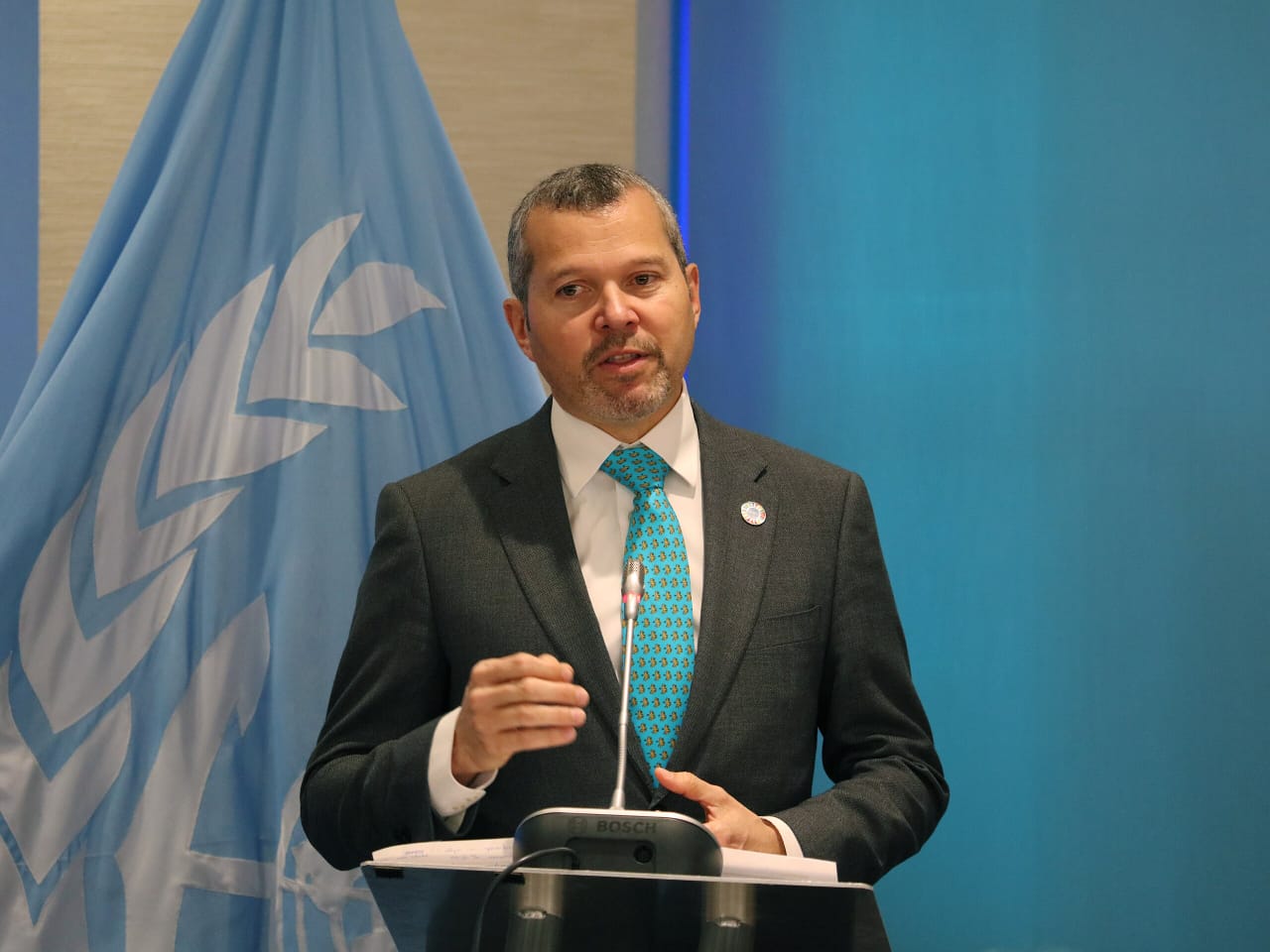
IMO Sets First-Ever Two-Year Theme for World Maritime Day, Tasks Member States to Move “From Policy to Practice”
By Emetena Ikuku | Waterways News
The International Maritime Organization (IMO) has adopted “From Policy to Practice: Powering Maritime Excellence” as its World Maritime Day theme for both 2026 and 2027, marking the first time in the observance’s history that a single theme will run for a full two-year cycle instead of the usual one.
The decision was endorsed by the IMO Council at its 134th session in London, held from July 7 to 11, on a proposal from IMO Secretary-General Arsenio Dominguez. World Maritime Day will continue to fall on the last Thursday of September each year, with 2026 and 2027 both marked under the same theme.
IMO explained that the extended timeframe reflects a deliberate shift in focus, from the adoption of new rules to ensuring those already on the books are actually applied. According to the organisation, “From Policy to Practice” speaks to its core mandate: making sure that conventions, codes and guidelines agreed at the international level are translated into national law, enforced consistently, and embedded in the daily operations of ports, ships and administrations worldwide, rather than existing only on paper.
The “Powering” element of the theme points to the practical support IMO intends to deploy to help member states close that implementation gap, including technical assistance, training programmes, capacity-building and knowledge-sharing partnerships aimed at strengthening maritime administrations and port state control regimes. “Maritime Excellence,” the organisation says, describes the end goal: a shipping industry that is safe, secure, efficient and environmentally sound, held to the highest international standards and committed to continuous improvement.
In a video message announcing the campaign, Dominguez said the true test of the global regulatory framework lies in implementation, stressing that when the industry talks about “practice,” it is ultimately talking about people, and that IMO is committed to powering that transition through direct technical cooperation and support.
IMO has invited member states, industry stakeholders and the public to join the campaign using the hashtags #WorldMaritimeDay and #MaritimePolicytoPractice as national and regional activities roll out over the two-year period.
Nigeria Watch
For Nigeria, a theme built entirely around closing the gap between policy and practice lands close to home. It is, in many ways, the exact fault line this desk has tracked for years across the country’s maritime sector: regulations that exist in full on paper but struggle to survive contact with implementation on the water.
The theme’s emphasis on national legislation, enforcement and day-to-day operations speaks directly to open questions around NIMASA’s cabotage regime and the long-delayed disbursement of the Cabotage Vessel Financing Fund (CVFF), to the jurisdictional tug-of-war between NIWA and LASWA over inland waterways regulation even after Supreme Court intervention, and to the practical rollout of the NPERA Act now that the agency has formally begun operations. Each of these is, at bottom, a policy-to-practice story still waiting for its second half to be written.
It also speaks pointedly to the everyday reality of Nigeria’s informal and small-scale waterway operators, represented by bodies like WABOTAN and ATBOWATON, who often experience federal and state maritime policy not as technical assistance and capacity-building, but as enforcement action with little of the promised support attached. If IMO’s two-year campaign is genuinely about “translating international rules into action at sea and on shore,” as the organisation puts it, Nigerian regulators have an unusually clean, IMO-endorsed framework to be measured against between now and 2027, and operators on the inland waterways will be watching to see whether “powering” the transition includes powering their own long-stalled asset financing and safety upgrades, not just headline compliance targets aimed at the deep-sea fleet only.
With Nigeria holding a seat on the IMO Council, the country also carries a diplomatic stake in how visibly it is seen to be putting the theme into practice at home over the coming biennium.
Blue Economy
Oyetola Sets Up Technical Committee to Fast-Track Fish Production, Cut Nigeria’s Import Bill
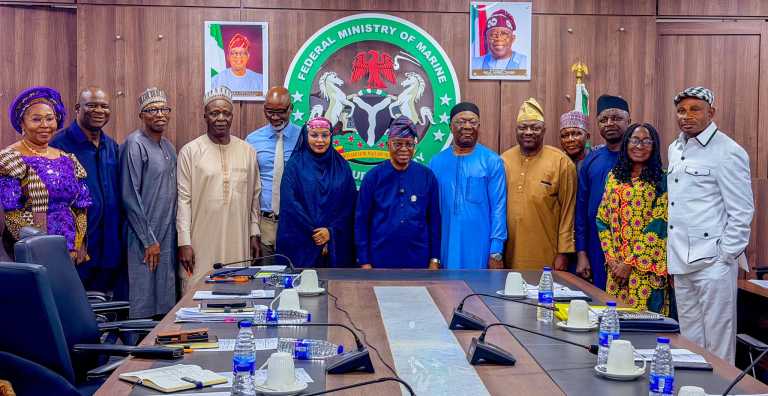
Oyetola Sets Up Technical Committee to Fast-Track Fish Production, Cut Nigeria’s Import Bill
By Ighoyota Onaibre | Waterways News
The Federal Ministry of Marine and Blue Economy has begun moving from policy talk to implementation on fish production, with the Minister, Dr Adegboyega Oyetola, inaugurating a Technical Committee on Accelerating Fish Production in Nigeria in Abuja on Thursday.
Oyetola said the committee’s job was to convert existing recommendations into coordinated action that can deliver measurable gains in the country’s fisheries and aquaculture sector, rather than produce another policy document.
He noted that fish remains a major source of animal protein for millions of Nigerians, and that the fisheries and aquaculture value chain sustains livelihoods across production, processing, marketing and transportation. But domestic output still falls well short of national demand, he said, with knock-on effects for food security, household incomes and the country’s foreign exchange position.
The Minister listed the sector’s key constraints as high production costs, particularly feed, poor access to quality fish seed and broodstock, weak fish-health and biosecurity systems, post-harvest losses, and inadequate cold-chain and storage infrastructure. He also pointed to limited access to affordable finance, thin research and data systems, and gaps in standards, traceability and market development.
Oyetola said the recent transfer of fisheries and aquaculture functions to his ministry gave the sector a stronger institutional platform, and reaffirmed government’s commitment to growing sustainable domestic production and cutting Nigeria’s reliance on fish imports.
The committee’s work builds on a strategic roundtable the ministry convened with the National Institute for Policy and Strategic Studies (NIPSS) on October 29, 2025, which produced a set of recommendations on production and value-chain bottlenecks. Members have been asked to test each recommendation against existing national policy, laws and institutional mandates, deciding whether it should be adopted, refined, folded into current programmes, studied further, or dropped and to map ongoing public, private and development-sector initiatives so scarce resources are not duplicated.
Oyetola said the committee’s final output must include a clear implementation roadmap and matrix covering priority interventions, responsible institutions, timelines, indicative costs, funding options, performance indicators and required approvals, along with credible entry points for private investment, public-private partnerships and development finance.
The Permanent Secretary of the ministry, Mrs Fatima Sugra Mahmood, who chairs the committee, pledged a thorough review process aimed at practical, measurable interventions. Prof Akintola Shehu Latunji of Lagos State University, speaking for other members, thanked the Minister and committed the committee to working with stakeholders to boost fish production nationwide.
Other members include Mr Omoragbon Wellington and Mr Garba Usman of the Federal Department of Fisheries and Aquaculture; Prof Ayo Omotayo of NIPSS; Prof Sule Abiodun of the Nigerian Institute for Oceanography and Marine Research; Prof Sadiku Suleiman Omeiza of the Federal University of Technology, Minna; Bayelsa State’s Commissioner for Marine and Blue Economy, Dr Faith Izibenua Zibs-Godwin; Dr Charles Okaga, Technical Assistant to the Minister; Dr Ebinimi Ansa of the Fisheries Society of Nigeria; Mr Onoja Sunday of the Catfish Farmers Association of Nigeria; Mr Mashi Gabriel Sani of the Fisheries Cooperative Federation of Nigeria; Mr Remi Ahmed of the Tilapia Development Association of Nigeria; and Dr Charles Iyangbe of WorldFish Nigeria.
The committee has eight weeks to submit its report.
Nigeria Watch
Fish production is not a subject Waterways News covers often, but it sits squarely inside the blue economy mandate this Ministry now carries and it is worth watching for the same reason CVFF, NPERA and NIMASA reforms are worth watching: Nigeria has no shortage of roundtables, committees and roadmaps; what it has historically lacked is follow-through.
Oyetola’s own framing, “your assignment is not to develop another policy”, reads as an implicit acknowledgment of that pattern, and an eight-week deadline is a useful marker for readers to hold the ministry to. The emphasis on cold-chain and storage infrastructure, and on post-harvest losses, also echoes concerns Waterways News has tracked on the inland waterways side, where WABOTAN and ATBOWATON operators regularly cite poor storage and logistics as a drag on returns from fish and other perishable cargo moved by water. A serious fisheries roadmap that funds cold-chain and market infrastructure along riverine routes would have direct relevance for the informal waterway transport economy this desk covers closely.
Whether this committee’s report becomes another shelved document or an actual funding and implementation pipeline is the story to follow when the eight weeks are up.
Blue Economy
NPERA Charges Staff on New Mandate as Akutah Eyes $1 Trillion Economy, Pledges Harmony with Sister Agencies
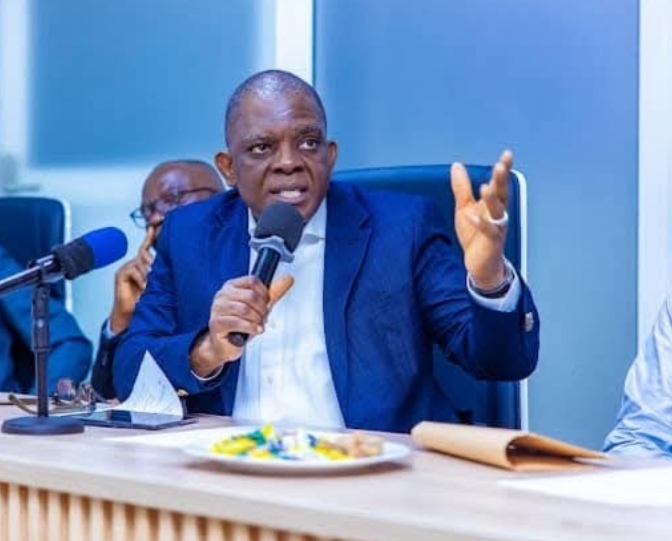
NPERA Charges Staff on New Mandate as Akutah Eyes $1 Trillion Economy, Pledges Harmony with Sister Agencies
By Okeoghene Onoriobe | Waterways News
The newly transitioned Nigeria Ports Economic Regulatory Agency (NPERA) has told its workforce that the agency’s expanded powers must translate into measurable gains for the maritime sector, as its chief executive moved to calm anxieties over possible turf conflicts with other port institutions.
Speaking at a townhall session with staff, NPERA’s Director-General, Dr Pius Akutah, said the agency’s new statutory footing, created under the Nigerian Ports Economic Regulatory Agency Act, 2026, leaves no room for institutional rivalry, since the law spells out NPERA’s role as the ports’ economic regulator distinctly from the operational and infrastructure mandates held by other agencies.
Akutah described the President’s assent to the Act as a breakthrough for the maritime industry, saying the reinforced regulatory powers position the agency to curb sharp practices and drive efficiency at the ports. He urged staff to raise their professional standards to match the agency’s new responsibilities, and said NPERA intends to work closely with the Nigerian Ports Authority (NPA) in particular, alongside other sister agencies, to deepen reforms and improve service delivery across the ports.
He linked the agency’s broadened mandate directly to government’s wider ambition of building a $1 trillion economy, arguing that a more predictable and business-friendly port environment is central to that goal.
The remarks follow the formal transition of the Nigerian Shippers’ Council (NSC) into NPERA, a process more than a decade in the making. NPERA Governing Board chairman, Dr Ibrahim Shema, has described the change as a structural separation of economic regulation from the NPA’s landlord and infrastructure functions, with NPERA’s approach to be anchored on transparency, fairness, predictability, efficiency and accountability. Both officials have stressed that NPA retains its infrastructure role while NPERA takes on tariff regulation, licensing, competition oversight and commercial dispute resolution.
NIGERIA WATCH
Every new regulator in Nigeria’s port and maritime space arrives with the same reassurance: this one won’t fight the agencies already there. NPERA’s rollout is no exception, and the emphasis on “harmony” with NPA is itself a tell — it signals that stakeholders, including operators and shippers who have lived through NIMASA-NPA and NIWA-LASWA turf disputes, are watching closely for the first sign of overlap.
For the informal and small-scale end of the water transport economy that Waterways News tracks — the operators represented by WABOTAN and ATBOWATON — NPERA’s mandate is, on paper, encouraging. A regulator empowered to resolve commercial disputes and rein in unapproved charges could, if it functions as designed, extend some protection to smaller port users who have historically had the least leverage against terminal operators and shipping lines. But the sector’s experience with the CVFF disbursement saga is a caution against measuring reform by its founding rhetoric alone. An agency can be transparent on paper about “five principles” and still take years to deliver anything an ordinary operator can point to.
The real test for NPERA, as with NPERA’s own DG has implicitly acknowledged by tasking his staff before the agency has even settled into its new powers, will be whether tariff clarity and faster dispute resolution reach beyond the big shipping lines and terminal operators to the smaller players who move goods and people along Nigeria’s waterways every day. Waterways News will be watching how NPERA’s mandate is implemented in practice, not just how it is announced.

 Oil and Gas7 months ago
Tantita’s Pipeline Deal: $144m Contract, Rising Output, and the Questions that Deserve Answers
- MARITIME TRADE & SHIPPING7 months ago
World’s Largest Container Ship Sets New Maritime Record with 22,233 TEUs on Single Voyage
- Blue Economy7 months ago
Nigeria’s Coast Guard Bill: A Solution in Search of a Problem?