Security & Safety
Ondo State Government Partners with NIWA to Enhance Waterway Safety

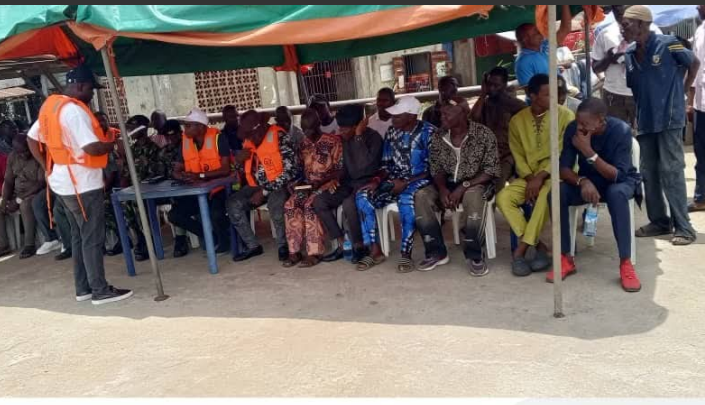

The National Inland Waterways Authority (NIWA) has received strong backing from the Ondo State Government in its ongoing efforts to improve safety and security on the state’s waterways. This collaboration was reinforced with the official launch of the Operation Safe Ondo Waters and Waterways Insurance Scheme, an initiative aimed at promoting safer and more sustainable water transport.
The program was formally unveiled by the Governor of Ondo State, Hon. Dr. Lucky Aiyedatiwa, through the Senior Special Assistant on Youth Empowerment and Job Creation, Amb. Orioye Benedict Gbayisemore, and the Special Assistant on Pipeline Surveillance and Inland Waterways Security, Engr. Alore Omosuyi. The launch underscores the government’s commitment to ensuring that riverine communities, boat operators, and other water users benefit from improved safety measures.
Speaking at the launch event, Amb. Orioye Benedict Gbayisemore emphasized that the state government recognizes the economic and social importance of inland waterways and is committed to making them safer for transport and commercial activities. He noted that enhancing waterway security and infrastructure would boost trade, reduce accidents, and provide better opportunities for communities dependent on water transportation.

“Waterways remain a critical component of Ondo State’s transportation and economic system. With this initiative, we are taking proactive steps to ensure that residents who rely on these routes for daily activities can do so with minimal risk. Our government, in partnership with NIWA, is determined to create a safer environment for all water users,” he said.
In further demonstrating its commitment to safety, the Ondo State Government procured 1,500 life jackets as part of the initiative. These jackets will be distributed free of charge to boat passengers, fishermen, and other water users to ensure compliance with safety standards. Engr. Alore Omosuyi stated that the life jackets would significantly reduce fatalities in the event of boat mishaps and that the state government would continue to invest in initiatives that prioritize safety on its waterways.
“This intervention is a game-changer for water transport safety in Ondo State. Many avoidable accidents occur due to the non-use of life jackets, and this initiative directly addresses that issue. We urge all waterway users to take advantage of this effort and always prioritize safety,” Omosuyi stated.
The Operation Safe Ondo Waters and Waterways Insurance Scheme is expected to provide additional security measures, including improved monitoring of waterway activities, stricter enforcement of safety regulations, and enhanced emergency response mechanisms. The insurance aspect of the scheme is designed to offer financial protection to water users in case of accidents, ensuring that victims or their families receive necessary support.
Stakeholders at the event, including representatives from NIWA, local boat operators, and community leaders, commended the initiative, describing it as a crucial step toward reducing waterway-related incidents. Many expressed optimism that the partnership between NIWA and the state government would not only save lives but also promote economic activities by making inland water transport more secure and efficient.
A NIWA representative at the event thanked the Ondo State Government for its proactive approach in supporting inland waterway development. He reiterated NIWA’s commitment to working closely with the state government and other stakeholders to maintain safety, improve navigation infrastructure, and enforce compliance with water transport regulations.
With the launch of Operation Safe Ondo Waters, the state government and NIWA have set a precedent for collaborative waterway management in Nigeria. The initiative is expected to significantly enhance the security of passengers and cargo, improve water transport reliability, and boost economic activities in riverine communities across the state.
As efforts continue to modernize and regulate Nigeria’s inland water transport sector, the Ondo State initiative serves as a model for other states looking to prioritize safety, security, and economic sustainability on their waterways.

Navy Nabs Three Stowaways Aboard Merchant Vessel Off Lagos Coast
By Okeoghene Onoriobe | Waterways News Reporter | April 21, 2026
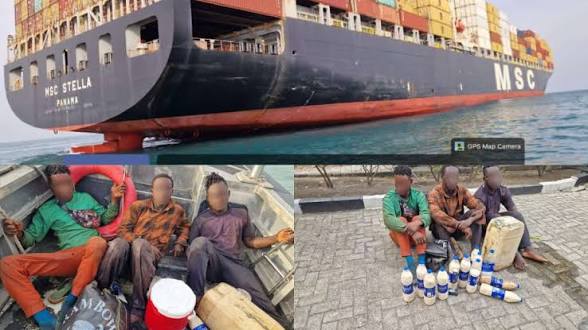
The Nigerian Navy has apprehended three suspected stowaways found concealed aboard the merchant vessel MSC STELLA (IMO No. 9279988) in waters off the Lagos Fairway Buoy, in what authorities say reflects the service’s intensified drive to secure Nigeria’s maritime corridors and combat irregular migration by sea.
The interception was confirmed in an official statement released Monday in Abuja by the Director of Naval Information, Navy Captain Abiodun Folorunsho.
According to Folorunsho, the operation was executed by personnel of Nigerian Navy Ship (NNS) BEECROFT, acting on credible intelligence received from the Western Regional Control Centre (WRCC) at approximately 5:05 pm on April 19. A Quick Response Team deployed from Tarkwa Bay successfully intercepted the suspects roughly five nautical miles off the Lagos coastline.
Preliminary investigations indicate the trio illegally boarded the vessel in the early hours of April 17 — around 1:00 am — while the ship was berthed at Tin Can Island Port, Lagos. The suspects have been identified as Aguru Michael, 27, a Benin Republic national; Soye Monday, 25, from Ondo State; and Kentobou Peter, 22, from Delta State. All three were reportedly attempting to reach Europe.
The naval spokesperson noted that the operation once again demonstrates the Nigerian Navy’s resolve to protect lives at sea and disrupt illegal migration through Nigeria’s waterways. He pointed to a string of recent search-and-rescue successes, including the rescue of seven people following a maritime collision in Bayelsa State, and the interception of three foreign stowaways aboard MT ANATOLIA just last month in March 2026.
The three suspects are currently being held at NNS BEECROFT and are undergoing investigation and administrative processing in accordance with applicable laws.
The Nigerian Navy reiterated its unwavering commitment to maritime safety, security, and continuous surveillance of Nigeria’s territorial waters.
Waterways News | Covering Nigeria’s Maritime Domain
EFCC, Customs Close Ranks to Choke Off Smuggling and Money Laundering at Nigeria’s Borders
By Okeoghene Onoriobe, Waterways News, Lagos April 15, 2026
The Economic and Financial Crimes Commission (EFCC) has thrown its weight behind its growing partnership with the Nigeria Customs Service (NCS), signalling that the two agencies are tightening their joint grip on smuggling networks and financial crime operations feeding off Nigeria’s trade corridors.
Speaking during a high-level engagement in Kano, EFCC Acting Zonal Director Friday Ebelo said the collaboration is already yielding tangible results — illicit goods intercepted, funds recovered and high-profile suspects arrested. He credited the gains to a deliberate effort by both agencies to understand each other’s operational mandates and align their enforcement strategies.
“No single agency can combat cross-border crime alone,” Ebelo said, stressing that intelligence sharing and joint enforcement are essential to protecting national revenue and disrupting the financial networks that sustain organised criminal groups.
The visit was led by the Commandant of the Nigeria Customs Command and Staff College, Gaura, who brought students for an immersive look at how the EFCC conducts its operations. Gaura commended the Commission’s transparency and operational efficiency, noting that modern Customs work has long outgrown the border post — it now demands intelligence-led financial investigation skills that are built through exactly this kind of interagency exposure.
The engagement covered a lecture on interagency cooperation, interactive sessions on intelligence sharing and joint investigations, and a focused discussion on managing seized assets connected to currency smuggling and financial crimes.
For a country whose ports and waterways remain entry points for contraband — from petroleum products and narcotics to foreign currencies — the deepening of this EFCC-Customs alliance carries direct implications for maritime enforcement. Smuggling routes that exploit Nigeria’s coastline and inland waterways often rely on the same financial infrastructure that both agencies are now working to dismantle together.
Waterways News | waterwaysnews.ng
News
CUSTOMS BUSTS N1BN DRUG HAUL: Over One Million Tramadol Tablets, 10,000 Codeine Bottles Seized on Benin Highway

CUSTOMS BUSTS N1BN DRUG HAUL: Over One Million Tramadol Tablets, 10,000 Codeine Bottles Seized on Benin Highway
By Ighoyota Enaibre
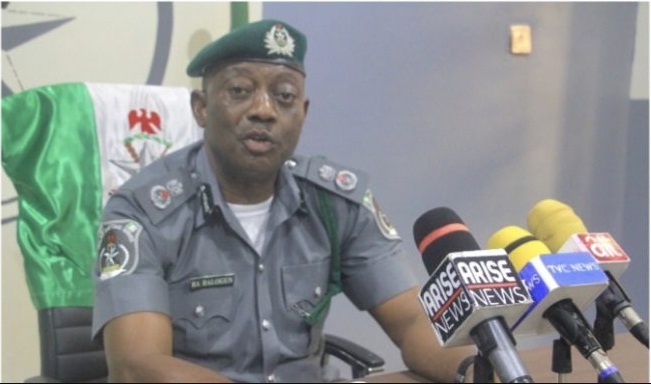
Operatives of the Nigeria Customs Service Federal Operations Unit (FOU) Zone C, Owerri, have dealt a major blow to drug traffickers after intercepting a staggering consignment of illicit narcotics with a Duty Paid Value of over N1 billion along the Okada/Ofosu Expressway in Benin City, Edo State.
The bust, one of the largest single drug seizures recorded by the unit, yielded 1,025,000 tablets of Tramadol and 10,000 bottles of Barcadin Codeine Syrup (100ml each) — all smuggled inside a truck and cleverly concealed among legitimate goods to dodge detection.
Comptroller Bishir Balogun, who announced the seizure, confirmed that the operation was executed on March 15, 2026, driven by strategic intelligence and coordinated enforcement action.
When customs operatives flagged down the vehicle, the driver made a desperate bid to escape — briefly pulling over before abandoning the truck entirely and fleeing on foot into nearby bushland. A thorough search of the truck uncovered the drugs hidden within the cargo.
The total Duty Paid Value (DPV) of the seized consignment stands at N1,056,000,000.
Balogun stressed that the haul reflects the Service’s firm resolve to choke off the supply of controlled substances fuelling drug addiction and violent crime across Nigeria.
“Smugglers and criminal networks should know that the Nigeria Customs Service will not relent. We will continue to deploy intelligence-led strategies to protect public health and national security,” he warned.
The consignment remains in custody as investigations continue to track down and prosecute those behind the operation.
-

 Oil and Gas2 months ago
Tantita’s Pipeline Deal: $144m Contract, Rising Output, and the Questions that Deserve Answers
-
 Blue Economy2 months ago
Nigeria’s Coast Guard Bill: A Solution in Search of a Problem?
-
 MARITIME TRADE & SHIPPING2 months ago
World’s Largest Container Ship Sets New Maritime Record with 22,233 TEUs on Single Voyage