Business
PORT EFFICIENCY REFORM: How Nigeria Got Here, Where It’s Headed


By Bode Animashaun
Nigeria’s maritime port sector has been on a long, winding road to recovery. Over the past decade, the Federal Government, working with the private sector and development partners, has pursued concerted reform efforts —but the journey has been anything but smooth.
The Crisis That Sparked It All
The problem is real and staggering. Nigeria’s port inefficiencies cost the nation an estimated $7 billion annually a bleeding wound that’s crippled the nation’s trade competitiveness. These aren’t new headaches either. Even during the 2007 ports reforms led by Ngozi Okonkwo-Iweala, structural issues plagued the sector—from crumbling infrastructure to policy inconsistencies, overlapping agency roles, and rampant corruption among port officials and users.Those reforms fizzled without the institutional muscle to drive real change.

The Reset: PEBEC Steps In
Enter the Presidential Enabling Business Environment Council. Inaugurated in 2016 by President Muhammadu Buhari, PEBEC was tasked with demolishing the bureaucratic roadblocks choking business in Nigeria Pebec. Since then, the council has shepherded over 200 reforms across multiple sectors, partnering with government agencies and the private sector.
But here’s the shift: recently, PEBEC got serious about ports. The Ports and Customs Efficiency Committee was set up to do more than just identify problems—it was built to roll up sleeves and implement solutions that actually stick. And this wasn’t some bureaucratic talking shop. It brought everyone to the table: the NPA, Nigeria Customs, technical operators, shipping lines, freight hauliers, logistics firms, exporters, manufacturers, and policymakers.
The Numbers and the Story
The baseline is sobering. Nigeria’s ports move cargo 475% slower than the global standard, and clearing goods costs 30% more than in neighbouring countries according to Nigerianports. To put it plainly: cargo sits in Nigerian ports for 18 to 21 days on average. In Ghana, it’s five to seven days. In Benin’s Cotonou, four days.
The 7-Day Bet: 2026
Fast forward to now. Vice President Kashim Shettima announced in December that Nigeria is gunning to slash cargo dwell time from 21 days down to seven days by end of 2026, declaring with confidence: “if we’ve managed joint inspections this year, I’m convinced we can hit—and beat—our seven-day target”
It’s not just talk. The roadmap is concrete. The National Single Window—rolling out in Q1 2026—will merge all documentation into one system, cut out manual handoffs, and bring transparency to every step of cargo clearance. Meanwhile, the NPA is attacking the problem from all angles: modernising infrastructure, upgrading equipment, deploying technology, and building human capacity.
What Success Could Mean
If this works, the payoff is massive. The maritime sector alone could generate around 10,000 direct jobs, with another 800,000 jobs rippling across related industries. A 25% boost in port efficiency could translate to a 2.1% jump in GDP.
That’s not small change.
Here’s the Catch
But here’s what keeps experts up at night: getting it done. The real battle isn’t policy—it’s execution. Making it all work together. Nigeria ranks 88th out of 139 countries on the World Bank Logistics Performance Index, with weak scores across customs, infrastructure, tracking, and logistics competence.
The problem? Siloed thinking. Port specialists stress that a sectoral approach won’t cut it—this has to be a national project. Finance, works, customs, immigration, ports, and state governments all need to row together with enforceable targets.
While reforms like risk-based customs screening and digital tracking have helped trim dwell times, challenges like aging infrastructure and uneven regulatory enforcement keep resurfacing.. And there’s another layer: ports sit disconnected from hinterland logistics networks—rail, inland waterways, road—which has fragmented the supply chain and driven traders to competing ports in Ghana and Benin.
The Political Will Factor
VP Shettima seems to get it. He’s made it clear: the days of agencies working in isolation are over, and inter-agency turf wars have to end. “Our success depends on what we achieve together,” Nigerianports he’s said.
There’s even an Executive Order on Joint Physical Inspections waiting for Presidential sign-off. Leadership is framing it as a watershed moment—”the boldest and most decisive step yet”—heralding an era where agencies synchronise, systems speak the same language, and traders can actually count on speed, transparency, and predictability.
The Real Test is Just Ahead
Nigeria’s port reform is at a pivot point. The pieces are there: the institutional framework through PEBEC and PCEC, political backing from the top, and concrete tools like the National Single Window and joint inspections.
But the honest assessment: Nigeria can unlock serious, game-changing gains if these reforms are pursued with discipline—we’re talking trillions of naira in additional annual trade value.
The next 12 months will tell the story. If the National Single Window launches smoothly in Q1 2026, if inter-agency cooperation holds, and if enforcement stays sharp, Nigeria could transform from a regional trade bottleneck into a continental logistics hub.
If it falters? Nigeria stays stuck—expensive, slow, and bleeding business to competitors. But for the first time in a long while, there appears to be genuine momentum.
Bode Animashaun is a maritime and ports correspondent with waterwaysnews.ng, covering port efficiency, maritime policy, and logistics development across West Africa.


LEKKI COASTAL ROAD: UMAHI PLEDGES TO CLEAR SWAMP CORRIDORS BLOCKING PORT EVACUATION ROUTES
Minister inspects 7th Axial Road project, sets April deadline for contractor
By Oghenewoke Onoriode | Waterways News Correspondent, Lagos
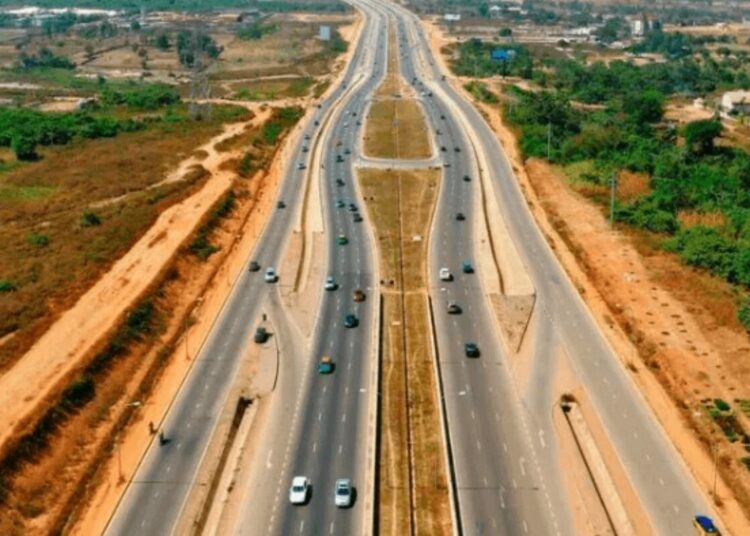
Minister of Works Engr. Dave Umahi has pledged to unlock waterlogged and swampy corridors along the Dangote Refinery route that are hampering cargo evacuation from the Lekki Deep Sea Port, following a hands-on inspection of the ongoing Lekki 7th Axial Road project in Lagos.
The Minister’s visit to the Lekki Corridor underscored the federal government’s recognition of the road as a critical last-mile link for maritime and port logistics — one that, when completed, will ease pressure on existing access roads and strengthen cargo movement from one of Nigeria’s most strategically significant port facilities.
The 7th Axial Road runs behind the Dangote Refinery and connects the Lekki industrial axis to the Sagamu corridor, making it a linchpin for port operations, industrial logistics and national freight movement. It forms part of a wider coastal infrastructure cluster that includes the Coastal Road, Dangote Road and the Lekki Deep Sea Port itself.
Expressing confidence in the project timeline, Umahi directed that roadbed filling works for Project Lot One must be completed by end of April, instructing the project team to ramp up the deployment of manpower, equipment and materials to meet the deadline.
He noted that the 7th Axial Road is designed to complement the broader Lekki corridor infrastructure, with the combined effect of reducing port congestion, improving cargo throughput and positioning the area as a major transportation and industrial hub for Lagos and the wider national economy.
The Minister also stressed the importance of environmental compliance, directing relevant agencies to ensure that construction proceeds without compromising ecological protection in the coastal zone — a concern of particular relevance given the road’s proximity to sensitive swamp and wetland terrain.
The project is being handled by China Harbour Engineering Company Limited (CHEC), the same firm that delivered the Lekki Deep Sea Port. A company representative assured the Minister that resources on site have been scaled up,
Waterways News | www.waterwaysnews.ng
with attention to safety, quality control and environmental standards.
Umahi cited CHEC’s track record on both the Lekki port and the Makurdi–Enugu road reconstruction as grounds for confidence in the firm’s ability to deliver.
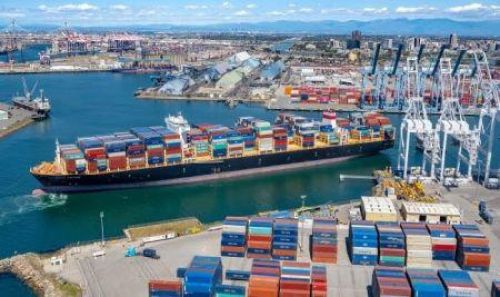
NIGERIA TO LAUNCH $1BN BLUE ECONOMY FUND AT LAGOS SUMMIT IN MARCH
Initiative targets maritime start-ups across shipping, fisheries, and renewable energy as Nigeria bets on the ocean to close its GDP gap
By Okeoghene Onoriobe, Waterways News Correspondent, Abuja
Nigeria is set to launch a $1 billion fund dedicated to supporting start-ups in the blue economy and maritime sectors, with the official unveiling planned for the Blue Economy Investment Summit in Lagos from March 9 to 11, 2026.
The announcement was made on December 15, 2025, in Abuja by Ronke Kosoko, Chief Executive Officer of the Maritime Innovations Hub, during a press conference held alongside the summit’s preparatory activities.
What the Fund Will Do
The fund will provide direct financing to early and growth-stage start-ups operating across key segments of the maritime economy, including shipping, fisheries, coastal tourism, shipbuilding, and marine renewable energy. Beyond capital, it will also deliver training programmes, technical assistance, and access to international networks — addressing what Kosoko described as both the financing and capacity gaps that have long constrained the sector.
“The objective is to provide direct financing to start-ups while strengthening their technical and managerial capacity,” Kosoko said.
The initiative builds on an earlier $100 million financing package secured by Nigeria for maritime training and capacity building. Kosoko confirmed that discussions with financial partners are in their final stages, with fund representatives expected to return to Nigeria shortly to formalise commitments.
A Sector Punching Below Its Weight
The scale of the opportunity — and the frustration behind this push — is captured in a single striking figure. Despite Nigeria boasting one of the longest coastlines in West Africa at over 850 kilometres, and occupying a commanding position along major international shipping routes, the blue economy contributes less than 3% to Nigeria’s gross domestic product.
Kosoko attributed this underperformance to a combination of structural weaknesses: insufficient port infrastructure, a shortage of reliable economic data, and a regulatory environment that has at times discouraged private investors from committing capital to the sector.
The fund, she argued, is designed precisely to break that cycle. With structured financial support, authorities believe the blue economy could help close a portion of Nigeria’s estimated $750 billion GDP gap — converting what are currently informal or underdeveloped maritime activities into tax-generating, job-creating businesses.
Diversification Imperative
The launch comes at a moment when Nigeria’s drive to reduce its dependence on oil revenues has taken on fresh urgency. The federal government has identified the blue economy as a priority sector for long-term economic growth, and this fund represents one of the most concrete financing commitments to that vision to date.
By combining capital, capacity building, and international market exposure in a single vehicle, the fund also aims to make Nigeria a more attractive destination for global maritime investors and industrial partners looking for entry points into West Africa’s largest economy.
IMO Return Adds Credibility
The announcement dovetails with Nigeria’s recent return to the council of the International Maritime Organization after a 14-year absence. In late November 2025, the country was elected to the IMO Council for the 2026 term under Category C, a category reserved for states with specific and significant interests in maritime transport.
Minister of Marine and Blue Economy Adegboyega Oyetola welcomed the election as international recognition of the reforms and security improvements Nigeria has achieved in the Gulf of Guinea. He said the IMO seat is expected to strengthen Nigeria’s international partnerships, improve access to technical assistance, and send a positive signal to investors watching the country’s maritime trajectory.
Together, the IMO election and the upcoming $1 billion fund launch paint a picture of a sector that — after years of unfulfilled potential — may finally be gathering the momentum its geography has long demanded.
The Blue Economy Investment Summit holds in Lagos from March 9 to 11, 2026.
— Waterways News NG | www.waterwaysnews.ng
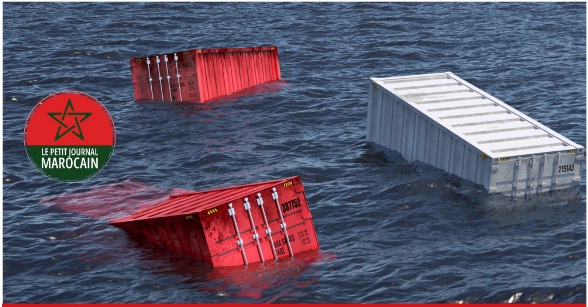
CASABLANCA PORT SHUT DOWN AFTER VESSEL LOSES 85 CONTAINERS — SHIP SERVES NIGERIAN ROUTES
Port authorities in Morocco have suspended all vessel movements at the Port of Casablanca following a container overboard incident involving a ship that regularly calls at Nigerian ports.
Morocco’s National Ports Agency ordered the suspension at approximately 11:00 PM local time on Thursday, February 26, after the containership Ionikos lost an estimated 85 containers into the water near the harbour entrance while departing the port in heavy seas.
As of Friday, operations at one of Africa’s busiest container ports remained halted, with numerous boxes still reported floating in the channel, posing serious navigational hazards.
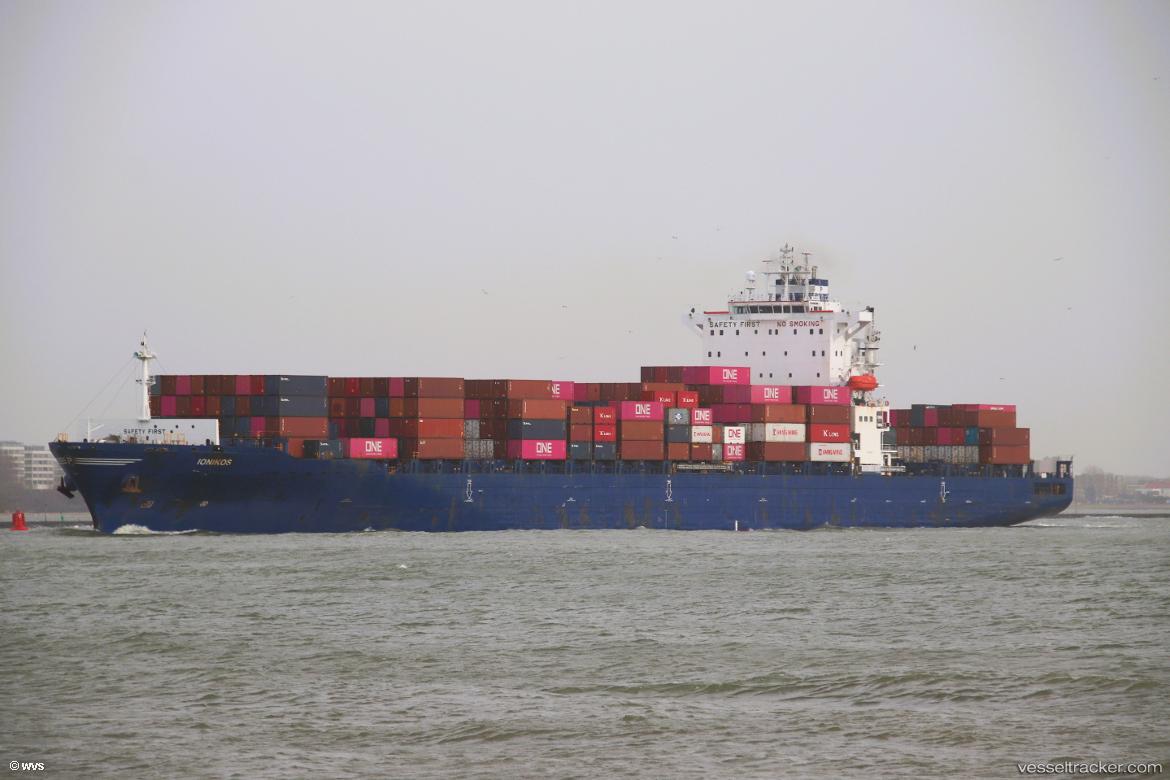
The Ionikos — a 52,427-deadweight-tonne vessel owned by Greek shipping interests and registered under the Liberian flag — is of particular interest to Nigerian shippers and port stakeholders. The ship operates on a service connecting Turkey and the eastern Mediterranean with ports in the Gulf of Guinea, including regular calls at Nigerian terminals and other West African destinations.
According to initial reports, the vessel had completed cargo operations in Casablanca and was bound for Barcelona when it encountered heavy swells on departure. The rough sea conditions caused the ship to roll violently, sending an estimated 85 containers overboard.
The Ionikos, built in 2009, measures 258 metres in length and has a capacity of 4,360 twenty-foot equivalent units (TEU). The vessel is currently anchored approximately six nautical miles offshore as authorities assess the damage and coordinate recovery efforts.
An overnight search and recovery operation was launched involving five vessels from Morocco’s Royal Maritime Gendarmerie and Royal Navy, alongside helicopter aerial support. Officials noted that darkness hampered early efforts to locate and secure the drifting containers. Tugboats have since been stationed near several floating units to prevent further hazards to passing traffic.
Local media in Morocco reported that the lost containers were carrying a range of cargo, including car parts, furniture, and consumer goods. At least one container is reported to have broken open and washed ashore on a nearby beach, where boxes of Nestlé-branded cereal were found scattered.
The incident compounds operational difficulties already affecting the port this winter. Reports indicate that a series of storms and persistent Atlantic swells have disrupted maritime traffic at Casablanca in recent months.
Port authorities said vessel movements would resume only when conditions in the harbour channel are deemed safe for navigation.
The disruption is being monitored closely by Nigerian shipping agents and cargo interests given the vessel’s regular Gulf of Guinea service schedule. Waterways News NG will provide updates as the situation develops.
— Waterways News NG | www.waterwaysnews.ng
-
 Blue Economy2 weeks ago
Nigeria’s Coast Guard Bill: A Solution in Search of a Problem?
-
 News2 weeks ago
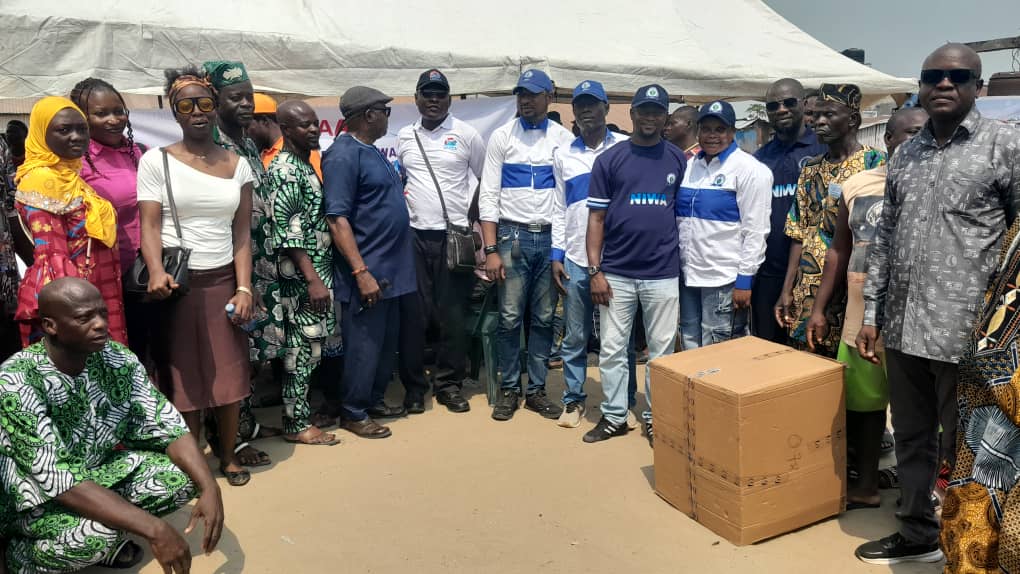
From Awareness to Action: How SWAAADO is Rewriting Nigeria’s Waterways Safety Story
-
 Blog3 weeks ago
SWAAADO Intensifies Waterways Safety Sensitization Campaign to Waterfront Communities in Lagos State.