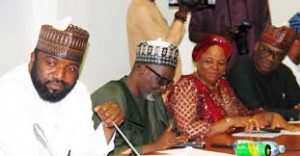
The House of Representatives Ad-hoc Committee on the Rehabilitation and Operationalisation of the Baro Inland Port has commenced a renewed push to bring the long-abandoned inland port back to life.
At the committee’s inaugural meeting held Wednesday in Abuja, Chairman Rep. Saidu Abdullahi described the port as a “sleeping giant,” adding that the time had come to convert decades of unfulfilled promises into meaningful progress.
“This committee is tasked with converting the endless talk over the years into real action,” Abdullahi declared. “Baro Inland Port is a sleeping giant, and our job is to wake it.”
Located in Niger State, the Baro Inland Port was once a critical logistics hub during the colonial era, connecting northern Nigeria’s agricultural exports to the coast via rail and inland waterways. However, years of neglect, driven by a post-independence focus on oil revenues and road-based infrastructure, led to its decline.
Advertisement
Abdullahi emphasized that this neglect has had significant economic and environmental consequences, including pressure on road infrastructure and missed opportunities in multimodal transport development.
Citing global examples like China’s Yangtze River Port (spanning 6,100 kilometers) and the Mississippi River Port system in the U.S. (over 12,000 miles), Abdullahi asserted that Nigeria must now leverage its inland waterways to foster national prosperity.
“Those countries have shown us what is possible. Inland waterways can be the backbone of any nation’s logistics. Nigeria too must rise to the occasion,” he said.
The committee chairman outlined key infrastructure deficits that must be addressed to activate the port: dredging of the capital channel to ensure navigability, rail connectivity between Baro and Minna, and improved access roads for cargo transport. He noted that while the Federal Government had already procured essential operational equipment, the missing links remain these foundational components.
Advertisement
“Our task is to bring the right stakeholders together, identify the bottlenecks, and engineer collaborative solutions to make Baro operational,” Abdullahi said.
He further stressed the importance of diversifying funding sources beyond public budgets. “We can’t rely solely on government allocations. We need private-sector involvement, PPP models, and investment from development finance institutions,” he added.
Abdullahi expressed confidence in the committee’s ability to deliver on its mandate, noting that its members were carefully drawn from across Nigeria’s six geopolitical zones to ensure inclusive planning and execution.
The committee also announced the inauguration of a technical sub-committee to provide expertise and support in delivering its objectives.
Advertisement
Former Deputy Speaker of the House, Idris Wase, who is a member of the committee, underscored the strategic national value of the Baro Port revival, stating that the initiative goes beyond benefiting Niger State alone.
“This is a national project. Its success will impact commerce and connectivity across the entire country,” Wase said.
The lawmakers called on the media to play a proactive role in amplifying public awareness and ensuring accountability throughout the project’s implementation.
“We will be depending on you to give this assignment the visibility it deserves. Let’s revive Baro together—for commerce, for communities, and for the country,” Abdullahi concluded.