Blue Economy
Revamp Nigeria’s Inland Waterways: CVFF Must Fund Standard Boats

Revamp Nigeria’s Inland Waterways: CVFF Must Fund Standard Boats

Nigeria’s inland waterways, a vital artery for transport and trade, urgently need a facelift to boost safety and efficiency. Experts say the Cabotage Vessel Financing Fund (CVFF) should be deployed to acquire standard, modern boats for operators on these routes. Using CVFF to fund such vessels will not only improve passenger safety but also enhance cargo movement, reduce accidents, and stimulate economic growth across riverine communities. Stakeholders urge government and maritime authorities to prioritize this investment, ensuring Nigeria’s waterways match global standards and support sustainable development.
The Case for CVFF-Funded Standard Vessels: Why Nigeria Cannot Afford to Wait
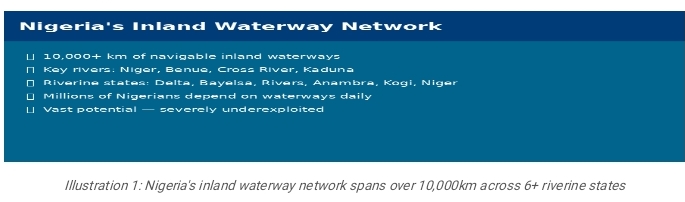

Nigeria is blessed with an estimated 10,000 kilometres of navigable inland waterways, including the Niger and Benue rivers, the Cross River, and a labyrinth of creeks and lakes that cut through some of the country’s most densely populated and economically active regions. Yet, despite this enormous natural endowment, the waterways sector remains one of the most neglected in Nigeria’s transport infrastructure landscape. Rickety wooden canoes, overloaded and poorly maintained ferries, and the near-total absence of life-saving equipment have become the tragic hallmarks of inland water transport in Nigeria. The time to act is now, and the Cabotage Vessel Financing Fund (CVFF) holds the key.


What Is the CVFF and Why Is It Relevant?
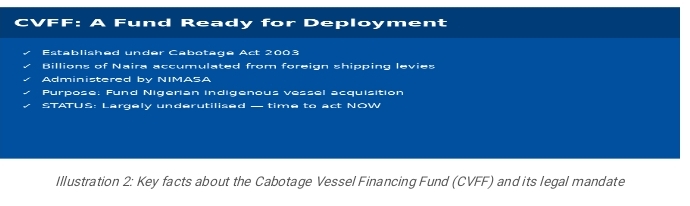

Established under the Coastal and Inland Shipping (Cabotage) Act of 2003, the CVFF was specifically designed to provide financial support to indigenous Nigerian shipowners seeking to acquire, build, or upgrade vessels for use in Nigerian waters. The fund, administered by the Nigerian Maritime Administration and Safety Agency (NIMASA), has accumulated billions of naira in contributions from foreign shipping companies operating in Nigerian waters. Ironically, while the fund sits largely underutilised, Nigerians continue to perish daily in avoidable waterway accidents. Redirecting a meaningful portion of CVFF resources toward the acquisition of standardised ferry boats for inland waterways operators is not only logical — it is a moral imperative.
Safety Crisis Demands Urgent Action
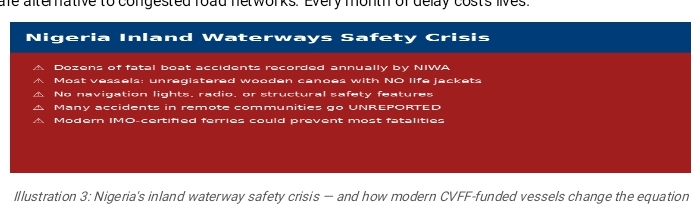
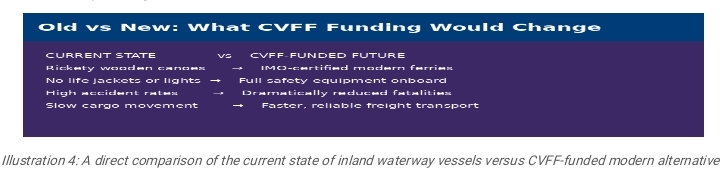
The statistics surrounding inland waterway accidents in Nigeria are deeply troubling. The National Inland Waterways Authority (NIWA) has consistently reported dozens of fatal boat mishaps annually, with many incidents going unrecorded in remote riverine communities. In most cases, the vessels involved are wooden boats with no life jackets, no navigation lights, no radio communication equipment, and no structural integrity to withstand even mild weather conditions. Deploying CVFF funds to procure modern, certified ferry boats — built to International Maritime Organization (IMO) standards — would dramatically reduce fatalities and instil public confidence in water transport as a safe alternative to congested road networks.

Economic Multiplier Effects on Riverine Communities
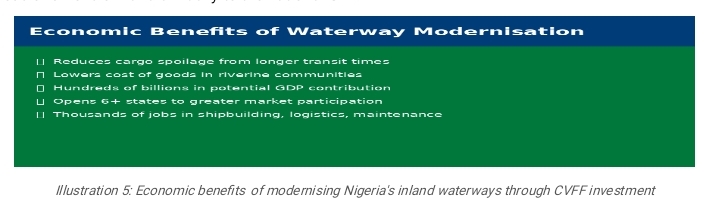
Beyond safety, the economic argument for CVFF-funded vessels is compelling. Millions of Nigerians living in riverine states such as Delta, Bayelsa, Rivers, Anambra, Kogi, Niger, and Cross River depend on waterways not just for daily commuting but for the movement of agricultural produce, fish, timber, and other commodities. The use of substandard boats increases transit times, leads to cargo spoilage, and drives up the cost of goods in these communities. Introducing modern ferry boats with adequate cargo capacity, refrigeration-compatible holds, and faster engines would slash transit times, reduce post-harvest losses, and open these communities to greater market participation. Economists estimate that unlocking inland waterway efficiency in Nigeria could contribute hundreds of billions of naira annually to the national GDP.
Decongestion of Roads and Reducing Carbon Footprint

Nigeria’s road infrastructure is under severe strain. The Lagos-Ibadan Expressway, the East-West Road, and numerous other critical corridors are perpetually gridlocked, costing the economy dearly in lost productivity and fuel consumption. Water transport, by its nature, has a significantly lower carbon footprint per tonne-kilometre compared to road haulage. Investing CVFF funds in standard inland waterway vessels would encourage a modal shift, diverting freight and passengers from overcrowded roads to waterways, thereby easing traffic congestion, reducing road maintenance costs, and contributing to Nigeria’s climate commitments under the Paris Agreement.

Job Creation and Local Capacity Building
The acquisition of standard vessels through the CVFF does not have to be a simple procurement exercise. Done right, it can catalyse an entire ecosystem of economic activity. Nigeria can leverage partnerships with shipbuilding firms — including indigenous yards at Dockyard Apapa and emerging facilities in Port Harcourt — to build or partially assemble these vessels locally. This approach would create thousands of direct and indirect jobs in engineering, fabrication, maritime logistics, and maintenance. Ferry operators trained to handle modern vessels would also gain internationally transferable skills, elevating the professional standards of Nigeria’s waterways workforce.
Tourism and Blue Economy Potential
Nigeria’s rivers, lakes, and creeks are not merely transport corridors — they are untapped tourism goldmines. The scenic beauty of the Niger Delta, the historic significance of the River Niger confluence at Lokoja, and the rich biodiversity of the Oguta Lake and Kainji Lake offer tremendous ecotourism potential that remains largely unexplored. The deployment of modern, comfortable passenger ferries could transform these waterways into tourist attractions, drawing both domestic and international visitors. This aligns directly with Nigeria’s Blue Economy policy agenda, which seeks to harness marine and freshwater resources for sustainable economic development.
Regulatory and Institutional Reforms Must Accompany Funding
Funding alone, however, is not enough. For the CVFF-backed vessel acquisition programme to succeed, it must be accompanied by robust institutional reforms. NIWA and NIMASA must strengthen their enforcement capacity to ensure that all vessels operating on inland waterways meet minimum safety standards. Operators must be mandated to carry adequate life-saving appliances, maintain vessels on scheduled inspection cycles, and obtain proper certification. Jetties and landing points across riverine states must be upgraded to accommodate modern vessels, and channel dredging programmes must be accelerated to ensure year-round navigability. The CVFF investment will only yield its full returns if supported by a well-regulated, professionally managed waterways ecosystem.

A Call to Action
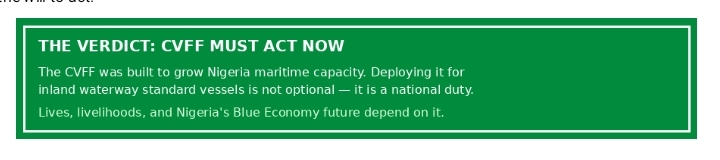
The CVFF was created to grow Nigeria’s indigenous maritime capacity — and there is no more urgent application of that mandate than fixing the country’s dangerously neglected inland waterways. Maritime authorities, the National Assembly, state governments, and the organised private sector must align behind a clear, time-bound programme to deploy CVFF resources for the acquisition and distribution of standard ferry boats across Nigeria’s inland waterway network. The lives of millions of Nigerians who depend on these routes every day demand nothing less. Nigeria’s waterways must become an asset, not a liability — and the CVFF is the most immediate and appropriate tool to make that transformation happen.