
Business
The Presence of Foreign Crew Aboard Our Coastal Vessels: What Must be Done to Enforce the Nigeria Cabotage Law – Part Three and Four

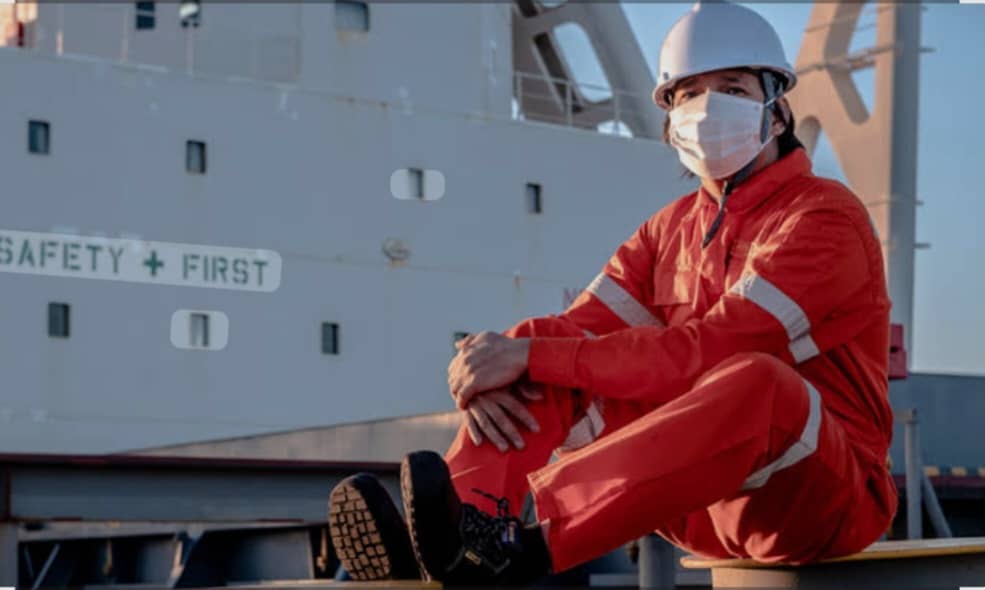

The Presence of Foreign Crew Aboard Our Coastal Vessels: What Must be Done to Enforce the Nigeria Cabotage Law – Part Three and Four
A Comprehensive Special Report on Legislative Intent, Systemic Failures, Human Costs, and the Reform Agenda Nigeria Cannot Afford to Delay. Our four-parts reports ends today, Here is part three and four.
By Oghenewoke Osaweren | Maritime Desk, Waterways News | Friday, March 20, 2026
PART THREE: THE HUMAN COST — UNEMPLOYED NIGERIANS, REPATRIATED BILLIONS

The failure of the Cabotage Act is not merely an abstraction of policy or economics. It has direct, measurable human consequences for the tens of thousands of Nigerian men and women trained for a maritime industry that the law promised to place in their hands.
The social consequences are equally severe as thousands of maritime jobs were lost to expatriates, while local operators remained uncompetitive, and Nigeria’s maritime sovereignty continued to erode. The ripple effects have hindered the growth of related sub-sectors, including shipbuilding, insurance, bunkering, and marine logistics.
The employment of Nigerian seafarers, ship operators, chandlers, and ship managers would increase, as domestic shipping would involve Nigerian-built, owned, crewed, and operated vessels. In the United States, for example, approximately 124,000 people are directly employed in jobs related to cabotage, including 20,000 workers in shipyards and 14,000 involved in fleet maintenance and repair.
Each waiver issued to a foreign vessel for crew is, in effect, a job denied to a Nigerian seafarer. Each crude oil shipment executed by a foreign tanker is income taxable to another nation, freight earnings banked in another economy. The Nigerian Ports Consultative Council (NPCC) estimates that yearly maritime revenue losses exceed $9 billion, while independent industry assessments by professional bodies estimate a yearly loss of approximately $50 billion. Some experts project the broader economic cost, including indirect losses, uncollected taxes, capital flight, and lost investment opportunities, to be as high as $100 billion per year.
The employment case for full cabotage enforcement is not hypothetical. Nigeria generates significant cargo through crude oil exports, agricultural produce, solid minerals, manufactured goods, and large import volumes. Yet foreign shipping lines dominate its seaborne trade, repatriating freight earnings and constraining domestic capital accumulation.
PART FOUR: THE REFORM AGENDA — WHAT MUST BE DONE
Nigeria’s maritime scholars, legal researchers, industry bodies, and regulatory authorities have produced a comprehensive body of recommendations for restoring the Cabotage Act to its intended purpose. Waterwaysnews.ng compiles the most substantive proposals below, drawing from peer-reviewed research, position papers by SEREC, and official government action frameworks.
4.1 LEGISLATIVE REFORM: AMEND THE ACT AND CLOSE THE WAIVER LOOPHOLES
The primacy of legal reform is widely agreed upon. SEREC recommends amending the Cabotage Act to close existing waiver loopholes, enhancing transparency, and implementing stiffer penalties for violations.
Specifically, researchers argue that the waiver provisions under Sections 9 to 11 must be fundamentally restructured. The waiver clauses in the Act, especially Section 9 (Part 3), are argued to no longer be necessary. The best alternative proposed is a ‘harmonised approach’ — requiring the Ministry of Transport and NIMASA to maintain focus and consistency in their actions, with recognition limited to companies that possess the necessary resources and meet the minimum ownership requirements.
Legal scholars further propose that the Act should include independent verification mechanisms for all waiver applications, mandatory timelines for waiver reviews, full public disclosure of all waivers granted, and penalties for fraudulent waiver applications. Without these safeguards, the waiver system will continue to serve as the most convenient instrument for cabotage circumvention.
4.2 ESTABLISH A CABOTAGE COMPLIANCE TRIBUNAL
The enforcement of the Cabotage Act through NIMASA’s general administrative powers has proven insufficient. A specialist adjudicatory body is needed. Establishing a specialised Cabotage Compliance Tribunal is suggested to expedite enforcement and ensure accountability, capable of handling violations swiftly and with credible deterrence.
Such a tribunal would have jurisdiction to hear cabotage violation cases, impose vessel detentions and financial penalties, adjudicate waiver disputes, and order restitution to defrauded Nigerian seafarers and operators. Its independence from political influence would be central to its efficacy.
4.3 MODERNISE AND PROPERLY FUND NIMASA
NIMASA must be modernised with advanced vessel tracking systems to improve inter-agency cooperation among maritime entities.
This encompasses comprehensive Automatic Identification System (AIS) integration, coastal surveillance technology, a centralised vessel compliance database accessible to all enforcement agencies, and mandatory real-time reporting from port operators and oil companies on all vessels operating in Nigerian waters. NIMASA’s enforcement personnel must also be increased and trained to match the scale of the maritime economy they are expected to regulate.
Professional appointments must be ensured to guarantee effective governance and regulation of the maritime sector, with reduced political interference in NIMASA operations.
4.4 FULLY OPERATIONALISE AND PROTECT THE CVFF
The Cabotage Vessel Financing Fund must be allowed to function at the scale it was always intended to reach. The CVFF should be fully operationalised with transparent disbursement and targeted support for fleet expansion.
The recent activation of the CVFF portal is a welcome development but must be followed through with actual disbursements, clear eligibility criteria, strong anti-corruption safeguards, and a pipeline of Nigerian shipping companies ready to acquire vessels. Empirical studies from Nigeria and other emerging markets suggest that the long-term gains depend heavily on credible, time-bound implementation and complementary industrial policy. The CVFF and complementary policies — skills, yards, and finance — must work in concert.
The Fund’s 2% surcharge collection from vessels engaged in coastal trade must also be audited, with all funds accounted for and ring-fenced for the purposes stipulated in the Act.
4.5 INCENTIVISE SHIPBUILDING AND REVITALISE INDIGENOUS SHIPYARDS
No cabotage policy can succeed without an industrial base to support it. Investment in local shipbuilding and seafarer training should be incentivised as part of a broader strategy to reclaim economic sovereignty and restore Nigeria’s maritime dignity.
The United States offers a ready model. The United States was able to accomplish its cabotage goals through various incentives like the Jones Act, Operating Differential Subsidy (ODS), and Capital Construction Fund (CCF), which aided in the development of both its shipbuilding and shipping industries simultaneously.
Nigeria’s accreditation of 27 shipyards in November 2025 represents an encouraging start. What is now required is a sustained programme of government contracts directed at indigenous yards, tax incentives for local vessel construction, and technical partnerships with advanced maritime nations for technology and skill transfer.
4.6 ENFORCE INTER-AGENCY COORDINATION AS A LEGAL OBLIGATION
Priority actions for full cabotage enforcement include improved inter-agency coordination among maritime entities — NIMASA, NPA, NNPCL, NIWA, and Nigeria Customs — as a structured, accountable institutional framework rather than a discretionary arrangement.
This requires formal inter-agency enforcement protocols with legal backing, joint inspection teams for vessels at all Nigerian ports and terminals, shared compliance databases, and mandatory information sharing. The National Policy on Marine and Blue Economy (2025–2034) provides a policy framework within which this coordination can be formalised.
4.7 PRIORITISE SEAFARER TRAINING AND EMPLOYMENT PIPELINES
Even with vessels, the cabotage regime will fail without qualified Nigerian crew. The challenges manifest in the absence of a national fleet or carriers that could provide necessary training and sea-time experience for cadets, officers, and engineers, hindering the achievement of the Act’s manpower development objectives.
Maritime training institutions — particularly the Maritime Academy of Nigeria — must be funded to expand capacity and equipped with modern simulators and practical training facilities. Government-mandated quotas requiring International Oil Companies (IOCs) and shipping operators to employ Nigerian seafarers as a condition of operating in Nigerian waters should be robustly enforced. Oil companies in particular, whose offshore logistics chains remain heavily dominated by foreign crew, must be required to demonstrate cabotage compliance as a condition of their operating licences.
4.8 MANDATE CORPORATE TRANSPARENCY AND ANTI-FRONTING MEASURES
The practice of using Nigerian nationals as nominal fronts for foreign-owned shipping companies — thereby feigning compliance with the Act’s ownership requirements while the beneficial owner and operational control remains foreign — must be systematically addressed. Ambiguity in ownership and build requirements, enabling proxy foreign participation, has been identified as a key factor undermining the Cabotage regime.
Regulatory reforms should include mandatory beneficial ownership disclosure for all vessels on the Nigerian ship register, independent verification of ownership claims at the point of registration, and criminal liability for directors of companies found to be fronting for foreign interests.
4.9 DECLARE POLITICAL WILL AS POLICY IMPERATIVE
Ultimately, no institutional reform will succeed without the sustained engagement of the highest levels of the Nigerian government. “Political will remains the most decisive factor in rescuing the Cabotage regime from perpetual stagnation. Nigeria must consciously prioritise its maritime economic sovereignty — not as a slogan, but as a policy imperative tied to national growth and security.”
SEREC has pointed to Nigeria’s National Policy on Marine and Blue Economy (2025–2034) as a comprehensive framework, stressing that the key challenge lies in effective, coordinated, and accountable implementation. Significant maritime-derived revenues already exist but remain fragmented and under-optimised due to weak coordination and enforcement.
The potential reward for sustained political commitment is enormous. The maritime and blue economy sector could generate up to ₦70 trillion in revenue with improved governance and regulation — capturing gains from trade expansion, logistics efficiency, port productivity, inland waterways utilisation, cabotage enforcement, offshore maritime services and related blue-economy industries.
CONCLUSION: BETWEEN VISION AND REALITY, A NATION’S CHOICE
The Nigeria Cabotage Act of 2003 was not poorly conceived. It was a visionary law that correctly diagnosed the structural disadvantage of Nigerian maritime operators and correctly prescribed the remedy: legal protection, financial support, workforce development, and industrial investment. The tragedy is not the law itself — it is the distance between what the law demands and what the state has delivered.
“The Cabotage Act remains one of Nigeria’s most visionary maritime policies but continues to suffer from poor execution and lack of accountability,” SEREC has emphasised.
Foreign nationals continue to be found aboard coastal vessels — some legitimately under approved waivers, some through systemic circumvention of the law, and some through outright smuggling via neighbouring states. Each foreign seafarer taking a berth that a Nigerian seafarer could fill represents not just a regulatory failure but a direct cost to a family, a community, and a national economy that can no longer afford such losses.
The reforms required are not unknown. They are well documented, widely agreed upon, and already partially initiated. What is missing is not strategy — it is sustained, accountable follow-through. For Nigeria’s maritime future to match its maritime geography, the gap between those two must be closed with urgency, transparency, and irreversible political commitment.
Waterwaysnews.ng Maritime Desk | Monday, March 16, 2026
> EDITORIAL NOTE: This report draws exclusively on publicly available academic research, official government statements, regulatory publications, position papers from recognised maritime research bodies, and verified industry analysis. It does not make allegations against any individual, company, or foreign government, and is published in the public interest to contribute to informed policy discourse on Nigeria’s maritime sector.
© 2026 Waterwaysnews.ng. All rights reserved. Reproduction without permission is prohibited.


Business
NIMASA to Launch Mandatory Registration Portal to Curb Foreign Takeover of Nigerian Shipping Agents Business

NIMASA to Launch Mandatory Registration Portal to Curb Foreign Takeover of Nigerian Shipping Agents Business
By Okeoghene Onoriobe, Waterways News Correspondent, Lagos
The Nigerian Maritime Administration and Safety Agency (NIMASA) has announced plans to establish a dedicated Shipping Business and Registration Unit at the Federal Ministry of Marine and Blue Economy, as part of measures to end the growing foreign encroachment into shipping agency operations — a sector long reserved for Nigerian indigenes.
NIMASA Director-General, Dr. Dayo Mobereola, disclosed this during a stakeholders’ engagement meeting organised by the Ministry in Lagos on Thursday.
Dr. Mobereola said the agency had observed with grave concern the increasing penetration of foreigners into aspects of ports and shipping business that are exclusively meant for Nigerian operators, including shipping agency and freight forwarding services — sectors where indigenous practitioners have long raised alarm.
“We need to establish a mandatory registration and licensing portal for Nigerian shipping agents. They would be the only ones with the rights to operate in the Nigerian shipping industry,” the NIMASA boss declared.
He added that the agency had also uncovered a troubling pattern where foreign nationals were registering companies through Nigerian fronts to circumvent existing rules.
“We noticed that these foreigners are registering companies with the assistance of Nigerians. The purpose here is to eliminate such acts and help us develop the Nigerian shipping sector — most importantly the shipping agents sector — to make it more economically friendly and create jobs for Nigerians,” he said.
Dr. Mobereola confirmed that the new department would be established soon, pending approval from the Honourable Minister of Marine and Blue Economy.
The proposed unit is expected to bring structure and legal clarity to a space that industry stakeholders say has been undermined for years by the activities of foreign interests — often operating covertly through proxy arrangements with local collaborators.
Waterways News gathered that the move has been broadly welcomed by indigenous shipping practitioners who have consistently called on regulatory authorities to enforce indigenisation policies in the maritime sector.
Waterways News — Nigeria’s Foremost Maritime Industry Publication | www.waterwaysnews.ng

NPA BOSS: PORT CONCESSION RENEWALS DELAYED FOR THOROUGH REVIEW, NOT NEGLIGENCE
Dantsoho says flawed agreements could create bigger problems; urges ICD operators to adapt to changing market realities
By Okeoghene Onoriobe | Waterways News Correspondent, Lagos
The Nigerian Ports Authority (NPA) has broken its silence on the prolonged delay in renewing seaport concession agreements, attributing the hold-up to an ongoing comprehensive review designed to strengthen contractual frameworks and shore up investor confidence.
Speaking to maritime journalists in Lagos, NPA Managing Director Abubakar Dantsoho said the Federal Government is deliberately prioritising the correction of structural deficiencies in existing agreements before any renewals are approved — a signal that the administration is unwilling to repeat the contractual pitfalls that have dogged Nigeria’s port sector for nearly two decades.
Background: Contracts Running Out
Nigeria’s seaports were handed over to private terminal operators in 2006 under the administration of former President Olusegun Obasanjo, with concession agreements ranging between 10 and 25 years. With many of those contracts now expired or expiring, uncertainty has deepened across the terminal operating community, with concessionaires growing increasingly anxious over the absence of fresh agreements.
“Get It Right” — Dantsoho
Dantsoho acknowledged the frustrations of terminal operators but held firm that quality must take precedence over speed. Both the NPA and concessionaires, he said, have identified unmet obligations on various sides — issues that must be resolved upfront to prevent costly disputes down the line.
“The focus is to get it right. A flawed agreement could create bigger problems later, while a well-structured one will provide long-term stability,” the NPA chief stated.
He also pushed back against the notion that slow processing undermines investor appeal, arguing that serious investors value legal clarity and contractual certainty far more than the pace of execution. A rigorous review, he noted, could even attract fresh investors should any existing operators choose not to renew.
ICD Operators Told to Restrategise
On the question of inland container depots (ICDs) and bonded terminals, Dantsoho issued a pointed advisory: adapt or risk irrelevance. He noted that while such facilities were critical pressure valves during periods of severe port congestion, the progressive easing of gridlock at Nigeria’s major ports has begun to erode the commercial rationale for their current operating models. Operators, he warned, must restrategise to remain competitive in a shifting maritime landscape.
NIGERIA WATCH: What this means for terminal operators, freight forwarders, and port stakeholders
The NPA’s position on concession renewals has far-reaching implications for virtually every layer of Nigeria’s maritime supply chain.
For terminal operators at Apapa, Tin Can Island, and the emerging Lekki Deep Sea Port, the delay introduces commercial uncertainty — investment decisions on equipment, berth upgrades, and staffing are difficult to commit to without clarity on tenure. Some operators are believed to be operating on tacit month-to-month arrangements, a situation that discourages capital expenditure.
For freight forwarders and shippers, stability of terminal operations directly affects cargo handling efficiency, tariff predictability, and turnaround times. Protracted uncertainty at the operator level has a downstream effect on the cost of doing business through Nigerian ports.
The NPA’s hint that new investors could enter if existing concessionaires step aside is significant. It opens the door to fresh capital and potentially more competitive terminal management — but only if the review produces the legally watertight agreements Dantsoho is promising.
On ICDs and bonded terminals, the warning is clear: the congestion-driven business model of the past is fading. As the NPA and the Nigerian Shippers’ Council (NSC) continue to push efficiency reforms, facilities that once thrived on cargo diversion and storage overflow must find new value propositions — whether in last-mile logistics, warehousing, or value-added trade facilitation services.
The Federal Ministry of Marine and Blue Economy and NIMASA will also be watching closely, as the outcome of the concession review will set the template for how Nigeria manages its blue economy assets going forward — and whether the country can finally position its ports as competitive gateways in the West African sub-region.
NSW Opens Apapa Support Centre as Digital Trade Platform Goes Live
By Emetena Ikuku, Waterways News Correspondent
LAGOS — The management of Nigeria’s National Single Window (NSW) has established a dedicated stakeholder support centre at 34 Wharf Road, Apapa, following the go-live of the country’s long-awaited digital trade facilitation platform last Friday.
The NSW platform — a Federal Government initiative to consolidate all port-related documentation and regulatory processes into a single digital environment — launched formally earlier in the week before transitioning to full commercial operations days later, marking a significant shift from pilot-phase testing to live deployment.
Support Centre Targets Smooth Onboarding
The Apapa facility is designed to assist port operators, freight forwarders, customs agents and other stakeholders encountering difficulties navigating the new system. Its location on Wharf Road, at the heart of Nigeria’s busiest port corridor, is intended to ensure ease of access for users operating within the Apapa axis.
Beyond physical walk-in support, the NSW management has activated a multi-channel helpdesk offering assistance via telephone, WhatsApp and email to address operational issues and resolve platform inquiries.
Management urged stakeholders to utilise the available support services, noting that effective onboarding is central to realising the platform’s full trade facilitation potential.
Platform Aims to Cut Cargo Dwell Time
The NSW is engineered to eliminate manual documentation bottlenecks by integrating all port clearance, regulatory and compliance processes under one digital roof. Authorities say full deployment is expected to reduce the cost of doing business at Nigerian ports and accelerate cargo throughput — objectives that have long ranked among the priorities of the Federal Ministry of Marine and Blue Economy.
Nigeria Watch
The go-live of the National Single Window carries direct implications for operators across the Nigerian port ecosystem. At Apapa and Tin Can Island — where manual documentation cycles and fragmented agency interactions have historically inflated cargo dwell times — the platform’s ability to centralise clearance processes could offer meaningful efficiency gains for importers, freight forwarders and terminal operators alike.
For the Nigerian Ports Authority (NPA) and the Nigerian Shippers’ Council (NSC), seamless NSW adoption among port users will be a key indicator of whether the digital trade agenda translates into measurable reductions in port congestion and logistics costs. NIMASA, whose regulatory mandate intersects with vessel and cargo documentation, will also have a stake in the platform’s integration architecture.
Freight forwarding associations and licensed customs agents — many of whom remain accustomed to manual and semi-manual clearance pathways — will likely represent the largest onboarding challenge. The placement of the support centre on Wharf Road, rather than at a government ministry or agency complex, signals a deliberate effort to meet practitioners where they operate.
The NSW’s full commercialisation also arrives against the backdrop of broader port reform efforts, including ongoing concession reviews and the Federal Government’s push to position Nigerian ports as competitive West African trade hubs. Whether the platform achieves critical mass adoption in its early weeks will depend heavily on the responsiveness of the helpdesk infrastructure now being put to the test.
Waterways News | Lagos
-

 Oil and Gas4 weeks ago
Tantita’s Pipeline Deal: $144m Contract, Rising Output, and the Questions that Deserve Answers
-
 Blue Economy2 months ago
Nigeria’s Coast Guard Bill: A Solution in Search of a Problem?
-
 Business1 month ago
CASABLANCA PORT SHUT DOWN AFTER VESSEL LOSES 85 CONTAINERS — SHIP SERVES NIGERIAN ROUTES