
Security & Safety
Understanding the Scope of Piracy in the Gulf of Guinea

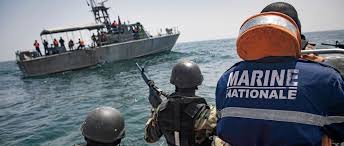

The Gulf of Guinea has emerged as one of the world’s most dangerous maritime regions, with piracy and armed robbery at sea posing significant threats to global shipping, regional economies, and seafarer safety. Stretching from Senegal to Angola along Africa’s western coastline, this vital maritime corridor has experienced a troubling evolution in pirate tactics and operations over the past decade.
The Shifting Epicenter of Maritime Crime
While Somalia dominated global piracy headlines in the early 2000s, the Gulf of Guinea has since become the primary hotspot for maritime crime in Africa. According to the International Maritime Bureau (IMB), the region accounted for approximately 43% of all reported piracy incidents globally in 2023, with particular concentration in waters off Nigeria, Benin, Togo, and Ghana.
Unlike Somali piracy, which typically occurred far offshore, Gulf of Guinea attacks often take place within territorial waters and exclusive economic zones, complicating international response efforts. The proximity to shore allows pirates to launch rapid attacks from coastal hideouts and quickly retreat with stolen cargo or kidnapped crew members.
Evolution of Tactics
Piracy in the Gulf of Guinea has evolved from opportunistic theft to sophisticated operations involving kidnapping for ransom. Modern pirates in the region employ increasingly violent methods and advanced equipment, including high-speed boats, automatic weapons, and satellite communication systems.

Most concerning is the shift toward crew kidnappings rather than vessel hijacking. Pirates now frequently board vessels, identify high-value crew members (particularly Western nationals), and retreat to shore with hostages for ransom negotiations that can last months. This change in tactics has reduced pirates’ operational risks while maintaining profitable outcomes.
Economic and Human Impact
The financial costs of Gulf of Guinea piracy are staggering. The United Nations Office on Drugs and Crime estimates annual direct and indirect losses exceeding $2 billion. These include:
- Ransom payments averaging $300,000-$500,000 per incident
- Increased insurance premiums for vessels transiting the region
- Security equipment and personnel costs
- Rerouting expenses
- Delayed cargo deliveries
- Lost productivity during hostage situations
Beyond financial metrics lies the profound human cost. Kidnapped seafarers often endure traumatic experiences during captivity, with psychological effects that can persist long after release. This threat has created a recruitment crisis for vessels operating in the region, with many experienced seafarers refusing assignments in Gulf of Guinea waters.
Regional Responses and Challenges
Regional governments have recognized the severity of the threat, resulting in initiatives like the Yaoundé Code of Conduct, which established a framework for maritime security cooperation among Gulf of Guinea nations. Nigeria’s Deep Blue Project has introduced dedicated maritime security assets, including patrol vessels and aircraft.
However, effective piracy suppression remains challenging due to:
- Limited naval and coast guard capabilities in affected nations
- Jurisdictional ambiguities in international waters
- Weak prosecutorial frameworks for apprehended pirates
- Corruption within maritime security structures
- Underlying socioeconomic factors driving piracy recruitment
International Engagement
The international community has responded through initiatives like the G7++ Friends of the Gulf of Guinea and EU-led maritime capacity building programs. International naval forces, including those from European nations, have increased their presence, though without the unified multinational command structure that helped combat Somali piracy.
Shipping companies have adapted by implementing Best Management Practices specific to the Gulf of Guinea, including enhanced lookout procedures, hardened citadels for crew refuge during attacks, and in many cases, embarked private maritime security personnel.
Future Outlook
While reported incidents showed modest decline in early 2024, security analysts caution against premature optimism. The piracy ecosystem in the Gulf of Guinea has demonstrated remarkable resilience and adaptability. Long-term suppression will require addressing root causes, including coastal poverty, youth unemployment, and weak governance in maritime sectors.
Until comprehensive solutions materialize, the Gulf of Guinea will likely remain a challenging environment for global shipping, requiring vigilance from vessels transiting the region and sustained commitment from regional and international stakeholders to maritime security.


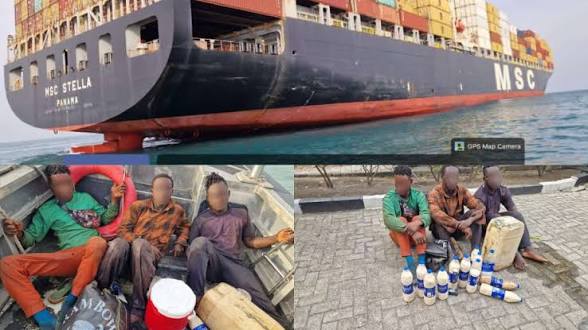
Navy Nabs Three Stowaways Aboard Merchant Vessel Off Lagos Coast
By Okeoghene Onoriobe | Waterways News Reporter | April 21, 2026
The Nigerian Navy has apprehended three suspected stowaways found concealed aboard the merchant vessel MSC STELLA (IMO No. 9279988) in waters off the Lagos Fairway Buoy, in what authorities say reflects the service’s intensified drive to secure Nigeria’s maritime corridors and combat irregular migration by sea.
The interception was confirmed in an official statement released Monday in Abuja by the Director of Naval Information, Navy Captain Abiodun Folorunsho.
According to Folorunsho, the operation was executed by personnel of Nigerian Navy Ship (NNS) BEECROFT, acting on credible intelligence received from the Western Regional Control Centre (WRCC) at approximately 5:05 pm on April 19. A Quick Response Team deployed from Tarkwa Bay successfully intercepted the suspects roughly five nautical miles off the Lagos coastline.
Preliminary investigations indicate the trio illegally boarded the vessel in the early hours of April 17 — around 1:00 am — while the ship was berthed at Tin Can Island Port, Lagos. The suspects have been identified as Aguru Michael, 27, a Benin Republic national; Soye Monday, 25, from Ondo State; and Kentobou Peter, 22, from Delta State. All three were reportedly attempting to reach Europe.
The naval spokesperson noted that the operation once again demonstrates the Nigerian Navy’s resolve to protect lives at sea and disrupt illegal migration through Nigeria’s waterways. He pointed to a string of recent search-and-rescue successes, including the rescue of seven people following a maritime collision in Bayelsa State, and the interception of three foreign stowaways aboard MT ANATOLIA just last month in March 2026.
The three suspects are currently being held at NNS BEECROFT and are undergoing investigation and administrative processing in accordance with applicable laws.
The Nigerian Navy reiterated its unwavering commitment to maritime safety, security, and continuous surveillance of Nigeria’s territorial waters.
Waterways News | Covering Nigeria’s Maritime Domain
EFCC, Customs Close Ranks to Choke Off Smuggling and Money Laundering at Nigeria’s Borders
By Okeoghene Onoriobe, Waterways News, Lagos April 15, 2026
The Economic and Financial Crimes Commission (EFCC) has thrown its weight behind its growing partnership with the Nigeria Customs Service (NCS), signalling that the two agencies are tightening their joint grip on smuggling networks and financial crime operations feeding off Nigeria’s trade corridors.
Speaking during a high-level engagement in Kano, EFCC Acting Zonal Director Friday Ebelo said the collaboration is already yielding tangible results — illicit goods intercepted, funds recovered and high-profile suspects arrested. He credited the gains to a deliberate effort by both agencies to understand each other’s operational mandates and align their enforcement strategies.
“No single agency can combat cross-border crime alone,” Ebelo said, stressing that intelligence sharing and joint enforcement are essential to protecting national revenue and disrupting the financial networks that sustain organised criminal groups.
The visit was led by the Commandant of the Nigeria Customs Command and Staff College, Gaura, who brought students for an immersive look at how the EFCC conducts its operations. Gaura commended the Commission’s transparency and operational efficiency, noting that modern Customs work has long outgrown the border post — it now demands intelligence-led financial investigation skills that are built through exactly this kind of interagency exposure.
The engagement covered a lecture on interagency cooperation, interactive sessions on intelligence sharing and joint investigations, and a focused discussion on managing seized assets connected to currency smuggling and financial crimes.
For a country whose ports and waterways remain entry points for contraband — from petroleum products and narcotics to foreign currencies — the deepening of this EFCC-Customs alliance carries direct implications for maritime enforcement. Smuggling routes that exploit Nigeria’s coastline and inland waterways often rely on the same financial infrastructure that both agencies are now working to dismantle together.
Waterways News | waterwaysnews.ng
News
CUSTOMS BUSTS N1BN DRUG HAUL: Over One Million Tramadol Tablets, 10,000 Codeine Bottles Seized on Benin Highway


CUSTOMS BUSTS N1BN DRUG HAUL: Over One Million Tramadol Tablets, 10,000 Codeine Bottles Seized on Benin Highway
By Ighoyota Enaibre
Operatives of the Nigeria Customs Service Federal Operations Unit (FOU) Zone C, Owerri, have dealt a major blow to drug traffickers after intercepting a staggering consignment of illicit narcotics with a Duty Paid Value of over N1 billion along the Okada/Ofosu Expressway in Benin City, Edo State.
The bust, one of the largest single drug seizures recorded by the unit, yielded 1,025,000 tablets of Tramadol and 10,000 bottles of Barcadin Codeine Syrup (100ml each) — all smuggled inside a truck and cleverly concealed among legitimate goods to dodge detection.
Comptroller Bishir Balogun, who announced the seizure, confirmed that the operation was executed on March 15, 2026, driven by strategic intelligence and coordinated enforcement action.
When customs operatives flagged down the vehicle, the driver made a desperate bid to escape — briefly pulling over before abandoning the truck entirely and fleeing on foot into nearby bushland. A thorough search of the truck uncovered the drugs hidden within the cargo.
The total Duty Paid Value (DPV) of the seized consignment stands at N1,056,000,000.
Balogun stressed that the haul reflects the Service’s firm resolve to choke off the supply of controlled substances fuelling drug addiction and violent crime across Nigeria.
“Smugglers and criminal networks should know that the Nigeria Customs Service will not relent. We will continue to deploy intelligence-led strategies to protect public health and national security,” he warned.
The consignment remains in custody as investigations continue to track down and prosecute those behind the operation.
-

 Oil and Gas2 months ago
Tantita’s Pipeline Deal: $144m Contract, Rising Output, and the Questions that Deserve Answers
-
 Blue Economy2 months ago
Nigeria’s Coast Guard Bill: A Solution in Search of a Problem?
-
 MARITIME TRADE & SHIPPING2 months ago
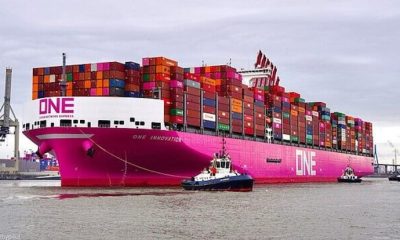
World’s Largest Container Ship Sets New Maritime Record with 22,233 TEUs on Single Voyage