Business
US-China Trade War Analysis: Beijing’s Strategic Advantage in the New Economic Confrontation

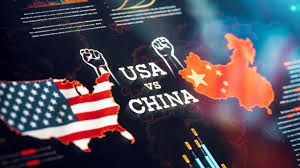
The current economic tensions between Washington and Beijing demonstrate remarkable parallels to their 2018 confrontation, though critical differences suggest China may be better positioned this time around. The revival of trade hostilities initiated by President Donald Trump’s April 2 tariff announcement has rapidly escalated into a high-stakes economic standoff with significant implications for global markets.
Retaliatory Patterns and Escalation Dynamics
When President Trump implemented his initial 34% tariff increase on Chinese imports (which were already subject to 20% duties), Beijing’s response was swift and measured. Unlike other nations that opted for caution and negotiation, China immediately announced countermeasures, demonstrating its willingness to engage directly in economic conflict. This pattern of reciprocal trade barriers has accelerated dramatically in recent days.
The situation intensified Wednesday when Trump’s 104% duties on Chinese products took effect. China’s Ministry of Commerce responded with a comprehensive policy statement vowing to “fight to the end” if necessary. The Trump administration subsequently raised the stakes dramatically by:
- Announcing a 90-day pause on reciprocal tariffs for all countries except China
- Setting a baseline 10% tariff globally
- Escalating China-specific duties to an unprecedented 125%
Trump justified this exceptional treatment, stating it reflected “the lack of respect that China has shown to the World’s Markets.” He highlighted that over 75 countries had approached his administration to negotiate rather than impose retaliatory measures.


Beijing’s Strengthened Position: A Comparative Analysis
Despite superficial similarities to the 2018 trade war, economic analysts identify fundamental differences in the current landscape that potentially favor China’s strategic position:
Enhanced Trade Diversification
“China’s export reliance on the United States has been reduced significantly,” explains Xin Sun, Chinese economy specialist at King’s College London. “Back in 2018, exports to the US accounted for around 20 percent of China’s total exports. Now that figure has decreased to around 14 percent.”


Johannes Petry from Goethe University Frankfurt notes a critical shift: “China’s trade with Global South countries has actually overtaken its trade with the G7. Compared to ten years ago, they’re not as sensitive anymore to US tariffs.”
Greater Economic Policy Flexibility
Despite China’s current growth challenges—barely meeting its 5% target for 2024—the government maintains substantial economic policy options. “The Chinese government has a lot of fiscal and monetary room to maneuver,” Petry explains. “They can go down with interest rates. They can spend more money. The central government can issue more debt.”
This contrasts with the US position, where federal deficit levels have increased from approximately 4% in 2018 to over 6% in 2024, potentially constraining Washington’s response options in the event of economic downturn.
Strategic Resource Leverage
China retains powerful leverage through its control of critical materials. “China can impose export controls over a wider range of rare earths,” notes Xin. “Currently China only imposes bans on rare earths for certain elements, but not all of them. If tariffs escalate even further, it’s a possibility that China could apply export controls over a wider range of rare earths.”

Unilateral Approach Weakens U.S. Position
A significant strategic disadvantage for the United States emerges from Trump’s decision to impose tariffs broadly rather than building a coalition specifically targeting China. Marc Lanteigne from The Arctic University of Norway observes: “Had Trump not also placed tariffs on, for example, the European Union, Japan and Korea, he probably could have convinced these countries to link resources and put even more pressure on China.”
This unilateral approach potentially isolates the United States rather than China in the global economic arena. Beijing appears to have calculated this advantage in its rapid and forceful response—sending what Xin describes as “a strong signal to everybody else that there is no tolerance from China about this kind of trade barriers and tariffs.”
Outlook and Strategic Implications
The economic confrontation occurs as China navigates a delicate economic transition, attempting to pivot “away from infrastructure spending and housing and real estate, and moving more into technology,” according to Petry. This period of vulnerability creates both challenges and motivation for Chinese authorities to minimize economic disruption.
For business leaders and investors, the rapidly escalating tariff environment necessitates heightened attention to supply chain resilience and market diversification. The absence of moderating influences in the current Trump administration—unlike the “adults in the room” present during his first term—suggests this trade confrontation may follow more unpredictable patterns than its 2018 predecessor.
With China better prepared and the United States potentially more constrained, this renewed trade conflict appears to be unfolding in an environment that may ultimately prove more favorable to Beijing’s strategic interests.