Maritime Labour and Trade Union
WABOTAN Reaffirms Commitment to Payment of Maritime Workers’ Union Dues, Calls for Collaborative Approach to ensure Waterways Safety

WABOTAN Reaffirms Commitment to Payment of Maritime Workers’ Union Dues, Calls for Collaborative Approach to ensure Waterways Safety
Boat owners association pledges continued remittance of workers’ union dues while advocating for enhanced safety measures on Nigeria’s inland waterways
The Waterfront Boat Owners and Transporters Association of Nigeria (WABOTAN) has reaffirmed its commitment to remitting boat workers’ union check-off dues to the Maritime Workers Union of Nigeria, while calling for a comprehensive approach to addressing safety challenges on the nation’s inland waterways.
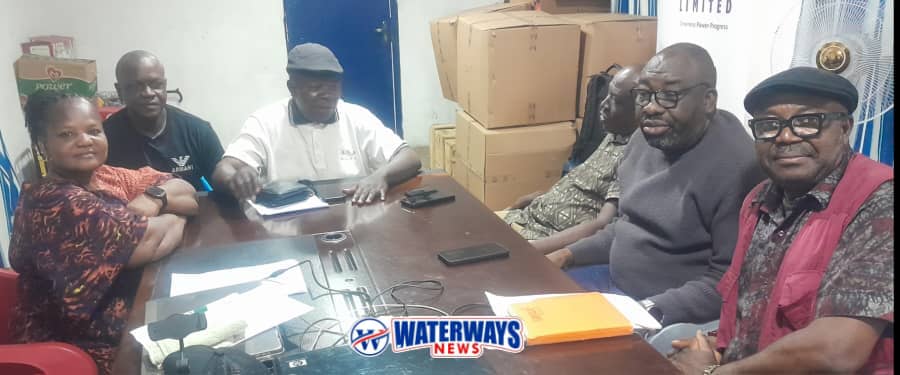
The commitment was reiterated during a strategic meeting held on August 14, 2025, at WABOTAN’s national secretariat, bringing together the association’s Think-Tank committee and representatives from the Lagos Commercial Private Boat District of the Maritime Workers Union of Nigeria.


Speaking at the meeting, WABOTAN National President Mr. Babatope Fajemirokun emphasized the urgent need for collective action in addressing waterways safety challenges.
“It’s time to set the records straight in the Nigerian inland waterways of the nation,” Fajemirokun stated. “In the midst of these boat mishaps happening all around our waterways, there should be a point where we all take the necessary steps to ensure safety on our waterways.”
The meeting represents a continuation of collaborative efforts that began in May 2025, when WABOTAN’s National Executive Council paid a courtesy visit to the Maritime Workers Union of Nigeria’s national secretariat for discussions with President General Comrade Francis Bunu and other national executives.

The association’s renewed commitment comes as the federal government implements recommendations from a special committee on boat accidents established by the Honourable Minister of Marine and Blue Economy.
“On the submission of the committee report, the federal government is playing their part in curbing this ugly trend on the nation’s waterways, and the private sector must also play their roles,” Fajemirokun explained.
The WABOTAN president stressed that while associations advocate for reduced operational costs, equal attention must be paid to workers’ welfare, highlighting the crucial role of workers’ unions as the voice of maritime workers.
Fajemirokun outlined a vision for enhanced collaboration between three key stakeholders: regulatory agencies, private sector operators, and workers’ unions.
“We must jointly collaborate with the regulatory agencies, the private sector, and our workers’ union, who are the voices of the workers, to secure the waterways,” he emphasized.
A significant portion of the discussion focused on the critical need for continuous training and retraining of boat workers, with particular emphasis on making essential licensing and certifications more accessible and affordable. Fajemirokun called on the Managing Director of the Nigerian Inland Waterways Authority (NIWA) to establish a tripartite committee comprising the authority, operators, and the Maritime Workers Union of Nigeria.
This proposed committee would specifically address training and retraining programs for inland waterways boat workers, including the development of affordable certification pathways that would not burden operators with excessive costs while ensuring proper skill development.
“We cannot compromise on safety, but we also recognize that expensive licensing requirements can create barriers for our workers and small-scale operators,” Fajemirokun noted. “We need certification programs that are both comprehensive and economically viable for our maritime workforce.”
The focus on affordable licensing and certification represents a recognition that safety improvements must be economically sustainable for the predominantly small-scale operators who dominate Nigeria’s inland waterways sector.
“When we make professional development affordable and accessible, we create a culture of continuous improvement that benefits everyone – workers, operators, passengers, and the entire maritime industry,” Fajemirokun emphasized.
This proposed approach to training and certification represents a proactive strategy to prevent accidents through improved human capacity while ensuring that cost considerations do not become barriers to professional development in the maritime sector.
The meeting and subsequent commitments signal a maturing approach to waterways management in Nigeria, where stakeholders are moving beyond individual interests toward collective responsibility for safety and operational excellence.
The collaboration between WABOTAN and the Maritime Workers Union of Nigeria demonstrates recognition that sustainable waterways operations require balancing business interests with worker welfare and safety standards, while ensuring that professional development opportunities remain within reach of the maritime workforce. As Nigeria continues to develop its blue economy potential, such partnerships between operators, unions, and regulatory bodies may serve as a model for other maritime sectors seeking to enhance safety while maintaining operational viability through affordable and accessible professional development programs.