
MARITIME TRADE & SHIPPING
Russia, China Veto UN Resolution on Strait of Hormuz as Trump Deadline Looms


Russia, China Veto UN Resolution on Strait of Hormuz as Trump Deadline Looms

By Emetena Ikuku, Waterways News Correspondent
The United Nations Security Council on Tuesday failed to secure the Strait of Hormuz after Russia and China vetoed a resolution that sought to guarantee the safety and reopening of the critical waterway, deepening a maritime crisis that now directly threatens Nigeria’s crude oil export revenues and global energy supply chains.
The resolution, tabled by Bahrain, drew 11 votes in favour before being struck down by the two permanent members. Pakistan and Colombia chose to abstain.
The proposed measure had called for the protection of commercial shipping lanes through the strategically vital passage, urged coordinated defensive action by states dependent on the route, and demanded that Iran immediately halt attacks on merchant vessels and end its interference with freedom of navigation. Earlier drafts had reportedly contained language that could have authorised the use of force to secure the waterway, but those provisions were significantly diluted in a last-minute bid to prevent a veto — an effort that ultimately proved unsuccessful.

Reacting sharply to the outcome, U.S. Ambassador Mike Waltz accused Moscow and Beijing of choosing Iran over the stability of global trade. “No one should tolerate holding the global economy at risk, but today Russia and China did,” he warned, adding that the council’s failure to act sends a dangerous signal about threats to international waterways. Bahrain’s Foreign Minister, Abdullatif bin Rashid Al Zayani, echoed that sentiment, cautioning that the Security Council’s inaction weakens the broader multilateral framework for maritime security.
Iran’s Ambassador to the UN, Amir Saeid Iravani, pushed back, arguing that the resolution would have handed Washington and its allies legal cover for what he described as unlawful conduct in the region.
The vote came as Washington intensified pressure on Tehran over its conduct in the Gulf. President Donald Trump set a deadline of 8 p.m. Eastern Time on Tuesday, warning of potential strikes against critical infrastructure — including power plants and bridges — if Iran did not comply with demands to reopen the strait. White House Press Secretary Karoline Leavitt declined to spell out the next steps, saying only the president knows what action follows as the clock runs down.
The Strait of Hormuz, which connects the Persian Gulf to the Gulf of Oman, remains one of the world’s most consequential maritime chokepoints. Analysts estimate that roughly 20 to 21 percent of global oil trade transits the waterway daily, making any sustained disruption a direct threat to energy markets worldwide — and to Nigeria, which competes for buyers in the same markets that depend on Gulf crude flows.
NIGERIA WATCH
What This Means for Nigeria
Russia and China on Tuesday vetoed a United Nations Security Council resolution seeking to ensure the reopening and security of the Strait of Hormuz, escalating tensions just hours before a deadline issued by Donald Trump to Iran. The resolution, introduced by Bahrain, received 11 votes in favour but was rejected after the two permanent members exercised their veto power. Pakistan and Colombia abstained from the vote.
The proposed measure called for the protection of commercial shipping routes through the strategic waterway and urged coordinated defensive efforts by states reliant on the passage. It also demanded that Iran immediately halt attacks on merchant vessels and cease interference with freedom of navigation. Earlier drafts of the resolution reportedly included provisions that could have authorised the use of force to secure the waterway. However, the language was significantly watered down in an attempt to avoid a veto, ultimately limiting the scope to defensive measures.
Reacting to the development, U.S. Ambassador Mike Waltz criticised Russia and China, accusing them of siding with Iran and undermining efforts to safeguard global trade routes. “No one should tolerate holding the global economy at risk, but today Russia and China did,” he said, warning that the failure to adopt the resolution sends a dangerous signal regarding threats to international waterways.
Bahrain’s Foreign Minister, Abdullatif bin Rashid Al Zayani, also expressed disappointment, stating that inaction by the council weakens global efforts to maintain maritime security. Iran’s Ambassador to the UN, Amir Saeid Iravani, defended his country’s position, arguing that the resolution would have emboldened the United States and its allies to pursue what he described as unlawful actions.
The vote comes amid heightened tensions in the Gulf region, with Washington warning of possible military action if Iran fails to comply with its demands. President Trump has given Iran until 8 p.m. Eastern Time to reopen the Strait of Hormuz or face potential strikes targeting critical infrastructure, including power plants and bridges. Speaking on the situation, White House Press Secretary Karoline Leavitt said only the president knows the next course of action as the deadline approaches.
For Nigeria, the stakes are considerable. A prolonged shutdown of the Strait of Hormuz could trigger a spike in global oil prices that, paradoxically, may temporarily boost receipts for Nigeria’s crude exports — but would simultaneously raise the cost of petroleum product imports at a time when the Dangote Refinery is still ramping up to full domestic supply capacity. Freight rates on all routes passing through or influenced by Gulf shipping patterns would also climb, adding pressure to Nigeria’s import-dependent economy.
The Strait of Hormuz remains one of the world’s most critical transit routes, with disruptions posing significant risks to global energy supplies and economic stability.
Waterways News | Lagos


Oron Marine Hub: Akwa Ibom’s Bold Bid to Reclaim Its Waterfront Legacy
By Okeoghene Onoriobe, Waterways News Correspondent
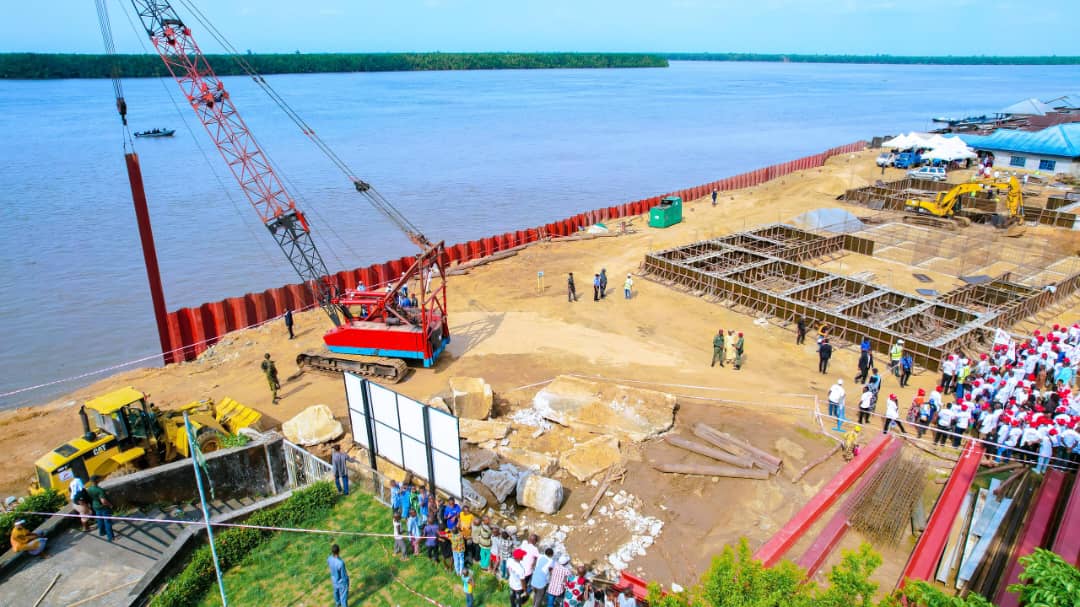
There is a certain quiet confidence building along the waterfront of Oron, the ancient coastal town that sits at the southeastern tip of Akwa Ibom State, where the Cross River empties into the Atlantic and where, for generations, fishermen and traders have made their living from the sea. That confidence has a name: the Oron Marine Hub — a sweeping, multi-component marine development project that, when completed, promises to fundamentally transform not just the physical landscape of Oron, but the economic fortunes of an entire coastal corridor in southern Nigeria.
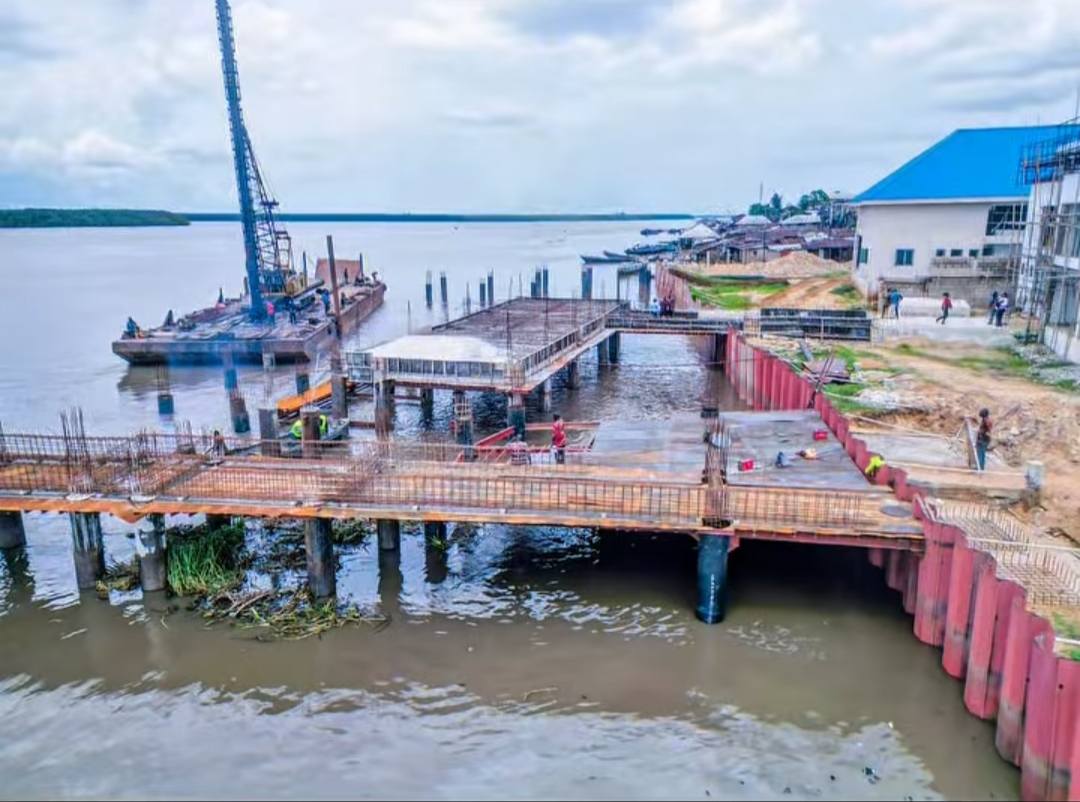
Ongoing construction at the site signals that this is no pipe dream. For a town whose maritime heritage once made it one of the most strategically important waterfront communities in the Niger Delta region, the hub represents something long overdue: a structured, modern infrastructure investment that takes the sea seriously.
More Than a Jetty
It would be a mistake to describe the Oron Marine Hub simply as a jetty project. The development is taking shape as a fully integrated marine terminal and economic complex — one designed to simultaneously address the needs of passengers, cargo operators, fishermen, security agencies, tourists, and traders.
At its core are four modern jetties, purpose-built to accommodate different categories of vessels. Passenger boats, cargo craft, and security and patrol vessels will each have dedicated berths, ending the chaotic informality that has long plagued waterfront operations across the Niger Delta. Alongside these jetties, a central terminal building is under construction to manage the flow of passengers — providing proper ticketing infrastructure, waiting areas, and the kind of organized movement that modern marine transport demands.
For too long, Nigeria’s inland and coastal waterways have operated as an afterthought to road transport, underfunded and underserved. The Oron Marine Hub is a direct challenge to that status quo.
Logistics, Trade, and the Cold Chain
Perhaps the most commercially significant aspect of the project lies in its cargo and trade infrastructure. A network of warehouses and cargo handling facilities is being integrated into the hub, designed to support marine-based trade and logistics along the Akwa Ibom coastline and beyond.
But it is the inclusion of cold storage systems, dry storage units, and fish processing facilities that may prove most transformative for the local economy. Oron sits in one of Nigeria’s most productive fishing zones, yet for decades, post-harvest losses have eaten deeply into the incomes of artisanal fishermen who lack the infrastructure to properly store or process their catch. With these facilities in place, the hub will create a direct value chain — from catch to processing to market — that could significantly increase revenues across the fishing sector, reduce waste, and open new export possibilities.
For fishing communities in Oron, Ibeno, and the broader coastline, this is not a small detail. It is potentially life-changing.
A Recreational and Tourism Offer
The Oron Marine Hub is also being designed with an eye on tourism — a sector that Nigeria’s coastal states have chronically underinvested in, despite possessing some of West Africa’s most scenic and culturally rich waterscapes.
Plans include a recreational waterfront zone, complete with leisure spaces and floating facilities that will offer residents and visitors an experience currently unavailable anywhere along this stretch of the Akwa Ibom coastline. Waterfronts, when properly developed, become magnets for economic activity — drawing restaurants, hospitality businesses, boat hire services, and cultural tourism.
Oron has history on its side. Home to one of Nigeria’s oldest and most significant traditional museums — the Oron Museum — and with a cultural identity deeply tied to water, the town has the raw ingredients for a compelling tourism offer. The Marine Hub gives it the platform.
Built to Last: Shoreline Protection and Infrastructure
Development along Nigeria’s coastline carries inherent risks. Erosion, tidal surge, and the long-term effects of climate change are real concerns for any coastal infrastructure project. The developers of the Oron Marine Hub appear to have accounted for this, incorporating shoreline protection works into the design — a feature that will be critical to the facility’s long-term viability.
Supporting the terminal operations are internal road networks, dedicated parking areas, and security infrastructure — provisions that speak to the operational complexity of running a busy marine hub and the importance of ensuring safety and order within the facility.
Restoring the Corridors
Beyond its physical footprint, the Oron Marine Hub carries significant strategic weight. Analysts and transport observers have long noted that marine routes connecting communities across the Niger Delta and the Gulf of Guinea coastline remain vastly underutilised, despite offering faster and often cheaper alternatives to road travel.
The hub is strategically positioned to restore key marine transport routes — most notably the Oron–Calabar corridor, a historically important waterway link between Akwa Ibom and Cross River States. Reviving this corridor alone would reduce travel times, ease pressure on road infrastructure, and reconnect communities that share deep commercial and cultural ties.
Wider connectivity to waterway routes in Rivers State and beyond is also within the project’s long-term vision, which could eventually reposition this corner of southern Nigeria as a genuine hub in the regional maritime network.
A Gateway City in the Making
When Nigerian leaders and planners speak of harnessing the country’s 853-kilometre coastline and vast inland waterway network, they are often speaking in abstractions. The Oron Marine Hub is concrete — literally and figuratively. It is bricks, steel, jetties, cold rooms, and warehouses rising from the waterfront of a town that has waited a long time for this moment.
When completed, Oron will not merely be a coastal town tucked into the southeastern corner of Akwa Ibom. It will be a functioning marine gateway — a point of departure and arrival for passengers, goods, and vessels; a processing hub for the fishing industry; a leisure and tourism destination; and a commercial node connecting southern Nigeria’s waterways in ways they have not been connected in a generation.
The sea has always defined Oron. With the Marine Hub, Oron is finally building something worthy of it.
NIGERIA WATCH: Tracking the ministries, departments, and agencies with a stake in this story
The Oron Marine Hub sits at the intersection of several federal mandates, making it one of the most regulatory-dense infrastructure projects currently underway in southern Nigeria. Here are the key government bodies whose oversight, policy direction, and funding priorities are directly relevant to this development:
Federal Ministry of Marine & Blue Economy — As the apex ministry for Nigeria’s maritime sector following its establishment by the Tinubu administration, this ministry holds primary federal interest in a project of this nature. The Oron Marine Hub aligns directly with the Blue Economy agenda, which seeks to monetise Nigeria’s coastal and inland water resources. The ministry’s engagement — or absence — in supporting and coordinating this project will be closely watched.
National Inland Waterways Authority (NIWA) — NIWA holds statutory responsibility for the development, maintenance, and regulation of Nigeria’s inland waterways, including the river and creek routes that connect Oron to Calabar, Warri, and Port Harcourt. The restoration of the Oron–Calabar corridor in particular falls squarely within NIWA’s operational mandate, and the agency’s role in dredging, charting, and regulating traffic on these routes will be essential to the hub’s commercial viability.
Nigerian Ports Authority (NPA) — To the extent that the Oron Marine Hub handles cargo and commercial vessel traffic, it may fall within the NPA’s licensing and regulatory jurisdiction. The NPA’s framework for recognising and regulating smaller regional terminals and marine hubs will determine how smoothly the facility integrates into Nigeria’s broader port ecosystem.
Nigerian Maritime Administration and Safety Agency (NIMASA) — NIMASA’s mandate covers vessel registration, seafarer certification, and maritime safety enforcement. With passenger and cargo vessels set to operate from Oron’s new jetties, NIMASA’s safety standards and enforcement presence will be critical to ensuring that the hub operates to international benchmarks and that lives on the water are protected.
Federal Ministry of Agriculture & Food Security — The hub’s fish processing facilities, cold storage systems, and post-harvest infrastructure connect directly to federal agricultural policy, particularly initiatives targeting aquaculture development and the reduction of post-harvest losses in the fisheries sub-sector. Federal support through this ministry could significantly accelerate the fishing industry components of the project.
Federal Ministry of Tourism — With a dedicated recreational waterfront zone forming part of the hub’s design, the Federal Ministry of Tourism has a clear interest in ensuring that the Oron Marine Hub is incorporated into Nigeria’s national tourism development framework and promotional campaigns.
Nigerian Meteorological Agency (NiMet) & Nigerian Hydrological Services Agency (NIHSA) — For a coastal infrastructure project that incorporates shoreline protection works, accurate weather forecasting and hydrological data are non-negotiable. Both agencies have roles to play in providing the environmental intelligence needed to protect the hub’s long-term structural integrity against tidal and climate risks.
Akwa Ibom State Government — While not a federal body, the state government is the most proximate authority driving and financing this project. Its relationship with federal agencies — particularly NIWA, NIMASA, and the Ministry of Marine & Blue Economy — will largely determine how quickly approvals, corridor licensing, and regulatory clearances are obtained.
Waterways News will continue to monitor federal agency engagement with the Oron Marine Hub project. Relevant ministries and agencies are invited to share updates, policy positions, and timelines with our editorial team.
Send tips and reports to the Waterways News editorial desk at www.waterwaysnews.ng
Blue Economy
NSC Board Visits APM Terminals Apapa, Cites $600m Investment Pledge as Boost for Nigeria’s Trade Ambitions
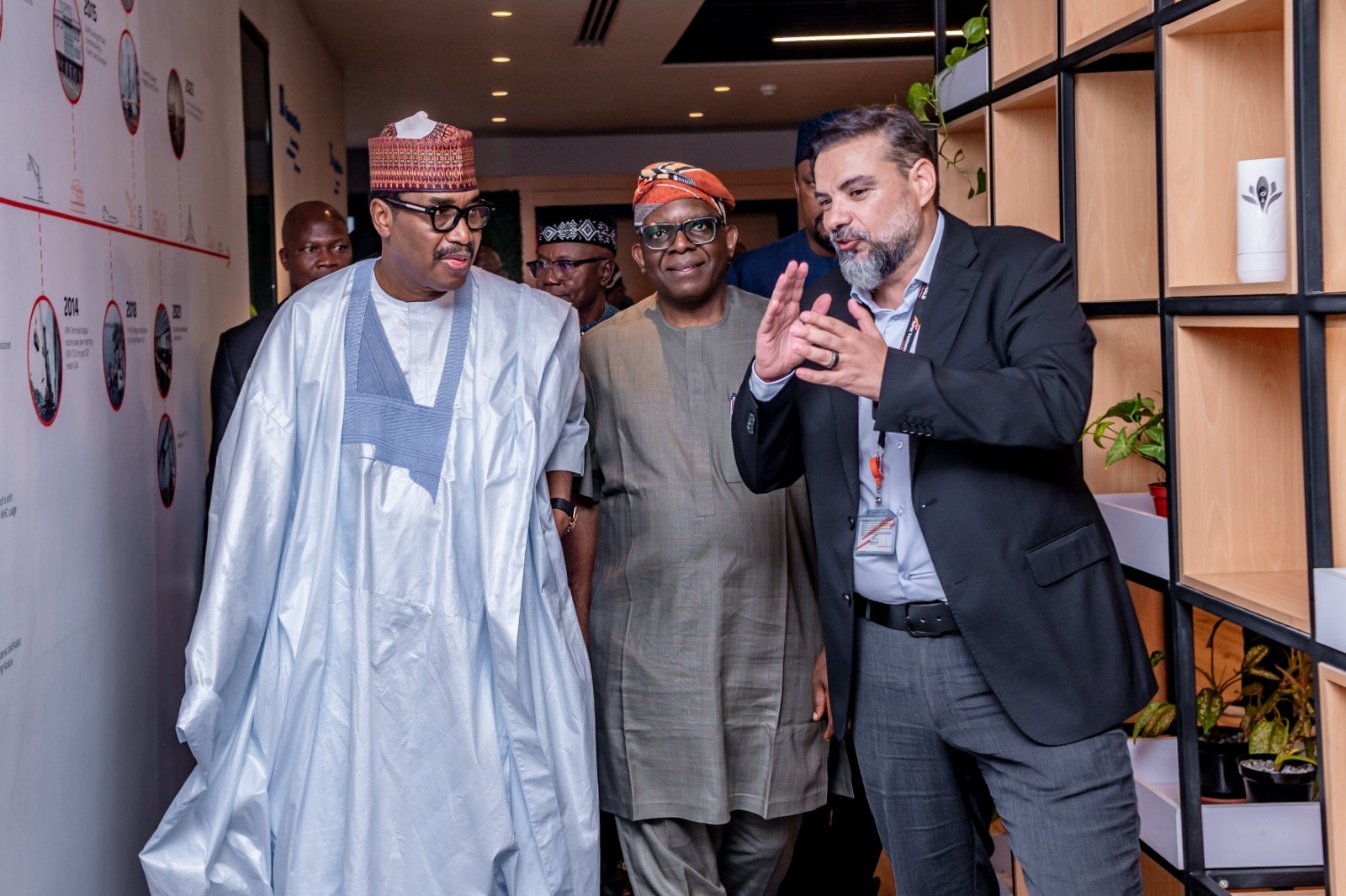
NSC Board Visits APM Terminals Apapa, Cites $600m Investment Pledge as Boost for Nigeria’s Trade Ambitions
Regulator points to 30% export cargo growth, digital transformation as signs of maturing port ecosystem
By Ighoyota Onaibre| Waterways News
The Governing Board of the Nigerian Shippers’ Council (NSC) has declared APM Terminals Apapa a benchmark for port operations in Nigeria, following a familiarisation visit to the Apapa facility that laid bare both the terminal’s progress and the regulator’s broader vision for the country’s port sector.
Leading the delegation, NSC Board Chairman Dr Ibrahim Shehu Shema used the occasion to reaffirm the Council’s commitment to its mandate as Nigeria’s port economic regulator, stressing that cross-sector collaboration remains the cornerstone of building a truly competitive maritime ecosystem.
“Most of what I have seen on this visit is quite impressive,” Shema said. “The way the organisations involve their stakeholders is commendable. It shows that government is very serious about generating revenue for this country through this sector, and there is no doubt that foreign investors are interested in committing even more resources.”
He said the Council would continue deepening engagement with terminal operators, shipping lines and shippers to position Nigeria as the dominant maritime hub for West and Central Africa — a goal he tied to President Bola Ahmed Tinubu’s Renewed Hope Agenda.
Akutah: Export Growth and Dangote Refinery Signal a Trade Rebalancing
NSC Executive Secretary and CEO Dr Pius Akutah struck an optimistic tone on the trade balance question — long a structural concern in Nigerian maritime circles. He disclosed that export cargo volumes at APM Terminals Apapa have grown by approximately 30 per cent, calling the figure a harbinger of change.
“For too long, the country has operated largely as an importing nation, resulting in persistent deficits in the balance of payments,” Akutah said. “This gives us optimism that, in the coming years, Nigeria will achieve a more balanced trade position.”
He acknowledged that exports remain predominantly commodity-based, but identified the Dangote Refinery’s emerging petroleum product exports and the opportunities unlocked by the African Continental Free Trade Area (AfCFTA) as catalysts for a more diversified export profile.
“With the Dangote Refinery now exporting petroleum products, we expect further progress. The manufacturing sector holds strong potential, particularly under AfCFTA, which provides a unified platform for trade across the continent. We are confident that Nigeria will soon expand its footprint in exporting manufactured goods across Africa,” he said.
On regulatory oversight, Akutah noted that many terminal operators are aligning with NSC directives to modernise facilities and embrace technology — progress he described as consistent with the vision of the Honourable Minister of Marine and Blue Economy, Dr Adegboyega Oyetola, CON.
$600m Reinvestment Proposal Described as a Vote of Confidence
Perhaps the most consequential disclosure of the visit came from Akutah’s confirmation that APM Terminals has tabled a proposal to invest an additional $600 million in its Nigerian operations — a commitment the NSC chief described as a strong signal of investor confidence at a time the Federal Government is actively courting foreign direct investment.
“At a time when the Federal Government is actively seeking foreign direct investment, it is reassuring to see companies already operating in Nigeria reinvesting and expanding their commitments,” Akutah said. “It is truly heartening and signals a promising period for the country.”
Terminal MD Points to Digital Overhaul
APM Terminals Apapa Managing Director Kamal Alhraishat used the occasion to highlight the terminal’s shift to electronic data interchange (EDI) systems — replacing manual, paper-based processes with digital platforms that enable the seamless exchange of standardised trade documents including invoices, bills of lading and cargo status updates.
“By eliminating paper-based processes, we have enhanced both efficiency and accuracy, while ensuring faster and more transparent communication between the terminal, shipping lines and shippers,”
Alhraishat said, adding that the company remains committed to ongoing infrastructure investment and technological innovation in support of Nigeria’s trade ambitions.
Nigeria Watch
The NSC board visit to APM Terminals Apapa carries more than ceremonial weight. It comes at a pivotal moment in the concession reform cycle, with the Nigerian Ports Authority (NPA) still navigating the concession renewal process for several terminals — a process in which operator performance benchmarks will be central.
APM Terminals Apapa’s reported 30 per cent export cargo growth is a metric worth watching closely. It corroborates narratives around the Dangote Refinery’s impact on Nigeria’s outbound freight market, and hints at a structural shift in the cargo mix at Apapa that regulators and terminal planners will need to account for.
The $600 million reinvestment proposal, if formalised, would represent one of the largest single private commitments to Nigerian port infrastructure in recent memory — and would significantly strengthen the case for Apapa’s continued relevance against the growing competitive pressure from the Lekki Deep Sea Port.
For the NSC, the visit reinforces its posture as an active regulator — one that is auditing performance, not merely adjudicating disputes. That positioning, amplified by Executive Secretary Akutah’s references to the AfCFTA and export diversification, suggests the Council is sharpening its strategic framing ahead of what promises to be a consequential season of port sector policy decisions.
Waterways News | Maritime | Ports | Blue Economy
Blue Economy
China Cements Shipbuilding Dominance; Sets New Maritime Benchmark with World’s Largest Car Carrier
China Cements Shipbuilding Dominance; Sets New Maritime Benchmark with World’s Largest Car Carrier
Glovis Leader’s delivery signals shifting tides in global auto transport and green shipping
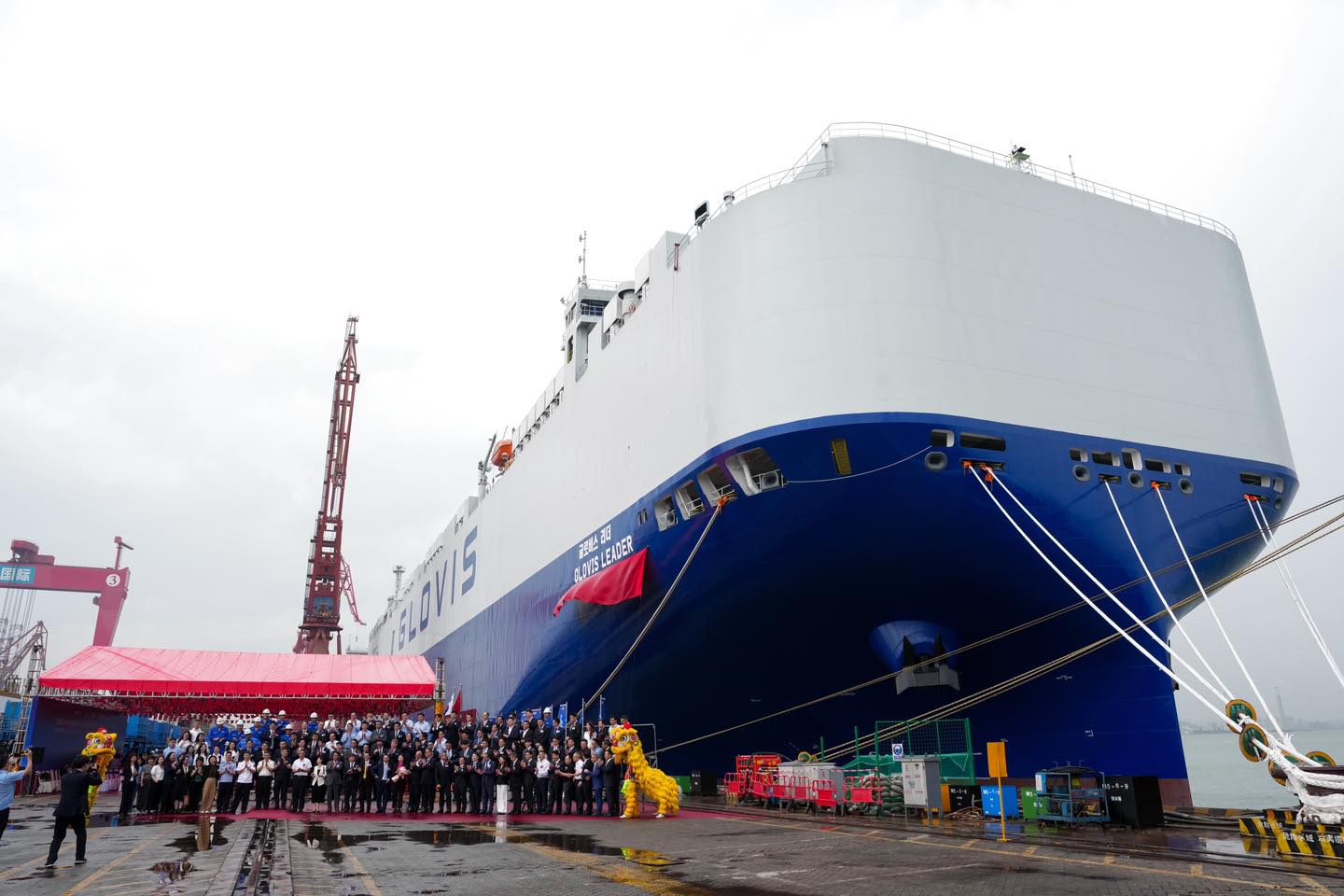
The global maritime industry has a new crown jewel. The Glovis Leader, a car carrier with a maximum capacity of 10,800 car equivalent units (CEU), was formally delivered on Tuesday in the southern Chinese city of Guangzhou — officially making it the largest vessel of its kind anywhere in the world.
The handover ceremony, held at the Nansha district shipyard in Guangzhou, marked a significant moment not just for the companies involved, but for the entire seaborne vehicle transport industry. Measuring 230 metres in length and 40 metres in width, and spread across 14 dedicated vehicle decks, the Glovis Leader was constructed by two firms — Guangzhou Shipyard International Company Limited, a subsidiary of the China State Shipbuilding Corporation (CSSC), and China Shipbuilding Trading Co., Ltd.
To appreciate the sheer scale of the vessel, consider this: if all the standard-sized five-metre cars the Glovis Leader can carry were arranged bumper-to-bumper in a straight line, they would stretch over 50 kilometres. And if fully loaded with vehicles priced at a conservative 100,000 yuan each, the total cargo value would exceed one billion yuan.
A New Era for Auto Shipping
The vessel was delivered to HMM, a leading South Korean shipping company, and will subsequently be operated by Hyundai Glovis Co., Ltd., a logistics firm also based in the Republic of Korea.
Speaking at the delivery ceremony, Lee Kyoo-bok, CEO of Hyundai Glovis, described the Glovis Leader as far more than an ordinary means of transport. With its enormous capacity and enhanced green operating system, he said, the vessel is expected to set a new benchmark for global seaborne automobile transport and mark an important milestone for the shipping industry.
The ship is capable of cruising at a speed of 19 knots, with a design draft of 10.5 metres. Its 14 decks are built to accommodate a wide array of vehicles, from electric cars and hydrogen-powered vehicles to heavy trucks — a reflection of the evolving demands of global automotive trade as the energy transition accelerates.
Green Technology at the Forefront
Beyond its record-breaking size, the Glovis Leader represents a major step forward in sustainable maritime operations. The vessel is powered by a dual-fuel system using liquefied natural gas (LNG) and conventional fuel, meeting the International Maritime Organization’s Tier III emissions standards. It also incorporates energy-saving technologies, including an optimised hull design, waste heat recovery systems, and shore power capability — allowing the ship to shut down its engines while docked and eliminate local air pollution in port.
A shaft generator developed by a research institute under the CSSC further enables the vessel to generate electricity while underway, reducing fuel consumption during voyages. Industry observers say these features are not merely compliance measures but represent a deliberate industry shift toward lower-carbon global shipping.
China’s Shipbuilding Momentum
The delivery of the Glovis Leader is the latest milestone in what has been a remarkable run for Chinese shipbuilders. Guangzhou Shipyard International has secured more than 40 orders for car carriers and delivered 26 to date. All vessels delivered so far were completed ahead of schedule, with 11 ships delivered in 2025 averaging 151 days early. The company currently holds orders worth approximately 100 billion yuan (about $14.58 billion USD), with overseas contracts accounting for more than 95 percent of the total, and production scheduled through 2030.
The Glovis Leader does not stand alone as evidence of China’s growing dominance in this segment. Just weeks before its delivery, the BYD Shenzhen, with a capacity of 9,200 standard vehicle spaces, completed its maiden export voyage, followed closely by the Anji Ansheng, capable of carrying 9,500 vehicles, which sailed from Shanghai to Europe — both vessels independently built by Chinese shipyards. Each record was broken in rapid succession, with the Glovis Leader now sitting at the top.
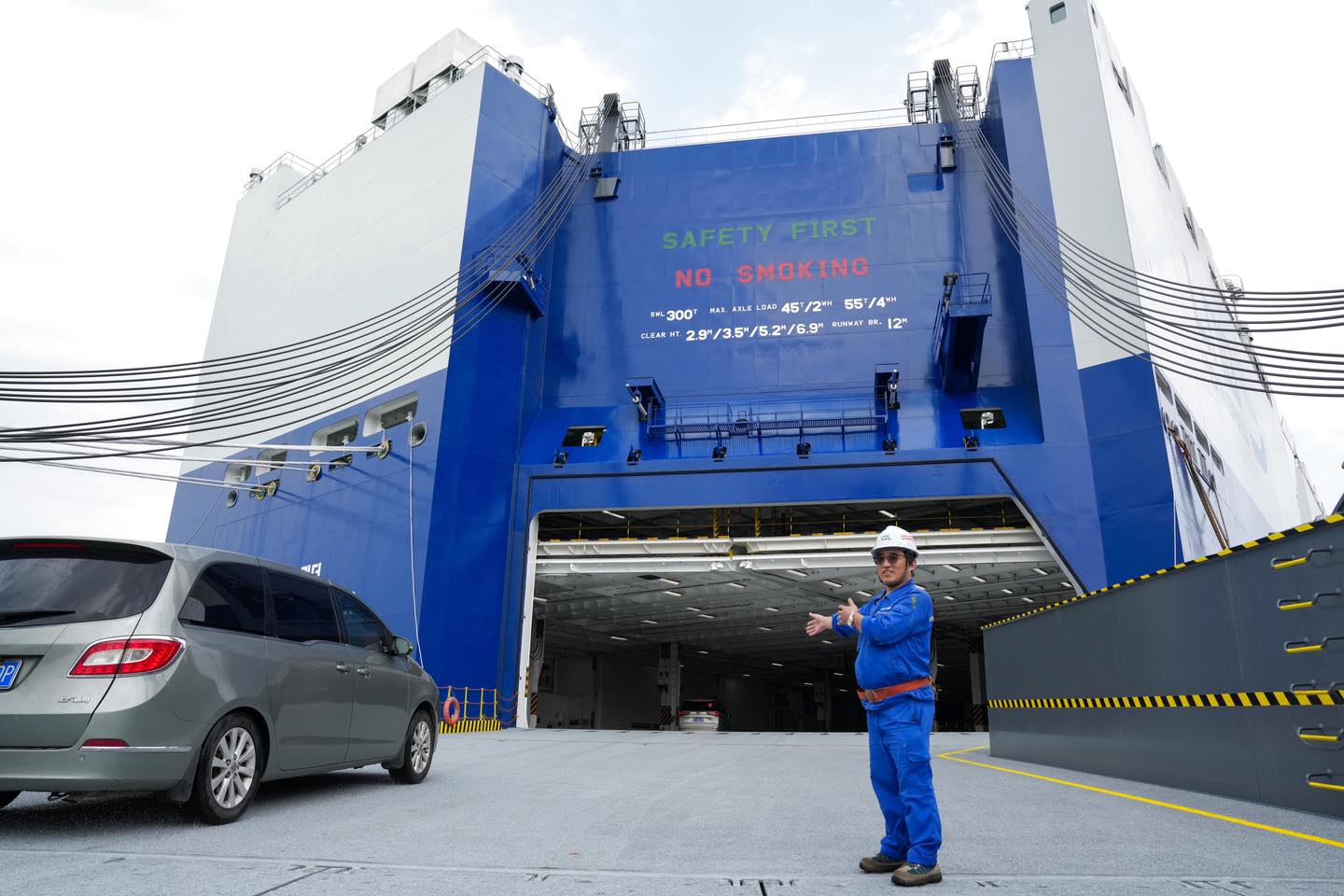
Nationally, China remains the world’s largest shipbuilder. Government data shows that the country built 53.69 million deadweight tons of vessels in 2025, accounting for 56.1 percent of global shipbuilding output. In 2025, China’s three major shipbuilding indicators — completed shipbuilding output, new orders, and orders on hand — accounted for the largest share of the global market for the 16th consecutive year.
NIGERIA WATCH: What this means for Nigerian ports, importers, and the auto trade
The arrival of the world’s largest car carrier on the high seas is not a distant headline for Nigeria — it lands squarely in the middle of one of the country’s fastest-growing import categories.
Nigeria’s passenger car imports rose to ₦1.58 trillion in 2025, a 24.64 percent increase year-on-year from ₦1.26 trillion in 2024. The broader transport equipment picture is even more striking: transport equipment and parts imports reached ₦6.54 trillion in 2025, up from ₦4.77 trillion in 2024, with passenger vehicles, industrial machinery, and spare parts making up the bulk of this bill.
Despite this surge in demand, Nigerian consumers are not necessarily getting a better deal. Automotive experts note that the increase in import values reflects the continued impact of foreign exchange volatility, a combination of higher vehicle prices globally and currency-related pressures locally that have significantly raised the cost of importing vehicles. For ordinary Nigerians, the result is vehicles that are increasingly out of reach — pushing more buyers toward the Tokunbo market.
Used vehicles, popularly known as Tokunbo, have become the default option for households and businesses squeezed by high interest rates, volatile foreign exchange markets, and persistent inflation, with Nigeria spending an estimated ₦1.71 trillion on used vehicle imports in 2025. Projections suggest Nigeria’s used vehicle import bill could rise further to about ₦1.85 trillion in 2026, assuming current trends persist.
This is precisely where vessels like the Glovis Leader could begin to make a difference. As ultra-large car carriers increase the volume of vehicles that can be moved per voyage, shipping costs per unit are expected to come down — a shift that could gradually ease the cost burden on Nigerian importers and, eventually, on consumers at the forecourt.
The United States has consistently dominated Nigeria’s vehicle import sourcing, accounting for over 41 percent of total passenger car imports in the first nine months of 2025 — far ahead of South Africa, the UAE, and European sources. The emergence of high-capacity vessels operating trans-Pacific and trans-Atlantic routes could intensify competition among shipping lines serving these corridors, with potential knock-on benefits for Nigerian ports and clearing agents.
On the policy front, Nigeria’s automotive authorities are watching the global fleet closely. The National Automotive Design and Development Council (NADDC) has announced that from 2026, Nigeria will introduce mandatory pre-export certification for used vehicles to curb the importation of unroadworthy and end-of-life vehicles — a policy move that could reshape which vehicles arrive at Tin Can Island and Apapa, and from where.
Under the broader classification of vehicles, aircraft, and related transport equipment, Nigeria’s total imports in this category increased from ₦4.49 trillion in 2024 to ₦5.92 trillion in 2025, representing a 31.8 percent year-on-year rise — a trajectory that shows no signs of slowing. As Nigeria’s appetite for vehicles grows and global shipping capacity expands, the case for routing more car carrier traffic through West African ports strengthens with each record-breaking vessel that enters service.
The Glovis Leader may fly a South Korean flag and carry a Chinese pedigree — but its ripple effects will be felt from Lagos to Port Harcourt.
Waterways News | Maritime Intelligence for Nigeria and Beyond
-

 Oil and Gas2 months ago
Tantita’s Pipeline Deal: $144m Contract, Rising Output, and the Questions that Deserve Answers
-
 Blue Economy2 months ago
Nigeria’s Coast Guard Bill: A Solution in Search of a Problem?
-
 MARITIME TRADE & SHIPPING2 months ago
World’s Largest Container Ship Sets New Maritime Record with 22,233 TEUs on Single Voyage