

MARITIME TRADE & SHIPPING
Trade Expert Demands Emergency Customs Audit, as $600 Million Container Duty Scandal Emerges

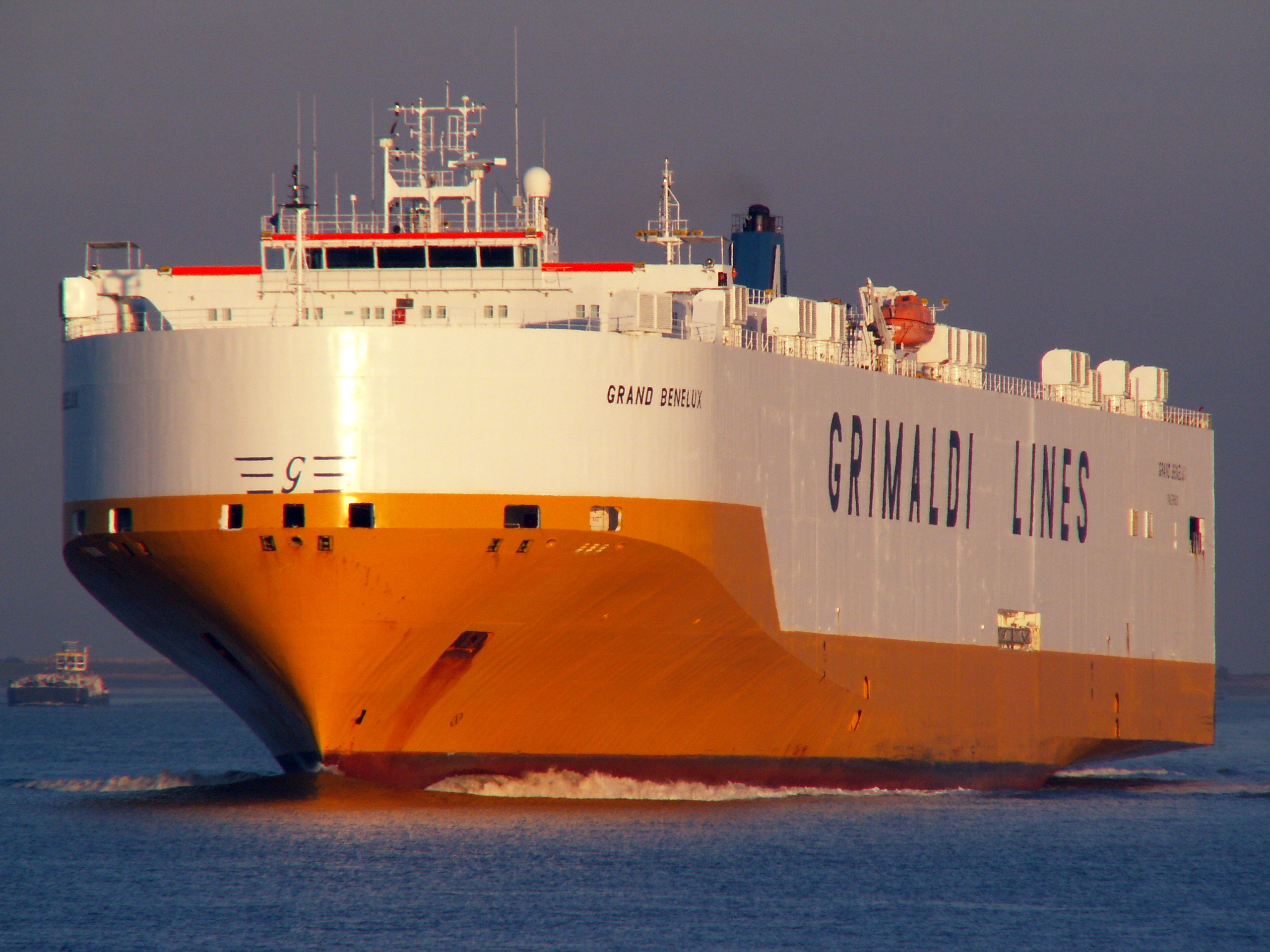

Trade Expert Demands Emergency Customs Audit, as $600 Million Container Duty Scandal Emerges
Trade expert calls for emergency audit as Grimaldi Agency Nigeria moves to sell 2,500 containers outside customs law — with transactions demanded in U.S. dollars
By Oghenewoke Osaweren | Waterways News Investigative Desk
Nigeria has haemorrhaged over $600 million in customs duties and value-added tax over three decades as foreign shipping lines operating in the country’s ports have brazenly sold empty import containers without complying with statutory customs conversion procedures — a practice that experts say amounts to organised economic sabotage against the Nigerian state.
The explosive allegation was made Monday by Okey Ibeke, Principal Consultant at International Trade Advisory Services, while addressing the Shipping Correspondents Association of Nigeria (SCAN) in Apapa, Lagos. Ibeke called on the Nigeria Customs Service (NCS) to immediately suspend all container sales by Grimaldi Agency Nigeria and launch a full industry-wide audit of the practice spanning the last 30 years.

“Grimaldi is not an isolated case. For 30 years, Maersk, MSC, CMA CGM, Hapag-Lloyd, COSCO, ONE, Evergreen, and PIL have operated in Nigerian ports under similar conditions.” — Okey Ibeke, Principal Consultant, International Trade Advisory Services
The Grimaldi Trigger
The controversy was ignited by media reports that Grimaldi Agency Nigeria — the local arm of the Italian shipping giant — is planning to sell more than 2,500 empty containers to Nigerian members of the public at $2,000 per 40-foot unit and $1,600 per 20-foot unit. Critically, buyers have been directed to make payments in U.S. dollars through domiciliary accounts, a requirement that directly contravenes the Central Bank of Nigeria’s policy discouraging the dollarisation of domestic transactions.
But for Ibeke, the currency issue is secondary to a far graver legal violation. Those containers, he argues, entered Nigeria under ‘Temporary Import’ status — a customs classification that legally obligates them to be re-exported after use. Selling them locally without converting their status to permanent import is, in his words, unambiguously illegal.
Breaking Down the Legal Breach
Under the Nigeria Customs Service Act 2023 and its Temporary Import Guidelines, any shipping line seeking to dispose of containers locally must first file a formal application with the NCS, submit the containers for customs valuation, pay all applicable duties, VAT, and levies into government accounts, and await a release order converting the containers to ‘home use’ status. Only after this process is complete can the containers be legally sold — and only in naira, unless the CBN grants a specific foreign exchange exemption.
According to Ibeke, Grimaldi’s current arrangement skips every single one of these prerequisite steps. “With Grimaldi, Step 5 is happening without Steps 1 to 4. That is illegal,” he stated plainly.
KEY FIGURES AT A GLANCE$600M+ Total Revenue Loss Over 30 years $350–$400 Loss Per Container Duties & taxes (2026 tariff) $875K–$1M Grimaldi Deal Loss 2,500 containers 5% + 7.5% HS Code Levy Duty + VAT + ETLS + FOB
The Numbers Behind the Scandal
Ibeke’s financial calculations are damning. Applying the 2026 Customs tariff schedule for HS Code 86.09 — which covers shipping containers — he calculated a combined levy burden of approximately 17% to 18% on each unit. At the declared sale price of $2,000, the government loses between $350 and $400 per container in unpaid duties and taxes. For Grimaldi’s 2,500 units alone, the resulting revenue shortfall ranges from $875,000 to $1,000,000 — from a single company in a single transaction.
The expert then applied this framework retrospectively. Industry data, he said, indicates that hundreds of thousands of containers have been absorbed into Nigeria’s informal and formal economies over the past three decades — repurposed as roadside shops, cold storage facilities, construction materials, and residential units. Conservatively estimating 250,000 such containers at an average price of $1,500 each, and applying a 10% duty-and-tax rate, the cumulative loss to the Federal Government exceeds $375 million — or over ₦600 billion at current exchange rates. Including broader tax leakages, the figure climbs above $600 million.
“That is money that should be funding roads, schools, hospitals, and debt service. Instead, it is lining the pockets of foreign corporations who treat Nigerian law as optional.”— Okey Ibeke, Principal Consultant, International Trade Advisory Services
Structural Drivers: Why Shipping Lines Abandon Containers
Ibeke did not merely assign blame; he also laid out the structural economic logic that has enabled the practice to persist undetected — or at least unpunished — for three decades. The root cause, he argues, is Nigeria’s severe trade imbalance: imports account for approximately 75% of dry cargo traffic through Nigerian ports, while exports represent a mere 15%. The remaining 10% consists of transit and transshipment cargoes.
Meanwhile, oil and mineral exports — which form the bulk of Nigeria’s outbound trade at 70% of export value — are not containerised. The consequence is stark: vessels arrive at Lagos, Apapa, and Tin Can ports fully loaded with import cargo, but depart 97% empty. Repatriating those empty containers to origin ports costs between $2,000 and $4,000 per 20-foot unit. Selling them locally is not just more profitable — it eliminates a significant operational cost. The economic incentive to circumvent customs law is, therefore, built into the very structure of Nigeria’s trade architecture.
A Culture of Impunity: Thirty Years of Accumulated Violations
What makes Ibeke’s intervention especially significant is his charge that this is not a new or isolated problem. He named some of the world’s largest shipping conglomerates — Maersk, MSC, CMA CGM, Hapag-Lloyd, COSCO, ONE, Evergreen, and PIL — as participants in the same pattern of behaviour over the past three decades. These are not fly-by-night operators; they are globally listed corporations with compliance departments and legal teams. Yet in Nigeria, he alleges, they have systematically operated outside the customs law framework with no consequence.
The trade expert linked this culture of impunity to a broader ecosystem of port-related malpractice affecting Nigerian importers and freight forwarders, including arbitrary demurrage and detention charges denominated in foreign currencies, persistent delays in refunding container deposit funds, forced use of nominated transporters, and the withholding of shipping documents until all local charges — legitimate or not — are settled.
Legal Framework: What the Law Says
Ibeke cited multiple statutory provisions that, in his assessment, the practice clearly breaches. Section 36 of the NCS Act 2023 explicitly states that goods brought in under temporary import status must either be re-exported or formally converted to home use with all applicable duties paid. Sections 245, 248, and 249 of the same act empower Customs officers to detain, seize, and impose penalties on goods that do not comply with these conditions.
The CBN Foreign Exchange Manual and Nigerian Shippers’ Council regulations further prohibit dollar-denominated transactions in domestic commercial activities without specific authorisation. The Nigerian Ports Authority’s own temporary import guidelines, Ibeke noted, are fully aligned with the customs law position.
Demands and Recommendations
Ibeke issued a series of specific demands. First, that the NCS immediately suspend all container sales by Grimaldi Agency Nigeria and other shipping lines pending a regulatory review. Second, that the Service conduct a full audit of all containers sold by foreign shipping lines over the past decade, with a view to recovering unpaid duties. Third, that the Federal Ministry of Finance formally investigate the financial exposure and publish findings. Fourth, that the CBN separately investigate the foreign exchange implications of dollar-denominated container sales. And fifth, that the Nigerian Shippers’ Council use its enforcement powers to compel compliance.
He also called on the National Assembly to amend relevant sections of the NCS Act to explicitly criminalise the sale of temporary import containers without prior customs conversion, and to mandate mandatory disclosure by shipping lines of all container disposal activities within Nigerian territory.
Regulatory and Government Response
As of the time of this report, neither the Nigeria Customs Service nor Grimaldi Agency Nigeria had issued a public response to the allegations. The Nigerian Shippers’ Council, which has in recent quarters recovered hundreds of millions of naira from shipping companies over container deposit refund disputes, also had not commented on whether it was investigating the temporary import conversion issue specifically.
It is worth noting that the House of Representatives, in November 2025, announced plans to probe the Customs Service over alleged revenue leakages linked to improper assessment of excise duties, overdue temporary importation, and unremitted customs charges — suggesting that legislative concern over the broader problem of port-related revenue haemorrhage has been building for some time.
The Bigger Picture
Nigeria’s ports have long been a flashpoint for debates over economic sovereignty, regulatory enforcement, and the terms on which foreign corporations operate within the country. The container scandal, if Ibeke’s figures are verified, would rank among the largest sustained customs violations in the country’s history — not because of the individual transaction size, but because of its sheer duration and the breadth of corporate actors allegedly involved.
For a Federal Government that collected an estimated ₦3.8 trillion in customs revenue in 2024 — and that is engaged in an aggressive revenue mobilisation drive to close a fiscal deficit exceeding ₦13 trillion — the loss of ₦600 billion or more to what amounts to customs fraud by multinational shipping companies is a political and economic wound it can ill afford to ignore.
Waterways News (www.waterwaysnews.ng) has reached out to the Nigeria Customs Service, Grimaldi Agency Nigeria, the Nigerian Shippers’ Council, and the Federal Ministry of Finance for official comment. Responses will be published as received.

Blue Economy
Oyetola Takes Nigeria’s Case on Gulf of Guinea Security and Seafarer Welfare to IMO Council in London
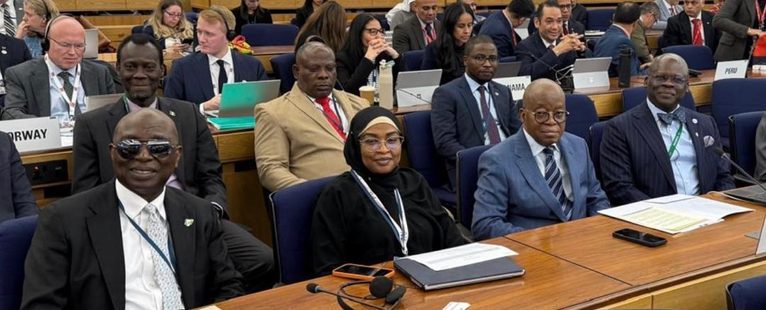
Oyetola Takes Nigeria’s Case on Gulf of Guinea Security and Seafarer Welfare to IMO Council in London
Minister says seafarers must not become casualties of geopolitical disputes as Nigeria presses for stronger technical support for developing maritime nations
By Ighoyota Onaibre | Waterways News
Nigeria’s Minister of Marine and Blue Economy, Dr. Adegboyega Oyetola, has restated the country’s commitment to safe, secure and sustainable international shipping. He is leading a high-level delegation to the 138th session of the International Maritime Organization (IMO) Council in London.
The five-day session opened on November 2 at the IMO headquarters and ends today, November 6, 2026. Nigeria’s participation is meant to strengthen its voice in global maritime governance and to advance the interests of developing maritime nations.
Nigeria sits on the 40-member Council under Category C. The session is considering the protection of vital shipping routes, the welfare and safety of seafarers, institutional governance and the sustainability of the global maritime industry.
Protecting vital shipping lanes
A central issue is the protection of strategic shipping routes against growing security threats and attacks on commercial vessels in high-risk zones. Under Agenda Item 11, “Protection of Vital Shipping Lanes,” Nigeria is expected to draw on its experience combating piracy and maritime crime in the Gulf of Guinea to push for stronger international cooperation and coordinated security responses.
“Nigeria recognises that the challenges confronting the global maritime industry require collective action, stronger international cooperation and effective regulatory frameworks,” Oyetola said. He added that Nigeria was at the Council to see its interests represented and to contribute to solutions that strengthen maritime security, protect seafarers and promote sustainable shipping.
He said the progress made in the Gulf of Guinea showed that maritime insecurity can be tackled “through political commitment, effective coordination and cooperation among regional and international partners.”
Seafarer welfare
Seafarer welfare is also high on the agenda. This follows IMO Secretary-General Arsenio Dominguez’s condemnation of the use of seafarers as pawns in geopolitical disputes. Nigeria is backing measures to prevent the arbitrary detention and abandonment of seafarers, and to ensure their fair treatment, safe repatriation and mental well-being.
“Seafarers are the lifeblood of international shipping,” Oyetola said. “Their safety, dignity and welfare must never be compromised by geopolitical tensions.”
Budget and capacity building
The Council is also reviewing financial allocations for the 2026–2027 biennium and strategic priorities for 2028–2029. Nigeria sees this as an opening to push for more technical cooperation and capacity-building support for developing maritime countries.
Oyetola said developing maritime nations “must have access to the technical expertise, institutional support and investment opportunities required to participate meaningfully in the evolving global shipping industry.”
The delegation
The minister is accompanied by:
The Permanent Secretary, Federal Ministry of Marine and Blue Economy, Mrs. Fatima Mahmood
The Director-General of NIMASA, Dr. Dayo Mobereola
The Director of Maritime Services, Mr. Oyinloye Meshack
Nigeria’s Alternate Permanent Representative at the IMO, Mr. William Bwala
Nigeria Watch
A heavy session. The Council has dealt with more than Nigeria’s agenda this week. Other delegations have also pressed seafarer protection and freedom of navigation, with Liberia and Indonesia among the countries that raised them. The session has also given attention to security in the Strait of Hormuz and the Black Sea. On Wednesday, the Council recommended a second four-year term for Secretary-General Arsenio Dominguez, running from 2028 to 2031. The IMO Assembly must still approve it in 2027. Nigeria’s message on the Gulf of Guinea has been delivered in a crowded room.
Hormuz is a Nigerian issue. This newsroom has followed the Strait of Hormuz crisis closely, from rising freight rates to war-risk insurance premiums at Nigerian ports. Oyetola’s call to shield seafarers from geopolitical tension is not abstract. Dominguez has said thousands of seafarers in the region live and work under heightened risk, and the IMO’s tally of seafarers killed in the region since February stood at 24 as of November 5.
Where the Gulf of Guinea story stands. Nigeria is presenting its Gulf of Guinea record as a model, and the Deep Blue Project is the backbone of that claim. NIMASA has just showcased upgraded assets at AFRIDEX 2026. Delegates in London will weigh the narrative against what stakeholders at home actually experience on the water.
The home test. Nigeria’s arguments at the IMO for seafarer dignity, fair treatment and capacity-building support will carry weight in proportion to how well they are matched at home.
Questions that Waterways News continues to raise:
Do Nigerian seafarers and inland waterway workers enjoy the safety and welfare standards the minister is championing abroad?
Will the technical cooperation Nigeria is seeking reach small-scale and informal waterway operators, such as those under WABOTAN and ATBOWATON, or stay at the policy level?
With Nigeria holding a Council seat, how will diplomatic wins in London be turned into delivery at home, from CVFF disbursement to NPERA implementation?
Waterways News will keep tracking the outcome of the 138th Council session and what it means for Nigerian maritime stakeholders.
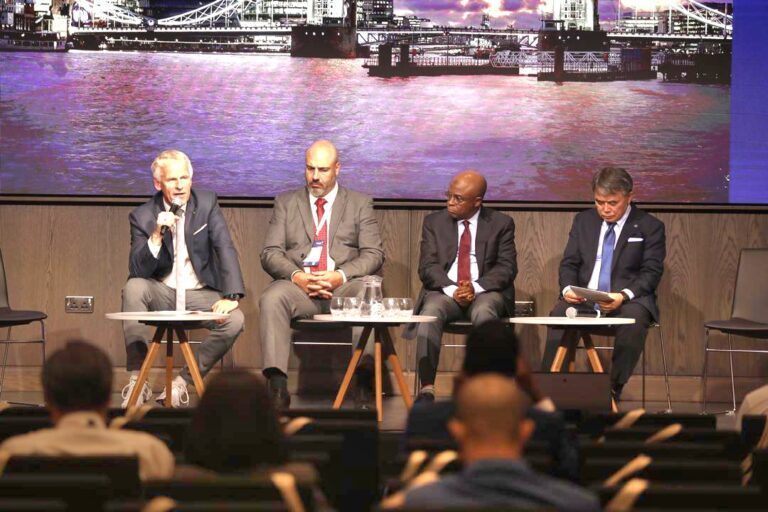
Nigeria’s Port Boom Is Outpacing Its Capacity, Dantsoho Tells World Ports Conference
Dantsoho Pitches Nigeria’s Ports to Global Investors in London, Says Lekki’s Capacity Is Exhausted
By Emamuzou Akatugba | Waterways News | London
The Managing Director of the Nigerian Ports Authority (NPA), Dr Abubakar Dantsoho, has told global port investors that Nigeria’s fast-growing cargo volumes make the country’s ports one of Africa’s most compelling investment opportunities. He said the Tinubu administration has put investor-friendly policies in place.
Dantsoho spoke on Tuesday at the IAPH World Ports Conference in London, which runs from November 3 to 6 at Olympia. He addressed a select group of maritime investors. He is Vice-President of the International Association of Ports and Harbors (IAPH) and Chairman of the Port Management Association of West and Central Africa (PMAWCA).
He said Nigeria’s population, rapid urbanisation and infrastructure gaps are what make the opportunity attractive. He argued that governments across Africa cannot alone fund bigger and deeper seaports, so private investment must move in quickly.
“The investment needed in ports to meet this expansion and growth can only happen if the requisite private investment is attracted and retained,” he said. He added that President Tinubu “has created the enabling atmosphere” for this
Dantsoho said Nigeria’s population has grown from about 45 million at independence in 1960 to over 260 million. In his words, the country needs capacity to receive bigger import vessels and to move higher export volumes.
His strongest example was the Lekki Deep Sea Port. It was funded with Chinese backing and built by China Harbour at a cost of $1.6 billion. He said it was commissioned only about three years ago, yet its capacity “has been exhausted”.
“Clearly, we need more capacity to be able to contain the volumes,” he said. He added that the NPA is pleased to be capturing more cargo, since rising volumes are what lift port revenue.
He also said most cargo arriving in West Africa, largely from China, ends up in the Nigerian market. He compared Nigeria’s population with Ghana (34 million), Côte d’Ivoire (32 million), Benin Republic (14 million) and Togo (9 million).
Other reports from the conference quote Dantsoho saying federal reforms have lifted Nigeria’s exports by about 25 per cent in two years, across oil and non-oil goods. He reportedly also cited two Nigerian ports in the World Bank’s top 20 global rankings, and a Single Window system the NPA developed in 2025 with a Singaporean firm.
NIGERIA WATCH
Capacity is now the story. A $1.6bn flagship port that is already full is the clearest sign yet that Nigeria’s problem has moved from attracting ships to handling them. It strengthens the case for the new deep seaport approvals (Badagry, Olokola, Ibom, Bakassi and Bonny) that have so far been announced faster than they have been built. Investors in London will want timelines, not just approvals.
Retaining investors is harder than attracting them. Dantsoho himself used the phrase “attracted and retained”. Concession renewal anxieties, regulatory overlap among agencies, and the Strait of Hormuz crisis’s effect on freight rates and war-risk insurance all weigh on retention. These are the questions investors will ask after the speech.
Where do the small operators fit? The pitch is about big terminals and big capital. Informal inland waterway operators, represented by WABOTAN and ATBOWATON, remain absent from the conversation.
Waterways News will keep asking how port-led growth and the NPA’s assessment of inland dry ports will translate into jetties, safety and livelihoods for the informal inland waterway operators.
MARITIME TRADE & SHIPPING
NPA Credits Reforms, APM Terminals Partnership for 25% Export Growth, Eyes $1bn Apapa Overhaul
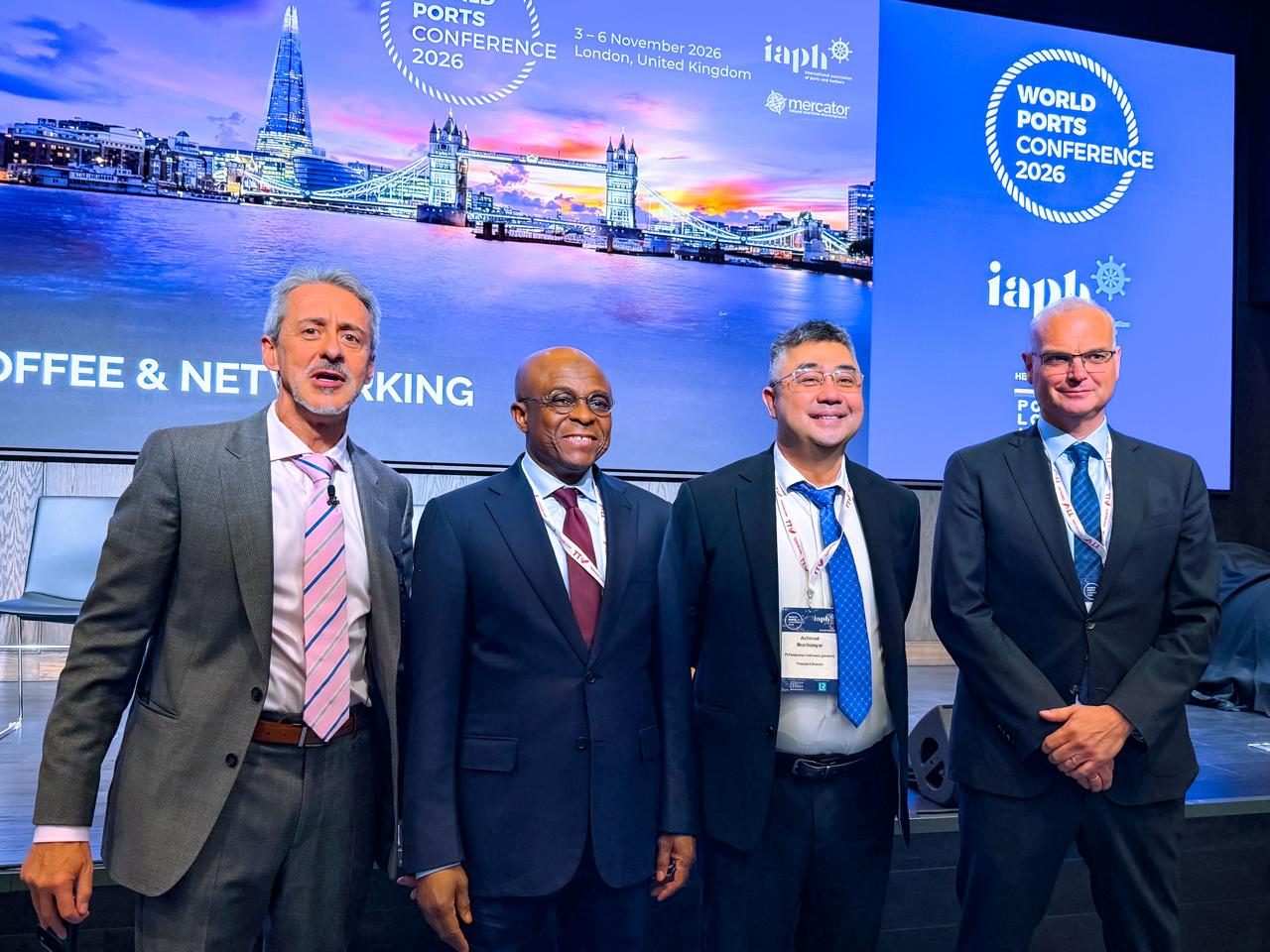
Dantsoho tells IAPH World Ports Conference in London that port revenue has quadrupled, as NPA pushes export terminals and digital platforms
By Emamuzou Akatugba | Waterways News | London
The Nigerian Ports Authority (NPA) says Nigeria’s exports have grown by more than 25 per cent in two years. It credits Federal Government reforms and closer collaboration with major terminal operators, especially APM Terminals.
NPA Managing Director, Dr Abubakar Dantsoho, disclosed this at the IAPH World Ports Conference in London. He said the growth was not driven mainly by oil and gas. Manufacturing and agriculture also contributed, with cocoa, cashew and other raw materials recording higher shipment volumes.
To sustain the momentum, the NPA has set up Export Processing Terminals to streamline the handling and documentation of export cargo. About four are operating nationwide. The authority works with terminal operators, the Nigeria Customs Service and other agencies so that goods are processed locally and meet required standards before shipment.
Dantsoho said the reforms have also positioned Nigeria to benefit from the African Continental Free Trade Area (AfCFTA). He cited Morocco, which he described as an emerging manufacturing hub for electric and other vehicles, as an example of trade and industrial cooperation within the continent.
He linked Nigeria’s improved global port standing to operational efficiency, technology adoption and stronger industry cooperation. He said two Nigerian ports are now in the world’s top 20 in the latest World Bank ranking, and that port revenue nationwide has quadrupled alongside rising cargo volumes. The NPA also uses a regional dashboard to track port efficiency across West and Central Africa. It shows gains in Nigeria and in countries such as Tanzania and Kenya.
On infrastructure, Dantsoho said the Federal Government plans a $1 billion expansion and modernisation of Apapa Port. He stressed that the project will need substantial private capital, and that the NPA is talking to APM Terminals and other potential investors. He added that the NPA plans to deepen partnerships with industry players in countries including Morocco and South Africa.
On digital reform, the NPA has partnered with a Singaporean company on a national single-window system. Talks are ongoing with an Abu Dhabi-based firm on a port community system. Both platforms are meant to improve coordination among stakeholders, simplify cargo clearance and reduce bottlenecks.
NIGERIA WATCH
What the “top 20” actually means: The World Bank ranked Apapa and Tin Can Island among the 20 most improved ports globally. This is an improvement ranking, not a list of the world’s 20 best ports. Both appeared in the 2025 Container Port Performance Index, and Tin Can placed 10th and Apapa 12th for gains between 2020 and 2025. Both ports scored well below zero in 2020 and had only recovered to -26 by 2025, so the climb is real but the starting point was very low. The authority should be precise about this at global forums.
Oil versus non-oil: Reports of Dantsoho’s remarks differ slightly. One account says the growth covered both oil and non-oil exports. The NPA should publish the underlying figures and the baseline year so the 25 per cent claim can be verified, especially the non-oil share.
Private capital and the Apapa plan: A $1 billion Apapa upgrade that depends largely on private investors makes terminal concession terms and port dues central issues for shippers and the Nigerian Shippers’ Council. Stakeholders will want to know who bears the cost, and whether efficiency gains will show up in lower charges.
The small operators’ angle: Export terminals, single-window and port community systems all target the seaport cargo chain. The informal inland waterway operators represented by WABOTAN and ATBOWATON see little of this attention. As reforms are celebrated in London, a fair test of “the blue economy” is whether feeder services, jetties and inland routes get matching investment.
What to watch: the NPA’s data on the four export terminals, the Apapa investment structure, and delivery dates for the single-window and port community platforms.

 Oil and Gas8 months ago
Tantita’s Pipeline Deal: $144m Contract, Rising Output, and the Questions that Deserve Answers
 MARITIME TRADE & SHIPPING8 months ago
World’s Largest Container Ship Sets New Maritime Record with 22,233 TEUs on Single Voyage
 Blue Economy9 months ago
Nigeria’s Coast Guard Bill: A Solution in Search of a Problem?