
MARITIME TRADE & SHIPPING
CMA CGM Slaps $600 Surcharge on China–West Africa Shipping Lane, Nigeria Feels the Heat


CMA CGM Slaps $600 Surcharge on China–West Africa Shipping Lane, Nigeria Feels the Heat
By Okeoghene Onoriobe, Waterways News Correspondent, Lagos
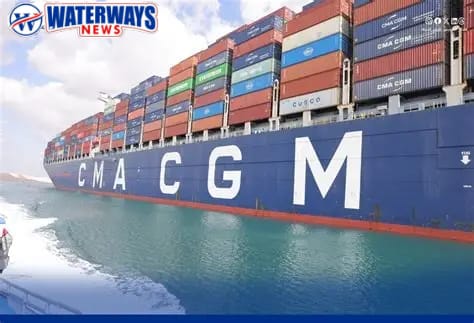
Nigerian importers face higher freight bills after French shipping giant CMA CGM announced a $600 peak season surcharge on container shipments from China to West and Central Africa — effective today, March 15, 2026.
The surcharge, which applies to all cargo moved in twenty-foot equivalent unit (TEU) containers under short-term arrangements, covers Freight All Kinds (FAK) cargo, spot bookings, and shipments under monthly and quarterly contracts. CMA CGM said the levy is necessary to maintain reliable and efficient operations during the peak shipping period, and will remain in force until further notice.
The timing is significant for Nigeria. Trade data from China’s national statistics authorities show that Chinese exports to Nigeria surged from $18.9 billion in 2024 to $24.9 billion in 2025 — an increase of $6 billion in a single year — consolidating China’s position as Nigeria’s single largest import source. Electronics, consumer goods, construction materials, and manufacturing inputs dominate that trade flow.
Beyond Nigeria, the surcharge sweeps across CMA CGM’s “South Range” corridor, capturing shipments destined for Angola, the Republic of the Congo, the Democratic Republic of the Congo, Namibia, Gabon, and Cameroon.
Importers should note that the $600 charge sits on top of existing freight costs. Bunker adjustment factors, terminal handling charges, and security-related fees remain separate line items. The company also reserved the right to impose additional contingency or local port charges depending on conditions at ports of call.

Industry analysts warn that the new surcharge could ripple through supply chains. If importers pass the additional costs on to end buyers, Nigerian consumers could see higher retail prices on a wide range of Chinese-origin goods at a time when global freight markets are already under pressure from geopolitical tensions and elevated insurance costs.
Nigeria Watch
The CMA CGM surcharge lands at a delicate moment for Nigeria’s import trade. With the naira still navigating post-reform volatility and port efficiency at Apapa and Tin Can Island remaining a persistent operational concern, any upward movement in ocean freight costs will tighten margins for Nigerian traders who are already managing tight foreign exchange windows for Letters of Credit.
The Nigeria Ports Authority and the Nigerian Shippers’ Council should take note: as shipping lines increasingly treat West Africa as a single commercial zone, Nigeria’s port competitiveness — in cost, speed, and reliability — becomes an even sharper factor in whether cargo flows into Lagos or diverts to Lomé, Cotonou, or Tema. Stakeholders and industry bodies would do well to monitor whether other major carriers on the China–Nigeria lane follow CMA CGM’s lead in the weeks ahead.


Blue Economy
Cargo Before Ships: Olubowale Tells Dangote, Big Shippers to Anchor Nigerian Fleet Growth With Long-Term Contracts
Cargo Before Ships: Olubowale Tells Dangote, Big Shippers to Anchor Nigerian Fleet Growth With Long-Term Contracts
Indigenous shipowners have again pressed major Nigerian cargo owners, especially the Dangote Group, to underwrite the growth of a domestic fleet by signing long-term Contracts of Affreightment (CoAs) for petroleum products, cement, fertiliser and other bulk commodities.
The renewed push rests on a simple argument from the shipowners: cargo drives trade, trade attracts financing, and only predictable cargo contracts give shipowners the bankable footing to acquire vessels and grow sustainable fleets.
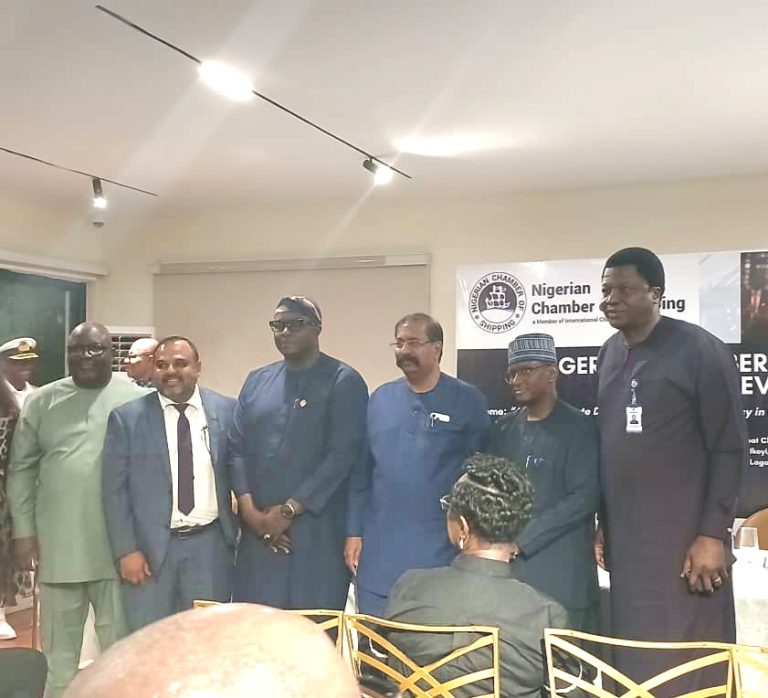
Captain Ladi Olubowale, former President of the Nigerian chapter of the African Shipowners’ Association and Group Managing Director/CEO of Seamate Maritime Integrated Services Limited, made the case at a Public-Private Dialogue with CEOs organised by the Nigerian Chamber of Shipping in Lagos. The event, themed “Unlocking Efficiency in the Marine and Blue Economy Value Chain,” drew industry leaders, cargo owners, terminal operators and policymakers, with Dangote Group’s Group Vice President, Edwin Devakumar, attending as guest CEO.
Olubowale argued that Nigeria’s maritime strategy has spent too long fixated on vessel ownership in the abstract, when the real task is building the commercial conditions that make indigenous vessel acquisition bankable in the first place. His formulation: give credible Nigerian shipowners long-term CoAs, and those contracts become the foundation on which vessels are financed, acquired and deployed.
He flipped the conventional sequencing — instead of waiting for indigenous firms to buy ships before handing them cargo, he proposed securing the cargo and the contract first, structuring finance around it, and letting qualified Nigerian operators acquire vessels against that guaranteed revenue.
For Dangote specifically, whose refinery, cement, fertiliser and industrial operations already generate heavy maritime cargo volumes, Olubowale sees an opening to become a genuine catalyst for Nigerian fleet development by allocating portions of its cargo requirements to qualified indigenous operators under structured, multi-year CoAs. Such arrangements, he said, would let Nigerian shipowners walk into banks, development finance institutions, export credit agencies, leasing firms and international vessel financiers with something concrete: identifiable cargo, predictable revenue and long-term contracts to show for it.
He extended the argument to crude and refined product haulage, noting that foreign-controlled vessels, including Suezmax tankers, still dominate lifting at Nigerian terminals such as Forcados, Bonny and Escravos, pocketing freight earnings generated by Nigerian-origin cargo. The policy question, in his view, is how Nigeria converts the movement of its own cargo into domestic assets, jobs, technical capacity and long-term economic value.
“There is no structural reason why Nigerian companies should not ultimately own and operate Suezmax tankers and other large commercial vessels,” Olubowale said, framing the goal as deliberate commercial capacity-building rather than protectionism without capability.
He set out a four-pillar model of Cargo, Contract, Finance and Vessel, in which cargo owners supply volumes, long-term CoAs convert those volumes into bankable paper, financial institutions fund the vessel purchases, and Nigerian shipowners supply the ships, crewing and technical management. He said this model would complement, not replace, government-backed tools such as the Cabotage Vessel Financing Fund (CVFF), keeping the commercial engine in private hands while government sticks to enabling and regulating.
Olubowale called for sustained dialogue among policymakers, cargo owners, shipowners, terminal operators and financiers, arguing that Nigeria’s cargo base — spanning petroleum products, cement, fertiliser, agriculture and industrial goods, and set to grow further under AfCFTA-driven intra-African trade — is large enough to build a genuinely competitive indigenous shipping industry, if it’s deliberately harnessed rather than left to foreign carriers.
“If we connect Nigerian cargo to Nigerian maritime capacity, we will not merely acquire ships. We will build a sustainable shipping industry,” he said
Nigeria Watch
Olubowale’s cargo-first pitch lands in a familiar gap for Waterways News readers: the distance between policy rhetoric on indigenous fleet-building and the commercial reality that keeps foreign tonnage dominant on Nigerian trade lanes. His four-pillar model is, in effect, a private-sector workaround for a problem the CVFF was meant to solve through government-backed financing and his explicit framing of it as complementary to, not a substitute for, the Fund is notable given how long CVFF disbursement has stalled.
The specific call-out to Dangote is also worth watching. A company generating that volume of captive cargo including refined products, cement and fertiliser could, if it acted on this, become one of the few private actors with the scale to single-handedly seed a viable indigenous tanker or bulk fleet, something years of NIMASA reform announcements have yet to achieve for the sector’s informal and small-scale operators tracked closely in this publication (WABOTAN and ATBOWATON). Whether Dangote or any major shipper, actually commits to multi-year CoAs with Nigerian carriers, rather than continuing to charter foreign tonnage on the open market, will be the real test of whether this dialogue moves beyond another CEO forum.
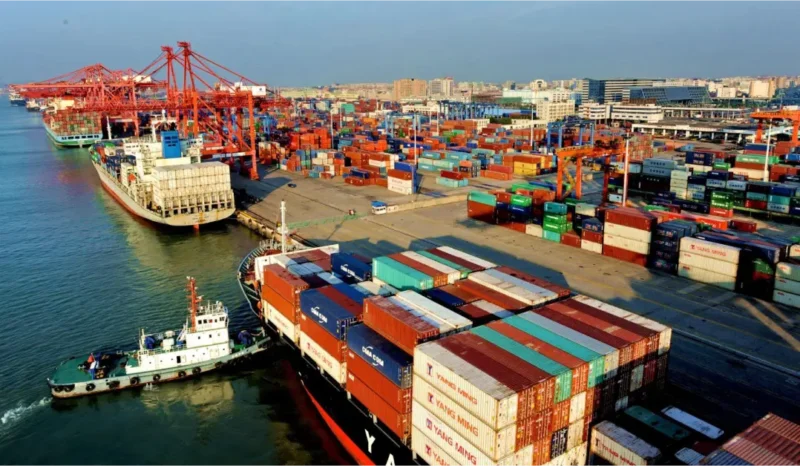
NPCC: FG’s £746m Apapa, Tin-Can Port Overhaul to Deliver Green, Smart Terminals
The Federal Government’s £746 million facility for the rehabilitation of the Apapa and Tin-Can Island ports is designed to convert both facilities into green and smart ports, with automation and digital systems central to the modernisation drive, the Nigerian Ports Consultative Council (NPCC) has said.
Chairman of the council’s Ports Operations and Security Committee, Capt. Iheanacho Ebubeogu, disclosed this while reviewing port operations and security for the second quarter of 2026, in an interview with the News Agency of Nigeria (NAN) in Lagos on Sunday.
Ebubeogu said the programme would deliver upgraded cargo-handling equipment, cut vessel turnaround and cargo dwell times, and improve environmental sustainability, while also boosting revenue generated from port operations.
He said the rehabilitation extends beyond Lagos, with contracts already awarded for the Escravos breakwaters and Terminals A and C, and the Federal Executive Council approving a channel management consortium to maintain and deepen channels serving the Delta ports.
At Rivers Port, Terminal 1 — operated by PTOL — is undergoing upgrades to berths one to three to improve safety and operational efficiency, Ebubeogu said, while Calabar Port would benefit from increased maintenance dredging. Rehabilitation work at the McKaiva and Malero jetties would also support trade along the eastern corridor.
Inland Dry Ports and Regulatory Reform
Ebubeogu said the administration of inland dry ports had been redesigned, with the Nigerian Ports Authority (NPA) now overseeing them as landlord in line with its statutory mandate.
He added that the Nigerian Shippers’ Council had formally transitioned into the Nigerian Port Economy Regulatory Agency (NPERA), which will regulate the tariffs, charges and rates imposed by shipping lines and terminal operators.
On expansion, Ebubeogu said site clearing had begun at the Snake Island concession area, part of efforts to grow port capacity, attract investment and strengthen the competitiveness of Nigeria’s maritime sector.
Nigeria Watch
The £746 million figure Ebubeogu cites has been public since March, when the UK and Nigeria signed the UK Export Finance-backed facility during President Tinubu’s Downing Street meeting with Prime Minister Keir Starmer — a deal structured through Citibank and carrying a UK-content requirement (steel supply from British Steel, and roughly 20 percent of project components sourced from UK firms). What Ebubeogu’s Q2 review adds is confirmation that the long-delayed financing has finally cleared its bureaucratic bottlenecks and construction is understood to be starting, after similar timelines slipped in 2024 and earlier in 2026.
For Waterways News readers tracking the gap between announcement and delivery, three things are worth watching. First, the NPERA transition Ebubeogu references is not a minor administrative footnote — it is the operational birth of the tariff regulator created under the NPERA Act, and how it exercises its new powers over shipping lines and terminal operators will matter more to importers and freight forwarders than the port-modernisation headlines.
Second, the shift of inland dry ports to NPA landlord administration touches directly on jurisdictional questions this desk has followed closely amid the NIWA-LASWA disputes — a redesign of who administers dry ports is a governance story in its own right, not just an infrastructure update.
Third, Snake Island site clearing is an early-stage signal only; NPCC and NPA statements on new capacity have a long history of preceding, sometimes by years, any visible construction.
None of the eastern-corridor commitments — Calabar dredging, McKaiva and Malero jetty rehabilitation — come with disclosed timelines or budgets in this briefing, a pattern familiar to operators along the Delta and eastern waterways who have waited through successive administrations for the Escravos breakwater reconstruction alone.
Waterways News will continue tracking disbursement and delivery timelines against Ebubeogu’s Q2 claims in subsequent quarterly reviews.
Blue Economy
Apapa’s Export Gambit: APM Terminals Bets on Round-the-Clock Barges, Rail to Break Cargo Logjam
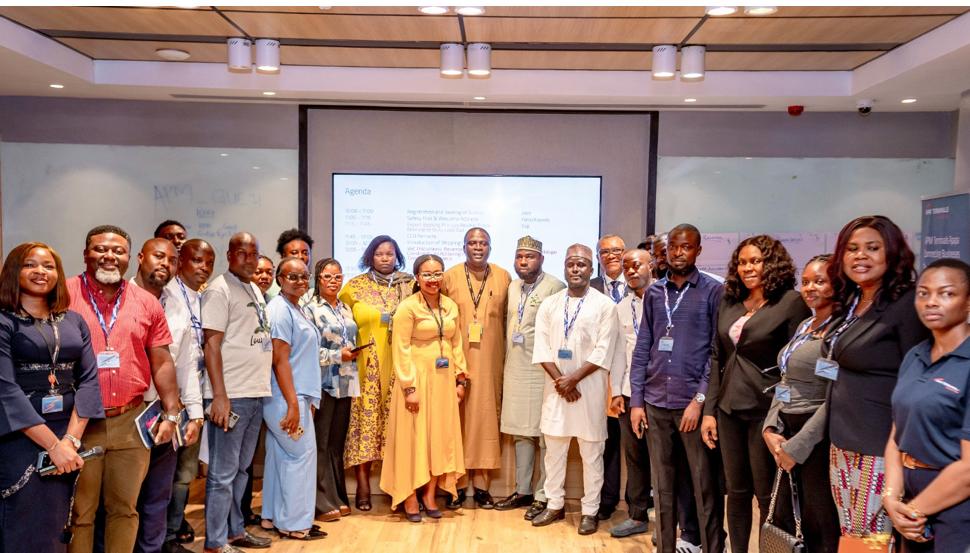
Apapa’s Export Gambit: APM Terminals Bets on Round-the-Clock Barges, Rail to Break Cargo Logjam
By Okeoghene Onoriobe | Waterways News
APM Terminals Apapa says it is moving to unclog one of the most persistent chokepoints in Nigeria’s export trade, unveiling plans to run barge operations at its Finger Jetty around the clock from the fourth quarter of 2026, alongside an ambitious push to shift up to 60 per cent of its export containers onto rail.
The disclosures were made at the third edition of the terminal’s Exporters Forum, themed “Exports – Voice of Customers Forum,” which drew exporters, shipping lines, logistics operators, regulators and academics to Lagos to dissect the bottlenecks still weighing down Nigeria’s export supply chain.
Head of Commercial at APM Terminals Apapa, Kayode Olufemi-Daniel, told the gathering that the terminal was working backward from the pain points exporters actually face, rather than imposing solutions from the top. He described a process of mapping root causes with stakeholders and building a joint action plan to lift export volumes.
At the centre of that plan is the dedicated Finger Jetty, which will begin 24-hour barge operations in the last quarter of the year. The facility will handle both inbound and outbound containers, giving customers round-the-clock capacity to move export cargo in, evacuate imports, and bring in empty containers, a marked departure, Olufemi-Daniel said, from the days when barging competed for space on the terminal’s main quay.
Terminal management framed the expansion as part of a broader campaign to lure exporters back to Apapa and support the Federal Government’s push to diversify the economy away from oil.
Rail is the other pillar of the strategy. Key Client Manager Adesoji Olaniyan said the terminal currently runs evacuation arrangements through two rail locations, each handling roughly three weekly calls, with trains carrying about 60 TEUs apiece. Internal assessments, he said, continue to show rail as the most cost-effective evacuation option available to the terminal, underpinning its 60-per-cent target.
Stakeholders at the forum credited APM Terminals with sustaining an open channel for feedback and progress-tracking. COSCO Shipping Lines Nigeria’s Precious Idika pointed to the terminal’s Team View portal as a genuine simplifier for gating and payment processes, while Lagos Business School’s Prof. Frank Ojadi urged the terminal to replicate the model beyond Lagos, in export-producing hubs such as Kano and Port Harcourt. Representatives of Maersk Line, British American Tobacco Nigeria, PIL Nigeria, Allround Cargo Company and Star Living Nigeria also acknowledged visible operational improvements.
Nigeria Watch
For a sector Waterways News tracks closely — the fortunes of small-scale and cooperative waterway operators who move much of the cargo between Apapa’s berths and the wider Lagos waterway network — APM Terminals’ 24-hour barging expansion is worth watching beyond the headline. A dedicated jetty running around the clock means more berthing windows and, potentially, more work for the barge operators and cooperative associations, including outfits like WABOTAN and ATBOWATON, that service container movement in and out of Apapa. Whether that additional capacity translates into fairer scheduling and payment terms for informal and cooperative operators — as opposed to simply absorbing more volume for the terminal’s own commercial benefit — will be the real test of this initiative’s impact on the ground.
It is also a reminder of the structural imbalance this desk has flagged repeatedly: private terminal operators like APM Terminals can unilaterally expand infrastructure and set the terms of engagement, while NIWA’s regulatory framework for the inland waterway operators who plug into that infrastructure remains comparatively under-resourced. Prof. Ojadi’s call to extend the Apapa model to Kano and Port Harcourt is well made, but Waterways News would add that any replication should come with parallel investment in the waterway-side capacity including vessels, jetties, and safety standards that feeds these terminals, not just the terminal gates themselves.
Nigeria’s non-oil export ambitions cannot rest on rail and barge announcements alone; they depend on the informal operators who still move a large share of that cargo having a stake in how the gains are shared.

 Oil and Gas7 months ago
Tantita’s Pipeline Deal: $144m Contract, Rising Output, and the Questions that Deserve Answers
- MARITIME TRADE & SHIPPING7 months ago
World’s Largest Container Ship Sets New Maritime Record with 22,233 TEUs on Single Voyage
- Blue Economy7 months ago
Nigeria’s Coast Guard Bill: A Solution in Search of a Problem?