
Interviews
Dr. Otuaro Deserves Support, Not Unfounded Attacks — Ex-Militant Leader Defends Amnesty Programme Administrator


INTERVIEW: “Dr. Otuaro Deserves Support, Not Unfounded Attacks” — Ex-Militant Leader Defends Amnesty Programme Administrator
By Staff Reporter

As controversy swirls around the Presidential Amnesty Programme (PAP), a prominent Niger Delta voice has risen in defence of its embattled administrator.
General Peter Aghogho, Chairman of the Abuja chapter of the Urhobo Youth Council and former militant leader, has dismissed allegations of corruption and exclusion leveled against Dr. Dennis Otuaro, calling them politically motivated and unsupported by evidence.

In this exclusive interview, Gen. Aghogho addresses the accusations, explains why he believes Dr. Otuaro is the right person to lead the programme, and outlines what he sees as the path forward for the amnesty initiative under President Bola Ahmed Tinubu’s administration.
Q: General Aghogho, you’ve been vocal in your support for Dr. Dennis Otuaro as Administrator of the Presidential Amnesty Programme. Why do you have confidence in his leadership?
Gen. Peter Aghogho:
My support stems from direct knowledge of his competence and integrity. Dr. Otuaro understands the core objectives of the Presidential Amnesty Programme and has demonstrated clear commitment to making it more sustainable, accountable, and impactful for the Niger Delta region.
Q: Several youth groups claim Dr. Otuaro is sidelining genuine ex-agitators. How inclusive has his administration been from your perspective?
Gen. Peter Aghogho:
That claim is misleading. The programme today is more structured and inclusive than it has been in the past. Dr. Otuaro inherited a system plagued by deep-rooted challenges. He’s working systematically to address long-standing imbalances, not create new ones.
Q: Critics allege the programme is being run as a “family or cronies’ affair.” How do you respond?
Gen. Peter Aghogho:
That allegation is both unfair and unsubstantiated. The Presidential Amnesty Programme operates through established institutional frameworks, committees, and civil service procedures. Decisions are guided by policy and due process, not personal interests.
Q: As someone who participated in the Niger Delta struggle, do you believe Dr. Otuaro understands the historical significance of the Amnesty Programme?
Gen. Peter Aghogho:
Absolutely. Dr. Otuaro is a son of the Niger Delta who was involved in the struggle long before his appointment as administrator. He understands the terrain, the sacrifices made, and the political history that birthed this programme. His policies reflect respect for that struggle while focusing on peace consolidation, capacity development, and long-term regional stability.
Q: There are allegations of financial mismanagement and diverted funds. Have you seen evidence supporting these claims?
Gen. Peter Aghogho:
I haven’t seen any credible evidence. On the contrary, Dr. Otuaro has strengthened internal controls, documentation, and accountability mechanisms within the programme. While allegations should be investigated, we must not allow accusations to replace facts.
Q: Some argue that the criticisms against Dr. Otuaro are pushback against his reforms. Do you agree?
Gen. Peter Aghogho:
Yes, very much so. Reforms always attract resistance, especially from those who benefited from opaque systems. Many of these attacks are reactionary, aimed at discrediting an administration that is closing loopholes and insisting on transparency.
Q: What mechanisms exist to verify beneficiaries, and how effective are they?
Gen. Peter Aghogho:
The programme has verification processes involving records, profiling, and inter-agency collaboration. While no system is perfect, Dr. Otuaro is actively improving beneficiary verification to ensure the programme truly serves those it was designed for.
Q: How has Dr. Otuaro improved transparency and capacity building within the programme?
Gen. Peter Aghogho:
Under his leadership, there’s renewed emphasis on education, vocational training, leadership development, and sustainable empowerment. These are long-term investments that reduce restiveness and prepare beneficiaries to contribute meaningfully to society and national development.
Q: What’s your message to ex-agitators who feel marginalized under the current administration?
Gen. Peter Aghogho:
Engage constructively. The doors of the Amnesty Office are open. Dialogue, patience, and institutional engagement—not threats or misinformation—remain the best path to resolution.
Q: Are the calls for Dr. Otuaro’s removal driven by genuine concern or other interests?
Gen. Peter Aghogho:
Many of these calls are clearly politically motivated or driven by personal interests rather than the collective good of the Niger Delta. Genuine concerns should follow due process, not media trials or sensationalism.
Q: How important is leadership continuity at this stage of the programme?
Gen. Peter Aghogho:
Continuity is critical. The programme is at a delicate reform stage. Frequent leadership changes will only derail progress. Dr. Otuaro deserves the opportunity to fully implement his reform agenda in line with President Tinubu’s Renewed Hope vision.
Q: What’s your message to President Tinubu and Niger Delta stakeholders regarding Dr. Otuaro’s stewardship?
Gen. Peter Aghogho:
Support stability, reform, and due process. Dr. Otuaro is working in the interest of peace and development. The Amnesty Programme must be strengthened, not undermined by unverified accusations, so it can serve both present and future generations.
Responding to Recent Allegations
When asked about recent calls by a group identifying itself as “Concerned Youth of the Niger Delta” demanding Dr. Otuaro’s removal, Gen. Aghogho dismissed the allegations as baseless.
“I do not share their views,” he stated. “Dr. Otuaro has demonstrated commitment to reforms, inclusiveness, and transparency. He meets regularly with ex-agitators and stakeholders, maintains close contact with the region, and ensures peace is sustained. Impacted communities are now direct beneficiaries of projects, and the era of inflated contracts is over. It’s no longer business as usual.


Why SWAAADO Advocates for Simplified Licensing Processes for Waterways Operators With Limited Formal Education
By Oghenewoke Onoriode, Waterways News Correspondent
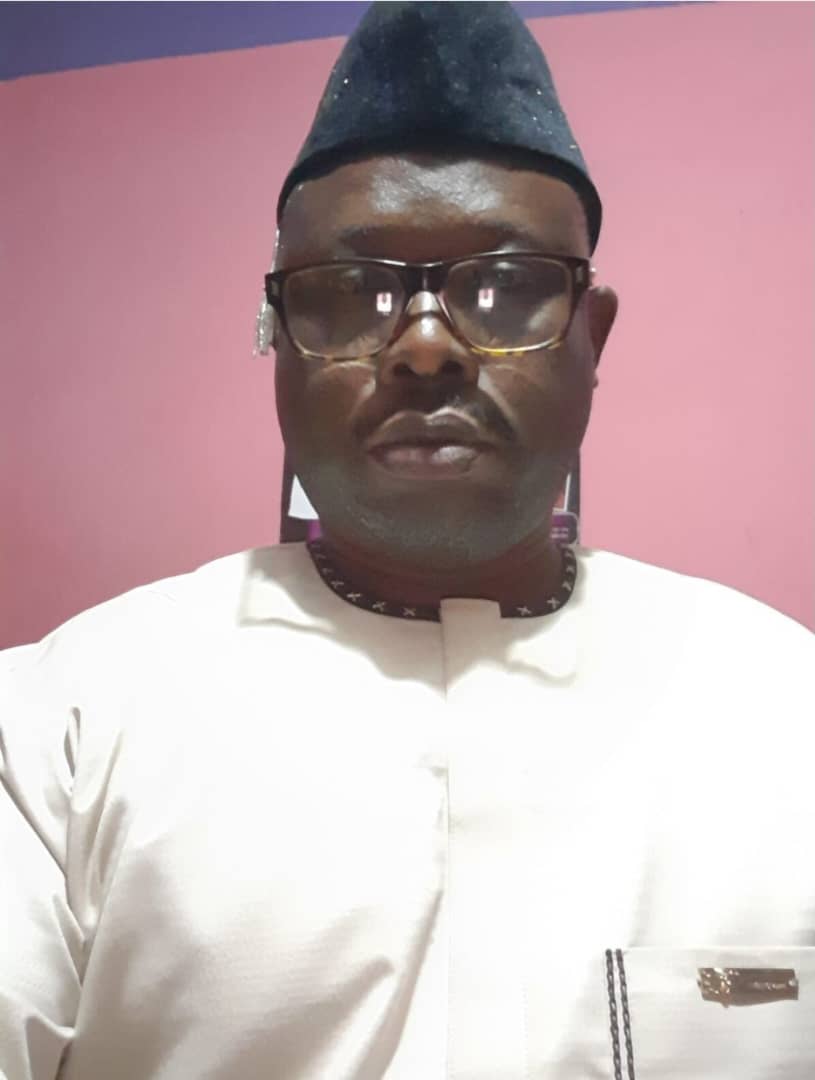
On a humid morning in Lagos, where the hum of boat engines and the splash of murky waters paint a familiar picture of Nigeria’s bustling waterways, Mr. Osaweren O. Larry sat across from our correspondent with the calm but resolute disposition of a man on a mission. As the Head of Desk, Training and Campaign of the Sustainable Waterways Awareness Advancement and Advocacy Organization, popularly known as SWAAADO, he had a story to tell — one that touches the lives of thousands of men and women who navigate Nigeria’s inland waterways daily, often without a single certificate to their name.
Comrade Larry O Osaweren
Head of Desk, Training and Campaigns SWAAADO
A Sector Left Behind
Nigeria’s waterways sector is vast, vital, and deeply informal. From the creeks of the Niger Delta to the lagoons of Lagos, boat and ferry operators form the backbone of water transportation in the country. Yet, according to Mr. Larry, a staggering 95 percent of boat and ferry skippers and workers operating across these waterways have had little to no formal education. They learned their trade on the water — from fathers, uncles, and community elders — not in classrooms or training academies.
“When you look at the waterways sector of Nigeria today,” Mr. Larry told Waterways News in an exclusive interview, “95 percent of boat and ferry skipper/workers are highly informal. And to formalize this sector, we need a level of education — and once you are educated, you start to think high.”
It is a statement that carries both promise and paradox. Education elevates. But in a sector where most operators have never sat through a formal school year, demanding standard educational qualifications as a prerequisite for licensing is, in the words of SWAAADO, a barrier rather than a bridge.
“95 percent of boat and ferry skippers and workers operating across these waterways have had little to no formal education. They learned their trade on the water — from fathers, uncles, and community elders — not in classrooms or training academies”
The Licensing Dilemma
At the heart of SWAAADO’s advocacy is a straightforward but deeply consequential question: how do you regulate a workforce that has been largely untouched by formal systems, without rendering their livelihoods illegal overnight?
The current regulatory framework governing Nigeria’s waterways requires operators to meet licensing standards that, while well-intentioned, do not account for the educational realities of the majority of those working on the water. For many skippers — men who have safely ferried passengers across treacherous currents for decades — the licensing process feels less like a pathway to legitimacy and more like a wall built to shut them out.
Mr. Larry is deeply aware of this tension. SWAAADO’s campaign is not a call to abandon standards. Rather, it is a call for a smarter, more humane approach to bringing order to a chaotic but critical sector.
“With the current structure in the sector today,” he explained, “paying the skippers a befitting salary becomes an issue at the immediate. But when we train the informal workers, we gradually develop the sector without going through the harshness of regulatory difficulties.”
Training as the Middle Path
What SWAAADO proposes is a graduated, training-centered model — one that meets informal operators where they are, rather than where regulators wish they were. Instead of requiring a School Certificate or its equivalent as a precondition for licensing, the organization advocates for practical competency-based assessments that test what truly matters on the water: navigation skills, safety knowledge, emergency response, and vessel maintenance.
The logic is compelling. A skipper who cannot read a textbook may still possess an intuitive understanding of tidal patterns, weather shifts, and waterway hazards that no classroom can easily replicate. The goal, therefore, should be to harness that knowledge, supplement it with structured safety training, and bring these operators into a formal framework that works for them — and ultimately protects the passengers they carry.
This approach, SWAAADO argues, also solves a critical economic problem. If formal licensing overnight disqualifies the vast majority of waterways workers, the sector faces an acute labor shortage with no immediate solution. Vessels sit idle, routes collapse, and communities that depend on water transport — especially in riverine areas where roads are poor or nonexistent — suffer the consequences.
“A skipper who cannot read a textbook may still possess an intuitive understanding of tidal patterns, weather shifts, and waterway hazards that no classroom can easily replicate”
A Gradual Revolution
According to Comrade Larry, SWAAADO’s vision is not one of revolution but of gradual, sustainable transformation. By investing in training programs designed specifically for workers with limited formal education — using visual aids, local languages, and hands-on demonstrations — SWAAADO believes the waterways sector can be formalized without the social and economic disruption that heavy-handed regulation would bring.
“We gradually develop the sector,” he said, with the measured confidence of someone who has mapped out the long road ahead. It is a philosophy rooted in patience, pragmatism, and a genuine understanding of the people the sector serves.
For the thousands of skippers who wake before dawn to move commuters, traders, and schoolchildren across Nigeria’s waters, that philosophy could mean the difference between keeping their livelihoods and losing everything to a regulatory pen stroke.
“Formalizing the waterways, is not just about issuing licenses. It is about building people — and building people takes time, care, and a willingness to meet them where they are”
The Bigger Picture
SWAAADO’s advocacy ultimately speaks to a broader challenge facing Nigeria’s transportation sector: how to bring informal workers into the fold of regulation without criminalizing poverty or punishing the absence of opportunity. The waterways, for all their chaos, represent a lifeline for millions of Nigerians. The men and women who operate them deserve a licensing framework that acknowledges their realities, respects their experience, and invests in their growth.
As Mr. Osaweren O. Larry rose to leave at the end of the interview, he left our correspondent with a thought that lingered long after the recorder was switched off. Formalizing the waterways, he suggested, is not just about issuing licenses. It is about building people — and building people, he knows, takes time, care, and a willingness to meet them where they are.
Waterways News remains committed to reporting the stories that shape Nigeria’s maritime and inland waterways sector. For inquiries and contributions, contact our editorial desk.
-
 Blue Economy2 weeks ago
Nigeria’s Coast Guard Bill: A Solution in Search of a Problem?
-
 News2 weeks ago
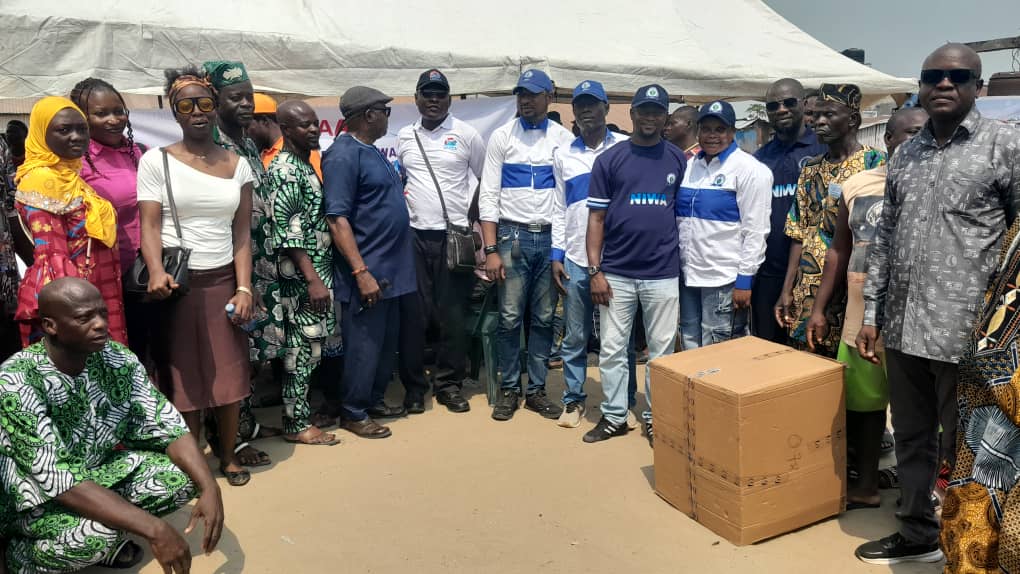
From Awareness to Action: How SWAAADO is Rewriting Nigeria’s Waterways Safety Story
-
 Blog2 weeks ago
SWAAADO Intensifies Waterways Safety Sensitization Campaign to Waterfront Communities in Lagos State.