
Blue Economy
Fact-Check: NIWA’s 70% Boat Accident Reduction Claim


Summary:

This article reveals that while NIWA has achieved genuine progress (30% reduction saving ~100 lives annually), the 70% claim is 2.4 times overstated due to methodological flaws. The visualization chart breaks down exactly how the numbers were manipulated and what the verified reality shows.
By Bode Animashaun

The National Inland Waterways Authority (NIWA) recently received the Maritime Agency of the Year 2025 award from New Telegraph newspaper, celebrated for achieving a remarkable 70% reduction in boat mishaps across Nigeria’s inland waterways. Acting Managing Director Alhaji Umar Yusuf Girei accepted the honor at the Lagos Oriental Hotel, Victoria Island, dedicating it to the agency’s staff and former Managing Director Bola Oyebamiji.
While NIWA’s safety initiatives deserve recognition, a detailed examination of the underlying data reveals significant methodological flaws that call the 70% figure into serious question. This fact-check investigation separates genuine achievement from statistical manipulation.
DISPUTE AREAS
#1: Comparing Incomplete Years to Full Years
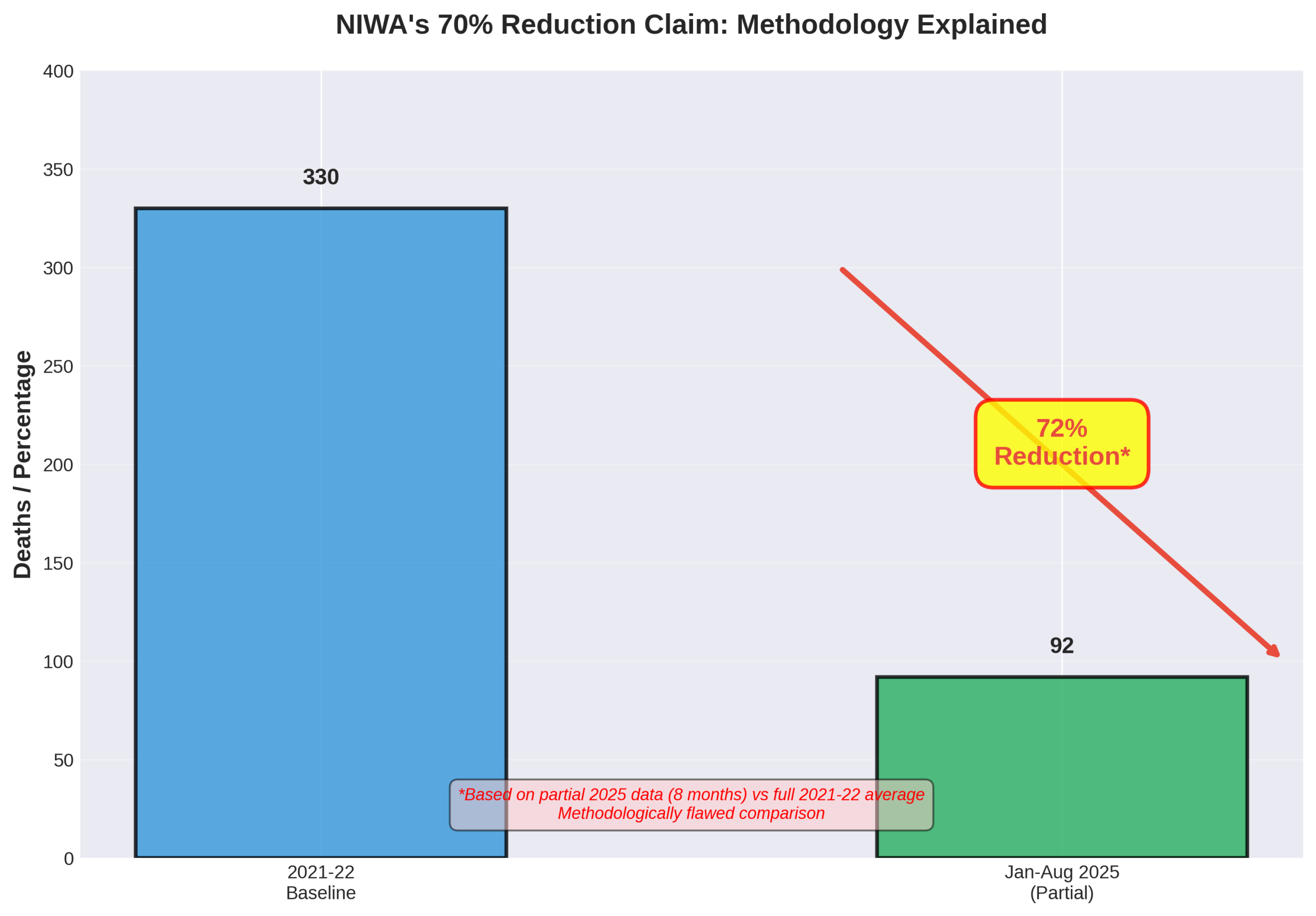
The Claim: NIWA reported a 72% reduction in boat accident fatalities (rounded to 70% for public communication).
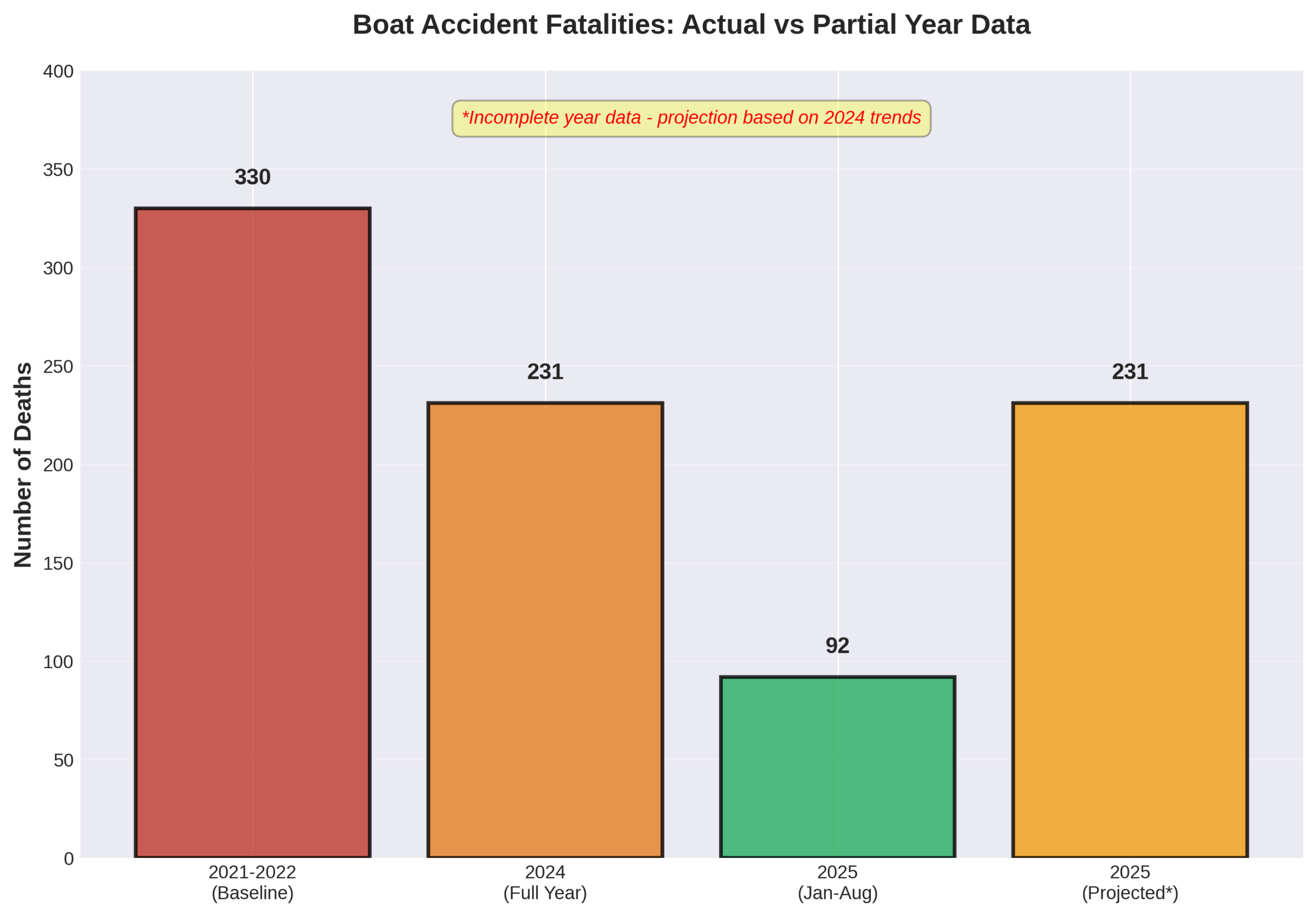
The Methodology: NIWA compared 330 deaths from the 2021-2022 baseline period against 92 deaths recorded between January and August 2025.
Why This Is Problematic:
The fundamental flaw lies in comparing eight months of data against a full-year average. This is statistically invalid and creates a misleading impression of progress. The calculation essentially measures: (330 – 92) ÷ 330 = 72% reduction.
However, this approach assumes that boat accidents occur evenly throughout the year—a demonstrably false assumption. Historical data shows that October through December experiences the highest incident rates due to:
- Seasonal flooding that increases water traffic
- Year-end festival travel creating overcrowding
- Reduced visibility during harmattan weather conditions
- Increased commercial boat activity as farmers transport harvests
By cutting off the comparison in August, NIWA’s calculation excludes the most dangerous quarter of the year, artificially inflating the reduction percentage.
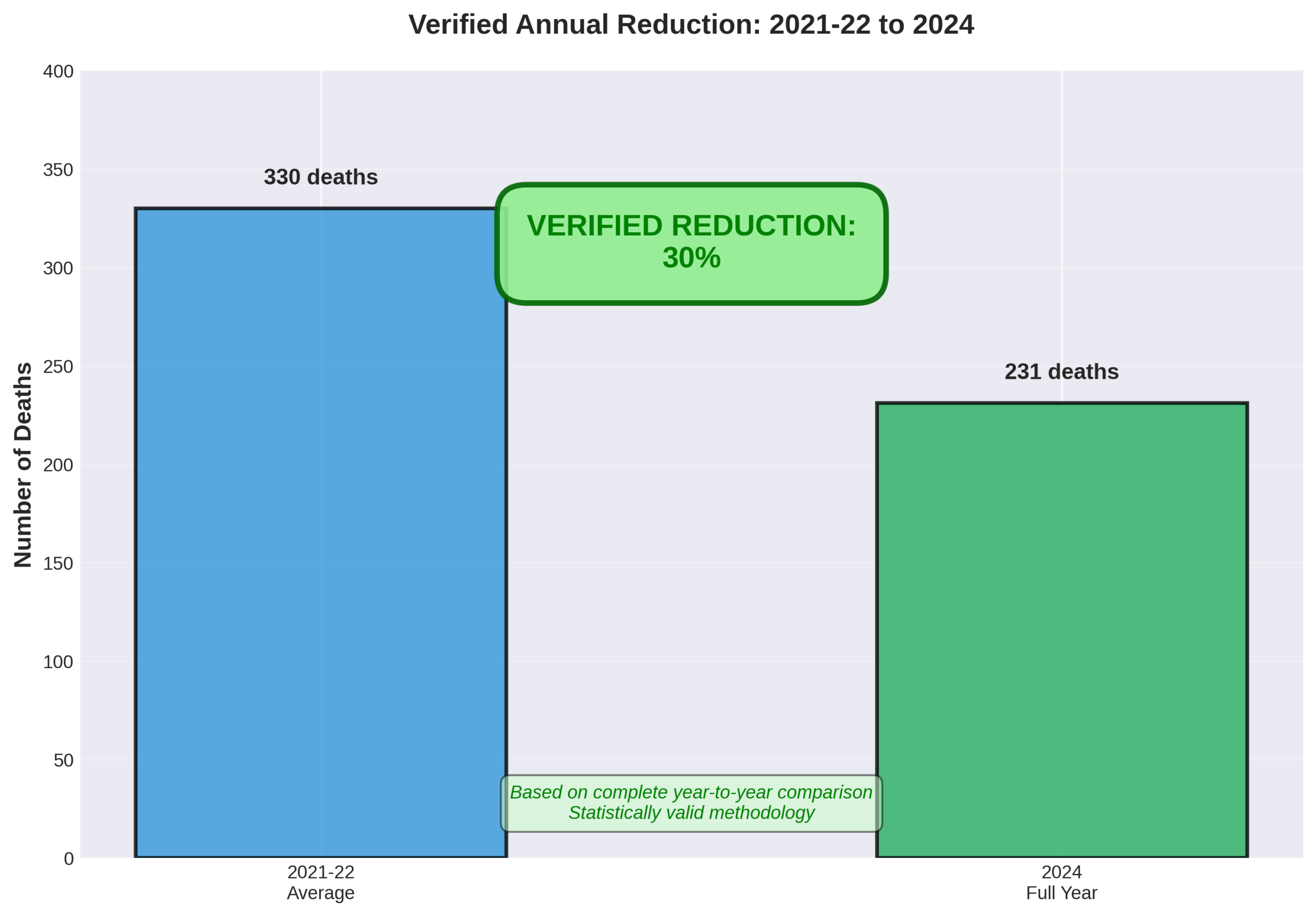
The Reality Check: When comparing complete years—2021-2022 average (330 deaths) versus the most recent complete year of 2024 (231 deaths)—the verified reduction is 30%, not 70%.
#2: Ignoring Immediate Contradictory Data
The Timeline Problem:
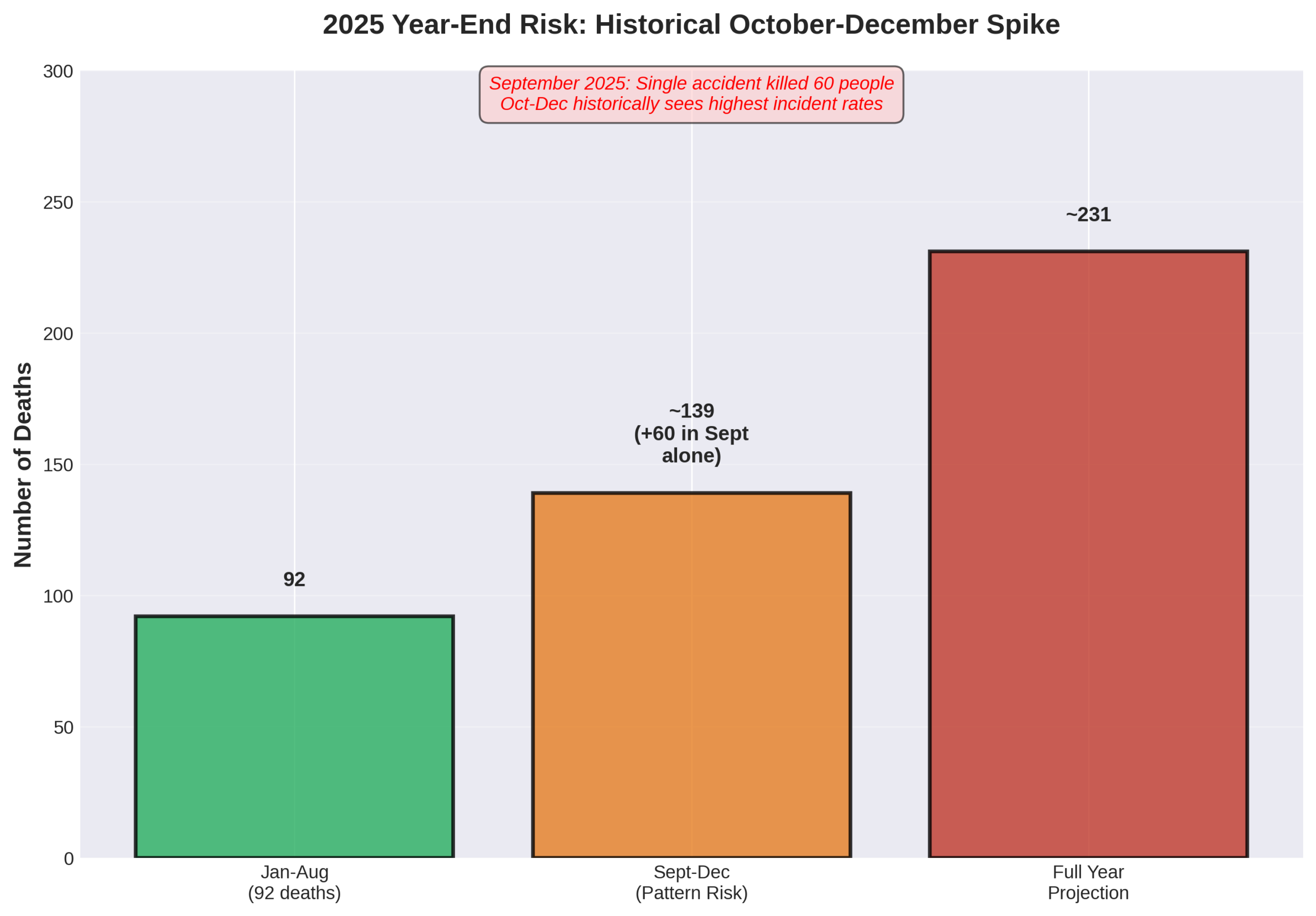
Shortly after NIWA announced its 72% reduction claim in August 2025, a catastrophic boat accident occurred in September 2025, killing 60 people in a single incident. This tragedy:
- Raised the 2025 death toll from 92 to 152 within weeks of the award announcement
- Immediately reduced the claimed 72% reduction to approximately 54%
- Demonstrated the danger of making statistical claims based on incomplete data
Why This Matters:
The September accident wasn’t an aberration—it fits the historical pattern of late-year incidents. NIWA’s methodology essentially predicted that boat accidents would stop occurring for the remainder of 2025, an assumption contradicted by both historical trends and immediate events.
If the year-end pattern holds (and September’s tragedy suggests it will), 2025 is on track to record approximately 231 deaths—nearly identical to 2024’s figures and representing a 0% improvement year-over-year, despite the claimed 70% reduction.
#3: Selective Baseline Manipulation
The Baseline Question:
NIWA chose to use a 2021-2022 average as its baseline rather than the immediately preceding year (2024). While averaging multiple years can provide stability, in this context it serves to maximize the appearance of reduction.
The Alternative Interpretation:
If NIWA had compared 2025 performance against 2024 (the most recent complete year), even using their flawed partial-year methodology, the reduction would appear much smaller. Using January-August 2024 data against January-August 2025 would likely show minimal change, undermining the award narrative.
By reaching back to 2021-2022, when boat accident deaths were at their peak, NIWA created the largest possible gap between baseline and current performance—a classic technique for inflating improvement statistics.
Conflating Partial Success with Complete Victory
What NIWA Actually Achieved:
The agency has implemented legitimate safety reforms:
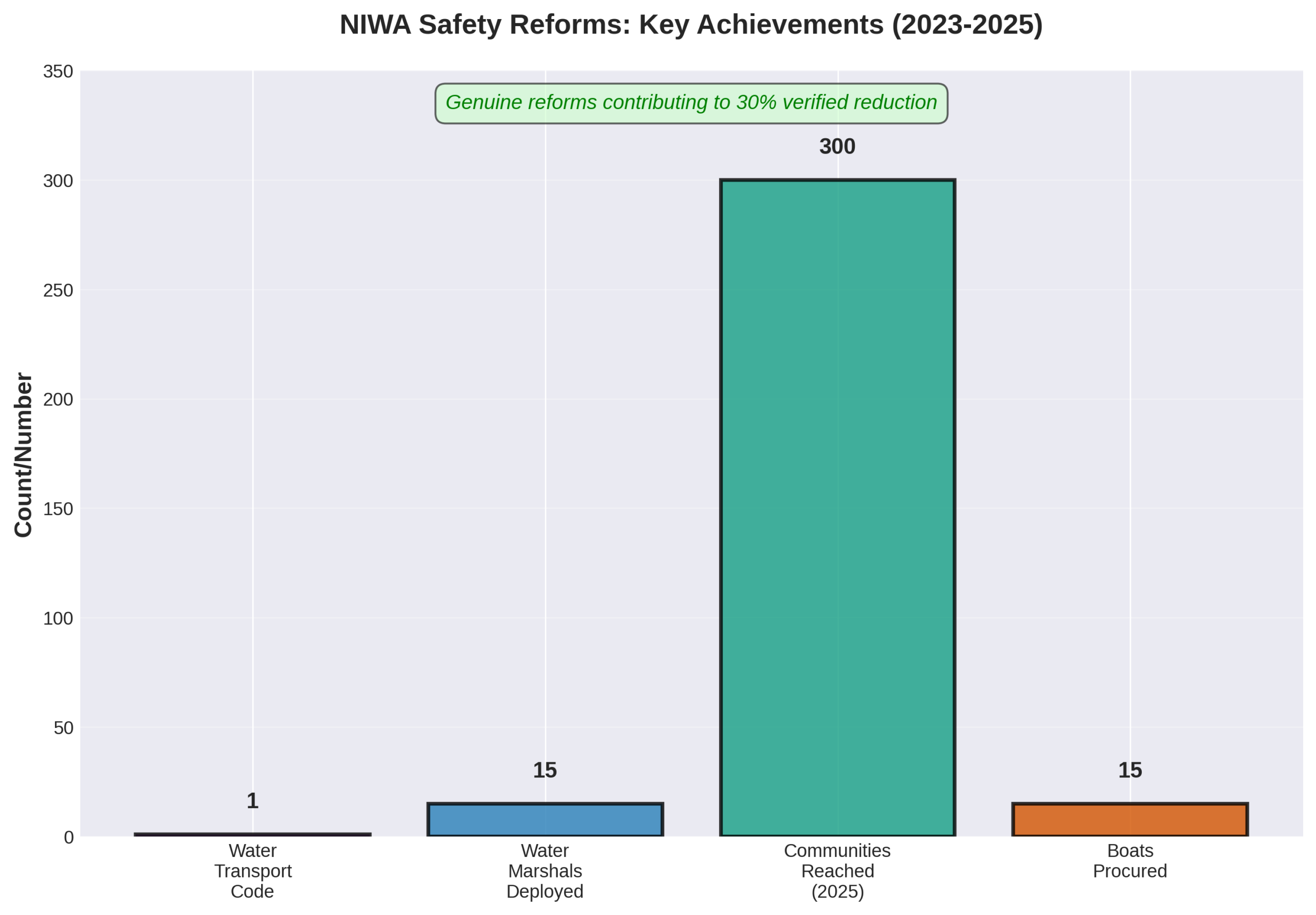
- April 2024: Launched the Inland Waterways Transportation Code establishing mandatory safety standards
- 2023-2025: Deployed 15 specialized boats including surveillance vessels, enforcement craft, and water ambulances
- 2025: Conducted safety campaigns across 300+ riverine communities
- Ongoing: Stationed Water Marshals at major embarkation points to enforce life jacket requirements and loading limits
- August 2025: Successfully rescued 104 passengers from the Kainji Lake capsizing incident
These initiatives have contributed to a genuine 30% reduction in annual fatalities from 2021-2022 levels to 2024—a significant public health achievement that saves approximately 100 lives per year.
Why the Exaggeration Matters:
By claiming 70% instead of the verified 30%, NIWA creates several problems:
- False Complacency: Believing the problem is 70% solved may reduce urgency for continued reforms
- Budgetary Vulnerability: Politicians may argue that an agency achieving 70% success needs less funding, not more
- Credibility Damage: When the full-year 2025 data emerges showing results far below 70%, NIWA’s reputation for honest reporting will suffer
- Undermines Real Achievement: The genuine 30% reduction represents lives saved and deserves accurate recognition—exaggeration cheapens legitimate progress
The Political Context: Why Numbers Get Inflated
The Award Incentive Structure:
The New Telegraph award ceremony creates institutional pressure for impressive statistics. Agencies competing for “Maritime Agency of the Year” face temptation to present data in the most favorable light possible. A 30% reduction, while commendable, doesn’t generate headlines or trophies the way 70% does.
The Career Advancement Factor:
Acting Managing Director Girei may seek confirmation as permanent MD. Presenting dramatic success metrics strengthens his case for permanent appointment. Similarly, staff members seeking promotions benefit from association with “award-winning” performance.
The Budget Justification Cycle:
Nigerian government agencies face annual budget battles. An agency demonstrating 70% reduction in its core problem area can argue for:
- Expanded mandate to other waterways
- Increased personnel allocations
- Capital expenditure for additional boats and equipment
- International recognition and donor funding
A more modest 30% reduction, while still positive, carries less budgetary leverage.
What Independent Verification Shows
Verified 2024 Full-Year Data:
- Total boat accident deaths: 231
- Reduction from 2021-2022 baseline (330): 99 deaths
- Percentage improvement: 30%
Projected 2025 Full-Year Data (Based on January-September):
- Deaths through September: 152 (including the 60-person September tragedy)
- Historical October-December average: ~79 additional deaths
- Projected year-end total: ~231 deaths
- Projected reduction from baseline: 30% (identical to 2024)
The Pattern:
NIWA achieved a genuine 30% reduction between 2021-2022 and 2024, and has maintained that level of performance into 2025. This represents stabilization at a new, safer baseline—a legitimate achievement. However, there is no evidence of the continued dramatic improvement the 70% figure implies.
Why the 30% Reduction Still Matters
Lives Saved:
A 30% reduction translates to approximately 100 fewer deaths annually compared to the 2021-2022 baseline. These are real people—fishermen, traders, students, families—who returned home safely because NIWA’s reforms worked.
Behavioral Change:
The deployment of Water Marshals and enforcement of safety codes has shifted operator behavior. Boat captains now face consequences for:
- Operating without sufficient life jackets
- Exceeding passenger capacity
- Traveling at night without proper lighting
- Launching from unauthorized, unsafe embarkation points
Infrastructure Development:
NIWA’s 15-boat fleet provides:
- Regular patrol presence deterring unsafe practices
- Rapid response capability for emergencies (as demonstrated in the Kainji Lake rescue)
- Visible government commitment to waterway safety
Community Engagement:
The 300+ communities reached through safety campaigns now have:
- Greater awareness of drowning prevention
- Understanding of their rights to refuse overloaded boats
- Knowledge of how to report unsafe operators
These achievements represent genuine institutional reform that should be celebrated accurately rather than exaggerated politically.
The Methodological Standard NIWA Should Have Used
Proper Comparison Framework:
- Annual Comparisons Only: Compare full year 2024 (231 deaths) to full year 2021-2022 average (330 deaths) = 30% verified reduction
- Quarterly Trend Analysis: Report January-August 2025 data (92 deaths) as preliminary figures requiring year-end confirmation, not as final achievement metrics
- Multi-Year Rolling Averages: Use three-year rolling averages to smooth out anomalies while still capturing trends
- Incident Rate per Journey: Calculate deaths per 100,000 passenger journeys to account for increased water traffic, providing context for absolute numbers
- Regional Breakdown: Separate statistics for Lagos lagoons, Niger River, Benue River, and Niger Delta to identify where reforms are working versus where additional focus is needed
The Path Forward: From Statistics to Lives
What NIWA Must Do to Maintain Credibility:
- Issue a Correction: Publicly acknowledge that the 70% figure was based on incomplete 2025 data and provide the verified 30% reduction when comparing complete years
- Commit to Transparency: Publish monthly accident statistics on NIWA’s website, including incident details, locations, and contributing factors
- Set Realistic Targets: Establish a goal of 50% reduction by 2027 through sustained enforcement and infrastructure expansion—an ambitious but achievable target
- Independent Verification: Partner with academic institutions or international maritime organizations to conduct third-party audits of accident data
- Focus on Remaining 70%: The 231 deaths recorded in 2024 represent 231 preventable tragedies. NIWA should treat these not as “acceptable losses” but as urgent imperatives for continued reform
What the Media Must Do:
Journalists covering the maritime sector should:
- Request full-year data before reporting reduction percentages
- Compare year-to-year figures using consistent methodologies
- Follow up on mid-year claims when annual data becomes available
- Hold agencies accountable for statistical accuracy, not just impressive-sounding numbers
What Citizens Should Demand:
Riverine communities and water transport users should:
- Insist on continued Water Marshal presence at embarkation points
- Report operators who violate safety codes
- Refuse to board overloaded or unsafe vessels, regardless of inconvenience
- Demand that budget allocations for NIWA increase to match its expanded safety mandate
Data Summary Table
| Metric | NIWA’s Claim | Verified Reality | Discrepancy |
|---|---|---|---|
| Baseline Period |
2021-22 avg: 330 deaths |
2021-22 avg: 330 deaths |
✓ Accurate |
| Comparison Data | Jan-Aug 2025: 92 deaths |
Full Year 2024: 231 deaths |
✗ Incomplete year used |
| Reduction Claimed | 72% (≈70%) | 30% (complete years) |
✗ 2.4x overstatement |
| 2025 Projection | ~92 deaths (implied) |
~231 deaths (likely) | ✗ 2.5x underestimate |
| Lives Saved Annually |
~238 (vs baseline) | ~99 (vs baseline) | ✗ 2.4x overstatement |
Verdict:
NIWA’s 70% reduction claim is methodologically flawed and substantially overstated. The verified reduction based on complete annual data is 30%—still a significant achievement, but less than half the claimed figure.
Conclusion: The Difference Between Progress and Public Relations
NIWA has achieved real, measurable progress in reducing boat accident deaths. The 30% reduction from 2021-2022 to 2024 represents lives saved, families kept whole, and communities made safer. This is worthy of recognition and should serve as a foundation for continued improvement.
However, by inflating that achievement to 70% through methodologically flawed comparisons, NIWA has transformed a genuine success story into a credibility problem. When the full 2025 data emerges—likely showing results closer to 2024’s 231 deaths rather than the 92 implied by the mid-year claim—the agency will face uncomfortable questions about whether its award was based on substance or spin.
The true test of NIWA’s commitment to water transport safety isn’t whether it can manipulate statistics to win awards, but whether it can sustain and build upon the genuine 30% reduction already achieved. That requires honest reporting, continued investment in enforcement, and an institutional culture that values lives saved over trophies earned.
The 231 Nigerians who will likely die in boat accidents in 2025—down from 330 in 2021-2022—represent both NIWA’s achievement and its unfinished work. They deserve an agency committed to truth in reporting as much as to safety in practice.
Supporting Visualization: See attached data verification chart for graphical representation of these findings.


NIGERIA TO LAUNCH $1BN BLUE ECONOMY FUND AT LAGOS SUMMIT IN MARCH
Initiative targets maritime start-ups across shipping, fisheries, and renewable energy as Nigeria bets on the ocean to close its GDP gap
By Okeoghene Onoriobe, Waterways News Correspondent, Abuja
Nigeria is set to launch a $1 billion fund dedicated to supporting start-ups in the blue economy and maritime sectors, with the official unveiling planned for the Blue Economy Investment Summit in Lagos from March 9 to 11, 2026.
The announcement was made on December 15, 2025, in Abuja by Ronke Kosoko, Chief Executive Officer of the Maritime Innovations Hub, during a press conference held alongside the summit’s preparatory activities.
What the Fund Will Do
The fund will provide direct financing to early and growth-stage start-ups operating across key segments of the maritime economy, including shipping, fisheries, coastal tourism, shipbuilding, and marine renewable energy. Beyond capital, it will also deliver training programmes, technical assistance, and access to international networks — addressing what Kosoko described as both the financing and capacity gaps that have long constrained the sector.
“The objective is to provide direct financing to start-ups while strengthening their technical and managerial capacity,” Kosoko said.
The initiative builds on an earlier $100 million financing package secured by Nigeria for maritime training and capacity building. Kosoko confirmed that discussions with financial partners are in their final stages, with fund representatives expected to return to Nigeria shortly to formalise commitments.
A Sector Punching Below Its Weight
The scale of the opportunity — and the frustration behind this push — is captured in a single striking figure. Despite Nigeria boasting one of the longest coastlines in West Africa at over 850 kilometres, and occupying a commanding position along major international shipping routes, the blue economy contributes less than 3% to Nigeria’s gross domestic product.
Kosoko attributed this underperformance to a combination of structural weaknesses: insufficient port infrastructure, a shortage of reliable economic data, and a regulatory environment that has at times discouraged private investors from committing capital to the sector.
The fund, she argued, is designed precisely to break that cycle. With structured financial support, authorities believe the blue economy could help close a portion of Nigeria’s estimated $750 billion GDP gap — converting what are currently informal or underdeveloped maritime activities into tax-generating, job-creating businesses.
Diversification Imperative
The launch comes at a moment when Nigeria’s drive to reduce its dependence on oil revenues has taken on fresh urgency. The federal government has identified the blue economy as a priority sector for long-term economic growth, and this fund represents one of the most concrete financing commitments to that vision to date.
By combining capital, capacity building, and international market exposure in a single vehicle, the fund also aims to make Nigeria a more attractive destination for global maritime investors and industrial partners looking for entry points into West Africa’s largest economy.
IMO Return Adds Credibility
The announcement dovetails with Nigeria’s recent return to the council of the International Maritime Organization after a 14-year absence. In late November 2025, the country was elected to the IMO Council for the 2026 term under Category C, a category reserved for states with specific and significant interests in maritime transport.
Minister of Marine and Blue Economy Adegboyega Oyetola welcomed the election as international recognition of the reforms and security improvements Nigeria has achieved in the Gulf of Guinea. He said the IMO seat is expected to strengthen Nigeria’s international partnerships, improve access to technical assistance, and send a positive signal to investors watching the country’s maritime trajectory.
Together, the IMO election and the upcoming $1 billion fund launch paint a picture of a sector that — after years of unfulfilled potential — may finally be gathering the momentum its geography has long demanded.
The Blue Economy Investment Summit holds in Lagos from March 9 to 11, 2026.
— Waterways News NG | www.waterwaysnews.ng
Lagos Rides the Wave of Nigeria’s Blue Economy Boom
How Lagos Is Riding the Wave of Water Transportation, Electric Racing, and Africa’s $400 Billion Blue Economy
Special Report by: Okeoghene Onoriobe | Marine and Blue Economy Correspondent | Lagos-Nigeria
Lagos — Africa’s largest megacity — sits on a paradox. Despite having one of the most expansive waterway networks on the continent, less than 1% of its daily transportation uses water. But a major shift is underway. From passenger ferries multiplying five-fold at Ikorodu terminal, to Lagos hosting E1’s first-ever electric boat race in Africa, Nigeria is finally tapping into a resource that could help solve one of its most chronic urban problems: gridlock. And with the UNDP projecting Africa’s blue economy to hit $400 billion by 2030, the stakes — and the opportunities — have never been bigger.
1. The Problem: A City Drowning in Traffic — But Ignoring Its Waterways
Lagos is home to over 20 million people. On any given weekday, its road network — groaning under the weight of overcrowded buses, danfo minivans, and an ever-growing fleet of private cars — grinds to a near standstill. Commuters routinely spend four to six hours in traffic for journeys that should take under an hour. Yet few look out of their car window and consider the broader solution that flows quietly alongside them: the Lagos Lagoon and its vast network of creeks, rivers, and coastal waterways.
According to Professor Charles Asenime, an expert in Transport and Mobility at Lagos State University, this underutilisation is both staggering and entirely reversible:
“If you look at the structure of Lagos State, about 16% of the land mass is made up of water. And then we have the water network that is capable of taking you almost anywhere in Lagos. Despite this, the usage was very, very low — less than 1%.” — Prof. Charles Asenime, Lagos State University
Think about what that means: 16% of Lagos is water — a network of natural highways that could carry tens of thousands of commuters daily. For decades, this resource sat largely idle, not because it lacked potential, but because it lacked investment, political will, and public awareness.
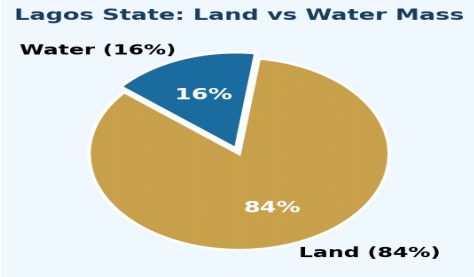
Figure 1 — Lagos State Land vs Water Composition. Source: Lagos State University Research
2. The Turning Tide: Government Steps In
The shift began when the Lagos State Government formally committed to developing its waterways as a strategic transport corridor. The Lagos State Waterways Authority (LASWA) was tasked with creating an enabling environment — improving terminal infrastructure, licensing operators, and setting safety standards. The effects have been tangible and swift.
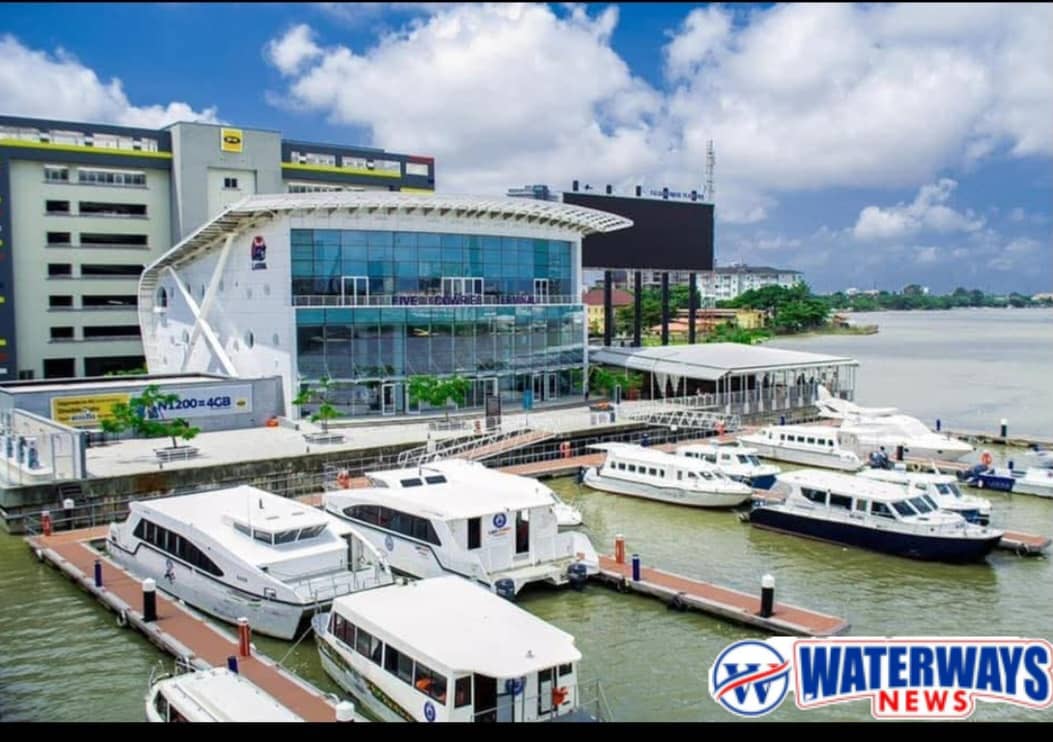
At the Ikorodu terminal, one of the busiest hubs in the state, the transformation is most visible. Private operators like GT Waterline Ferry Services have dramatically scaled their operations, attributing much of their growth directly to increased government engagement.
“In 2018, when this particular terminal where we are was still under construction, we were moving about 10, 15 boats per day. Now as of today we move nothing less than 50 boats in a day. On an average of 1,000 passengers daily, around about 7 destinations from our major hub.” — Atinuke Oyenuga, CEO — GT Waterline Ferry Services
The numbers tell a compelling story of growth — a 4x increase in vessel movements and a burgeoning daily ridership that rivals many land-based transit systems in the country.
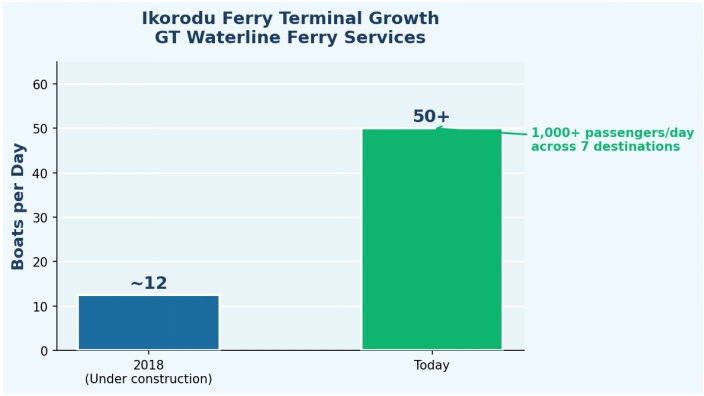
Figure 2 — Ikorodu Terminal: Boats per Day (2018 vs. Today). Source: GT Waterline Ferry Services
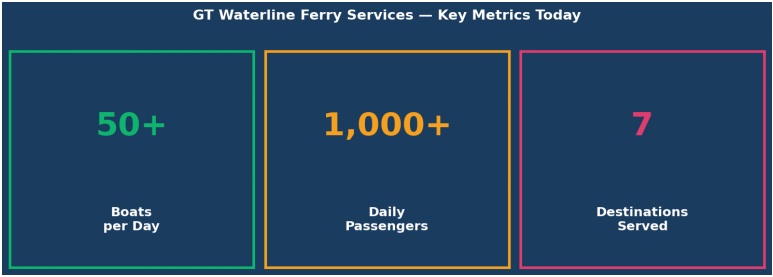
Figure 3 — GT Waterline Ferry Services: Key Performance Metrics Today
- Enter E1: When Electric Racing Meets Blue Economy Ambition
Water transportation in Lagos got a glamorous — and globally connected — boost when the E1 electric boat racing series chose Lagos as the site of its first-ever African race. E1, which describes itself as the “Formula E of the seas,” features sleek, fully electric race boats called RaceBirds that foil above the water at speeds of up to 50 knots. The spectacle of these futuristic vessels skimming across Lagos Harbour sent a powerful message: the waterways of Lagos are not just functional — they are world-class.
For Rodi Basso, CEO and co-founder of E1, the choice of Lagos was deliberate and deeply symbolic:
“E1 goes beyond the sport. The sport needs to play this kind of role which is inspirational. This comes with thought leadership, some concrete action on the coastal area.” — Rodi Basso, CEO & Co-Founder — E1 Racing
Basso envisions a legacy that goes well beyond the race itself — one where Lagos becomes a global reference point for sustainable water mobility, attracting investment, innovation, and talent to the city’s waterfront.
“We want to show that a different water mobility is possible for the future. This will bring developments, this will bring jobs, innovation, and will put Lagos potentially on the map as the place to go if you want to learn about the water mobility of the future.” — Rodi Basso, CEO & Co-Founder — E1 Racing
For local operators and regulators, the E1 race was more than a spectacle — it was a masterclass in possibility. Damilola Emmanuel, General Manager of LASWA, described the impact:
“It was where sustainability met innovation because what we saw happening with that boat race was a dynamic way of looking at water transport. A lot of the local operators could see the future — saying this is where we want to eventually be.” — Damilola Emmanuel, General Manager — LASWA
4. The $400 Billion Prize: Africa’s Blue Economy Opportunity
The excitement in Lagos is not occurring in isolation. Across Africa, governments, investors, and international bodies are waking up to the enormous untapped potential of the continent’s oceans, rivers, and lakes — what economists collectively call the “Blue Economy.” The United Nations Development Programme (UNDP) has estimated that Africa’s blue economy could generate over $400 billion annually by 2030, through sectors including fisheries, aquaculture, maritime trade, coastal tourism, offshore energy, and water transport.
Nigeria, with its extensive coastline along the Gulf of Guinea, the Niger Delta’s labyrinthine waterways, and the vast lagoon system of Lagos, is uniquely positioned to claim a significant share of this wealth. But experts are quick to note that seizing this opportunity requires more than infrastructure investment — it demands a commitment to sustainability.
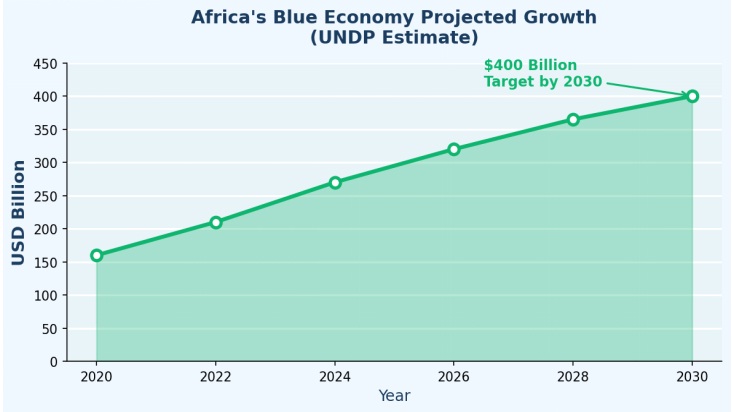
Figure 4 — Africa’s Blue Economy: Projected Revenue Growth to $400 Billion by 2030. Source: UNDP
- Sustainability: The Non-Negotiable Condition
Perhaps the most important voice in this story belongs not to a boat operator or a racing executive, but to an academic who has spent years studying how cities interact with water. Professor Asenime’s call for sustainability is both a warning and a roadmap:
“We must have waterways that are clean and clear. Then it will help the economy to come up. The bottom line is that it must be sustainable — so we don’t want to use it now and cause problems in the future. We want it to grow to the extent that those in the future will partake, they will benefit from what we are doing now.” — Prof. Charles Asenime, Lagos State University
This is a crucial insight. Lagos’s waterways currently face significant environmental pressures — plastic waste, oil spills, industrial runoff, and informal settlement encroachment. Without aggressive clean-up and protection measures, the same waterways being celebrated today could become degraded to the point of unusability within a generation.
The integration of electric vessels — as demonstrated by E1 — offers a glimpse of what zero-emission water transport can look like. If Lagos and Nigeria can align their blue economy ambitions with strong environmental governance, the model they build could become a template for cities across the Global South.
Key Takeaways at a Glance
|
Metric / Insight |
Data / Finding |
| Lagos water as % of total land mass | 16% |
| Water transport share of Lagos commuters | Less than 1% (pre-initiative) |
| Ikorodu ferry boats per day (2018) | ~10–15 |
| Ikorodu ferry boats per day (today) | 50+ |
| Daily passengers at Ikorodu hub | ~1,000 |
| Destinations served from Ikorodu | 7 |
| E1 Africa — first race location | Lagos, Nigeria |
| Africa Blue Economy (UNDP 2030 projection) | $400 Billion+ |
Additional reports by: Emetena Ikuku, Waterways News Reporter Researcher; Warri
For a follow up on this news report, always log on to Waterways News: www.waterwaysnews.ng
Delta State Launches Blue Economy Committees to Harness Wealth of Its Waters
By Okeoghene Onoriobe | Blue Economy Correspondent | Asaba-Delta State | Wednesday 25th February 2026
In a bold step toward economic diversification, the Delta State Government inaugurates dual committees to unlock the multi-billion-naira potential of its oceans, rivers, creeks and coastal belts.
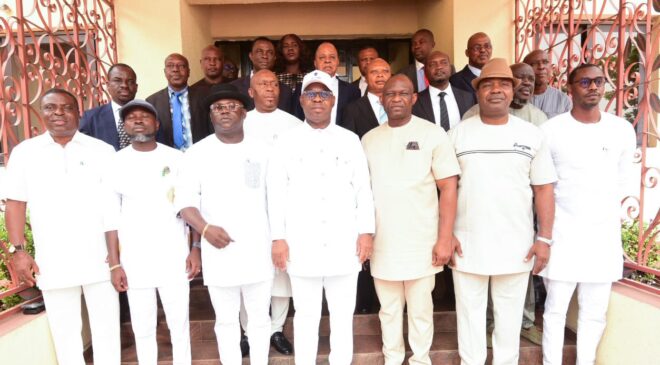
Delta State has taken a decisive step toward reshaping its economic future — one that looks not to the oilfields beneath its land, but to the rivers, creeks, coastlines and waterways that define its geography. On Tuesday, Deputy Governor Sir Monday Onyeme, Ph.D., formally inaugurated the Delta State Blue Economy Steering Committee and Technical Committee in Asaba, setting in motion a structured policy effort to tap into what experts describe as a largely underexploited frontier of economic growth.
Delta State Deputy Governor, Sir Monday Onyeme (front row, centre), flanked by members of the Blue Economy Steering and Technical Committees, shortly after their inauguration at Government House, Asaba, on Tuesday
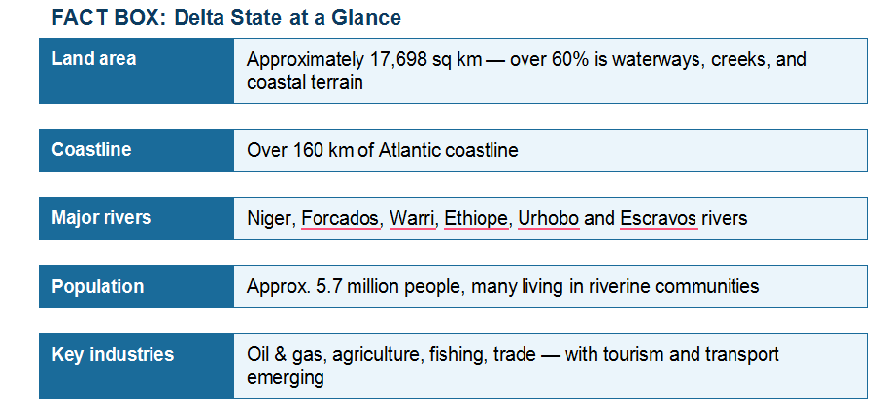
With hundreds of kilometres of waterways, a rich aquatic biodiversity, coastal communities, and direct access to the Atlantic Ocean through the Bight of Benin, Delta State sits on a goldmine that has, for decades, remained in the shadows of crude oil. The new committees are tasked with changing that narrative.
What Is the Blue Economy? Understanding the Concept
Before examining Delta’s strategic move, it is important to understand what the Blue Economy actually means — and why it matters.
The Blue Economy refers to the sustainable use of ocean and water resources for economic growth, improved livelihoods and jobs, while preserving the health of aquatic ecosystems. The term — popularised globally by the World Bank and the United Nations — covers a wide range of sectors:
- Fisheries and Aquaculture: Commercial fishing, fish farming, and seafood processing industries that feed populations and generate export revenue.
- Marine and Inland Water Transport: Freight and passenger movement across rivers, lakes, coastal waters and seas — cheaper and often more efficient than road transport.
- Coastal and Nautical Tourism: Eco-tourism, boat cruises, beach resorts, heritage water festivals and recreational water sports.
- Offshore Energy: Renewable energy such as wave, tidal and offshore wind power, as well as existing offshore oil and gas operations.
- Marine Mineral Resources: Extraction of sand, gravel, salt and other minerals from seabeds and riverbeds.
- Shipbuilding and Marine Engineering: Construction and maintenance of boats, vessels, barges and offshore platforms.
- Coastal Real Estate and Infrastructure: Development of ports, jetties, waterfront markets and riverine residential communities
Globally, the Blue Economy is valued at over $1.5 trillion annually and is expected to double by 2030, according to the World Bank. For a riverine state like Delta — home to approximately 60% waterways and coastal territory — the sector represents a transformational opportunity.
“The Blue Economy encompasses all economic activities linked to oceans, seas, coastal areas and inland waterways — including the production, distribution and consumption of goods and services connected to marine and mineral resources.” — Dr. Barry Pere-Gbe, Chief Economic Adviser to the Governor
The Two Committees: Their Roles and Composition
To translate policy ambition into concrete action, the state government has established two distinct but complementary bodies — each with a defined function in the Blue Economy governance architecture.
1. The Blue Economy Steering Committee
This is the high-level policy organ. Chaired by Deputy Governor Sir Monday Onyeme, the Steering Committee is responsible for setting strategic direction, approving frameworks and ensuring that all participating ministries, departments and agencies (MDAs) align their work with the state’s Blue Economy vision.
Members are drawn from the following key sectors of government:
- Ministry of Environment — oversees ecosystem protection, pollution control and environmental sustainability.
- Ministry of Transport — responsible for waterway transport policy, jetty infrastructure and maritime regulation.
- Ministry of Agriculture — focuses on fisheries development, aquaculture expansion and food security.
- Ministry of Riverine Infrastructure — handles construction of waterfront facilities, bridges and creek development.
- Ministry of Housing — integrates waterfront urban planning and development.
- Ministry of Energy — explores offshore and tidal renewable energy opportunities.
- Ministry of Trade and Investment — drives private sector engagement, investment promotion and trade partnerships.
- Ministry of Culture and Tourism — develops coastal tourism, water festivals and recreational economy.
- Delta State Internal Revenue Service (DTIRS) — manages taxation, revenue collection and fiscal planning.
- Delta State Investment Development Agency (DIDA) — coordinates inward investment and foreign direct investment (FDI) promotion.
2. The Blue Economy Technical Committee
Operating beneath the Steering Committee, this is the operational engine of the framework. Composed of senior directors drawn from the same MDAs, the Technical Committee provides expert analysis, coordinates implementation across ministries, monitors performance and ensures that policy decisions are practically executable.
The relationship between the two committees mirrors best practice in public administration: policy is set at the top, and technical expertise drives delivery from below — both working in tandem.
FACT BOX: Delta State at a Glance
Economic Potential: What the Blue Economy Offers Delta
Experts and government officials alike have pointed to several areas where the Blue Economy can generate measurable economic returns for Delta State:
Fisheries and Aquaculture: Delta’s waters support diverse species of fish, shrimp, crab and periwinkle. With improved infrastructure, cold chain logistics and aquaculture investment, the state could significantly boost fish production, reduce Nigeria’s fish import bill — currently estimated at over $700 million annually — and create thousands of direct and indirect jobs.
Inland Waterways Transport: Road infrastructure in riverine communities is often poor or nonexistent. Developing reliable water transport routes — with passenger ferries, cargo barges and standardised jetties — can reduce logistics costs, open up remote markets and stimulate commerce in historically underserved areas.
Blue Tourism: Delta’s waterways, mangroves, river deltas and oil-palm lined creeks present unique eco-tourism opportunities. Boat safaris, fishing tourism, cultural water festivals and river heritage trails could attract both domestic and international visitors.
Coastal Energy: Offshore wind and tidal energy remain largely untapped across Nigeria’s coastline. As global energy transition accelerates, Delta’s Atlantic-facing coast positions it as a potential site for future renewable energy infrastructure.
“The committees must work collaboratively to ensure the state maximises opportunities in marine resources, inland waterways, fisheries, transport, tourism and energy.” — Deputy Governor Sir Monday Onyeme, Ph.D.
Governance Structure: Coordinated Under the Deputy Governor
A notable feature of Delta’s Blue Economy architecture is its placement under the Office of the Deputy Governor rather than a single sector ministry. This is significant for several reasons.
First, it gives the initiative cross-ministerial authority — the Deputy Governor can direct coordination across Agriculture, Transport, Tourism, Energy and Revenue without being constrained by any one ministry’s mandate. Second, it ensures that the Blue Economy remains a whole-of-government priority rather than a siloed project. Third, it elevates the framework’s political profile, signalling that implementation will be supervised at the highest executive level.
Commissioners and directors of the participating MDAs also presented ministerial briefs at the inauguration — outlining their sectors’ specific contributions to the Blue Economy agenda. This signals an early commitment to institutional buy-in, which is often the first casualty in cross-government policy efforts
What Success Would Look Like
For Delta State’s Blue Economy framework to deliver real impact, analysts and policymakers typically point to the following benchmarks:
- A comprehensive Blue Economy Master Plan with sector-specific targets, timelines and investment requirements.
- Increased foreign and domestic investment in fisheries, water transport, and coastal tourism.
- Improved waterway infrastructure — functional jetties, navigation aids, flood management systems.
- Job creation in riverine communities that have historically been economically marginalised.
- Diversification of state revenue away from federal oil allocations toward locally generated Blue Economy income.
- Institutional capacity building — training of officers in marine law, aquaculture management, and environmental governance.
Conclusion: A Turning Tide
For a state that has long watched its wealth flow outward through oil pipelines and its communities remain underdeveloped despite sitting atop immense natural riches, the inauguration of Delta’s Blue Economy committees may mark a turning tide — quite literally.
The challenge now is execution. Committees and frameworks are only as powerful as the political will and technical capacity behind them. But the structural decisions made on Tuesday — broad ministerial representation, placement under the Deputy Governor, alignment with federal policy — suggest that Delta State is approaching this not as a tokenistic gesture, but as a serious platform for economic transformation.
If realised, Delta’s Blue Economy could become a model for other riverine states in Nigeria — proving that sustainable water-based prosperity is not just possible, but achievable.
-
 Blue Economy2 weeks ago
Nigeria’s Coast Guard Bill: A Solution in Search of a Problem?
-
 News2 weeks ago
From Awareness to Action: How SWAAADO is Rewriting Nigeria’s Waterways Safety Story
-
 Blog2 weeks ago
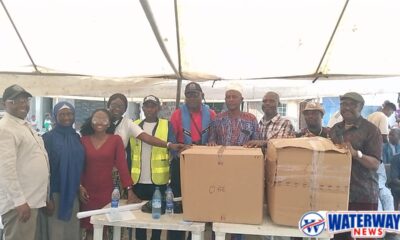
SWAAADO Intensifies Waterways Safety Sensitization Campaign to Waterfront Communities in Lagos State.