Blue Economy
Forgotten at Sea: Why Ex-NNSL Seafarers Cannot Wait Any Longer

Forgotten at Sea: Why Ex-NNSL Seafarers Cannot Wait Any Longer
Nearly three decades after the Nigerian National Shipping Line (NNSL) was liquidated, thousands of former seafarers remain trapped in a cycle of broken promises, poverty, and preventable deaths—a national scandal that demands immediate government intervention.
These men and women once crewed Nigeria’s merchant fleet, navigating the world’s oceans under harsh conditions and carrying the nation’s flag to distant ports. Today, they have been abandoned by the very institutions meant to protect them: the government agencies responsible for their welfare and the unions that once represented them at the bargaining table.
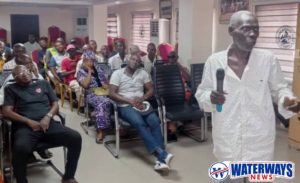

The demise of NNSL was no sudden accident. It was the inevitable result of decades of mismanagement, political interference, aging vessels, mounting debts, and the absence of strategic investment in fleet renewal.
By the mid-1990s, under General Abdulsalami Abubakar’s military administration, the once-proud shipping line had become commercially unsustainable.
When liquidation came in 1995, it was swift and brutal. Assets were sold off, and thousands of workers were abruptly disengaged. For the seafarers, this was not retirement—it was abandonment. Many were still in their prime working years, ready and willing to continue their careers. Instead, they were cast aside without the pensions, gratuities, or terminal benefits they had been promised.
The cost of this neglect has been catastrophic. More than 600 former NNSL workers have died since the liquidation. According to Shipping Position Report, at least 13 ex-seafarers died in 2024 alone while waiting for their entitlements, with eight more deaths recorded so far in 2025. Many survivors are bedridden, blind, or battling chronic illnesses—victims not of old age alone, but of years of financial hardship and institutional neglect.
These are not abstract statistics. They are fathers, mothers, and breadwinners whose final years have been consumed by poverty and despair rather than the dignity they earned through decades of service.


Government response has been characterized by insincerity and half-measures. Verification exercises have been conducted repeatedly—most recently in 2024, when the Federal Government and the Maritime Workers Union of Nigeria (MWUN) invited beneficiaries and next of kin for screening. While verification may be necessary, these endless cycles have become a cruel ritual. Files are reviewed, hope is raised, promises are made—but nothing reaches the pockets of those who need it most. Perhaps most insulting was the Nigerian Maritime Administration and Safety Agency’s (NIMASA) offer of N100 million as settlement for all entitlements. MWUN rightly rejected the proposal, which would have amounted to roughly N50,000 per person when divided among thousands of claimants—a tokenistic gesture that revealed either breathtaking ignorance or callous disregard for the scale of suffering involved.
Yet MWUN itself cannot escape accountability. For nearly 30 years, under successive leaderships, the union has failed to secure a lasting resolution for its members. Despite being the primary representative body for these forgotten seafarers, it has not been able to translate decades of advocacy into tangible results.Whether due to internal politics, strategic failures, or other factors, the outcome remains the same: MWUN has left its members feeling betrayed. In this prolonged silence and inaction lies a form of complicity.
What makes this neglect even more unconscionable is the stark contrast with how ex-workers of Nigeria Airways have been treated. The defunct airline, liquidated in the early 2000s, saw over N22 billion released for severance payments in 2018, with additional approvals following. Recently, the Federal Government approved pensions for retired aviation workers, including Nigeria Airways staff. While those payments may not have been complete, they represent substantial and visible commitment. For ex-NNSL seafarers, there has been nothing remotely comparable—exposing a troubling double standard in how the government prioritizes workers’ welfare across sectors.
This failure extends beyond unpaid benefits. It strikes at the heart of public trust and the social contract between workers and the state. When governments disengage employees, terminal benefits are part of the agreement. When those promises are dishonored for three decades, the message is clear: service means nothing, promises are worthless, and institutions cannot be trusted. This breeds cynicism, undermines faith in both government and unions, and erodes the moral authority of the state itself.
Urgent action is now required on multiple fronts: The Federal Government must: Move beyond performative verification exercises and establish clear, publicly announced timelines for payment. Allocate funds that reflect the true scale of what is owed—not symbolic gestures. Ensure full transparency by publishing lists of verified beneficiaries, amounts due, and disbursements made.
MWUN must: Abandon its
passive posture and mobilize aggressively on behalf of its members. If necessary, pursue litigation to compel action. The union exists to fight for workers—this is the fight that matters most.
The plight of ex-NNSL seafarers is ultimately about justice, dignity, and national credibility. These men and women represented Nigeria on the world’s oceans, keeping the nation’s flag flying on the high seas. That they are now dying while waiting for entitlements rightfully theirs is an indictment of successive governments and union leaderships alike. If Nigeria could mobilize billions for ex-workers of other defunct state corporations, it can certainly do the same for its forgotten seafarers. To continue ignoring them is to betray not only a legal obligation but a fundamental human one. The true measure of a nation is not the size of its fleet, but how it treats those who once sailed it. On that measure, Nigeria is failing catastrophically—and the time to change course is now.