Business
HORMUZ ON A KNIFE’S EDGE: Ships Queue for Iranian Clearance as Insurance Costs Spiral and the ‘Armageddon Scenario’ Looms

HORMUZ ON A KNIFE’S EDGE: Ships Queue for Iranian Clearance as Insurance Costs Spiral and the ‘Armageddon Scenario’ Looms
By Raymond Gold, Co-publisher and Research Reporter, Lagos
Vessels attempting passage through the Strait of Hormuz are no longer moving freely. Ships must now coordinate directly with Iranian authorities before transiting the waterway, as escalating risks and skyrocketing insurance premiums fundamentally reshape one of the world’s most critical maritime corridors.
The shift marks a dramatic change in how global shipping is operating in the region — and the consequences are being felt far beyond the Gulf.


Thailand confirmed on Tuesday that one of its oil tankers, owned by Bangchak Corporation, successfully passed through the strait following direct negotiations with Iranian authorities. A second vessel remains anchored and waiting for clearance, alongside a growing queue of ships seeking safe transit.
The turning point came on February 28, when the current escalation began. Since then, war risk insurance premiums have surged to levels that are reshaping commercial decisions across the entire shipping industry.
David Osler, finance editor at the respected maritime publication Lloyd’s List, laid out the stark reality: before hostilities, war risk cover for a one-week Hormuz transit typically cost between 0.15% and 0.25% of a vessel’s hull value. That figure has now rocketed to between 5% and 10% — a fortyfold increase in a matter of weeks.
For a Very Large Crude Carrier (VLCC) valued at around $100 million, that translates to several million dollars in additional costs for a single voyage — a burden that is forcing shipowners to ask hard questions about whether the journey is worth making at all.
Osler noted, however, that insurance itself is not the binding constraint. Policies are still available for those willing to pay. The deeper issue is crew safety. “If they want to make the trip — and can find a crew that will agree to do the job — they are not being held back by lack of insurance,” he said.
Maritime specialist Mustapha Zehhaf confirmed that a number of shipping companies have already made the call to avoid the strait entirely. Those that do proceed are adjusting their routes, with some vessels sailing closer to the Iranian coastline in a bid to reduce exposure to attack.
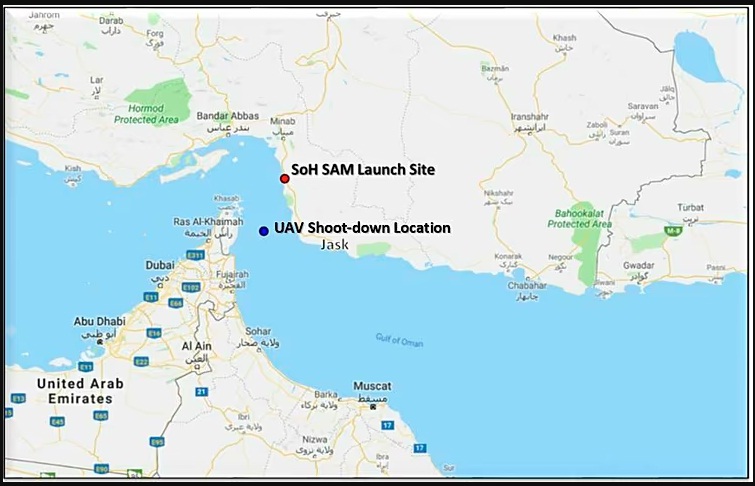

Map showing the Strait of Hormuz, a key shipping route linking the Persian Gulf to global markets.
No Easy Way Around
The problem facing the global energy trade is that there are virtually no viable alternatives to Hormuz. Saudi Arabia’s East-West pipeline and the UAE’s Fujairah export line offer partial bypass options, but neither has the capacity to absorb the volume of crude and LNG that flows daily through the strait. The overwhelming majority of Gulf energy exports remain dependent on this single chokepoint.
Energy analyst Bill Farren-Price, who heads the gas programme at the Oxford Institute for Energy Studies, warned that if the current situation persists, the world is looking at a serious supply shock. In his assessment, prices will rise as supply contracts, shortages filter through to consumers, and only then will demand begin to soften in response to cost pressure.
More alarming still, Farren-Price dismissed the idea that either military force or diplomacy could resolve the crisis quickly. There is, he said, no credible military mechanism to fully secure the strait, and no diplomatic breakthrough appears imminent.
His assessment was blunt: “Much worse — this was always the Armageddon scenario.”
What It Means for Nigeria
For Nigeria, the implications are direct and serious. As a major crude exporter and a country still dependent on imported refined products, any sustained disruption to Hormuz traffic tightens global oil supply and puts upward pressure on prices — affecting everything from pump prices to shipping freight rates on routes into Lagos and Port Harcourt.
Nigerian importers, vessel operators, and energy traders will be watching developments at Hormuz closely. What began as a regional military escalation is rapidly becoming a global shipping crisis — and no maritime nation is insulated from its reach.
Waterways News | waterwaysnews.ng