
Breaking News
Hormuz Seafarers Evacuation Suspended as Vessel Attack Halts IMO Operation


Hormuz Seafarers Evacuation Suspended as Vessel Attack Halts IMO Operation
By Okeoghene Onoriobe | Waterways News
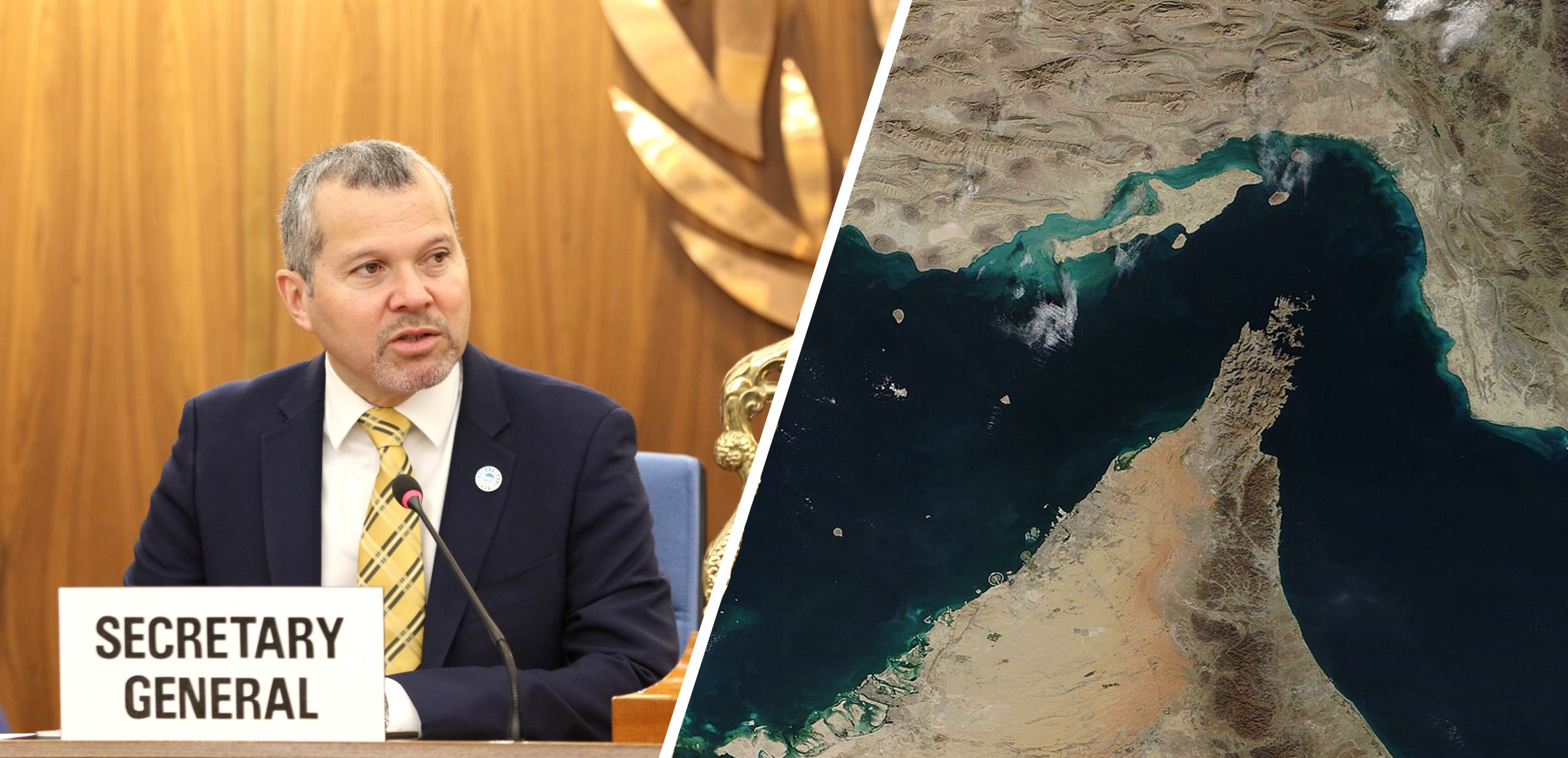
The International Maritime Organization (IMO) has temporarily suspended its ongoing evacuation of approximately 11,000 mariners stranded in and around the Strait of Hormuz following an attack on a cargo vessel in the Gulf of Oman on Thursday, June 25, 2026.
The UN’s maritime agency had earlier in the week commenced the phased evacuation of some 600 ships and their crews after Washington and Tehran reached a preliminary ceasefire understanding to halt their conflict. The operation, which began on Tuesday evening, was designed to guide trapped vessels safely through the strait under an internationally supervised framework.
However, the evacuation was brought to a sudden halt after an unidentified projectile struck a cargo ship operating off the Omani coast. The vessel, the UK Maritime Trade Operations (UKMTO) confirmed, suffered damage to its bridge but no crew casualties were reported.

IMO Secretary-General Arsenio Dominguez announced the pause in a formal statement, saying he had taken the decision in order to reconfirm that the necessary safety guarantees remain in place for ships listed under the evacuation programme and for all other vessels in the region. He clarified that the attacked vessel was not travelling under the IMO’s evacuation framework.
Data from maritime analytics firm Kpler indicated that 70 confirmed crossings of the Strait of Hormuz were recorded on Wednesday, though traffic through the strategic waterway remains at roughly half its pre-war volume.
Iran’s Persian Gulf Strait Authority issued a warning on the same day, stating that vessels using routes outside the designated evacuation framework would not be entitled to safe passage guarantees. Iran’s Revolutionary Guards went further, warning that any ships transiting the strait without authorisation would face consequences.
NIGERIA WATCH
The suspension of the Hormuz seafarer evacuation is a stark reminder that the conflict’s threat to global maritime trade — and to Nigerian interests in particular — is far from over.
For Nigeria, the stakes are direct and measurable. Nigerian seafarers are among the thousands of mariners caught in the strait’s standoff, and NIMASA’s ongoing engagement on their welfare and repatriation remains critical. The Agency must continue to press through diplomatic and IMO channels for the protection of Nigerian crew members aboard vessels stranded in the conflict zone, especially now that evacuation timelines have become uncertain.
Beyond crew welfare, the disruption carries serious freight and energy market implications for Nigeria. The Strait of Hormuz remains the world’s single most important oil chokepoint, through which a significant share of global crude oil and LPG shipments transit. Any prolonged disruption has historically transmitted directly into global oil price volatility — a dynamic that simultaneously affects Nigeria’s oil export revenues and the landed cost of petroleum products being re-imported at a time when domestic refining capacity, though growing with the Dangote Refinery’s ramp-up, has not yet fully decoupled Nigeria from global oil price swings.
Nigerian freight forwarders, importers dependent on Asian supply chains, and terminal operators at Apapa, Tin Can Island, and the Lekki Deep Sea Port are equally exposed. With traffic through Hormuz still at only about half its pre-war level, shipping delays, vessel diversions, and rising war risk insurance premiums continue to push up freight rates on routes that touch Nigeria’s import-heavy economy.
The IMO’s credibility as an honest broker in this crisis is also on the line. Nigeria, as a significant maritime nation and IMO member state, should be using its voice at the Agency to advocate for a durable safety framework — not just a pause-and-resume evacuation arrangement vulnerable to the next incident. NIMASA and the Federal Ministry of Marine and Blue Economy must ensure Nigeria is not a passive observer in these proceedings but an active participant in shaping the multilateral response.
Until genuine security guarantees are established and sustained across the strait, every resumed convoy risks another suspension — and with each delay, Nigerian mariners, cargo, and trade revenues remain at the mercy of a conflict that shows no sign of swift resolution.
Waterways News | Maritime & Blue Economy Desk

Blue Economy
Oyetola Confirms 7,059 Nigerian Seafarers Placed Onboard Vessels, Orders NIMASA to Fast-Track CVFF Disbursement
Oyetola Confirms 7,059 Nigerian Seafarers Placed Onboard Vessels, Orders NIMASA to Fast-Track CVFF Disbursement
By Ighoyota Onaibre | Waterways News
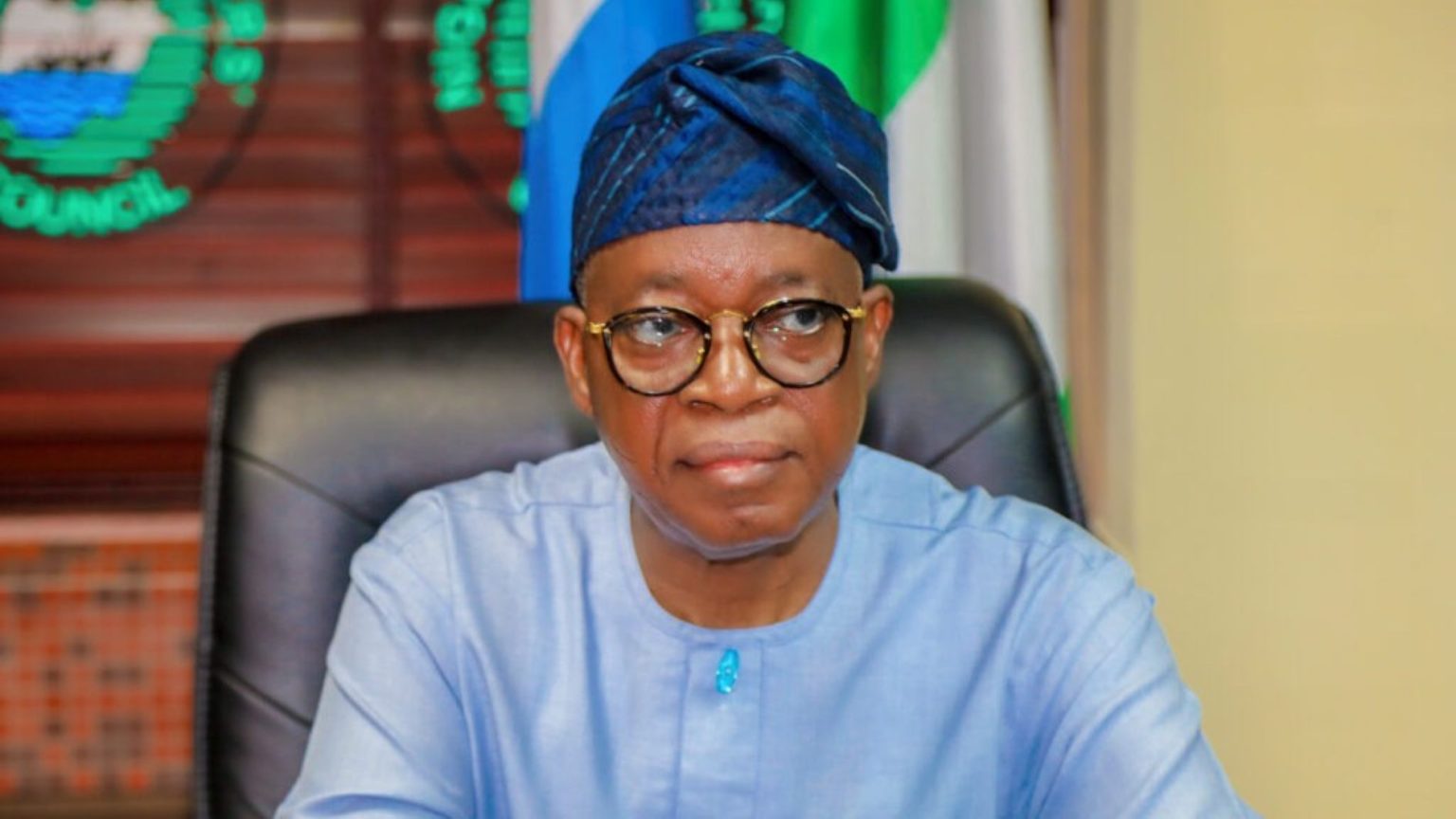
The Minister of Marine and Blue Economy, Dr Adegboyega Oyetola, says 7,059 Nigerian seafarers have so far been placed onboard vessels to acquire seatime experience, part of what he described as the Federal Government’s broader push to build a competitive indigenous maritime workforce.
The Minister, in a statement issued through his Special Adviser, Dr Bolaji Akinola, at the weekend, also directed the Nigerian Maritime Administration and Safety Agency (NIMASA) to work more closely with the 12 approved Primary Lending Institutions (PLIs) to accelerate disbursement of the Cabotage Vessel Financing Fund (CVFF) to qualified Nigerian shipowners.
According to the statement, NIMASA has so far received 92 applications under the CVFF framework, of which 20 have been forwarded to the PLIs and one has been reviewed and cleared for approval. Oyetola said the ship acquisition initiative could generate more than 30,000 direct and indirect jobs across shipyards, marine engineering firms and maritime logistics companies, while deepening Nigeria’s domestic ship-owning and shipbuilding base.
The Minister linked the disbursement push to President Bola Tinubu’s authorisation to unlock financing long owed to domestic maritime operators, framing it as central to realising the economic potential of Nigeria’s blue economy.
On manpower development, Oyetola disclosed that 222 seafarers had been trained free of charge in basic and advanced professional courses, while 333 cadets completed academic training and were awarded degrees. Under the Nigerian Seafarers Development Programme (NSDP), 135 cadets have completed the programme and obtained their Certificates of Competency (CoC).
He said the interventions reflect government’s commitment to strengthening indigenous maritime capacity so that Nigerians can benefit directly from opportunities created by the blue economy.
Nigeria Watch
The seafarer numbers are worth celebrating, but the more consequential line in Oyetola’s statement is the one about CVFF: 92 applications received, 20 forwarded to PLIs, and just one, only one is reviewed and cleared for approval. That ratio is the real story.
Waterways News has tracked the CVFF disbursement saga for years, and the pattern here is familiar: an announcement of “significant progress” that, on closer reading, describes a process still largely stuck at the application stage. Nigerian shipowners have waited over two decades for meaningful access to this fund, first established in 2003. A single approved application, even framed as forward momentum, does not yet amount to disbursement, and it is disbursement, not directives to NIMASA and the PLIs, that shipowners can take to the bank.
The seafarer placement and training figures are a genuine bright spot and speak to real capacity-building through NIMASA’s cadetship and NSDP schemes. But they sit somewhat apart from the CVFF question.
Training seafarers builds the workforce; it does not put Nigerian-owned vessels on the water for that workforce to crew. Until the CVFF pipeline moves from “20 applications forwarded” to actual funds reaching qualified shipowners, Nigeria’s ambition to grow an indigenous shipowning fleet — the same ambition the Minister invoked in citing 30,000 potential jobs — remains aspirational.
Waterways News will continue to press for concrete disbursement timelines and named beneficiaries under the CVFF, rather than accept process updates as a substitute for delivery.
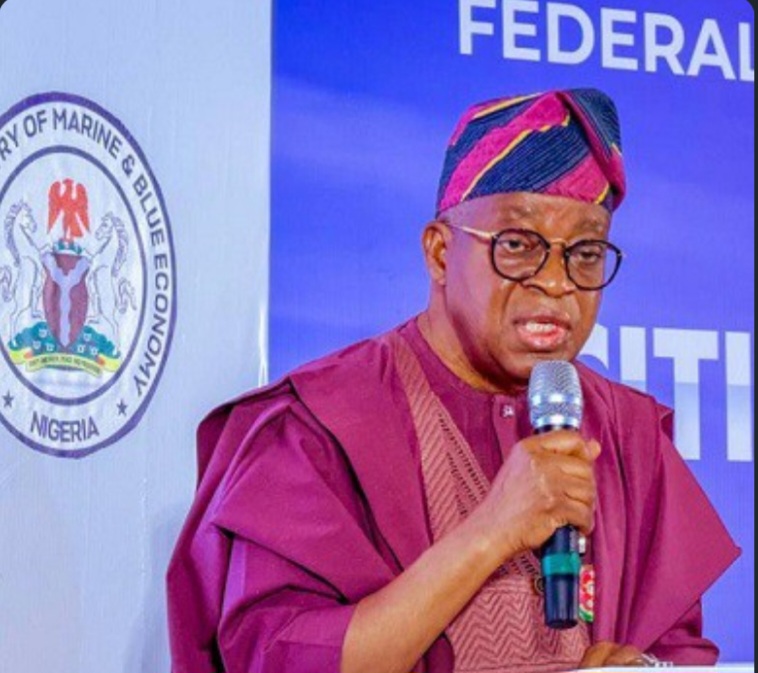
Oyetola Orders NPA Takeover of Inland Dry Ports, Sets Up NSC-NPERA Transition Committee
By Ighoyota Onaibre | Waterways News
The Minister of Marine and Blue Economy, Dr Adegboyega Oyetola, has ordered the transfer of inland dry port (IDP) functions from the Nigerian Shippers’ Council (NSC) to the Nigerian Ports Authority (NPA), in a move the ministry says will draw a clear line between port economic regulation on one hand, and port development and operations on the other.
A statement issued in Abuja on Thursday by the Minister’s Special Adviser, Dr Bolaji Akinola, said Oyetola has also directed the immediate constitution of a ministerial committee to supervise the Nigerian Shippers’ Council’s transition into the newly created Nigeria Ports Economic Regulatory Agency (NPERA), following President Bola Tinubu’s assent to the NPERA Act, 2026.
The two directives, the ministry said, are meant to build a clear institutional framework for the new port economic regulatory regime, close out overlapping mandates, and ensure that agencies under the Ministry operate strictly within their defined remits.
Signed into law by President Tinubu in August, the NPERA Act formally creates a substantive economic regulator for Nigeria’s port sector, closing out a wait of roughly two decades for a dedicated statutory regulator. With its enactment, the Nigerian Shippers’ Council, which had served as the country’s interim port economic regulator since 2014, now transmutes into NPERA.
Under the new arrangement, NPERA is expected to concentrate on core economic regulatory duties: tariff and charge regulation, promotion of competition, licensing, service standards, commercial dispute resolution, and protection of port users.
Oyetola said the NSC-to-NPERA transition offers a chance to build a regulator that stands clearly apart from operational, developmental, and promotional responsibilities. “We must get the transition right,” he said. “The establishment of NPERA is a landmark reform, and the process of moving from the Nigerian Shippers’ Council to the Nigeria Ports Economic Regulatory Agency must be carefully managed. The ministerial committee will provide the necessary oversight to ensure that the transition is seamless and that every function is domiciled in the appropriate institution.”
The Minister argued that a regulator’s credibility rests partly on its ability to act as an impartial referee, unencumbered by responsibilities that could create actual or perceived conflicts of interest. The Federal Government’s aim, he said, is for NPERA to focus fully on its statutory regulatory mandate, while operational, developmental, or promotional functions move to agencies with the appropriate mandate and capacity.
“The emergence of NPERA marks a new chapter in the governance of Nigeria’s port sector,” Oyetola said. “It is therefore important that the new economic regulator is freed from functions that are not compatible with economic regulation. A regulator cannot function as an operator and, at the same time, be expected to be perceived as an unbiased referee.”
He added that separating these responsibilities would strengthen confidence in the regulatory framework, improve transparency, and create a more predictable operating environment for port users, investors, terminal operators, shipping lines, and other stakeholders.
Oyetola sought to reassure stakeholders that shifting IDP functions to the NPA is not a scaling-back of the Federal Government’s commitment to inland dry port development. Rather, he said, the goal is to strengthen the IDP programme by housing its promotion within an agency with the operational and infrastructure mandate to integrate the facilities into the country’s wider port network.
“We are committed to strengthening the development of the Inland Dry Ports by placing their promotion within the agency with the appropriate operational and infrastructure mandate,” he said. “The ultimate objective is to create a more efficient and integrated port system that serves the entire country.”
Nigeria Watch
For operators and stakeholders across Nigeria’s inland waterway and dry port ecosystem, this reorganisation is worth watching closely on two fronts: what it means for the NPERA transition itself, and what it means for the inland dry ports it now hands to the NPA.
On the regulatory side, the logic is sound on paper, separating the referee from the operator is a standard governance principle, and after two decades of the Shippers’ Council doubling as an interim regulator without full statutory teeth, NPERA’s arrival is a genuine milestone. Waterways News has tracked this file closely, alongside the CVFF disbursement saga and NIMASA’s reform rhetoric, and the pattern that recurs across Nigerian maritime governance is not a shortage of good frameworks. It is rather the gap between the framework and its delivery. A ministerial transition committee is a sensible mechanism, but its real test will be speed and transparency: stakeholders, especially smaller shippers and terminal operators who have dealt with NSC’s interim mandate for years, will want to know timelines, not just intentions.
On the inland dry ports side, moving IDP promotion to the NPA, an agency built for port operations and infrastructure, makes structural sense, but it is also a jurisdictional shift worth monitoring given Nigeria’s track record of inter-agency friction, most visibly in the long-running NIWA-LASWA dispute over inland waterway authority. Inland dry ports sit at the intersection of customs, port economics, and inland logistics; how cleanly NPA absorbs functions previously run by NSC, and whether existing IDP concessions, host-community arrangements, and cargo-evacuation plans survive the handover intact, will determine whether this “seamless” transition Oyetola promises is felt on the ground or only on the organogram.
For cooperative and informal operators on Nigeria’s waterways, the more consequential question remains one this desk raises often: whether institutional reshuffling at this level eventually reaches the small-scale operators who move goods and people on the inland waterways every day, or whether reform continues to circulate among federal agencies while the operational realities at the waterfront stay unchanged.

NPA Clears Backlog of Stranded NDPHC Power Equipment, Saves Billions in Naira Losses
By Ighoyota Onaibre | Waterways News
The Nigerian Ports Authority (NPA) has secured the release of long-abandoned power sector equipment belonging to the Niger Delta Power Holding Company (NDPHC), ending a costly hold-up that had left critical infrastructure gathering dust at Nigerian seaports.
The disclosure came at the weekend when NDPHC Managing Director, Engr. Jennifer Adighije, led a delegation of the company’s management team on a courtesy visit to NPA Managing Director, Dr. Abubakar Dantsoho, and his team in Lagos.
Adighije said the equipment had been idle at the ports for a period, and that continued delay in its recovery and clearance risked derailing project timelines, inflating costs, and setting back the country’s electricity supply targets. She credited NPA’s intervention with averting losses running into billions of naira and keeping NDPHC’s power projects on schedule.
Beyond the immediate cargo release, the NDPHC boss framed the visit as part of a push to deepen institutional collaboration between her agency, the NPA, and other government bodies straddling the energy and maritime sectors — collaboration she argued is necessary to head off the bureaucratic bottlenecks that routinely snag equipment moving through the nation’s ports.
Responding, Dantsoho commended NDPHC’s contribution to Nigeria’s power sector and reaffirmed the NPA’s readiness to support interagency partnerships that advance national development. He said the Authority would keep facilitating the swift clearance of equipment central to infrastructure and power projects.
Nigeria Watch
For an industry that spends much of its time chronicling how slowly Nigeria’s ports move critical cargo, this is a rare case study in the system working as intended — though it also underlines how much still rides on goodwill and high-level intervention rather than routine process.
Power equipment stranded at the ports is not a new phenomenon. Turbines, transformers, and related consignments have historically been vulnerable to the same delays, demurrage, clearance bottlenecks, inter-agency friction that plague ordinary containerised cargo, except the stakes are steeper: every week a transformer sits idle at Apapa or Onne is a week added to a power project’s timeline, and ultimately to Nigeria’s electricity supply gap.
That NDPHC felt compelled to publicly thank the NPA, rather than treat the clearance as routine service delivery, says something about the baseline expectation in the sector. It also strengthens the case, long argued by port users and operators, that predictable and time-bound clearance of strategic national assets should not depend on a courtesy visit and a press statement. It should be the default.
The episode adds to a broader pattern this year of the NPA positioning itself as a facilitator of interagency collaboration, at a time when the Authority, alongside NIMASA and the newly operational NPERA, is under pressure to show that Nigeria’s ports can support, rather than obstruct, the delivery of critical national infrastructure.

 Oil and Gas7 months ago
Tantita’s Pipeline Deal: $144m Contract, Rising Output, and the Questions that Deserve Answers
- MARITIME TRADE & SHIPPING7 months ago
World’s Largest Container Ship Sets New Maritime Record with 22,233 TEUs on Single Voyage
- Blue Economy7 months ago
Nigeria’s Coast Guard Bill: A Solution in Search of a Problem?