Security & Safety
MAERSK PULLS BACK FROM RED SEA AGAIN — WHAT IT MEANS FOR WEST AFRICAN SHIPPING


MAERSK PULLS BACK FROM RED SEA AGAIN — WHAT IT MEANS FOR WEST AFRICAN SHIPPING
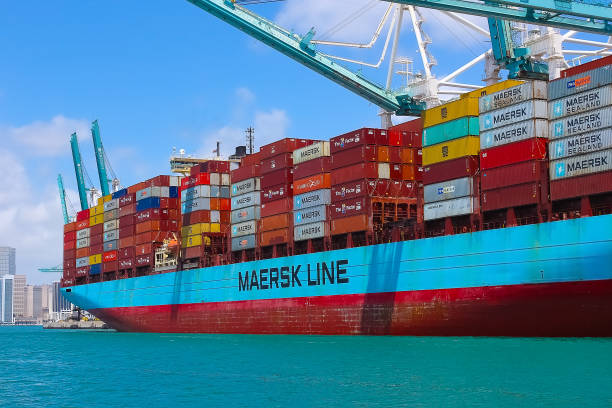
The world’s largest container line has reversed course on its Red Sea comeback, raising fresh concerns for Nigerian importers and shippers already navigating tight supply chains.
Danish shipping giant Maersk has announced a temporary withdrawal from the Suez–Red Sea corridor on two of its major services, just weeks after cautiously resuming transits through the troubled waterway.
In a customer advisory dated February 27, the carrier described the move as “temporary adjustments” affecting its ME11 and MECL services — but for cargo interests across West Africa, the implications could be anything but temporary.

Why Maersk Is Turning Back
The company cited what it called “unforeseen constraints” stemming from the wider operating environment in the Red Sea region. After consultations with security partners, Maersk concluded that reliably avoiding delays through the area had become too difficult to guarantee.
As a result, several upcoming voyages on both affected services will be diverted away from the Suez Canal and rerouted around the Cape of Good Hope — adding thousands of nautical miles, additional sailing days, and higher fuel costs to each voyage.
The Services Affected
The MECL service — an independently operated route linking Saudi Arabia and other Middle East ports with the U.S. East Coast — will see its next three eastbound and westbound sailings rerouted via southern Africa through mid-March.
More significantly, the ME11 service connecting India and the Middle East to the Mediterranean will have its next three westbound and four eastbound voyages diverted around the Cape. The ME11 operates under the Gemini Cooperation, the vessel-sharing alliance between Maersk and Germany’s Hapag-Lloyd, giving the decision added weight across the industry.
Maersk said it was giving customers three weeks’ notice to adjust supply chain plans, with updated transport schedules to follow.
A Fragile Return Unravels
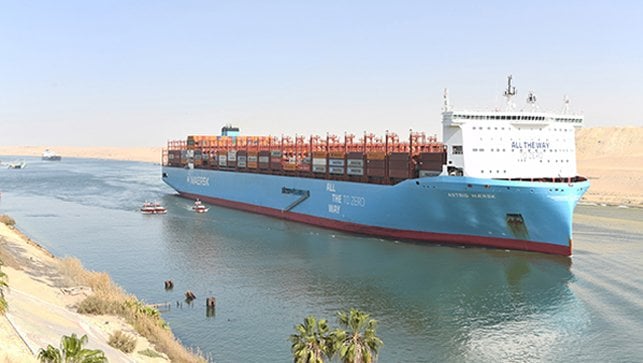
The reversal is notable for its timing. Just over two weeks ago, a Maersk vessel completed the first eastbound Suez transit on the reinstated ME11 route — a carefully watched moment that many in the shipping world had hoped signalled a durable return to the corridor.
That optimism now appears premature. Earlier in January, Maersk had cautioned that sailings through the region would depend on stable security conditions and reliable naval protection. Those conditions, it now says, are not holding consistently enough.
Security Challenges Persist
The broader security picture in the Red Sea remains uneasy. Yemen’s Houthi movement has made intermittent threats, though no confirmed attacks on merchant vessels have been recorded since last September. Meanwhile, rising U.S.-Iran tensions and an expanded American naval presence in the Middle East have added layers of unpredictability to the region.
On the protection side, the European Union’s maritime security mission, Operation Aspides — which deploys three warships to escort commercial vessels through the corridor — was recently extended through February 2027. However, limited escort capacity has created scheduling bottlenecks, with French carrier CMA CGM previously flagging long waits for available naval cover as a major operational headache.
What This Means for Nigerian Shippers
For cargo stakeholders in Nigeria and across the Gulf of Guinea, renewed Red Sea disruptions carry direct consequences. Longer Cape of Good Hope routings push up transit times and freight costs — pressures that typically filter through to Nigerian importers and end consumers.
The ME11 service in particular feeds cargo flows between Asia, the Middle East, and Europe, with knock-on effects for connecting services that serve West African ports. Any sustained return to Cape routing by major carriers would likely tighten vessel availability and complicate scheduling on feeder and direct services calling at Nigerian terminals.
Industry watchers say Maersk’s decision could prompt other carriers to slow or reconsider their own Red Sea comeback plans — further prolonging a disruption that has reshaped global shipping patterns since late 2023.
Maersk maintains the rerouting is short-term and continues to describe the Suez corridor as the fastest, most sustainable option for customers. But as confidence in the route proves fragile once again, the Cape of Good Hope remains, for now, the safer bet.
Waterways News NG will continue to monitor developments in the Red Sea and their implications for Nigerian and West African maritime trade.
— Waterways News NG | www.waterwaysnews.ng

NIGERIA AND CAMEROON SIGN SEARCH AND RESCUE AGREEMENT — A WIN FOR REGIONAL SAFETY
The deal extends emergency cooperation beyond the skies, with implications for maritime and cross-border rescue operations across the Gulf of Guinea.
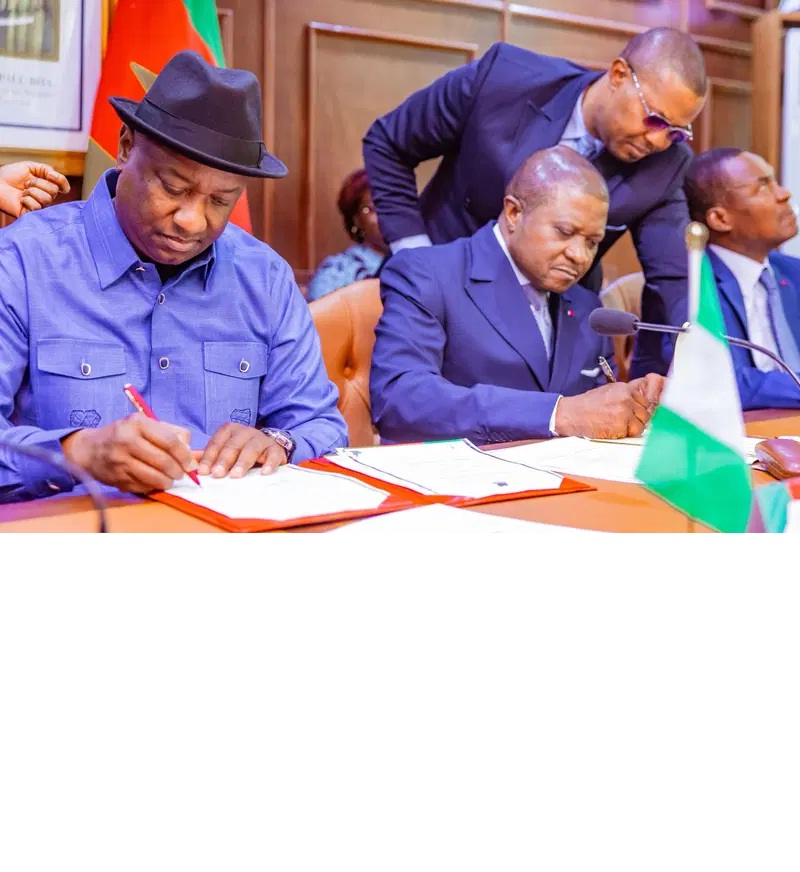
Nigeria and Cameroon have formalised a Technical Aeronautical Search and Rescue (SAR) Agreement, marking a significant step in cross-border emergency response cooperation between the two neighbouring nations.
Aviation Minister Festus Keyamo signed the agreement during a working visit to Cameroon, accompanied by the Director-General of the Nigeria Civil Aviation Authority (NCAA), Capt. Chris Najomo. The signing was confirmed in a statement by the minister’s Special Adviser on Media and Communications, Tunde Moshood.
“Search and rescue cooperation is not simply a regulatory requirement under ICAO Annex 12; it is a humanitarian imperative and a moral responsibility” Festus Keyamo, Minister of Aviatioon and Aerospace Space Development
Why It Matters Beyond Aviation
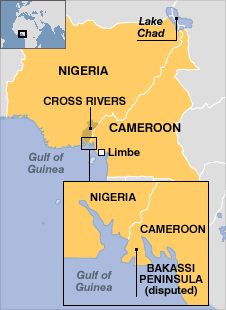
While framed as an aeronautical agreement, the deal carries broader significance for Nigeria’s maritime and coastal emergency response community. Nigeria and Cameroon share not only a land border but also overlapping maritime zones in the Gulf of Guinea — one of the world’s most strategically important and operationally challenging waterways. Strengthened SAR coordination between the two countries sets a precedent and a practical framework that could, in time, extend to joint maritime rescue operations in shared waters.
For Waterways News NG readers — port operators, shipping agents, seafarers, and maritime regulators — the agreement signals a regional shift toward more integrated emergency response, one that the maritime sector has long called for.
What the Agreement Does
The pact establishes clear communication protocols between the Rescue Coordination Centres (RCCs) of both countries, facilitates joint search and rescue operations, and strengthens rapid response mechanisms within their respective Search and Rescue Regions (SRRs). It brings both nations into closer alignment with international safety standards, particularly ICAO Annex 12, which governs SAR obligations for signatory states.
Speaking at the signing ceremony, Minister Keyamo was direct about the stakes involved. “Search and rescue cooperation is not simply a regulatory requirement under ICAO Annex 12; it is a humanitarian imperative and a moral responsibility,” he said.
He added: “In moments of distress, response time saves lives. Borders must never become barriers to humanitarian intervention.”
Framed Within the Tinubu Agenda
The agreement has been positioned by the Federal Government as part of President Bola Tinubu’s Renewed Hope agenda, which prioritises institutional strengthening, regional cooperation, economic revitalisation, and the protection of lives and property.
Keyamo described aviation — and by extension, the broader transport sector — as a strategic driver of economic growth and regional integration, while stressing that such growth must be grounded in safety and effective emergency preparedness.
“Today, Nigeria and Cameroon demonstrate that cooperation — not fragmentation — defines our regional approach to aviation safety,” the minister said, calling the agreement a practical expression of African solidarity and good neighbourliness.
A Building Block for Gulf of Guinea Cooperation
For the maritime community, the deal is worth watching closely. The Gulf of Guinea remains one of the most piracy-affected maritime regions in the world, and coordinated SAR capacity between Nigeria and Cameroon — two of its most significant coastal states — is a building block toward more robust regional maritime security architecture.
Nigeria’s maritime agency, NIMASA, has in recent years worked to strengthen its own SAR and anti-piracy capabilities through initiatives such as the Deep Blue Project. A complementary bilateral framework with Cameroon could reinforce those efforts and improve response times in the event of incidents near shared waters.
The agreement reinforces both countries’ commitment to international safety standards and, for those watching Nigeria’s place in regional maritime affairs, offers a quiet but meaningful signal of diplomatic momentum.
Waterways News NG will continue to track developments in Nigeria-Cameroon maritime and aviation cooperation.
— Waterways News NG | www.waterwaysnews.ng
CASABLANCA PORT SHUT DOWN AFTER VESSEL LOSES 85 CONTAINERS — SHIP SERVES NIGERIAN ROUTES
Port authorities in Morocco have suspended all vessel movements at the Port of Casablanca following a container overboard incident involving a ship that regularly calls at Nigerian ports.
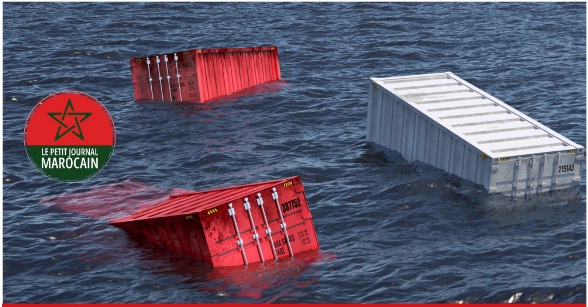
Morocco’s National Ports Agency ordered the suspension at approximately 11:00 PM local time on Thursday, February 26, after the containership Ionikos lost an estimated 85 containers into the water near the harbour entrance while departing the port in heavy seas.
As of Friday, operations at one of Africa’s busiest container ports remained halted, with numerous boxes still reported floating in the channel, posing serious navigational hazards.
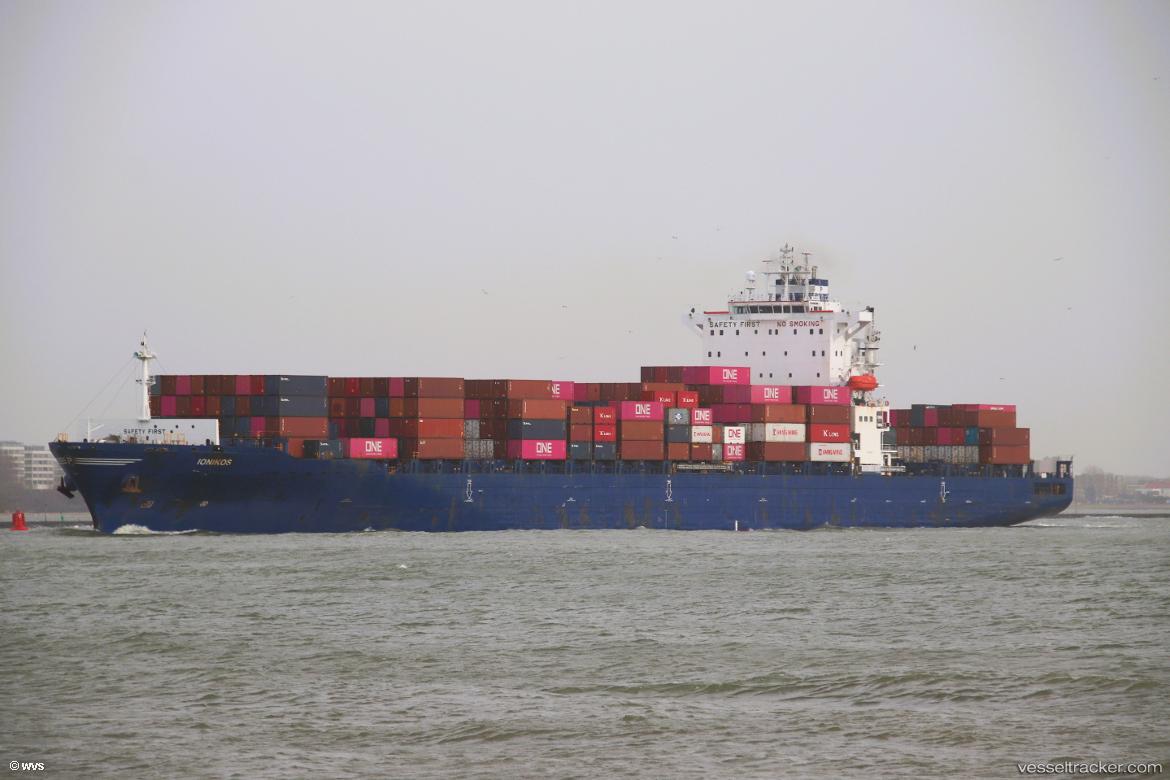
The Ionikos — a 52,427-deadweight-tonne vessel owned by Greek shipping interests and registered under the Liberian flag — is of particular interest to Nigerian shippers and port stakeholders. The ship operates on a service connecting Turkey and the eastern Mediterranean with ports in the Gulf of Guinea, including regular calls at Nigerian terminals and other West African destinations.
According to initial reports, the vessel had completed cargo operations in Casablanca and was bound for Barcelona when it encountered heavy swells on departure. The rough sea conditions caused the ship to roll violently, sending an estimated 85 containers overboard.
The Ionikos, built in 2009, measures 258 metres in length and has a capacity of 4,360 twenty-foot equivalent units (TEU). The vessel is currently anchored approximately six nautical miles offshore as authorities assess the damage and coordinate recovery efforts.
An overnight search and recovery operation was launched involving five vessels from Morocco’s Royal Maritime Gendarmerie and Royal Navy, alongside helicopter aerial support. Officials noted that darkness hampered early efforts to locate and secure the drifting containers. Tugboats have since been stationed near several floating units to prevent further hazards to passing traffic.
Local media in Morocco reported that the lost containers were carrying a range of cargo, including car parts, furniture, and consumer goods. At least one container is reported to have broken open and washed ashore on a nearby beach, where boxes of Nestlé-branded cereal were found scattered.
The incident compounds operational difficulties already affecting the port this winter. Reports indicate that a series of storms and persistent Atlantic swells have disrupted maritime traffic at Casablanca in recent months.
Port authorities said vessel movements would resume only when conditions in the harbour channel are deemed safe for navigation.
The disruption is being monitored closely by Nigerian shipping agents and cargo interests given the vessel’s regular Gulf of Guinea service schedule. Waterways News NG will provide updates as the situation develops.
— Waterways News NG | www.waterwaysnews.ng
Blue Economy
PARTNERS ON THE WATER: Maritime Workers’ Unions and the Battle to Develop Nigeria’s Inland Waterways Sector
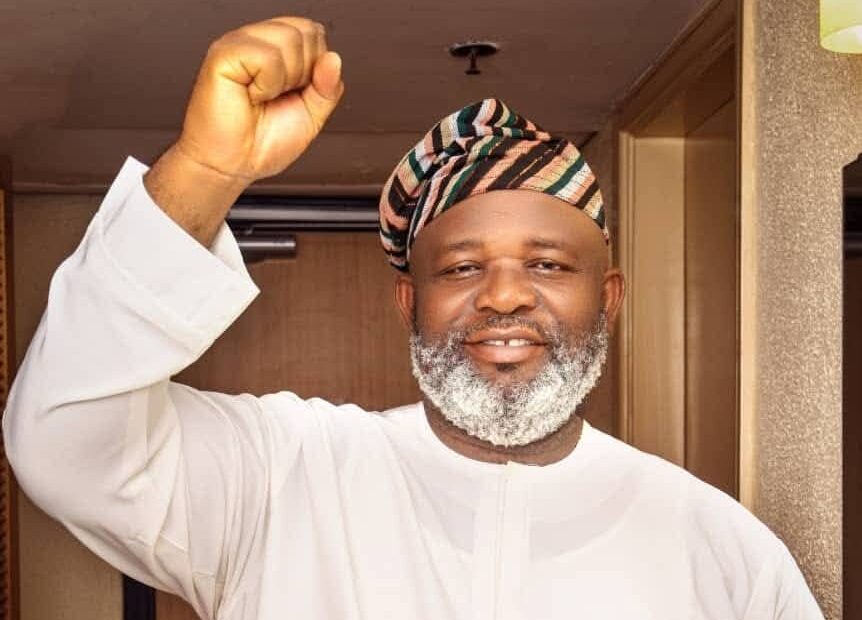
PARTNERS ON THE WATER:Maritime Workers’ Unions and the Battle to Develop Nigeria’s Inland Waterways Sector
By the Nigerian Waterways News Special Investigations Desk, Lagos | February 20, 2026
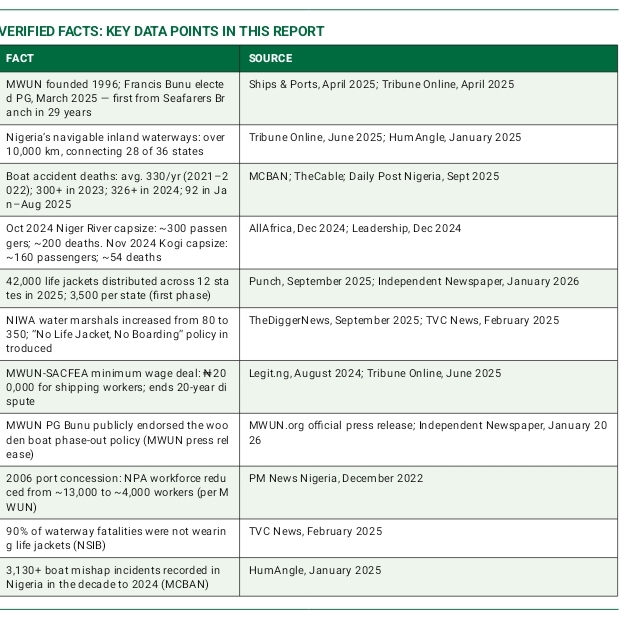
Nigeria’s inland waterways span more than 10,000 kilometers of rivers, creeks, and channels, connecting 28 of the country’s 36 states. They represent one of the most underutilized transport assets on the African continent. And as the Federal Government, through its newly established Ministry of Marine and Blue Economy, pushes to unlock that potential, the Maritime Workers’ Union of Nigeria (MWUN) — the country’s principal labour organization in the sector — has been working from multiple angles to shape, support, and at times challenge that effort.
This is a report about what that engagement looks like in practice: from wage negotiations and safety advocacy to partnerships with regulators and the challenge of absorbing a workforce that, for the most part, has never held a formal contract.
The Union and Its Sector
The Maritime Workers’ Union of Nigeria was formed in 1996, when the Federal Government merged four separate maritime labour organizations into a single industrial union.
Affiliated to the Nigeria Labour Congress (NLC), MWUN represents sailors, dockworkers, ferry operators, and port support staff across the country’s seaports and inland waterway terminals.
In March 2025, the union held its 6th Quadrennial National Delegates Conference at Festac Town, Lagos, at which Comrade Francis Abi Bunu was elected President-General, unopposed. Bunu succeeded Comrade Adewale Adeyanju, who had led the union for eight years. The election was notably the first time in MWUN’s 29-year history that a president-general had come from the Seafarers Branch of the union.
Bunu’s background is directly relevant to the inland waterways discussion. Before his election, he served as President of the Seamen/NIWA and Water Transportation Branch of MWUN — the branch that deals specifically with river and inland waterway workers. His ascent to the presidency was welcomed by the Barge Operators Association of Nigeria (BOAN), which had recently initiated a formal collaboration with MWUN to improve operations and strengthen engagement with government regulators, including NIWA and NIMASA.
The Scale of the Safety Crisis
Any honest discussion of MWUN’s role in developing Nigeria’s waterways must begin with the body count. Boat accidents on Nigeria’s inland waterways kill hundreds of people every year, and the data — such as it is — tells a grim story.According to the Marine Crafts Builders Association of Nigeria (MCBAN), the average annual death toll from boat accidents in 2021 and 2022 was approximately 330. In 2023, over 300 lives were lost, with Kwara and Anambra states recording the highest casualties, according to a report by The Cable.
The 2024 figures were no better: at least 326 confirmed deaths, an increase of 8.67 percent over 2023, according to The Cable’s count, with Niger and Kwara states leading casualties. Some accounts put the 2024 toll as high as 452, reflecting the difficulty of consistent data collection across remote riverine communities.
Among the most devastating single incidents in recent memory was the October 3, 2024, capsizing of a wooden dugout canoe on the River Niger — carrying an estimated 300 passengers — which resulted in nearly 200 deaths. A second major incident followed on November 29, 2024, on the Dambo-Ebuchi waterways in Kogi State, where a vessel with over 160 passengers capsized, killing approximately 54 and leaving an unknown number unaccounted for.
The root causes have been extensively documented: overloaded and poorly maintained wooden vessels, absent life jackets, unlicensed operators, no mandatory passenger manifests, night sailing on unmarked waterways, and chronic under-enforcement by regulatory agencies.
As the Independent Newspaper reported in October 2025, experts in the sector have consistently noted that NIWA, Marine Police, and State Waterways Authorities often operate in silos, with enforcement that is reactive rather than preventive.
MWUN’s Advocacy on Vessel Safety
MWUN has been publicly vocal on the need to modernise Nigeria’s waterway fleet. When Minister of Marine and Blue Economy Adegboyega Oyetola intensified his campaign in 2025 for state governments to phase out wooden commercial boats in favour of safer fibre-reinforced plastic and aluminium vessels, MWUN President-General Francis Bunu publicly endorsed the position. According to a press release published on the union’s official website, Bunu specifically lauded Oyetola’s stance on phasing out wooden boats as a necessary step toward curbing incessant waterways accidents.
“The safety of our citizens on water is not just a policy responsibility, it is a moral duty.” — Minister Adegboyega Oyetola, presenting the report of the Special Committee on the Prevention of Boat Mishaps, 2025
The Ministry of Marine and Blue Economy established a 16-member Special Committee on the Prevention of Boat Mishaps in February 2025, chaired by NIWA Managing Director Bola Oyebamiji. The committee’s recommendations fed into ongoing efforts to enforce the Inland Waterways Transportation Regulations 2023 — the Water Transportation Code — which was launched in April 2024 by Minister Oyetola at the NIWA headquarters in Lokoja.
NIWA’s enforcement response since 2023 has included increasing its water marshal deployment from 80 officers to 350; introducing mandatory passenger manifests at registered jetties; installing marine navigational buoys; and enforcing a “No Life Jacket, No Boarding” policy.
The Ministry distributed 42,000 life jackets across 12 riverine states in 2025, with each state receiving 3,500 in the first phase. The distribution began in Minna, Niger State. The results, while contested in their precise magnitude, show a measurable downward trend. Industry data shows fatalities dropped from the 2021–2022 average of 330 to 231 in 2024, and further to 92 in the first eight months of 2025 — a period during which NIWA claimed a reduction of up to 72 percent compared to the 2021–2022 baseline. Independent analysts have urged caution about the 72 percent figure, noting it compares eight months of 2025 data against a full-year baseline, and that late-year incidents typically account for a significant share of annual fatalities. A comparison between 2022 and 2024 yields a more defensible figure of approximately 30 percent reduction.
The 2025 Safety Sensitisation Campaign
Beyond endorsing government policy, MWUN has taken its own operational role in safety. In 2025, NIWA ran a waterways sensitization campaign under the theme “Safety and Safety Trip: Zero Tolerance to Boat Mishap, No Life Jacket, No Boarding.” A key highlight of the campaign was the inauguration of waterways marshals at the Zumba waterfront to enforce water transport regulations. MWUN’s network of members and branch structures in riverine communities has been identified as a channel through which safety messaging and compliance campaigns are amplified at the local level.
MWUN has also moved on its own account to bring previously non-unionised seafarers into the formal sector fold. Bunu led the union on a tour of Melsmore Marine Nigeria Limited at Ibeju Lekki in 2025 to sensitize workers there about unionization, flagging that many seafarers were working under hazardous conditions with inadequate health and safety provision. He noted that poor conditions on vessels had claimed the lives of crew members through communicable diseases contracted while at sea.
The Landmark Wage Agreement
On the labour relations front, MWUN achieved one of its most significant breakthroughs in recent years in 2024: the conclusion of a 20-year-old wage dispute in the maritime sector. The Shipping Agencies, Clearing and Forwarding Employers Association (SACFEA) and MWUN signed an agreement establishing a minimum wage of ₦200,000 for shipping industry workers employed by SACFEA members. The deal was brokered by Minister Oyetola and facilitated by the Nigerian Shippers’ Council.
Then-President-General Adewale Adeyanju, who was concluding his tenure as the deal was finalised, noted in his farewell briefing with journalists that Hull-Blyth Nigeria Limited initially declined to join the agreement, but subsequently agreed to pay the ₦200,000 minimum wage. The agreement is to be reviewed every two years.
“MWUN will always be open to any collaboration that will positively impact the industry.” — Comrade Francis Bunu, MWUN President-General, on the BOAN-MWUN partnership (Radarr Africa, May 2025)
MWUN and the Broader Development Agenda
MWUN has consistently framed waterways development as a national emergency, not merely an industry issue. During a National Executive Council meeting at Golden Tulip Hotel, Festac, Lagos, former President-General Adeyanju drew attention to the severe job losses from the 2006 port concession exercise — which he said reduced the NPA workforce from approximately 13,000 workers to just 4,000 — while calling on NIWA and NPA to urgently recruit more junior staff to man jetties and port terminals. NIWA’s then-Managing Director, Dr George Moghalu, confirmed at the same meeting that the authority was making preparations to expand its junior workforce.
The union has also called directly on the Federal Government to develop and fortify waterways as a means of effective transportation and employment generation, and to empower relevant agencies to regulate private boat operators and align their operations with economic development objectives.
MWUN’s position is that safety and development are inseparable: an unsafe waterways sector will never attract the investment or public confidence needed to grow.
On maritime security, Bunu has praised NIMASA’s achievements in combating piracy in the Gulf of Guinea — noting the improvement in safety and stability on Nigerian waters — and pledged that MWUN would mobilise its international affiliates to support Nigeria’s bid for a seat on the International Maritime Organization (IMO) Council. The union views Nigeria’s prominence in global maritime governance as directly linked to the credibility and development of its domestic waterways sector.
The BOAN-MWUN Partnership: A Model for Collaboration
One of the most concrete recent examples of union-industry collaboration is the partnership between MWUN and the Barge Operators Association of Nigeria. BOAN executives visited the newly elected President-General Bunu at MWUN’s offices in Apapa, Lagos, to formalise discussions on joint working, explicitly noting that MWUN’s scale and reach across the country’s maritime industry made it the natural partner for improving barge operations.
BOAN has been working in parallel with NIWA, NIMASA, the Nigerian Navy, the Nigeria Police, and the Lagos State Waterways Authority (LASWA) to improve coordination of waterway traffic. The partnership with MWUN adds a workforce dimension to that multi-agency framework. Observers have noted that if the BOAN-MWUN collaboration produces joint training programmes, improved communication between operators and workers, and better compliance with safety standards, it could serve as a replicable model for other segments of Nigeria’s inland waterways sector.
The Challenges That Remain
For all the genuine activity, the picture is far from resolved. Enforcement on Nigeria’s waterways remains chronically weak, even by the admission of regulatory officials. The National Safety Investigation Bureau (NSIB) has noted that more than two-thirds of all boat fatalities are drowning incidents, and that 90 percent of victims were not wearing life jackets at the time of their deaths — despite the existence of regulations mandating their use.
Nigeria recorded more than 3,130 incidents of boat mishaps in the ten years leading to 2024, according to data from the Marine Crafts Builders Association of Nigeria. The frequency of those incidents — on waterways that connect millions of Nigerians in communities where boats are the only viable means of transport — makes the pace of reform feel inadequate to many who live and work on those routes.The institutional fragmentation is also real. NIWA, state waterways authorities such as LASWA and RIWAMA, Marine Police, NEMA, and local government landing committees each have overlapping mandates and limited coordination. The union operates within that complexity, and its influence — though growing — cannot substitute for the institutional reform and sustained funding that the sector ultimately requires.
MWUN itself faces internal development challenges. The union’s new leadership under Bunu has inherited an organisation whose capacity to reach informal sector workers — the majority of those who operate on Nigeria’s inland waterways — remains limited. Formalisation of the workforce is a long-term project, and the economic precariousness of most informal boat operators makes the transition to structured employment genuinely difficult.
Conclusion: A Union at the Centre of a Necessary Conversation
Nigeria’s inland waterways development is not a single project — it is a decades-long national challenge involving infrastructure, regulation, workforce development, safety, and the economic inclusion of millions of riverine Nigerians.
The Maritime Workers’ Union of Nigeria is not the solution to that challenge. But the evidence of its activity — from the SACFEA minimum wage breakthrough, to Bunu’s public endorsement of the wooden boat phase-out, to MWUN’s partnership with BOAN, to its longstanding demands for NIWA and NPA recruitment — shows that the union is actively engaged with that challenge across multiple fronts.What the sector needs now, and what MWUN has begun to articulate with increasing clarity under its new leadership, is a framework in which the union’s knowledge of the workforce and the waterways is formally integrated into planning and development processes — not just consulted after decisions have been made, but engaged as a co-designer of the sector’s future. Nigeria’s rivers have been waiting long enough.
-
 Blue Economy2 weeks ago
Nigeria’s Coast Guard Bill: A Solution in Search of a Problem?
-
 News2 weeks ago
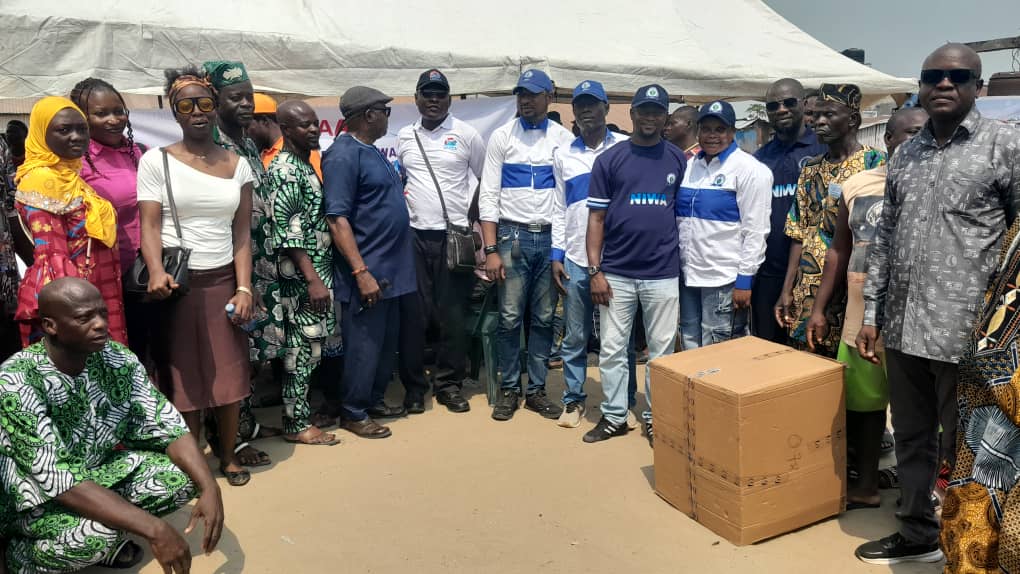
From Awareness to Action: How SWAAADO is Rewriting Nigeria’s Waterways Safety Story
-
 Blog2 weeks ago
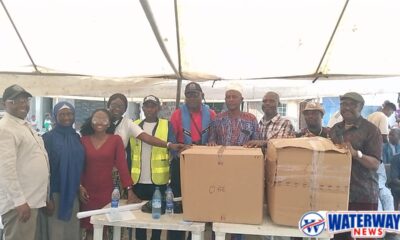
SWAAADO Intensifies Waterways Safety Sensitization Campaign to Waterfront Communities in Lagos State.