
Blue Economy
NASS Must Act Now: Maritime Sector Stakeholders Push for Creation of National Coast Guard

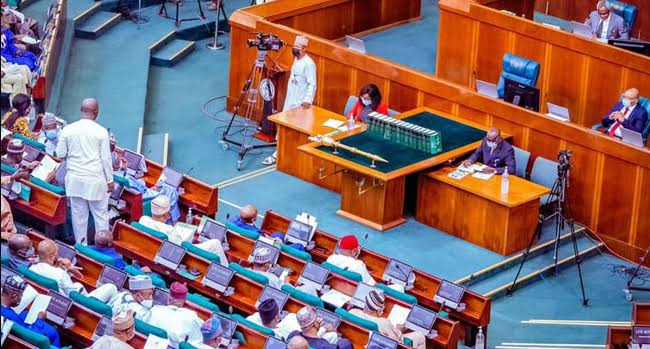
NASS Must Act Now: Maritime Sector Stakeholders Push for Creation of National Coast Guard
By Emetena Ikuku | Waterways News Correspondent
Maritime stakeholders have renewed calls on the National Assembly to urgently pass legislation establishing a dedicated National Coast Guard, warning that the absence of a civil maritime agency is costing Nigerian lives and bleeding the economy.
The appeal, issued Wednesday, comes against a backdrop of recurring fatal accidents and unchecked illegal activities across Nigeria’s estimated 850-kilometre inland and coastal waterways — a network that remains critically under-policed.

Security Vacuum Exposed
At the heart of the stakeholders’ concern is a structural gap: Nigeria currently has no dedicated civil agency mandated to conduct search and rescue, enforce maritime law, and monitor the environment along its waterways. The Nigerian Navy, they argue, was never designed to shoulder these responsibilities alongside its core military mandate.
Abdulazeez Ayodele Aloba, a leading voice among the stakeholders, said the current arrangement leaves both citizens and economic assets dangerously exposed. He pointed to a recent canoe mishap in Yobe State that reportedly claimed more than 20 lives as a stark illustration of what happens when specialised emergency response capacity is absent.
“The current structure exposes citizens and economic assets to avoidable risks,” Aloba said.
IMO Seat Raises the Stakes
The urgency of the call is sharpened by Nigeria’s recent re-election to the International Maritime Organization (IMO) Council under Category C for the 2026–2027 biennium — a diplomatic achievement that now carries institutional obligations.
Stakeholders note that fellow Category C members including the Philippines, Egypt, Indonesia, and Malaysia all operate dedicated coast guard services handling civil maritime functions. Nigeria’s continued reliance on the Navy for both military and civil roles, they say, places the country out of step with global standards and undermines its credibility at the IMO.
Blue Economy at Risk
Despite Nigeria’s enormous maritime endowment — spanning its Atlantic coastline, the Niger Delta, major river systems, and vast inland waterway network — the sector contributes less than three percent of GDP. Stakeholders attribute this underperformance directly to insecurity and weak institutional frameworks.
Piracy, illegal fishing, crude oil theft, and rampant smuggling continue to erode investor confidence and drain national revenue. Without a professional coast guard to address these threats, stakeholders warn that the Federal Government’s blue economy ambitions will remain on paper.
Tinubu’s Blue Economy Push Acknowledged
Stakeholders acknowledged President Bola Tinubu’s decision to elevate maritime affairs through the creation of the Federal Ministry of Marine and Blue Economy, as well as his administration’s endorsement of National Institute for Policy and Strategic Studies (NIPSS) recommendations on sustainable maritime development. They also commended the Minister of Marine and Blue Economy, Adegboyega Oyetola, for his efforts in advancing maritime diplomacy.
However, they stressed that administrative structures must be matched with legislative action — and the National Assembly holds the key.
Nigeria Watch
For freight forwarders, terminal operators, and maritime trade stakeholders, the coast guard debate is not merely a security question — it is an economic one. Nigeria’s ports handle billions of dollars in cargo annually, yet the maritime access routes feeding those ports remain dangerously under-governed. The piracy risk premium that shippers and insurers attach to Nigerian waters directly inflates the cost of doing business. A functional, well-resourced coast guard — distinct from the Navy — would reduce that premium, improve incident response times on waterway cargo routes, and signal to international shipping lines that Nigeria is serious about protecting maritime commerce.
The National Assembly’s inaction on this bill is not a neutral stance; it is a cost borne by every importer, exporter, and operator working Nigeria’s waterways.

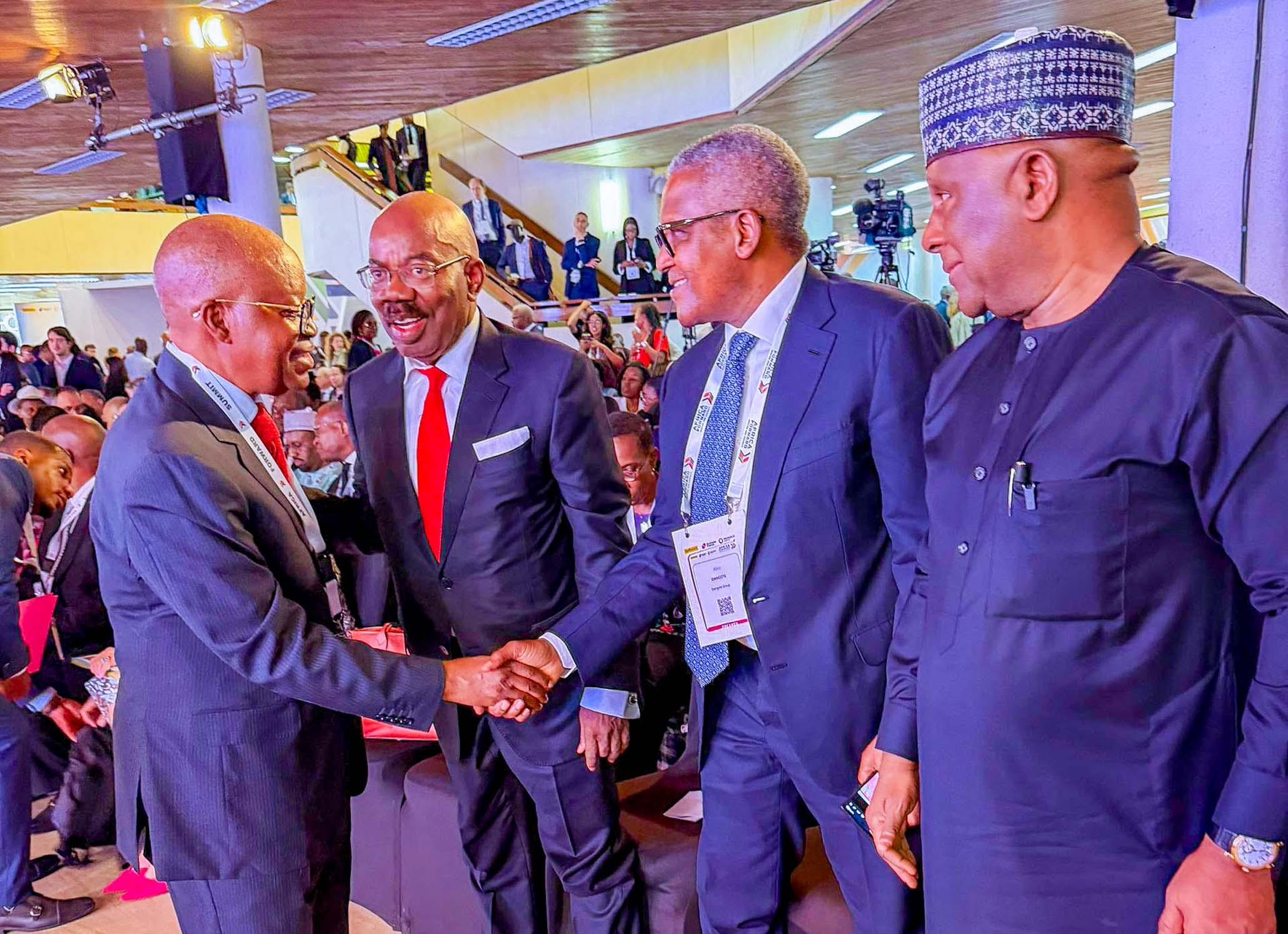
Oyetola Champions Nigeria’s Blue Economy at Africa Forward Summit in Nairobi
By Ighoyota Onaibre | Waterways News Correspondent
Nigeria’s Minister of Marine and Blue Economy, Dr. Adegboyega Oyetola, brought the country’s blue economy agenda to the international stage on Monday as he joined African leaders, investors and policymakers at the Africa Forward Summit held in Nairobi, Kenya.
Oyetola featured on a high-level panel centred on the theme “Blue Economy — Maritime Sovereignty & Sustainable Valorization,” sharing a platform with France’s Minister of the Sea and Fisheries, Catherine Chabaud, and other prominent maritime stakeholders from across the continent.
The summit, co-hosted by Kenyan President William Ruto and French President Emmanuel Macron under the banner “Africa-France Partnerships for Innovation and Growth,” drew considerable attention as the first Africa-France summit hosted in an English-speaking, non-Francophone African country — a milestone that underscored the evolving dynamics of Africa’s engagement with its global partners.
President Bola Ahmed Tinubu was among the African heads of state in attendance, joining what has been widely described as a pivotal diplomatic forum for charting a new course in economic and strategic cooperation between Africa and France.
For the Federal Ministry of Marine and Blue Economy, the summit provided a timely platform to showcase Nigeria’s growing ambitions in the sector. Since the Ministry’s creation in August 2023, it has moved to lay a policy foundation for sustainable growth — producing Nigeria’s first National Policy on Marine and Blue Economy to guide development across the country’s vast coastal and inland waterways resources.
The results are beginning to show. Agencies under the Ministry recorded a combined revenue of N1.83 trillion in the 2025 fiscal year. The Federal Government has also approved a comprehensive port modernisation programme aimed at accommodating larger vessels, creating more jobs and consolidating Nigeria’s standing as the premier maritime gateway for West and Central Africa.
NIGERIA WATCH
The blue economy message Oyetola carried to Nairobi did not originate in a single office — it is the product of a coordinated ecosystem of all agencies operating under the Federal Ministry of Marine and Blue Economy, each with a distinct but interlinked role in building the sector he is now promoting on the continental stage.
Nigerian Maritime Administration and Safety Agency (NIMASA) is the Ministry’s apex regulatory arm, responsible for ship registration, seafarer certification, cabotage enforcement, marine environment protection and maritime security. NIMASA’s Deep Blue Project — which has helped drive down piracy incidents in the Gulf of Guinea — is central to the maritime sovereignty argument Oyetola made at the Nairobi panel. A safer maritime domain is the foundation on which any blue economy investment case is built. NIMASA also drives Nigeria’s engagement with the International Maritime Organization (IMO), ensuring the country’s policies align with global standards — the kind of credibility that matters on a summit stage alongside French ministers.
Nigerian Ports Authority (NPA) manages and regulates port operations and infrastructure across Nigeria’s seaports. The port modernisation programme approved by the Federal Government — highlighted as a key ministry achievement — sits squarely in NPA’s remit. Attracting larger vessels, expanding cargo throughput and positioning Nigeria as West and Central Africa’s leading maritime hub are all functions that flow directly through the Authority. When Oyetola speaks of Nigeria’s marine potential before investors at a summit like Africa Forward, it is NPA’s infrastructure that those investors will ultimately be looking to engage with.
National Inland Waterways Authority (NIWA) oversees the development and regulation of Nigeria’s inland waterways — a network spanning over 10,000 kilometres, of which only about 3,000 are currently navigable. The sustainable valorisation of marine resources, which Oyetola spoke to at the panel, cannot be complete without unlocking this inland corridor. NIWA is the agency responsible for opening up that frontier — through waterway development, jetty construction, vessel regulation and safety enforcement on rivers and creeks. Its work connects coastal blue economy gains to riverine communities across 28 states.
Nigerian Shippers’ Council (NSC) functions as the port economic regulator and the voice of cargo owners in Nigeria’s maritime supply chain. As the Ministry pursues greater investment and trade flows through the blue economy agenda, NSC’s role in moderating freight rates, resolving disputes between shippers and service providers, and ensuring a competitive port environment becomes critical. The commercial sustainability of Nigeria’s maritime hub ambition depends significantly on how well NSC regulates the cost and ease of doing business at Nigerian ports.
Together, these four agencies form the institutional backbone behind the blue economy narrative Nigeria is now projecting internationally. Oyetola’s appearance in Nairobi signals diplomatic momentum — but it is the day-to-day performance of NIMASA, NPA, NIWA and NSC at home that will determine whether that narrative holds.
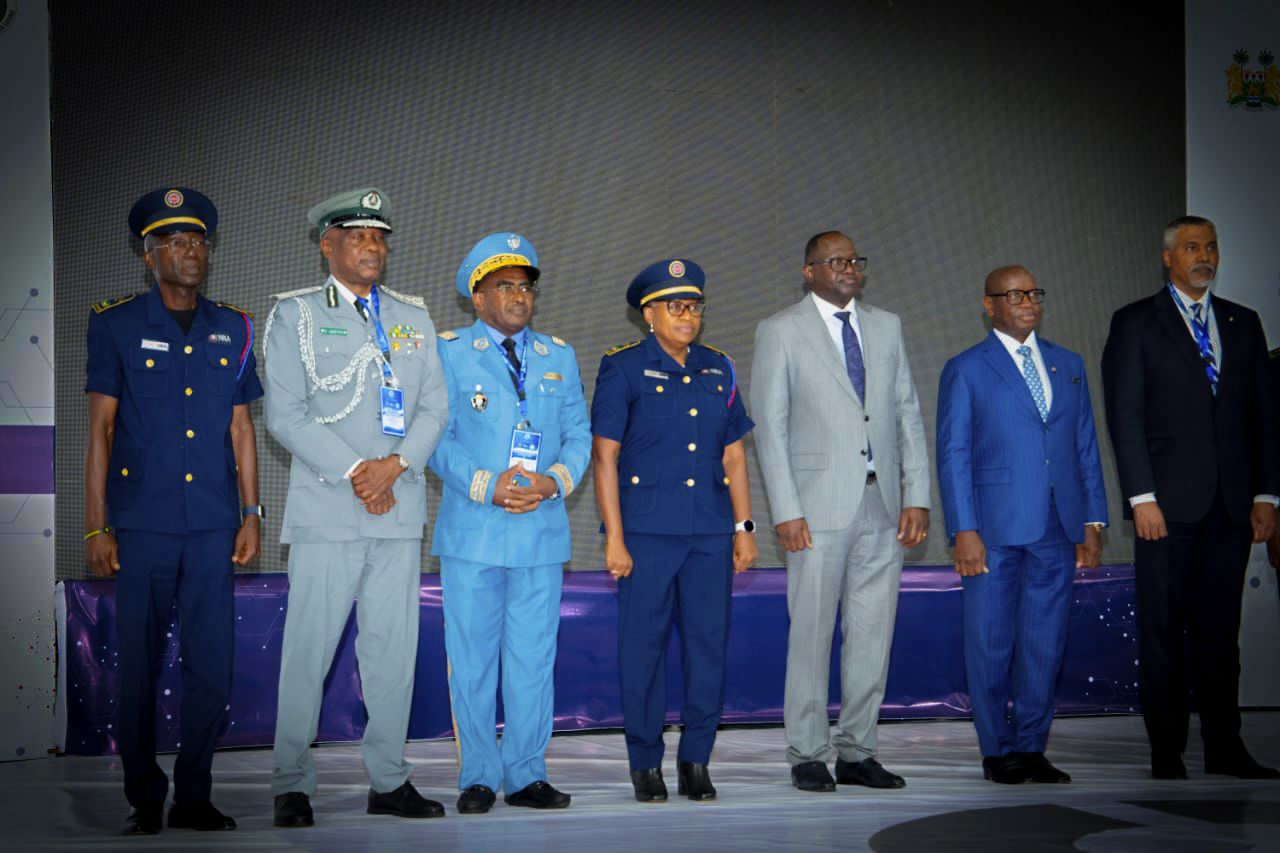
NCS Boss Champions Digital Trade, Regional Customs Unity at WCO Freetown Summit
By Ighoyota Onaibre | Waterways News Correspondent
Nigeria Customs Service Comptroller-General Bashir Adewale Adeniyi has used the platform of the 32nd Conference of Directors General of Customs in Freetown, Sierra Leone, to press for accelerated digital trade reforms and deeper cooperation among West and Central African Customs administrations, warning that the region’s economic integration agenda faces serious threats from illicit trade and fragmented border management.
Adeniyi, who represented Nigeria’s interests at the two-day summit convened under the World Customs Organization (WCO) framework, told delegates that Nigeria’s engagement within the regional body was animated by a commitment to collective progress rather than the narrow pursuit of national advantage. He praised the region’s tradition of rotating leadership among member states irrespective of their size or economic weight, describing it as a model worthy of emulation.
Summit Theme and Key Agenda
The conference, held under the theme “A Customs Service that Protects Society Through its Vigilance and Commitment,” placed digital transformation, intelligence-driven border management and harmonised Customs operations at the centre of its deliberations.
Delegates reached broad agreement on the need for coordinated roll-out of Single Window platforms across the region, stronger transit verification through the ECOWAS SIGMAT framework, and more robust data-sharing arrangements to plug revenue leakages and disrupt smuggling and transnational criminal networks exploiting trade corridors.
Adeniyi separately commended the WCO leadership for sustaining an inclusive modernisation agenda that keeps African Customs administrations meaningfully engaged in shaping global trade standards.
Sierra Leone’s Modernisation Blueprint
Sierra Leone’s hosting of the summit coincided with an announcement of its own Customs transformation roadmap. The country unveiled plans to upgrade its ASYCUDA World system, deploy a Single Window Customs and Ports Community System, and introduce product-tracing solutions for excisable goods — steps that align with the broader regional push for interoperable trade infrastructure.
The conference was formally opened by Sierra Leone President Julius Maada Bio, who called on regional governments to deepen cooperation on trade facilitation, border security and economic integration as foundational pillars of sustainable growth.
AfCFTA Opportunities, Security Imperatives
Participants acknowledged that the African Continental Free Trade Area (AfCFTA) offers the region significant commercial opportunities but cautioned that its full potential can only be realised if modern Customs systems and effective border controls keep criminal actors from exploiting the expanded trade corridors that accompany liberalisation.
The summit closed with the election of the Central African Republic as the new Vice-Chair of the WCO West and Central Africa Region, succeeding Mali at the conclusion of a two-year tenure.
Nigeria Watch
For Nigeria’s ports and maritime trade ecosystem, the Freetown summit carries direct operational significance. The NCS has been actively rolling out the Nigeria National Single Window — a platform whose value depends heavily on whether neighbouring Customs administrations adopt comparable systems. Without regional interoperability, goods moving through West African corridors remain vulnerable to mis-declaration, valuation fraud and diversion at transit points beyond Nigeria’s jurisdiction.
Adeniyi’s advocacy for the ECOWAS SIGMAT transit verification framework is particularly noteworthy. Nigeria’s major ports — Apapa and Tin Can Island — serve as entry points for cargo destined for landlocked neighbours including Niger, Burkina Faso and Mali. Strengthening transit Customs controls is therefore not merely a regional solidarity gesture; it is a direct revenue protection measure for the NCS and a trade facilitation imperative for Nigerian port operators.
The AfCFTA dimension also bears watching. As tariff barriers fall, the premium on Customs intelligence, risk profiling and cross-border data sharing will only rise. Nigeria’s positioning within the WCO regional structure gives it leverage to shape those frameworks — leverage that must be converted into binding protocols if the country’s ports are to remain competitive gateways into West Africa.
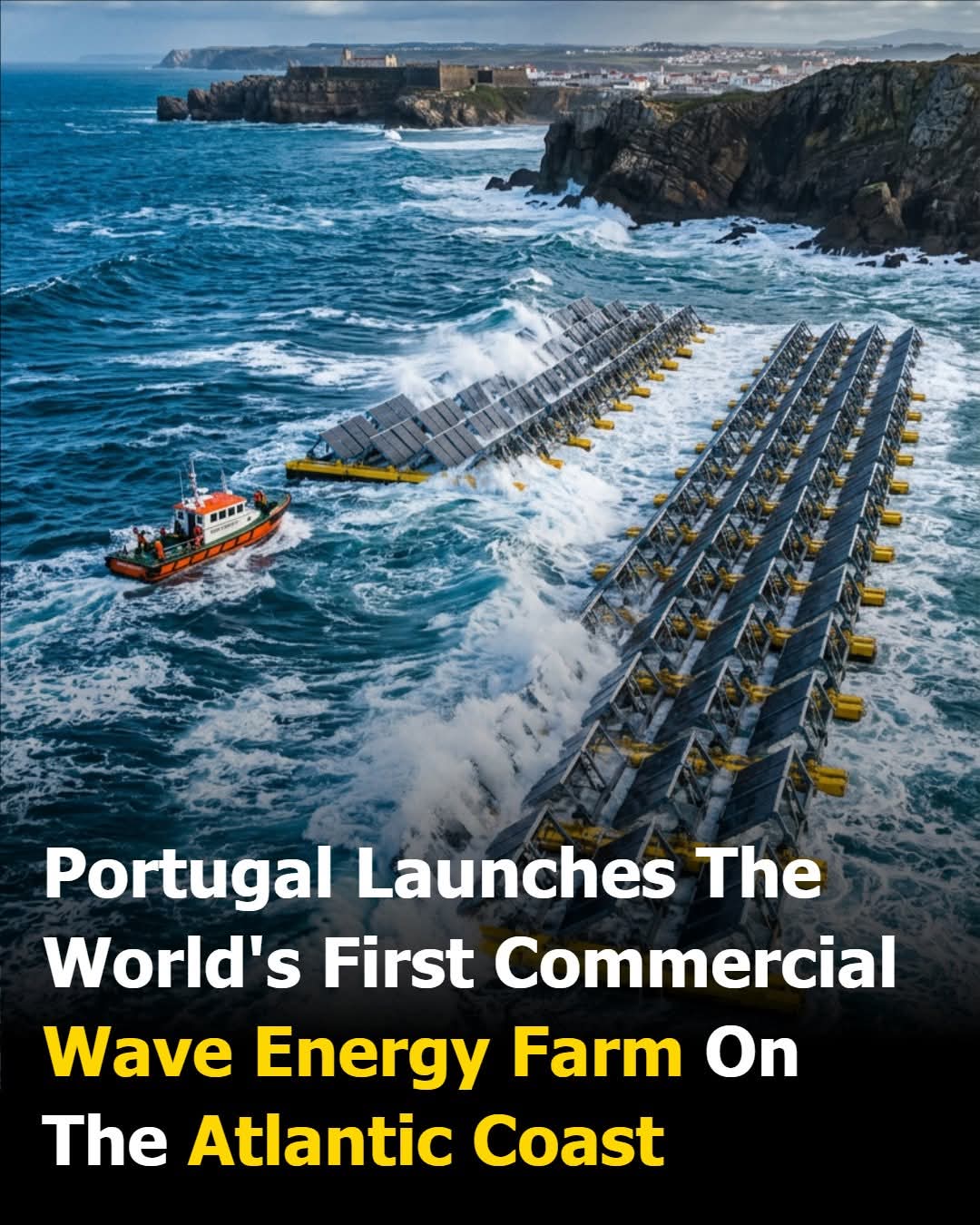
Portugal’s Seabed Energy Farms Points a New Way for Ocean Nations
By Ighoyota Onaibre | Waterways News Correspondent
Finland’s AW-Energy and a 14-partner European consortium have deployed WaveRoller technology off Peniche in a milestone that maritime and energy planners from Lagos to Abuja should be watching closely
Eight hundred and twenty metres off the coast of Peniche — a windswept fishing town on Portugal’s Atlantic seaboard long known for its big-wave surfing — something quietly extraordinary is happening on the ocean floor. Hinged panels, each the size of a large shipping container standing on end, are anchored to the seabed in 15 to 25 metres of water. As deep Atlantic swells roll in from the open ocean, the panels rock back and forth with the surge. Every tilt and recovery drives hydraulic fluid through onshore generators. The ocean is, in the most literal sense, doing the work.
This is not a laboratory experiment. It is the commercialisation of wave energy — one of the most elusive prizes in renewable power development — and it is happening now.
The Technology: How WaveRoller Works
The device behind the Peniche installation is the WaveRoller, developed by Finnish clean energy company AW-Energy. The first unit of the wave power farm was successfully installed on the seabed, marking the beginning of the commercial phase of clean electricity production.
The principle is elegantly simple. The technology consists of a vertical panel that moves with the sea currents, capturing energy that is transmitted to a hydraulic system and then to a power plant. Unlike offshore wind turbines, which are visible from the shore and exposed to storms, WaveRoller units sit beneath the surface, sheltered from the worst of the weather, anchored to the seabed by a foundation system engineered to handle the relentless pressure of open-ocean swells.
The device is installed 820 metres offshore from Peniche, and during the commissioning phase, operators collect data around the clock to monitor performance using motion, pressure, and strain gauge sensors engineered into its panel, foundation, and bearings. AW-Energy CEO Christopher Ridgewell has said the data received from the installation indicates the WaveRoller is operating well and performing in accordance with expectations.
The connection to the national grid runs via an onshore substation, meaning the power generated beneath the waves travels ashore through a submarine cable and feeds directly into Portugal’s electricity network — the same infrastructure that powers homes, hospitals, and factories.
ONDEP: Scaling Up to Commercial Reality
The latest and most significant chapter in Peniche’s wave energy story is the Ondas de Peniche project, known by its Portuguese acronym ONDEP. The ONDEP project has been awarded €19 million from the EU’s Horizon Europe funding programme to deploy a 2 MW wave energy array featuring four WaveRoller wave energy converters. The project commenced in October 2024 and will last five and a half years, encompassing the full spectrum of project activities — from design and manufacturing to testing, deployment, and operation.
Two megawatts may sound modest in an era of gigawatt-scale offshore wind farms, but the significance of ONDEP lies not in its size but in what it proves. The pilot wave farm will be installed and connected to the grid and will continue generating electricity for an additional eight years after the project’s official end (Energy Global) — a total operational horizon of more than thirteen years that will generate the long-term performance data the industry has long needed to attract serious infrastructure investment.
The ONDEP project will also establish a comprehensive, end-to-end European supply chain to support the deployment of gigawatt-scale wave energy across Europe and beyond, as a significant step towards the industrialisation of wave energy.
Ridgewell has described the project as the culmination of two decades of development work: “This project builds on two decades of hard work developing WaveRoller into a commercial asset. We’re excited to work on this collaboration together with the other partners to create a new industry in Europe.”
Led by Queen’s University Belfast, ONDEP involves 14 partners from Belgium, Finland, France, Italy, the Netherlands, Norway, Portugal, Spain, and the United Kingdom.
The breadth of that consortium — spanning universities, engineering firms, marine contractors, and grid operators — reflects the complexity of bringing an ocean energy technology from prototype to bankable commercial product.
Why Wave Energy Matters: The Case for the Unstoppable Resource
The appeal of wave energy, to engineers and energy planners alike, comes down to one word: predictability. Solar panels produce nothing at night and struggle on cloudy days. Wind turbines are idle when conditions are calm. But wave energy captured through the rhythmic motion of the sea offers one of the most consistent, predictable forms of renewable power on the planet. Unlike solar or wind, waves do not sleep. They do not stall. They do not depend on perfect weather.
This consistency is particularly valuable to grid operators trying to balance supply against demand around the clock. A power source that generates reliably through nights, cloudy seasons, and calm spells fills precisely the gap that intermittent renewables cannot. For coastal nations with energy deficits and long Atlantic-facing coastlines, it is a resource that literally never stops arriving.
The Africa Dimension: A $296 Billion Blue Economy Waiting
For Nigerian maritime and energy policymakers, the Peniche story carries a very direct message. Nigeria boasts an 853-kilometre coastline along the Atlantic Ocean and extensive inland waterways covering over 10,000 kilometres. Data from the Nigerian Maritime Administration and Safety Agency projects the value of Nigeria’s untapped blue economy potential at a stunning $296 billion. (Voice of Nigeria)
Apart from harnessing tidal and wave energy as part of Nigeria’s green transition, marine biotechnology, research and development in marine-based pharmaceuticals and bio-products are opportunities waiting.
Research has already begun to quantify the resource. A study evaluating Brass Creek in Rivers State found that the site is characterised by moderate to high significant wave heights and favourable wave periods, with annual mean wave power density reaching 31.42 kW/m and seasonal peaks observed during summer and autumn. The prevailing wave direction aligns with the Atlantic swell, further supporting the site’s suitability for wave energy extraction. The same study found that significant wave heights above 1.5 metres occur with a probability of 93.6%, underscoring the reliability of the resource.
Yet despite this documented potential, Africa has no commercial wave farms today — not one.
The instantaneous wave power resource of African waters has previously been estimated to be between 324 GW and 422 GW — a figure that dwarfs Nigeria’s current installed electricity generation capacity many times over. Investing in offshore wind, tidal, and wave energy can provide sustainable sources of electricity while reducing greenhouse gas emissions, according to analysts assessing Nigeria’s blue economy prospects.
Nigeria Watch: What the Peniche Milestone Means for Nigeria’s Marine and Energy Sectors
Portugal’s Peniche installation is more than a technology story. It is a policy signal — and Nigerian stakeholders, from the Federal Ministry of Marine and Blue Economy to NIMASA and the Nigerian Electricity Regulatory Commission, should take note of several dimensions.
The regulatory template. Portugal has not simply funded a project; it has built a framework — grid connection standards, seabed lease arrangements, environmental monitoring protocols — that took years to develop. Nigeria’s maritime regulatory architecture, currently being strengthened under the Marine and Blue Economy agenda, will need analogous structures if ocean energy is ever to attract private capital.
The financing model. ONDEP’s €19 million EU Horizon Europe grant was matched by a consortium of fourteen institutional partners. No single government carried the risk. Nigeria’s engagement with multilateral development finance — the African Development Bank, the World Bank’s IFC, and bilateral climate funds — offers a comparable pathway, particularly given Nigeria’s NDC commitments under the Paris Agreement.
The coastal community dimension. One of the stated objectives of the Peniche installation is ensuring that residents of Peniche benefit directly from the energy it generates. Nigeria’s coastal communities — in Bayelsa, Delta, Rivers, Akwa Ibom, Cross River, Lagos, Ogun, and Ondo states — have historically seen their maritime resources extracted without equivalent benefit flowing back. A wave energy programme conceived from the outset around local grid connection and community benefit-sharing would represent a meaningful departure from that pattern.
The port infrastructure opportunity. Eco Wave Power, a separate Israeli-Swedish technology company, is implementing a first 1MW project at a breakwater facility in Porto, Portugal, which is expected to be finalised during 2026. The Porto model — attaching wave energy converters to existing port infrastructure rather than deploying standalone offshore arrays — is directly applicable to Nigeria, where the Nigerian Ports Authority manages breakwater and jetty structures at multiple locations along the coast. NPA’s concession renewal discussions and its ongoing infrastructure modernisation programme would be a natural vehicle for piloting a comparable installation.
The Bottom Line
What Portugal has demonstrated at Peniche is not a proof of concept — that stage passed some years ago. What it has demonstrated is commercial viability at grid scale, backed by serious institutional money, operating under real regulatory conditions, with a business model that works.
For Nigeria, with its vast Atlantic coastline, its chronic electricity deficit, its expanding Federal Ministry of Marine and Blue Economy mandate, and its $296 billion blue economy prize still largely uncaptured, the question is no longer whether wave energy is technically possible. The question is whether the policy will, the institutional coordination, and the financing architecture can be assembled before another decade passes.
Peniche’s seabed is moving. Lagos’s energy planners should be too.
-

 Oil and Gas2 months ago
Tantita’s Pipeline Deal: $144m Contract, Rising Output, and the Questions that Deserve Answers
-
 Blue Economy3 months ago
Nigeria’s Coast Guard Bill: A Solution in Search of a Problem?
-
 MARITIME TRADE & SHIPPING2 months ago
World’s Largest Container Ship Sets New Maritime Record with 22,233 TEUs on Single Voyage
Akinleye Oluwatosin
May 7, 2026 at 5:09 pm
This is a very good step for the movement of our economy in Nigeria because this collaboration and operation together with your fellow men on a shipping line protect our economic architecture and that is what is good for they officer onboarding not to allow any illegal or attack to penetrate through our border I believe with the passing of the bill the organization is a separate body and it’s own vision to support the country please let us be together and forget the duplication of fight will are talking about pls Nigeria needs progressive and many youths are jobless may God help us.
Akinleye Oluwatosin
May 7, 2026 at 5:14 pm
This is a very good step for the movement of our economy in Nigeria because this collaboration and operation together with your fellow men on a shipping line protect our economic architecture and that is what is good for they officer onboarding not to allow any illegal or attack to penetrate through our border I believe with the passing of the bill the organization is a separate body and it’s own vision to support the country please let us be together and forget the concerns of the duty will are talking about please Nigeria needs progressive and many youths are jobless may God help us.