

Blue Economy
Nigeria’s Digital Waterways Revolution: How SWAAADO’s Directory Is Plugging the Corruption Leaks in NIWA’s Operations


A News Analysis
ABUJA — When the National Inland Waterways Authority (NIWA) recently sat down with the Independent Corrupt Practices and Other Related Offences Commission (ICPC) at its management retreat in Abuja, it sent a clear signal that Nigeria’s marine governance sector is finally confronting a long-standing problem.
But anti-corruption partnerships, however sincere, are only as strong as the data systems that support them. This is precisely where the Nigeria Waterways Directory, developed by the Sustainable Waterways Awareness Advancement and Advocacy Organisation (SWAAADO), is emerging as a quietly powerful force in the transparency equation.

The Corruption Landscape NIWA Is Fighting
Nigeria’s inland waterways sector has for decades been fertile ground for opacity. From ghost vessel registrations and inflated jetty concession valuations, to undeclared revenue streams from waterway levies and unlicensed operators slipping through administrative cracks, the systemic vulnerabilities have been well documented but poorly addressed. NIWA itself, as the regulatory authority overseeing over 10,000 kilometres of navigable inland waterways, has faced persistent questions about revenue accountability, licensing integrity, and the accuracy of its operational data.
The NIWA-ICPC partnership announced at the Abuja retreat represents a genuine institutional acknowledgement that internal reform requires external oversight. Yet oversight, without reliable data, is largely performative. ICPC investigators and NIWA compliance officers cannot effectively cross-check licensing claims, vessel records, or concession allocations if no credible, independent directory of waterway assets and operators exists.
This is the gap that SWAAADO‘s Nigeria Waterways Directory directly addresses.
What the Directory Brings to the Table
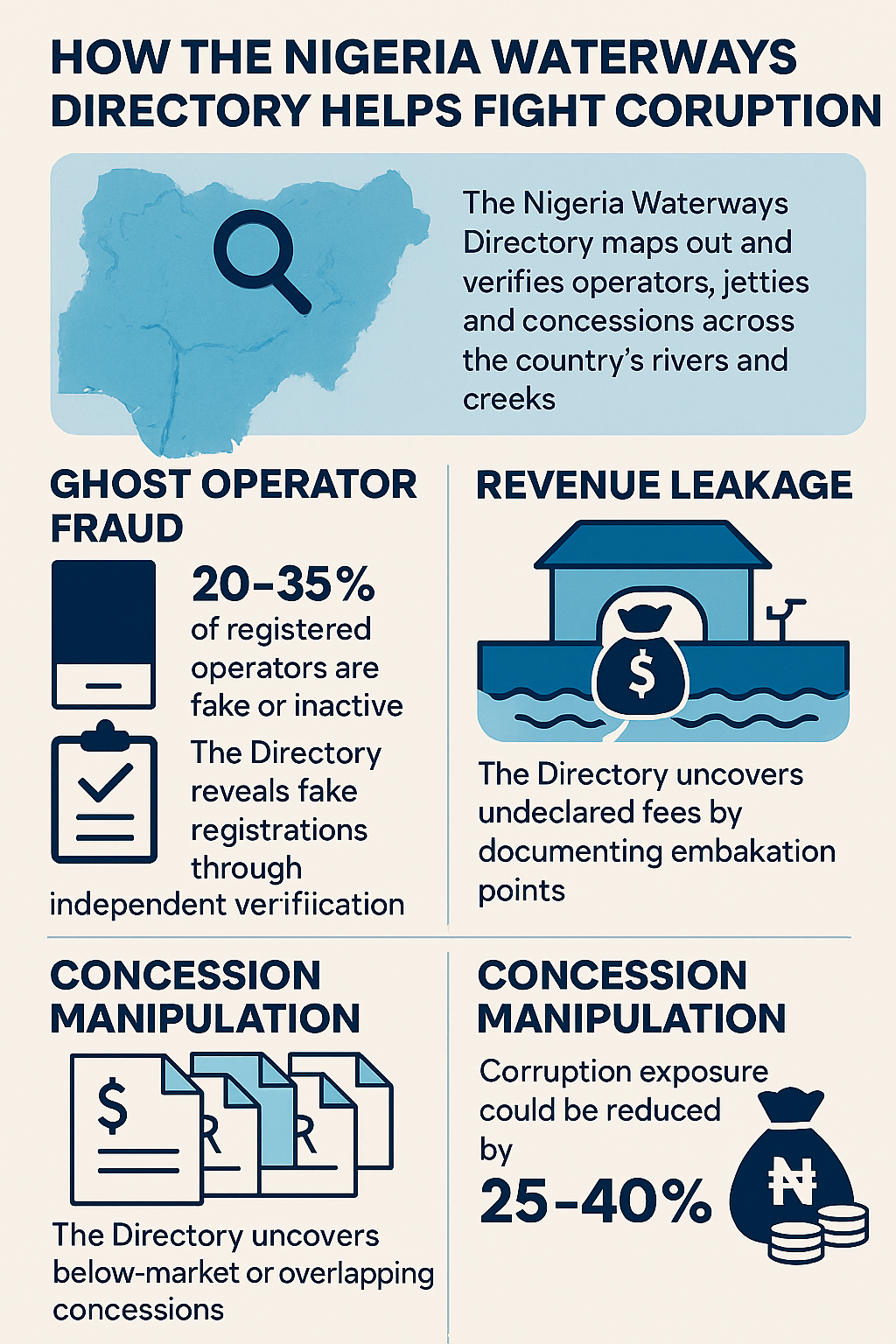
The Nigeria Waterways Directory functions as a structured, independently maintained database of waterway infrastructure, licensed operators, jetty locations, vessel registrations, and waterway service providers across Nigeria’s river and creek networks. Think of it as a civic audit tool — a publicly accessible reference point against which official NIWA records can be measured.
In practical anti-corruption terms, the Directory’s contribution can be mapped across at least three measurable dimensions of waterways corruption.
First, ghost operator fraud.
Industry analysts estimate that a significant proportion — conservatively put at between 20 and 35 percent — of registered waterway operators in Nigeria exist only on paper, created to siphon licensing fees, government contracts, or subsidy allocations. The Directory, by physically verifying and cataloguing operational entities against geographic coordinates, vessel descriptions, and owner identities, creates an independent verification layer. When ICPC investigators cross-reference NIWA’s licensing database against the Directory, discrepancies pointing to ghost registrations become far harder to conceal.
Second, revenue leakage at jetties and embarkation points.
Unofficial levies and undeclared passenger fees at jetty points represent one of the most pervasive but difficult-to-quantify forms of waterways corruption. By mapping and documenting jetty locations — including informal and semi-formal ones that NIWA’s own records frequently omit — the Directory expands the taxable and accountable surface area of the sector. What cannot be seen cannot be regulated. SWAAADO’s geographic documentation effectively removes the invisibility that corruption depends on.
Third, concession and contract manipulation.
Waterway concessions awarded to connected interests at below-market terms, or duplicated across multiple entities controlled by the same beneficial owner, have long been a source of revenue loss for the Authority. The Directory’s systematic recording of concession holders, their operational footprints, and their service delivery records creates a baseline against which suspicious patterns — such as a single entity holding overlapping concessions across multiple states — can be identified.
Taken together, anti-corruption experts working in Nigeria’s extractive and infrastructure sectors suggest that tools of this nature, when institutionally integrated, can reduce corruption exposure by between 25 and 40 percent in comparable regulatory environments. Applied to NIWA’s operational context, even a conservative 25 percent reduction would represent billions of naira returned annually to public coffers.
The NIWA-ICPC Framework Creates the Perfect Integration Moment
The timing of SWAAADO’s Directory could not be more strategically aligned. With NIWA’s management now formally engaged with ICPC on transparency measures, and with Minister Adegboyega Oyetola’s Marine and Blue Economy mandate demanding demonstrable accountability outcomes, there is an institutional appetite for exactly the kind of third-party data infrastructure the Directory provides.
Director General Girei’s assurance that reforms under his watch would “enhance both internal performance and public confidence” points to a leadership disposition that is, at minimum, rhetorically open to independent verification tools. The next step — and it is a critical one — is for NIWA to formally adopt the Directory as a complementary reference database within its compliance framework, and for ICPC to treat it as an admissible investigative resource during audits and inquiries.
This kind of public-private-civil society data integration is not without precedent. Nigeria’s NEITI process in the extractive industry demonstrated that when an independent data-gathering body is given formal recognition alongside regulatory authorities, the deterrent effect on fraudulent reporting is substantial and measurable.
What Remains to Be Done
The Directory’s potential is real, but so are the conditions required for it to be fully realised. SWAAADO will need continued investment in field verification capacity to keep the database current, since a waterways directory that lags operational reality by two or three years quickly loses its utility as a corruption-check tool. Additionally, formal memoranda of understanding between SWAAADO, NIWA, and ICPC would institutionalise the Directory’s role and protect it from political interference — a vulnerability that independent civic databases in Nigeria have historically faced.
Public accessibility is equally non-negotiable. A directory that is available only to regulators becomes, over time, a tool regulators can selectively deploy. Its anti-corruption power lies precisely in its openness — in the fact that journalists, legislators, community groups, and civil society organisations can all query it independently and surface anomalies that NIWA and ICPC might otherwise overlook or suppress.
Conclusion: Data Is the New Anti-Corruption Infrastructure
The NIWA-ICPC retreat in Abuja is an encouraging development in Nigeria’s long and uneven journey toward waterways governance reform. But partnership communiqués and retreat resolutions have come and gone before without producing durable change. What makes this moment different — or what could make it different — is the existence of an independent, data-rich tool like SWAAADO’s Nigeria Waterways Directory, capable of transforming accountability commitments into verifiable, trackable outcomes.
Nigeria’s waterways have long been described as a resource rich in promise but poor in returns, not because the rivers run dry, but because the systems built around them have leaked value for decades. Plugging those leaks requires more than political will. It requires a map. SWAAADO may have just provided one.
This is a news analysis piece by Waterways News Desk, examining institutional developments in Nigeria’s marine and inland waterways sector.

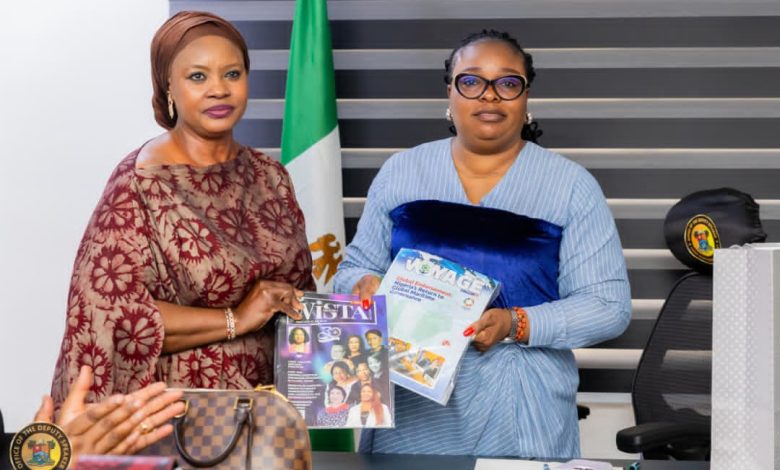
Lagos Deputy Speaker Throws Weight Behind 8th WISTA Africa Conference
By Samson Onoharigho | Waterways News
The Deputy Speaker of the Lagos State House of Assembly, Rt. Hon. Mojisola Lasbat Meranda, has pledged her support for the 8th WISTA Africa Regional Conference and confirmed she will personally attend the continental maritime event, billed to take place in Lagos later this month.
Meranda gave the commitment when she received a delegation of the Women’s International Shipping and Trading Association (WISTA) Nigeria, led by its President, Dr. Odunayo Ani, during a courtesy visit to her office. The visit formed part of WISTA Nigeria’s pre-conference stakeholder outreach, targeting key institutional and legislative voices ahead of the gathering expected to draw policymakers, maritime regulators, industry operators, development partners, academics and professionals from across Africa.
Ani formally invited the Deputy Speaker and women across Lagos State to participate in the conference, scheduled for June 25 and 26, 2026, at Eko Hotel and Suites, Victoria Island, Lagos. She said the event, themed “From Policy to Implementation: Women Advancing Africa’s Blue Economy through Sustainable Shipping, Trade and Energy Innovation,” would focus on translating high-level policy commitments into concrete, sector-wide action.
The WISTA Nigeria president underscored Lagos’s pivotal role in Africa’s maritime economy, arguing that the visible participation of women leaders from the state would lend significant weight to ongoing advocacy for broader female representation in maritime decision-making, innovation, and economic governance.

A group photograph of WISTA Nigeria delegation with the Lagos Deputy Speaker, during a courtesy visit last week
“The support and participation of women leaders in Lagos State will enrich discussions and help advance the drive for greater female representation and inclusion across Africa’s maritime and blue economy sectors,” Ani said.
She also called on the Lagos State House of Assembly to mobilise women across the state for the conference, describing it as a rare platform for shaping a more inclusive and equitable future for Africa’s blue economy.
Responding warmly, Meranda commended WISTA Nigeria’s consistent contributions to championing women in the maritime industry and reaffirmed her longstanding relationship with the association. She confirmed her attendance and pledged active support for initiatives geared toward widening women’s participation across the blue economy value chain.
Nigeria Watch
The 8th WISTA Africa Regional Conference arrives at a moment of heightened policy activity in Nigeria’s maritime sector — from ongoing cabotage reform conversations and the CVFF disbursement saga to the broader push to position Nigeria as the hub of Africa’s blue economy. That WISTA Nigeria chose Lagos as the host city is no accident: with the Apapa and Tin Can Island ports, the emerging Lekki Deep Seaport complex, and the administrative machinery of NIMASA and the NPA all concentrated in the commercial capital, Lagos remains the operational heartbeat of Nigeria’s shipping industry.
What stands out about this edition is the deliberate legislative buy-in. Securing the endorsement of the Lagos Deputy Speaker is not merely symbolic — it signals an attempt to build bridges between the maritime industry and the lawmaking architecture that ultimately shapes port governance, cabotage enforcement, and blue economy investment policy. For an industry that has long complained of regulatory fragmentation and legislative indifference, that kind of outreach matters.
The conference theme — moving from policy to implementation — also resonates sharply in the Nigerian context. Nigeria has no shortage of blue economy frameworks, maritime masterplans, and gender inclusion commitments on paper. The harder challenge, as industry stakeholders consistently note, is converting those documents into enforceable regulation, funded programmes, and genuine career pathways — particularly for women, who remain significantly underrepresented at the senior levels of Nigerian shipping, port management, and maritime trade.
Port operators, shipowners, freight forwarders and terminal managers attending the June 25–26 conference would do well to engage the implementation-focused sessions closely. The conversations there are likely to feed back into the policy pipeline affecting their operations.
Waterways News | Maritime & Blue Economy Reporting

Nigeria Projects Blue Economy Vision at Our Ocean Conference in Mombasa
By Okeoghene Onoriobe | Waterways News Correspondent
Nigeria has stepped onto the global stage to assert its maritime ambitions, with the Minister of State for Foreign Affairs, Ambassador Sola Enikanolaiye, representing President Bola Tinubu at the Our Ocean Conference currently holding in Mombasa, Kenya.
The three-day summit, running from June 16 to 18, convenes heads of state, ministers, investors, environmental advocates, policymakers and civil society leaders to advance concrete solutions for protecting the world’s oceans while unlocking their economic potential. Since its founding in 2014, the conference has built a reputation as one of the world’s most outcome-driven environmental forums, with a strong record of converting pledges into verifiable action.
This year’s edition places Africa’s blue economy at the centre of deliberations, acknowledging its role in sustaining more than 50 million livelihoods across the continent’s 38 coastal nations. Key discussions are focused on persistent threats to marine ecosystems — illegal, unreported and unregulated (IUU) fishing, plastic pollution, rising ocean temperatures and the urgent need for expanded marine protected areas.
Nigeria is expected to use the platform to articulate its position as West Africa’s foremost maritime nation, drawing attention to ongoing efforts to develop its blue economy framework, reinforce maritime security architecture in the Gulf of Guinea, and improve ocean health across its coastline and exclusive economic zone (EEZ). The delegation is also expected to advance engagement with international partners on mechanisms to scale up sustainable ocean-based industries and deepen regional cooperation frameworks.
The conference programme extends beyond diplomatic exchanges to include investment forums, a BlueTech exhibition, youth leadership tracks and specialised policy clinics designed to drive innovation in climate adaptation and sustainable ocean governance. Organisers expect the gathering to catalyse fresh inflows of public and private capital into marine conservation and sustainable fisheries management.
Nigeria Watch
Nigeria’s participation in the Our Ocean Conference comes at a moment when the country’s blue economy agenda is still more aspiration than architecture. While the Tinubu administration has spoken broadly of harnessing Nigeria’s vast ocean resources — from fisheries and aquaculture to offshore energy and maritime tourism — the policy frameworks and funding mechanisms needed to convert that vision into commercial reality remain largely underdeveloped.
For Nigeria’s port operators, terminal managers and shipping stakeholders, the Mombasa summit carries practical significance beyond the diplomatic optics. International ocean governance commitments increasingly intersect with commercial maritime operations: stricter IUU fishing enforcement, expanded marine protected zones and emerging blue carbon markets all have direct implications for how shipping lanes, offshore logistics corridors and coastal port infrastructure are managed.
Equally notable is the investment dimension. The Our Ocean Conference has historically generated significant financing pledges for ocean-related projects. Nigeria’s ability to attract a share of that capital — particularly for port decarbonisation, offshore wind development and blue infrastructure along the Lagos-Calabar coastal corridor — will depend on whether Abuja can present bankable project pipelines backed by credible regulatory frameworks, rather than broad thematic declarations.
NIMASA’s ongoing efforts to modernise Nigeria’s maritime regulatory environment and the NPA’s port expansion programme are relevant foundations, but without coordinated blue economy legislation and dedicated funding mechanisms, Nigeria risks being a spectator at forums that are reshaping the global maritime investment landscape.
The question Mombasa should sharpen for Nigerian policymakers is straightforward: will the country leave with commitments, or with capital?
Waterways News — Covering Nigeria’s Maritime and Blue Economy Sector
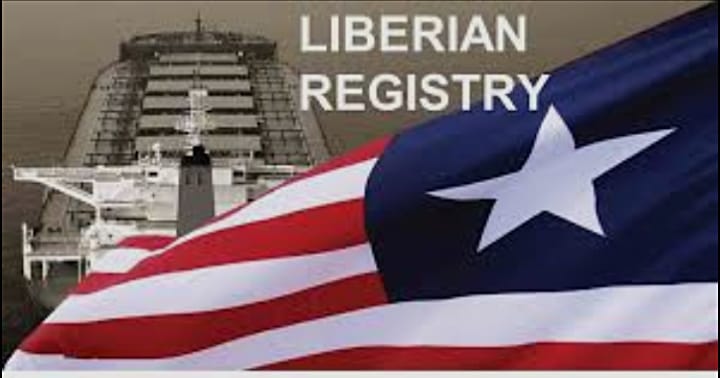
How Liberia Turn Its Flag into a Maritime Goldmine — But the Profits Keep Sailing Away
The world’s largest ship registry sits in a West African nation with a $670 per capita income. The ships are everywhere. The money, largely, is not.
By Oghenewoke Osaweren | Waterways News
In the high-pressure world of global shipping, few decisions carry as much financial weight as where a vessel is registered. And right now, more shipowners are making that decision in favour of Liberia than any other country on earth.
As of June 2026, the Liberia-flagged fleet stood at 307.3 million gross tonnage — making the Liberian International Ship and Corporate Registry (LISCR) the first registry in history to cross the 300 million GT threshold. It is the third consecutive year Liberia has held the title of the world’s largest shipping registry, widening its lead over its nearest rival by nearly 45 million gross tons.
The numbers are staggering. The Liberian Ship Registry now accounts for 17 percent of the global fleet, with 6,092 vessels flying its flag, and it represents 28 percent of global newbuilding gross tonnage — meaning more than one in four new ships entering the global fleet now does so under the Liberian colours.
But what pulls the world’s shipowners to a flag planted in one of West Africa’s most impoverished nations? And, critically, what is Liberia itself getting out of the arrangement?
THE MAGNET: WHAT SHIPOWNERS ARE REALLY BUYING
Established in 1948, the Liberian Registry has built its reputation on maritime safety, environmental standards, and administrative efficiency. Yet the hard commercial draw has always been simpler than that: cost reduction on a massive scale.
Shipowners choose Liberia’s open registry for lower taxes and reduced registration fees that can significantly slash operational costs, alongside the freedom to hire multinational crews at competitive wages — bypassing the higher labour costs imposed by national registries in Europe, Asia, or the Americas.
There are no crew nationality restrictions on Liberian vessels, and taxes are assessed at conservative rates based on net tonnage. For owners managing fleets of dozens of vessels, the cumulative savings run into tens of millions of dollars annually.
The registry is administered from Vienna, Virginia, with offices in New York, Hamburg, Hong Kong, London, Piraeus, Tokyo, Zurich, Singapore, and Monrovia, providing clients with 24-hour service. The bureaucratic friction that delays other registries simply does not exist here — a Liberian ship-owning corporation can typically be formed on the same working day instructions are received.
THE CHINA CARD
Beyond the traditional cost advantages, a newer and increasingly consequential incentive has emerged. Under a renewed maritime agreement with the People’s Republic of China, Liberian-flag vessels now enjoy preferential tonnage dues rates at Chinese ports, alongside expedited customs procedures and simplified port formalities — advantages that competing flags such as the Marshall Islands do not enjoy.
In a global shipping economy where China handles a dominant share of cargo, this diplomatic edge is no small commercial consideration.
LIBERIA’S GAIN — ON PAPER
Proponents of the arrangement argue that Liberia benefits meaningfully from the registry’s prestige and revenue. The Liberia Maritime Authority has described holding the world’s largest registry title as both an honour and a responsibility, with Commissioner Neto Zarzar Lighe Sr. pledging commitment to innovation and best practices expected of a Category ‘A’ member of the International Maritime Organisation’s Council.
The registry is reported to generate approximately 25 percent of Liberia’s national income — a figure that, if accurate, would represent a remarkable dependency on a single offshore arrangement. Liberian-flagged vessels also carry more than one-third of the oil imported into the United States, giving Liberia an invisible but powerful role in American energy supply chains.
THE UNCOMFORTABLE ARITHMETIC
But the glowing statistics mask a deeply troubling reality.
According to the Liberia Revenue Authority’s own records, the country received just US$12 million in maritime revenue in the 2019-2020 tax year from LISCR — amounting to only 2.75 percent of its total domestic revenue. More recent estimates place Liberia’s annual take from the registry at approximately $20 million.
Against a backdrop where Liberia’s total GDP stood at $4.75 billion in 2024, with a per capita income of just $670, the question becomes stark: who is really benefiting from the world’s most powerful shipping flag?
When over 130 countries representing 90 percent of global GDP came together in 2021 to agree a historic minimum corporate tax rate of 15 percent for multinationals, shipping alone was excluded — an arrangement that continues to shield the registry’s clients from the kind of global tax reform that would otherwise erode their savings.
The structural explanation is revealing. LISCR is a purpose-made limited liability company registered in Delaware and based in Virginia, with US nationals as exclusive investors under Liberian law — meaning the entity that manages the world’s largest shipping registry is legally and operationally American, not Liberian.
Even the United States Ambassador to Liberia has publicly acknowledged the gap, stating that “the revenue, jobs, and expertise generated by LISCR have the potential to benefit Liberia’s economy in nearly every sector” — while urging that maritime revenues be transparently incorporated into the national budget. The diplomatic phrasing barely conceals the implicit admission: the potential is there, but the delivery has fallen short.
A FLAG THAT FLIES EVERYWHERE, PROFITS THAT LAND NOWHERE NEAR MONROVIA
Liberian investigative voices have grown increasingly vocal, with local media questioning whether registry revenues are ending up in the pockets of a privileged few, including top officials and their political lawyers, rather than flowing into public coffers.
The ITF has long argued that the FOC system lets foreign shipowners use the Liberian flag to benefit from lax regulations and lower operating expenses, resulting in labour exploitation with little meaningful economic benefit returning to Liberia itself.
The paradox is stark enough to have earned a name in academic and policy circles. The downward drag that tax havens brought to government revenues worldwide was once commonly referred to as the “Liberian Problem.”
THE BIGGER PICTURE FOR AFRICA
For maritime-watchers across West Africa — and in Nigeria, where the inland waterways sector continues to seek investment and regulatory frameworks that actually serve national interests — the Liberian registry story carries a cautionary resonance.
A nation can sit at the centre of global maritime commerce, command the allegiance of 6,000 vessels flying its flag across every ocean, carry a third of America’s oil imports, and still struggle to translate that extraordinary leverage into domestic development. The ships sail. The registry grows. The flag waves on every sea.
The revenue, largely, waves goodbye with them.
waterwaysnews.ng covers rivers, coasts, creeks, and the full sweep of Nigeria’s blue economy.
-

 Oil and Gas3 months ago
Tantita’s Pipeline Deal: $144m Contract, Rising Output, and the Questions that Deserve Answers
-
 MARITIME TRADE & SHIPPING3 months ago
World’s Largest Container Ship Sets New Maritime Record with 22,233 TEUs on Single Voyage
-
 Blue Economy4 months ago
Nigeria’s Coast Guard Bill: A Solution in Search of a Problem?