
Special Report
NIGERIA’S MARINE ECONOMY CRISIS: CAN ₦10.5B SAVE A SECTOR THAT HANDLES 90% OF TRADE? 2


Minister Oyetola’s Budget Plea Exposes Decade of Systematic Neglect
A Waterways News Special Report
Abuja, February 11, 2026
THE INLAND WATERWAYS OPPORTUNITY: CHEAP, SAFE, IGNORED
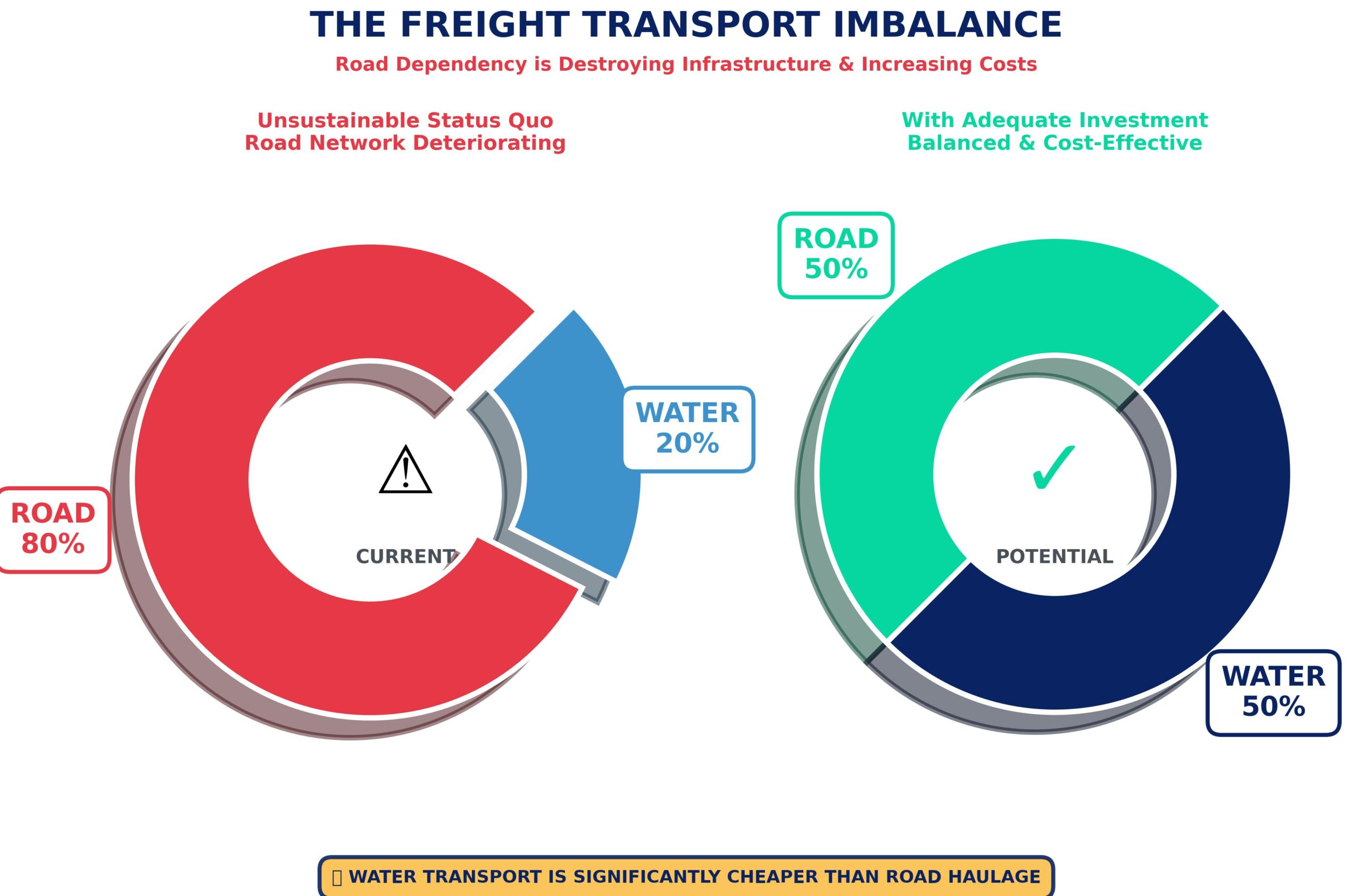
Nigeria’s heavy reliance on road transport for over 80 percent of freight movement is both economically irrational and infrastructurally destructive. Water transport is globally recognized as significantly cheaper than road haulage, yet Nigeria’s inland waterways remain chronically underfunded, unsafe, and underutilized.
The minister’s appeal for increased waterways funding was framed around safety—curbing accidents and loss of lives. But the economic argument is equally compelling. Shifting even 20 percent of current road freight to waterways would:
- Reduce road deterioration, extending the lifespan of highway infrastructure
- Lower logistics costs for manufacturers and distributors
- Decrease carbon emissions from heavy truck traffic
- Ease urban congestion in cities along major freight corridors
- Create new economic activity around river ports and inland terminals
Yet year after year, waterways receive token allocations that barely cover operational costs, much less the investment needed to make them viable alternatives. The proposed 2026 budget continues this pattern of benign neglect.

THE FISH IMPORT TRAP: FOOD SECURITY MEETS FOREX DRAIN
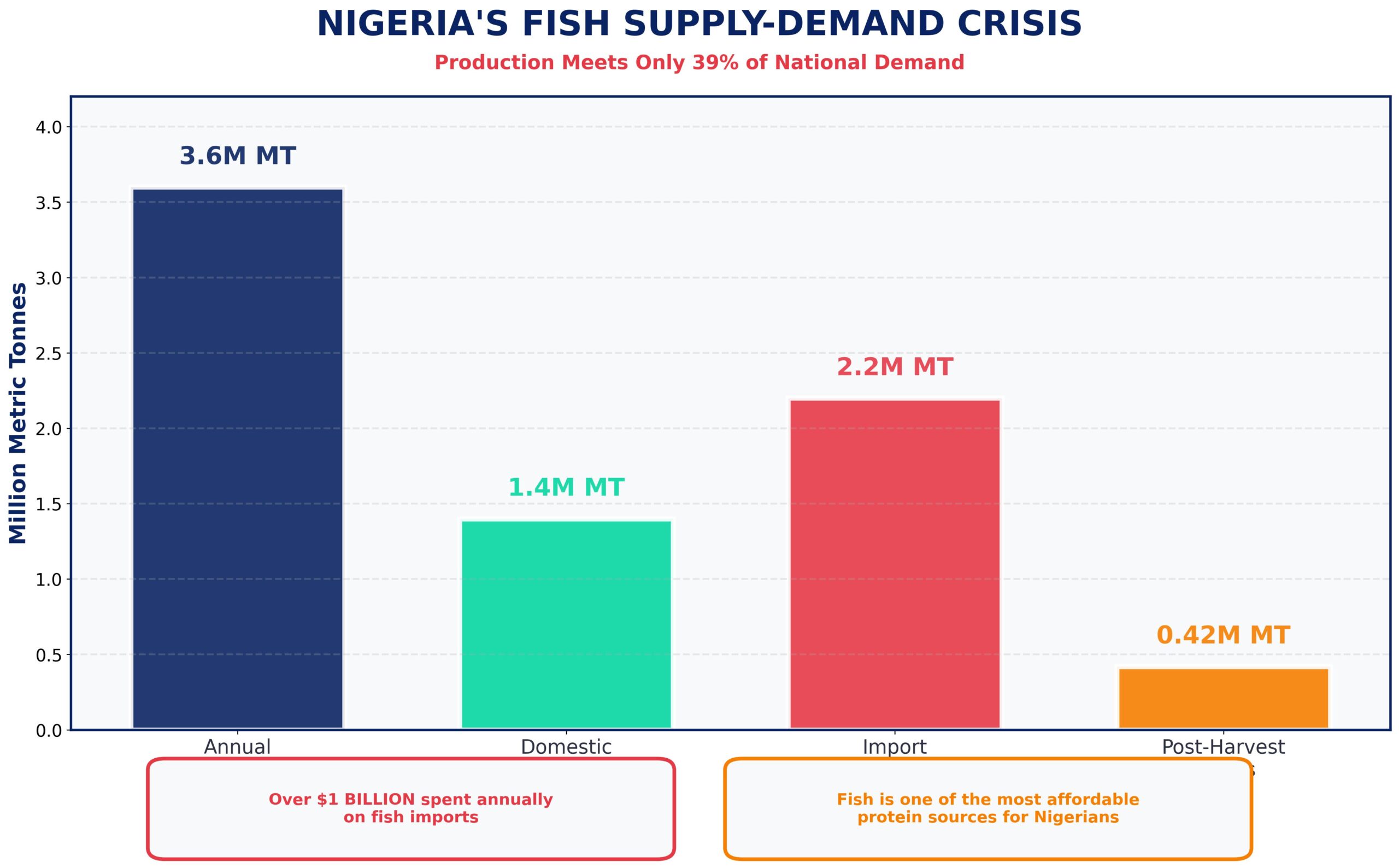
Nigeria’s fish sector presents one of the clearest cases for urgent investment. Annual demand exceeds 3.6 million metric tonnes. Domestic production struggles to reach 1.4 million metric tonnes. The deficit—over 2.2 million metric tonnes—is met through imports valued at more than one billion dollars annually.
This is not a luxury import situation. Fish is one of the most affordable sources of animal protein for Nigerian households, particularly in coastal and riverine communities. Yet the country spends over $1 billion yearly to import what it could theoretically produce domestically.
The situation is made worse by post-harvest losses of up to 30 percent, which further reduce already inadequate supply. These losses stem from poor storage facilities, inadequate cold chain infrastructure, and inefficient processing methods—all problems that require capital investment to solve.
The minister assured the committee that the ministry is “working hard to increase local fish production and reduce importation.” But without substantial budgetary support, such assurances ring hollow. You cannot build cold storage facilities, establish fish processing plants, or develop aquaculture infrastructure without capital.
The math is brutal but simple: spending ₦10.5 billion domestically to build fish production capacity makes far more economic sense than spending $1 billion (roughly ₦1.5 trillion at current exchange rates) annually on imports. Yet the budget reflects no such strategic thinking.
WHAT THIS BUDGET CAN ACHIEVE: A REALISTIC ASSESSMENT
If the ₦10.5 billion is approved and—critically—actually released, what might the ministry accomplish?
Minimal operational continuity is the minister’s own assessment, and there is no reason to dispute it. The budget allows for:
- Basic administrative functions: Paying salaries, maintaining offices, conducting routine oversight
- Essential maintenance: Keeping existing infrastructure from complete collapse
- Selective interventions: Perhaps a handful of small-scale pilot projects in priority areas
- Crisis management: Responding to immediate problems as they arise
What the budget cannot achieve:
- Meaningful port modernization to reduce congestion and improve efficiency
- Waterways infrastructure development to shift freight from road to water
- Aquaculture expansion to meaningfully close the fish production gap
- Maritime safety upgrades beyond bare-minimum equipment replacement
- Regulatory capacity building to match international standards
- Blue economy initiatives to tap ocean resources sustainably
In essence, this is a budget for survival, not growth. It keeps the ministry alive but does not enable it to fulfill its mandate. For a sector handling 90 percent of international trade, this represents a catastrophic failure of prioritization.
CRITICAL OVERSIGHTS: WHAT THE BUDGET IGNORES
Several glaring omissions undermine the budget’s already limited potential:
1. No Strategy for Reversing Agency Revenue Deductions
The budget proposal identifies excessive deductions as a core problem but offers no mechanism or dedicated allocation to negotiate, compensate for, or legally challenge these deductions. The agencies will continue bleeding revenue.
2. Insufficient Allocations for Safety and Emergency Response
Given the minister’s emphasis on waterways safety and recurring accidents, the budget should have included dedicated safety infrastructure spending—life jackets, rescue boats, communication equipment, training programs. These appear absent or inadequately funded.
3. No Meaningful Aquaculture Investment
Closing a 2.2 million metric tonne fish deficit requires industrial-scale aquaculture development. This demands hatcheries, feed mills, extension services, and farmer financing programs. The capital allocation shows no evidence of such ambition.
4. Port Technology Deficits Unaddressed
Modern ports run on digital systems—automated cargo handling, electronic documentation, real-time tracking. Nigeria’s ports lag decades behind. The budget includes no visible allocation for technology upgrades that could radically improve efficiency.
5. Climate Adaptation Ignored
As a maritime and fisheries ministry, climate change should be central to planning. Rising sea levels, ocean warming, and weather pattern changes directly affect all subsectors. The budget reflects no climate adaptation or mitigation strategy.
6. Private Sector Partnership Mechanisms Absent
Given fiscal constraints, the ministry should be aggressively pursuing public-private partnerships for infrastructure development. The budget includes no dedicated allocation for PPP structuring, feasibility studies, or transaction advisory services.
7. Human Capital Development Overlooked
Maritime expertise—naval architects, marine engineers, aquaculture specialists, port managers—requires continuous training and development. There is no evidence of a robust capacity-building allocation.
THE BOTTOMLINE: A SECTOR TOO CRITICAL TO FAIL, TOO NEGLECTED TO SUCCEED
Minister Oyetola’s budget presentation was, in essence, a cry for help dressed in bureaucratic language. Behind the technocratic terminology and fiscal jargon lies a stark reality: Nigeria is systematically undermining one of its most strategically vital sectors.
The marine and blue economy is not a discretionary concern. It is the foundation upon which Nigeria’s trade, commerce, and food security rest. When 90 percent of international trade moves through your ports, maritime efficiency becomes synonymous with economic competitiveness. When over 40 million people depend on fishing for livelihood, aquaculture becomes a matter of social stability.
Yet the budget treats this sector as an afterthought—not because policymakers are ignorant of its importance, but because immediate fiscal pressures consistently override long-term strategic thinking. The federal government’s approach resembles a homeowner who, facing a cash crunch, stops paying for roof repairs while the ceiling leaks. The short-term savings are real; the long-term costs are catastrophic.
Three fundamental truths emerge from this budget crisis:
First, the current model of funding the maritime sector is economically irrational. Self-funding agencies that generate substantial revenue should not be bled dry through excessive deductions. They should be strengthened, allowed to retain more of their earnings, and encouraged to expand operations. The federal government’s current approach is like taxing a successful business into bankruptcy.
Second, the disconnect between budget approval and budget release has become a farce. When only 1.7 percent of capital allocations actually reach the implementing ministry, the budget process itself loses credibility. Either approve realistic budgets and release funds, or stop pretending the paper allocations mean anything.
Third, the ministry needs at minimum a ten-fold budget increase to begin addressing its mandate seriously. ₦100 billion annually would still be modest for a sector of this importance, but it would at least enable strategic interventions rather than mere survival.
Senator Wasiu Eshilokun’s assurance that the National Assembly will “carefully examine the proposals” is welcome, but examination alone will not solve the underlying structural problems. The Senate and House committees have an opportunity—perhaps an obligation—to fundamentally rethink how Nigeria funds its maritime sector.
This might mean:
- Legislation protecting self-funding agency revenues from excessive deductions
- Multi-year funding commitments for major infrastructure projects
- Automatic budget release mechanisms tied to fiscal performance indicators
- Establishment of a dedicated blue economy development fund with guaranteed annual allocations
- Congressional oversight of the Accountant-General’s deduction policies
Without such structural reforms, the ₦10.5 billion budget—whether approved or not, whether released or not—will remain what Minister Oyetola himself acknowledged: enough to survive, insufficient to succeed.
Nigeria’s maritime sector deserves better. More importantly, Nigeria’s economy requires better. The question is whether those holding the purse strings will recognize this reality before the cost of neglect becomes insurmountable.
The minister has done his job. He has sounded the alarm, presented the evidence, and made the case. Now the responsibility shifts to the National Assembly and, ultimately, to the presidency.
Will they respond with the urgency this crisis demands, or will they approve another aspirational budget that remains largely unimplemented, consigning the marine and blue economy to another year of “minimal operational continuity”?
The answer to that question will reverberate far beyond the ministry’s offices. It will be felt in every port, on every waterway, in every fishing community, and ultimately, in the price Nigerians pay for goods and food.
The time for carefully examining proposals has long passed. The time for decisive action is now.
A Waterways News Special Report
Abuja, February 11, 2026

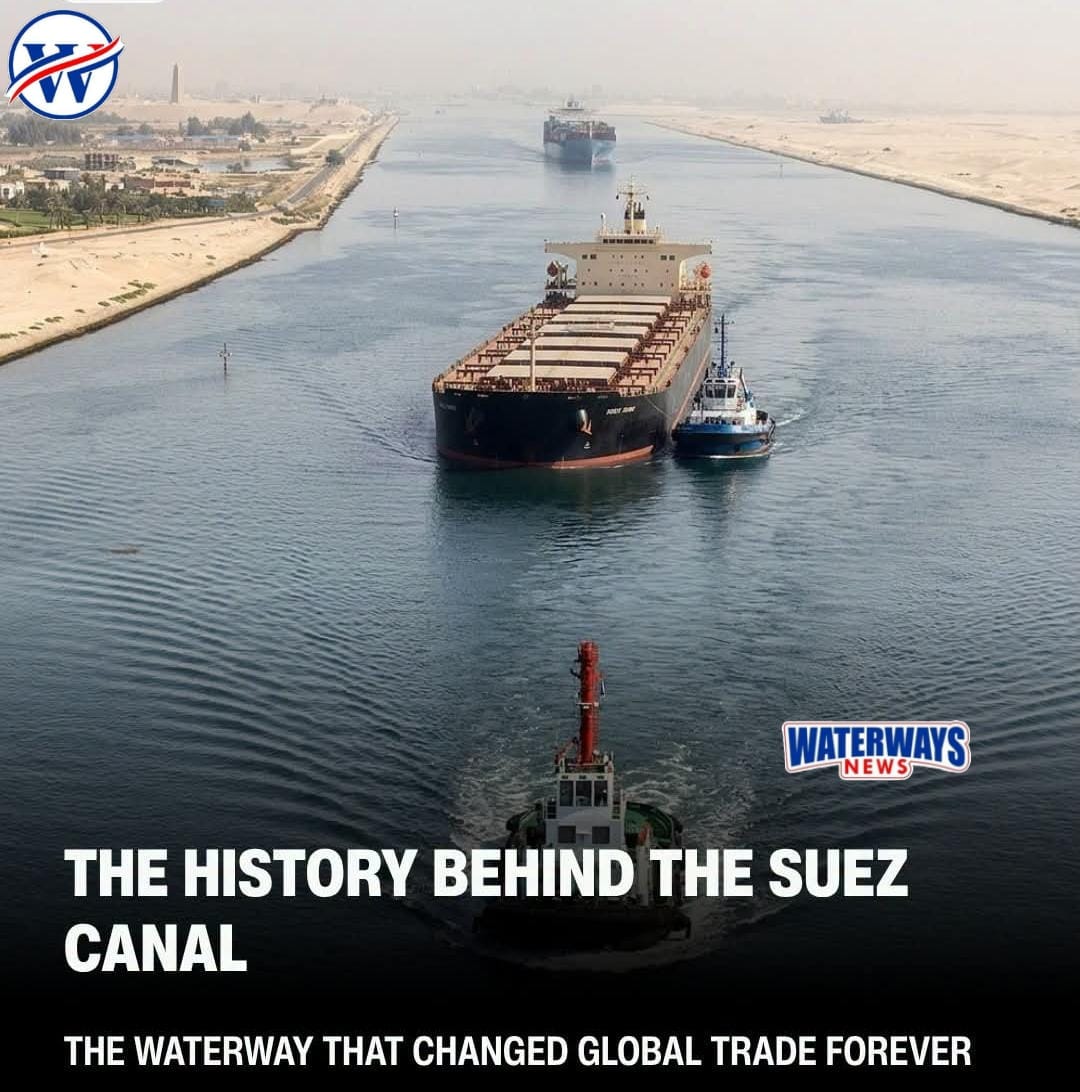
Suez Canal at 157: The Man-Made Waterway That Still Shapes Global Trade
The Suez Canal remains one of the most consequential engineering feats in maritime history. It is a 193km artificial channel through Egypt that links the Mediterranean Sea to the Red Sea via the Gulf of Suez, cutting thousands of kilometres off voyages that would otherwise require sailing around the southern tip of Africa.
Formally opened in November 1869 after a decade of construction, the canal traces its conceptual roots back nearly 4,000 years, to Pharaonic-era attempts at linking the Nile to the Red Sea. Several ancient rulers, from Senausret III to Persian King Darius, reopened and extended earlier channels over the centuries, though each fell into disuse before the modern canal took shape.
The version in use today began with French diplomat and engineer Ferdinand de Lesseps, who in the mid-1800s persuaded Egypt’s viceroy to back the project. The Universal Suez Ship Canal Company broke ground in April 1859 and was granted a 99-year operating concession before control would revert to Egypt. Construction relied initially on forced labour before shifting to steam-powered dredgers after Egypt banned the practice in 1863, and the final cost ran more than double the original budget.
Britain, initially hostile to the project as a threat to its trade dominance, later became the canal’s dominant shareholder after buying Egypt’s stake in 1875. This move deepened British political control over Egypt for decades and set the stage for repeated conflict. The 1956 Suez Crisis, triggered when President Gamal Abdel Nasser nationalised the canal, a move that saw Egypt invaded by Britain, France and Israel before UN intervention forced a withdrawal. A second closure during the 1967 Six-Day War, trapped 15 vessels, the so-called “Yellow Fleet”, in the Great Bitter Lake for eight years until the canal reopened in 1975.
Since then, the canal has grown into one of the backbones of global seaborne trade, handling roughly 8 percent of world shipping volumes annually. A major 2015 expansion added a 35 kilometres second lane, enabling two-way traffic and larger vessels, including the record-breaking OOCL Hong Kong container ship in 2017.
Nigeria Watch
For Nigeria, the Suez Canal’s relevance goes well beyond history. It is a live pressure point in the country’s trade economics. Much of Nigeria’s crude export flow to European and Asian buyers, along with a significant share of imported refined products and manufactured goods, transits routes that either pass through Suez or compete against it as an alternative corridor.
The canal’s chequered history of closures, in 1956, 1967-75, and more recently the 2021 Ever Given grounding, offers a cautionary parallel to the ongoing Strait of Hormuz disruptions this outlet has extensively covered. Both choke points demonstrate how a single geography can hold global freight rates, war risk insurance premiums, and delivery timelines hostage, with second-order effects landing squarely on Nigerian import costs, fuel supply chains feeding the Dangote Refinery, and the competitiveness of Apapa and Lagos-area ports against alternatives like Cotonou.
The lesson for Nigerian maritime policymakers is one of choke point diversification and contingency planning. NIMASA, the Federal Ministry of Marine and Blue Economy, and shippers navigating volatile freight markets would do well to study how quickly canal-dependent trade routes can seize up, and how long recovery can take when they do.
Raymond Gold is Co-publisher and Research Reporter for Waterways News (www.waterwaysnews.ng), Nigeria’s foremost digital publication covering ports, shipping, inland waterways, and the marine and blue economy.© Waterways News | www.waterwaysnews.ng | All rights reserved
Rethinking Sustainable Waterways Safety for Nigeria Inland Waterways: CVFF to the Rescue
By Okeoghene Onoriobe | Waterways News
Advocacy groups, boat operators, and waterways safety experts are calling on the Federal Government to urgently expand the scope of the Cabotage Vessel Financing Fund (CVFF) to cover small-scale private boat operators on Nigeria’s inland and coastal waterways, arguing that the $700 million fund, accumulated over two decades in NIMASA’s coffers, represents the most readily available solution to the nation’s epidemic of fatal boat mishaps.
The calls come against a backdrop of sustained mass casualties on Nigeria’s rivers and creeks. According to data from the Nigeria Safety Investigation Bureau (NSIB) and various industry stakeholders, over 452 lives were lost to boat accidents between July and December 2024 alone, with industry watchdogs estimating the annual toll may be even higher than official figures reflect. The Marine Crafts Builders Association of Nigeria (MCBAN) has recorded over 3,000 boat accidents across the country in the past decade. Investigators and maritime safety experts consistently identify the same culprit: the continued operation of old, substandard, and overloaded wooden boats by private operators who lack the financial capacity to upgrade their vessels to safer, modern standards.
A report by the NSIB has found that more than two-thirds of boat accident fatalities result from drowning, with 90 per cent of victims not wearing life jackets at the time of the incidents. Over 67 per cent of recorded accidents are classified as preventable, attributed to operational inefficiencies, overloading, poor maintenance, the absence of basic safety equipment and conditions that can be directly linked to the quality of vessels in service.
“Common causes include poor operator experience, operational inefficiencies, lack of safety measures such as life-saving appliances, overloading, inadequate boat maintenance, and weak regulatory oversight,” maritime expert Captain Ahmed Hambali stated, noting that these factors highlight the need for immediate and comprehensive action to restore safety and public confidence in waterways transportation.
Nigeria’s inland waterway network spans approximately 8,600 kilometres. It is Africa’s third-longest and connects 28 of the country’s 36 states. For millions of Nigerians in riverine communities without adequate road infrastructure, water transport is not a choice but a necessity, making the quality and safety of vessels on these routes a matter of life and death.
Very recently, eleven persons perished when a wooden boat capsized on the evening of Saturday June 13, 2026. Victims were returning from a burial ceremony in Wadata, a suburb of Makurdi, to the island settlement of Daudu Dawadawa located about 25 kilometres from Makurdi city along the River Benue.
CVFF Portal Launched, But Scope Excludes Inland Operators
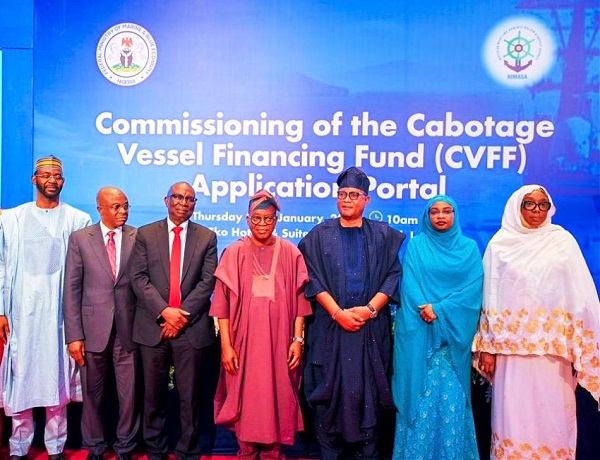
The Federal Government took a significant step in January 2026 when Minister of Marine and Blue Economy Dr. Adegboyega Oyetola officially launched the CVFF Application Portal at Eko Hotel and Suites in Victoria Island, Lagos, describing the occasion as a historic milestone in operationalising structured financing for indigenous ship ownership. The CVFF was established under the Coastal and Inland Shipping (Cabotage) Act of 2003 and is funded primarily through a 2% surcharge on all cabotage contracts, managed by the Nigerian Maritime Administration and Safety Agency (NIMASA).
Minister of Marine and Blue Economy Dr. Adegboyega Oyetola (Middle), DG of NIMASA Dr Dayo Mobereola (second from left) and other guests at the official launching of the CVFF Application Portal at Eko Hotel and Suites in Victoria Island, Lagos on January 22, 2026
Under the current framework, eligible indigenous firms may access financing of up to $25 million each at competitive interest rates, through 12 appointed Primary Lending Institutions. The fund is structured as a revolving facility, meaning loan repayments will sustain future lending cycles.However, advocacy organisations and boat operators’ groups have raised concerns that the fund’s eligibility framework — designed for registered corporate shipping companies acquiring ocean-going or offshore vessels — effectively excludes the small, private boat operators who operate the passenger ferries, water taxis, and canoes that most inland Nigerians rely on.
The Sustainable Waterways Awareness Advancement and Advocacy Organisation (SWAAADO) has noted in a recent research report that inland ferry services and coastal mass transportation fall within the mandate of the CVFF, with the Act’s provisions supporting the inclusion of local boat operators under the scheme. SWAAADO’s Head of Desk, Corporate Communication and Strategy, Chief Gold Raymond, has stated that with inflows into the CVFF valued at around $700 million, its proper deployment could substantially address the vessel quality crisis on Nigeria’s inland waterways.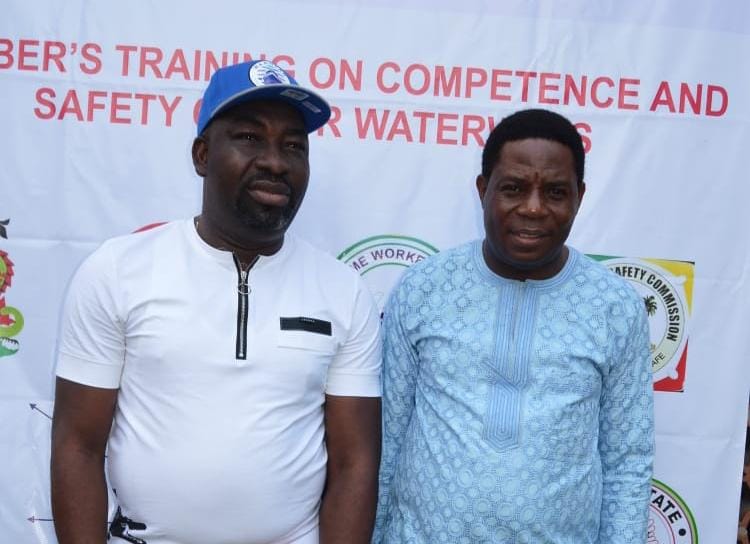
National President of Waterfront Boat Owners and Transporters Association of Nigeria (WABOTAN), Comrade Tope Fajemirokun and President of Maritime Workers Union of Nigeria (MWUN), Seamen/NIWA and Water Transport Branch, Comrade Sunday Avoseh at a workshop for Water Transport stakeholders recently organized by WABOTAN at Apapa, Lagos
National President of the Waterfront Boat Owners and Transporters Association of Nigeria (WABOTAN), Comrade Tope Fajemirokun, also supported calls for an amendment of the Cabotage Act to formally open the CVFF to inland boat operators.
Operators Call for Tiered Disbursement Window
Stakeholders are proposing a dedicated grassroots disbursement window within the CVFF framework, with loan sizes ranging from $100,000 to $500,000, structured over extended repayment periods at single-digit interest rates. They argue that a basic Corporate Affairs Commission (CAC) business registration and operator registration with the National Inland Waterways Authority (NIWA), the Lagos State Waterways Authority (LASWA), or the relevant State Waterway Authority should serve as the primary eligibility gateway for inland operators, replacing the complex corporate documentation requirements currently applicable to large shipowners.
Proponents note that a modern safety-compliant passenger ferry or waterbus carrying 30 to 100 passengers can be acquired for between $100,000 and $200,000 depending on specification, meaning even a modest allocation from the CVFF could place hundreds of modern vessels in private operators’ hands across the country.
NIWA itself has demonstrated the concept in practice. Among its recent fleet acquisitions is a modern 62-seater passenger boat piloted as a safer replacement for wooden canoes, alongside surveillance boats, enforcement vessels, and water ambulances. The agency recorded a 72 per cent reduction in waterway fatalities by mid-2025 compared to 2022 averages, though stakeholders caution that sustainable change requires the private operator fleet, not just government agency vessels, to be modernised.
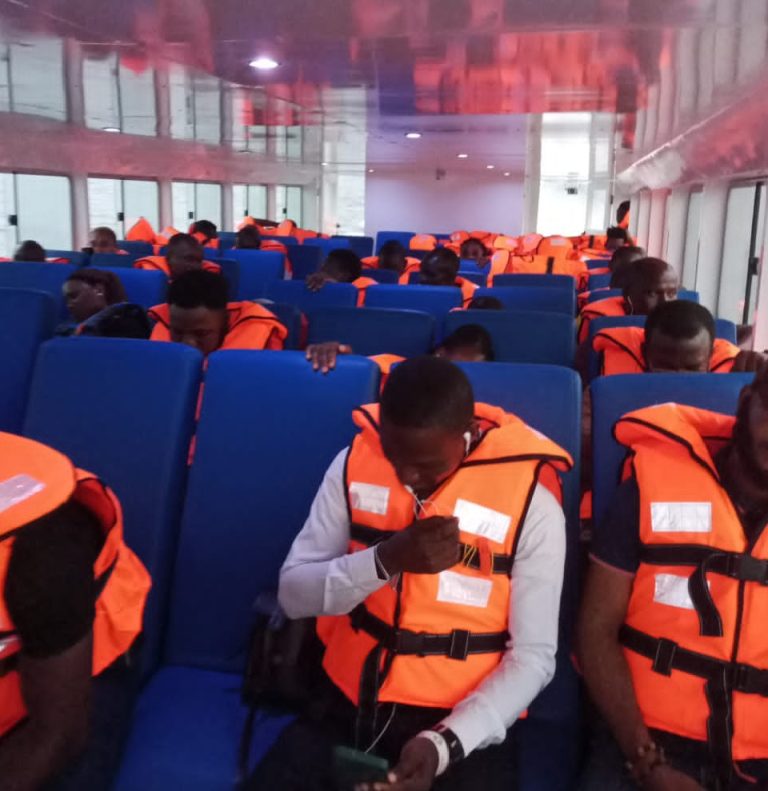
Passengers seated inside NIWA’s 62-seater capacity modern passengers ferry boat
LASWA also demonstrated this concept in practice. In it’s first phase of the Omí Eko project, the Lagos State government through LASWA, acquired some modern 60-seater and 40-seater capacity passenger ferry boats, equipped with modern navigational gadgets, for moving citizens daily across the state waterways. These crafts are not just improving safety on the state’s waterways but also giving it a face lift as they all add positively to the look and feel of the state waterways.
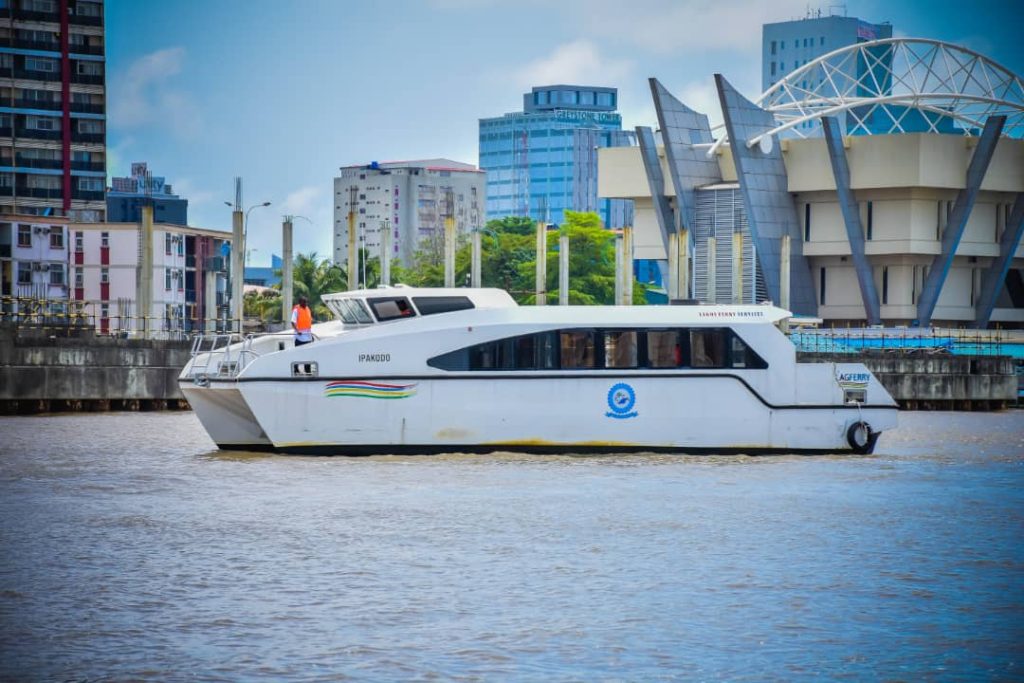
Lagos State 60-seater passenger ferry boat operated by Lagos Ferry Services Company (Lagferry)
Minister Oyetola has separately called on state governments to phase out unsafe wooden boats and invest in modern vessels, warning that many old boats have become safety hazards. The House of Representatives Committee on Maritime Safety, Education, and Administration has also signalled support for NIMASA’s CVFF implementation progress, with stakeholders urging legislators to go further and amend the Cabotage Act to widen the fund’s beneficiary scope.
The CVFF fund balance, held securely at the Central Bank of Nigeria under the Single Treasury Account, was confirmed intact by NIMASA Director General Dr. Dayo Mobereola, who stated the agency would continue to manage it with the utmost responsibility.
NIGERIA WATCH: Analysis and Commentary for Nigeria’s Maritime Stakeholders
The $700 Million Question Nigeria Must Answer Before the Next Boat Goes Down
There is a conversation Nigeria keeps almost having, and then not having, every time a boat goes down. We talk about enforcement. We talk about life jackets. We talk about overloading. We talk about night travel. All of these conversations are legitimate, and some of the enforcement measures of recent years, NIWA’s water marshals, the no-life-jacket-no-boarding policy, the Water Transport Code, have produced measurable results. Fatalities dropped from over 330 annually in 2021–2022 to 92 in the first eight months of 2025. That is real progress, and it deserves acknowledgement.
But there is a conversation Nigeria seems to be overlooking. It is the conversation about the boats themselves. Not about how they are operated. Not about whether passengers are wearing life jackets. But about the fundamental, stubborn, structural reality that the vast majority of Nigeria’s inland waterway passenger transport is conducted by private operators using wooden boats that are old, under-powered, poorly maintained, and critically, unaffordable to replace. The operators running these boats, especially in the northern part of the country, are not villains. They are small entrepreneurs, community transporters, boat cooperative members, doing what they can with what they have. What they have is not enough to keep their passengers alive.This is the heart of the problem. And the solution, or at least a very significant part of it, has been sitting in an account at the Central Bank of Nigeria for the past 22 years.
Why the CVFF Must Look Downriver
The Cabotage Vessel Financing Fund was established in 2003 with a genuinely good purpose: to build indigenous capacity in Nigeria’s maritime shipping sector by providing accessible, affordable financing for Nigerian operators to acquire vessels. Twenty-two years later, $700 million has accumulated. The fund is intact. A portal has been launched. And eligible shipowners can now apply for up to $25 million each.This is all commendable. But $25 million is the financing language of ocean-going cargo ships and offshore supply vessels. It is not the language of the operator on the Benue crossing, or the water taxi owner in Badagry, or the cooperative ferry running between Onitsha and the east bank.The Cabotage Act was written looking outward, toward international shipping competitiveness, offshore oil and gas logistics, the deep sea. The inland waterway passenger transport sector was, for its drafters, probably an afterthought. Two decades later, that afterthought is the sector where Nigerians are dying by the hundreds every year, in vessels that a modest fraction of the CVFF could replace with modern, standard, safe alternatives.The mathematics are straightforward. A modern 50-to-100-seat passenger ferry with GPS, VHF communications, life jackets, fire safety equipment, and compliant freeboard costs between $150,000 and $500,000. At an average of $250,000 per vessel, a $50 million grassroots window within the CVFF, just over 7 per cent of the total fund, could finance 200 modern ferry boats in its first disbursement cycle. Run that as a revolving fund, with repayments feeding back into fresh lending, and you have a self-sustaining mechanism for progressively replacing wooden boats with modern vessels across Nigeria’s navigable inland waterways.Two hundred modern ferries in the first cycle. Four hundred after the first repayment cycle. Within a decade, the wooden boat, not abolished by regulation that cannot be enforced on a 3,000-kilometre waterway network, but made economically redundant by accessible financing, could be a relic of a more dangerous past.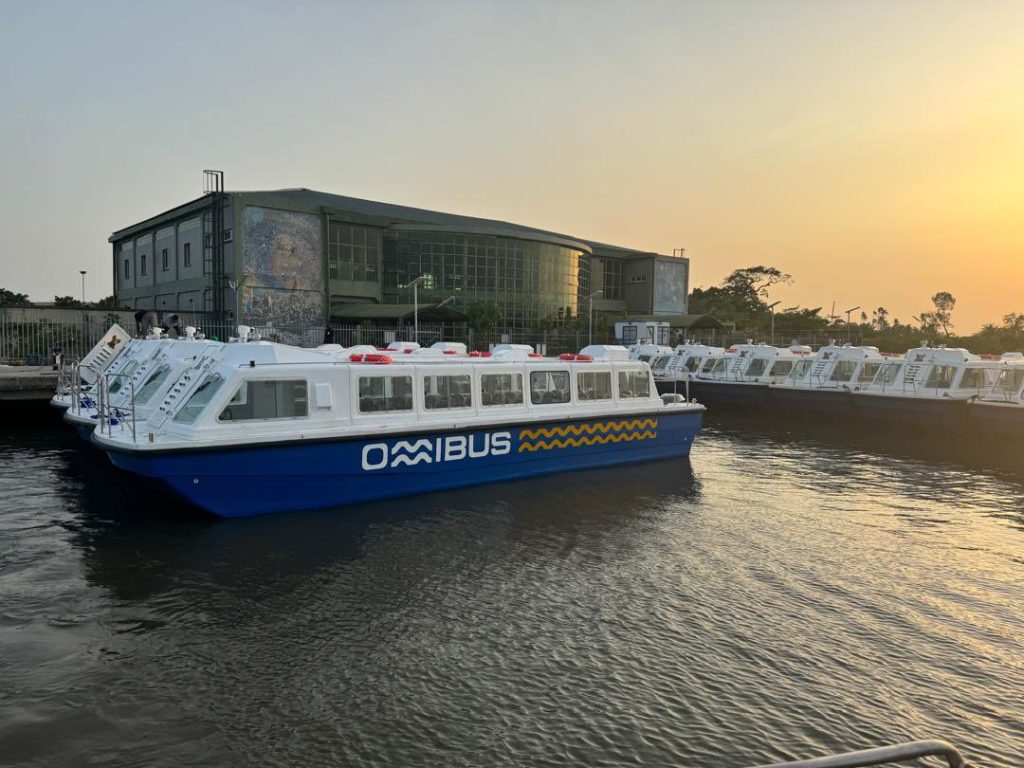
A fleet of OmiBus 40-seater capacity passenger ferry boats at LASWA head office , Five Cowries Terminal Ikoyi
The Eligibility Barrier Must Come Down
For this to work, the eligibility framework must be redesigned for the sector it is trying to serve. The current CVFF guidelines, requiring corporate registration, audited financial statements, business plans of the kind that corporate shipowners commission and artisanal boat operators have never heard of, are designed for an applicant that does not look like a canoe operator in Kogi State.The gateway for a grassroots CVFF window should be registration with NIWA, LASWA, or the relevant State Waterway Authority. If an operator is licensed, registered, and known to the regulator, that is the accountability foundation on which a micro-loan can be built. Boat operators’ associations and cooperatives, WABOTAN and similar bodies, should be formally empowered as conduit institutions, aggregating applications, vouching for members, and facilitating group accountability frameworks analogous to cooperative lending models that have worked in agricultural finance.This is not reinventing the wheel. It is applying standard microfinance logic to a sector that desperately needs it.
If the Cabotage Act requires amendment to make this legally possible, then let the National Assembly act. The House of Representatives Committee on Maritime Safety has shown appetite for engagement with NIMASA on CVFF matters. A bill to expand CVFF eligibility to inland passenger transport operators, framed explicitly around waterways safety and the phase-out of wooden boats, would be difficult to oppose. Which senator or representative wants to be on record voting against a measure designed to stop Nigerians from drowning?
The Minister’s Own Diagnosis
It is worth noting that Minister Oyetola has himself identified the direction. He has publicly called on state governments to phase out unsafe wooden boats and invest in modern vessels. His ministry has overseen a measurable improvement in NIWA’s operational capacity. He launched the CVFF portal with language about repositioning Nigeria’s maritime sector as a central pillar of national development.All of this is directionally correct. But calling on state governments to invest in vessel modernisation while the Federal Government holds $700 million in a fund that could finance exactly that investment is a policy gap that needs to be closed, not by more calls, but by action.The Minister does not need to wait for the National Assembly to act first. A ministerial directive expanding CVFF eligibility guidelines to include a dedicated inland waterway passenger transport window, pending full legislative amendment, would send an immediate signal to the sector. NIMASA, which already has a dedicated Cabotage Secretariat Unit managing CVFF implementation, has the institutional infrastructure to pilot such a window.
Connecting the Dots
Nigeria has the fund. Nigeria has the need. Nigeria has operators who want to do better. Nigeria has a regulatory framework that, with some expansion, can deliver accountability. Nigeria has a Minister who has diagnosed the problem correctly. Nigeria has a NIWA that has already demonstrated, in its own 62-seater pilot ferry, what a modern vessel looks like on an inland waterway.The only thing missing is the political will to connect these dots, to say, explicitly, that the CVFF is not only for shipowners dreaming of ocean-going cargo fleets, but also for the boat operator in Delta State who is running a cracked wooden hull because he has never had access to any other option.
Boat mishaps are not acts of God. They are the predictable outcome of a transport market in which safe vessels are financially inaccessible, and in which a fund designed to solve exactly that problem has been directed away from the people who need it most.The CVFF can rescue Nigeria’s inland waterways. But first, Nigeria must rescue the CVFF from a definition of its mission that is too narrow, too corporate, and too ocean-facing to save the lives being lost, right now, on the rivers that run through the heart of the country.The time to look downriver is long overdue.
Okeoghene Onoriobe writes for Waterways News (www.waterwaysnews.ng), Nigeria’s foremost digital publication covering ports, shipping, inland waterways, and the blue economy.© Waterways News | www.waterwaysnews.ng | All rights reserved
MARITIME TRADE & SHIPPING
Trade Expert Demands Emergency Customs Audit, as $600 Million Container Duty Scandal Emerges

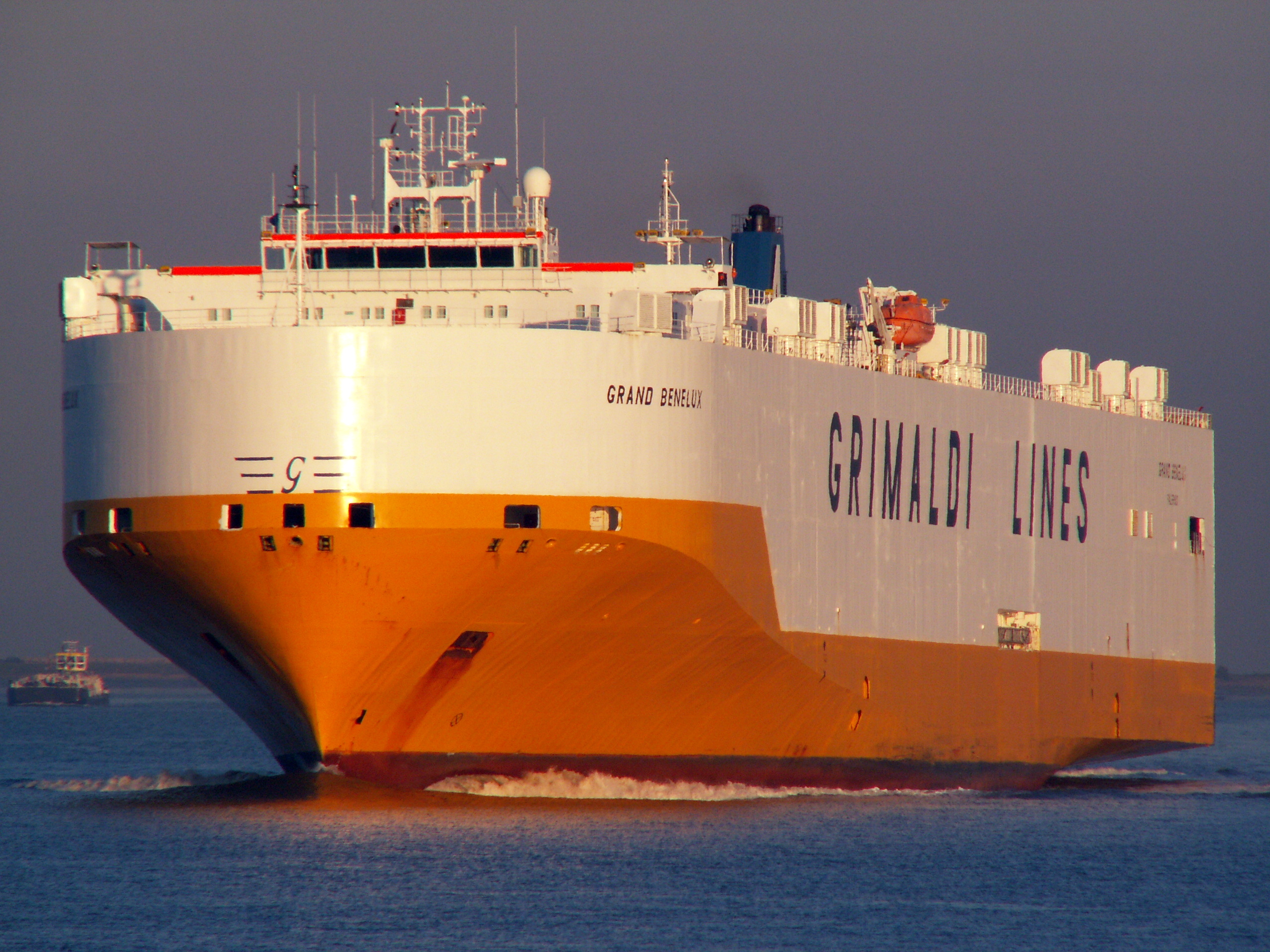
Trade Expert Demands Emergency Customs Audit, as $600 Million Container Duty Scandal Emerges
Trade expert calls for emergency audit as Grimaldi Agency Nigeria moves to sell 2,500 containers outside customs law — with transactions demanded in U.S. dollars
By Oghenewoke Osaweren | Waterways News Investigative Desk
Nigeria has haemorrhaged over $600 million in customs duties and value-added tax over three decades as foreign shipping lines operating in the country’s ports have brazenly sold empty import containers without complying with statutory customs conversion procedures — a practice that experts say amounts to organised economic sabotage against the Nigerian state.
The explosive allegation was made Monday by Okey Ibeke, Principal Consultant at International Trade Advisory Services, while addressing the Shipping Correspondents Association of Nigeria (SCAN) in Apapa, Lagos. Ibeke called on the Nigeria Customs Service (NCS) to immediately suspend all container sales by Grimaldi Agency Nigeria and launch a full industry-wide audit of the practice spanning the last 30 years.
“Grimaldi is not an isolated case. For 30 years, Maersk, MSC, CMA CGM, Hapag-Lloyd, COSCO, ONE, Evergreen, and PIL have operated in Nigerian ports under similar conditions.” — Okey Ibeke, Principal Consultant, International Trade Advisory Services
The Grimaldi Trigger
The controversy was ignited by media reports that Grimaldi Agency Nigeria — the local arm of the Italian shipping giant — is planning to sell more than 2,500 empty containers to Nigerian members of the public at $2,000 per 40-foot unit and $1,600 per 20-foot unit. Critically, buyers have been directed to make payments in U.S. dollars through domiciliary accounts, a requirement that directly contravenes the Central Bank of Nigeria’s policy discouraging the dollarisation of domestic transactions.
But for Ibeke, the currency issue is secondary to a far graver legal violation. Those containers, he argues, entered Nigeria under ‘Temporary Import’ status — a customs classification that legally obligates them to be re-exported after use. Selling them locally without converting their status to permanent import is, in his words, unambiguously illegal.
Breaking Down the Legal Breach
Under the Nigeria Customs Service Act 2023 and its Temporary Import Guidelines, any shipping line seeking to dispose of containers locally must first file a formal application with the NCS, submit the containers for customs valuation, pay all applicable duties, VAT, and levies into government accounts, and await a release order converting the containers to ‘home use’ status. Only after this process is complete can the containers be legally sold — and only in naira, unless the CBN grants a specific foreign exchange exemption.
According to Ibeke, Grimaldi’s current arrangement skips every single one of these prerequisite steps. “With Grimaldi, Step 5 is happening without Steps 1 to 4. That is illegal,” he stated plainly.
KEY FIGURES AT A GLANCE$600M+ Total Revenue Loss Over 30 years $350–$400 Loss Per Container Duties & taxes (2026 tariff) $875K–$1M Grimaldi Deal Loss 2,500 containers 5% + 7.5% HS Code Levy Duty + VAT + ETLS + FOB
The Numbers Behind the Scandal
Ibeke’s financial calculations are damning. Applying the 2026 Customs tariff schedule for HS Code 86.09 — which covers shipping containers — he calculated a combined levy burden of approximately 17% to 18% on each unit. At the declared sale price of $2,000, the government loses between $350 and $400 per container in unpaid duties and taxes. For Grimaldi’s 2,500 units alone, the resulting revenue shortfall ranges from $875,000 to $1,000,000 — from a single company in a single transaction.
The expert then applied this framework retrospectively. Industry data, he said, indicates that hundreds of thousands of containers have been absorbed into Nigeria’s informal and formal economies over the past three decades — repurposed as roadside shops, cold storage facilities, construction materials, and residential units. Conservatively estimating 250,000 such containers at an average price of $1,500 each, and applying a 10% duty-and-tax rate, the cumulative loss to the Federal Government exceeds $375 million — or over ₦600 billion at current exchange rates. Including broader tax leakages, the figure climbs above $600 million.
“That is money that should be funding roads, schools, hospitals, and debt service. Instead, it is lining the pockets of foreign corporations who treat Nigerian law as optional.”— Okey Ibeke, Principal Consultant, International Trade Advisory Services
Structural Drivers: Why Shipping Lines Abandon Containers
Ibeke did not merely assign blame; he also laid out the structural economic logic that has enabled the practice to persist undetected — or at least unpunished — for three decades. The root cause, he argues, is Nigeria’s severe trade imbalance: imports account for approximately 75% of dry cargo traffic through Nigerian ports, while exports represent a mere 15%. The remaining 10% consists of transit and transshipment cargoes.
Meanwhile, oil and mineral exports — which form the bulk of Nigeria’s outbound trade at 70% of export value — are not containerised. The consequence is stark: vessels arrive at Lagos, Apapa, and Tin Can ports fully loaded with import cargo, but depart 97% empty. Repatriating those empty containers to origin ports costs between $2,000 and $4,000 per 20-foot unit. Selling them locally is not just more profitable — it eliminates a significant operational cost. The economic incentive to circumvent customs law is, therefore, built into the very structure of Nigeria’s trade architecture.
A Culture of Impunity: Thirty Years of Accumulated Violations
What makes Ibeke’s intervention especially significant is his charge that this is not a new or isolated problem. He named some of the world’s largest shipping conglomerates — Maersk, MSC, CMA CGM, Hapag-Lloyd, COSCO, ONE, Evergreen, and PIL — as participants in the same pattern of behaviour over the past three decades. These are not fly-by-night operators; they are globally listed corporations with compliance departments and legal teams. Yet in Nigeria, he alleges, they have systematically operated outside the customs law framework with no consequence.
The trade expert linked this culture of impunity to a broader ecosystem of port-related malpractice affecting Nigerian importers and freight forwarders, including arbitrary demurrage and detention charges denominated in foreign currencies, persistent delays in refunding container deposit funds, forced use of nominated transporters, and the withholding of shipping documents until all local charges — legitimate or not — are settled.
Legal Framework: What the Law Says
Ibeke cited multiple statutory provisions that, in his assessment, the practice clearly breaches. Section 36 of the NCS Act 2023 explicitly states that goods brought in under temporary import status must either be re-exported or formally converted to home use with all applicable duties paid. Sections 245, 248, and 249 of the same act empower Customs officers to detain, seize, and impose penalties on goods that do not comply with these conditions.
The CBN Foreign Exchange Manual and Nigerian Shippers’ Council regulations further prohibit dollar-denominated transactions in domestic commercial activities without specific authorisation. The Nigerian Ports Authority’s own temporary import guidelines, Ibeke noted, are fully aligned with the customs law position.
Demands and Recommendations
Ibeke issued a series of specific demands. First, that the NCS immediately suspend all container sales by Grimaldi Agency Nigeria and other shipping lines pending a regulatory review. Second, that the Service conduct a full audit of all containers sold by foreign shipping lines over the past decade, with a view to recovering unpaid duties. Third, that the Federal Ministry of Finance formally investigate the financial exposure and publish findings. Fourth, that the CBN separately investigate the foreign exchange implications of dollar-denominated container sales. And fifth, that the Nigerian Shippers’ Council use its enforcement powers to compel compliance.
He also called on the National Assembly to amend relevant sections of the NCS Act to explicitly criminalise the sale of temporary import containers without prior customs conversion, and to mandate mandatory disclosure by shipping lines of all container disposal activities within Nigerian territory.
Regulatory and Government Response
As of the time of this report, neither the Nigeria Customs Service nor Grimaldi Agency Nigeria had issued a public response to the allegations. The Nigerian Shippers’ Council, which has in recent quarters recovered hundreds of millions of naira from shipping companies over container deposit refund disputes, also had not commented on whether it was investigating the temporary import conversion issue specifically.
It is worth noting that the House of Representatives, in November 2025, announced plans to probe the Customs Service over alleged revenue leakages linked to improper assessment of excise duties, overdue temporary importation, and unremitted customs charges — suggesting that legislative concern over the broader problem of port-related revenue haemorrhage has been building for some time.
The Bigger Picture
Nigeria’s ports have long been a flashpoint for debates over economic sovereignty, regulatory enforcement, and the terms on which foreign corporations operate within the country. The container scandal, if Ibeke’s figures are verified, would rank among the largest sustained customs violations in the country’s history — not because of the individual transaction size, but because of its sheer duration and the breadth of corporate actors allegedly involved.
For a Federal Government that collected an estimated ₦3.8 trillion in customs revenue in 2024 — and that is engaged in an aggressive revenue mobilisation drive to close a fiscal deficit exceeding ₦13 trillion — the loss of ₦600 billion or more to what amounts to customs fraud by multinational shipping companies is a political and economic wound it can ill afford to ignore.
Waterways News (www.waterwaysnews.ng) has reached out to the Nigeria Customs Service, Grimaldi Agency Nigeria, the Nigerian Shippers’ Council, and the Federal Ministry of Finance for official comment. Responses will be published as received.

 Oil and Gas7 months ago
Tantita’s Pipeline Deal: $144m Contract, Rising Output, and the Questions that Deserve Answers
- MARITIME TRADE & SHIPPING7 months ago
World’s Largest Container Ship Sets New Maritime Record with 22,233 TEUs on Single Voyage
- Blue Economy7 months ago
Nigeria’s Coast Guard Bill: A Solution in Search of a Problem?