Security & Safety
Nigeria’s Waterway Crisis: Tragic Toll of Negligence, the Path Forward

PART 1: The Crisis Unfolding
A National Tragedy Waiting for Solutions
Every year, Nigeria’s waterways—which should serve as vital arteries of commerce and connectivity for millions of citizens—become scenes of unimaginable tragedy. What begins as routine journeys often end in desperate struggles against the water, with families losing breadwinners, children losing parents, and communities losing their future. The numbers are staggering, yet what makes them truly haunting is that most of these deaths are entirely preventable.


The Alarming Death Toll
Official records paint a grim picture of Nigeria’s waterway safety crisis. Between 2021 and 2024, the National Inland Waterways Authority (NIWA) documented a horrifying loss of life:
| Year | Deaths Recorded |
| 2021-2022 (Average) | 330 |
| 2023 | 231+ |
| 2024 | 231 |
| Jan-Aug 2025 | 92 |
However, these official figures mask a deeper reality. Industry watchers and civil society organizations estimate that actual fatalities are substantially higher, with some reports suggesting over 600 deaths in 2024 alone. The discrepancy between official counts and field realities reflects a serious data collection and reporting problem that undermines the government’s ability to address the crisis effectively. Notably, over 3,000 boat accidents have been recorded in the past decade, with the Marine Crafts Builders Association of Nigeria (MCBAN) documenting more than 3,000 lives lost during this period.



Recent Catastrophic Incidents
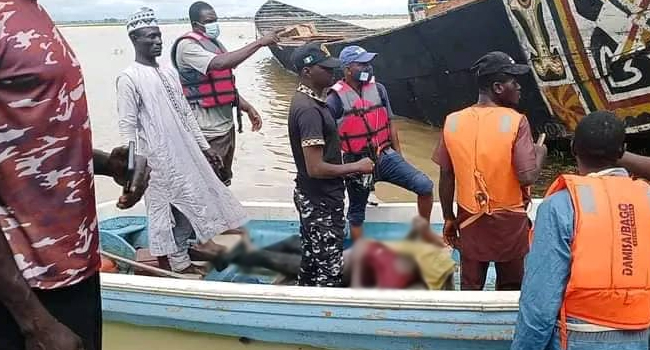
The year 2024 and early 2025 witnessed several particularly devastating incidents that shocked the nation and drew urgent calls for action. In October 2024, a boat capsized in Niger State killing at least 70 people when it struck a submerged tree stump. Days later, a Kogi State accident claimed 54 lives, while numerous other incidents in August, November, and December added to the toll. Most recently, in September 2025, another tragedy in Niger State left 60 people dead. Most victims are traders, farmers, schoolchildren, and seasonal workers—ordinary Nigerians whose only choice is to risk their lives on unsafe waterways to reach markets, farms, and schools.
Why the Tragedies Keep Happening
Maritime experts and investigation reports have consistently identified a constellation of preventable factors that turn ordinary boat journeys into death traps:
- Chronic Overloading: Boat operators prioritize profit over safety, routinely loading vessels with double or triple their intended capacity. The boat that capsized in Niger with over 70 deaths was carrying approximately 200 passengers when its capacity was only 100.
- Widespread Use of Unsafe Vessels: Wooden boats dominate commercial water transport. These vessels are poorly maintained, lack basic safety equipment, and deteriorate rapidly with cracks and leakages. No comprehensive vessel registration system exists to ensure seaworthiness.
- Absence of Life-Saving Equipment: A Nigeria Safety Investigation Bureau report reveals that 90 percent of waterway fatalities result from drowning, with 90 percent of victims not wearing life jackets. Most boats operate without any rescue equipment whatsoever.
- Illegal Night Travel: Despite regulations prohibiting travel between 6 PM and 6 AM, illegal nighttime sailing persists, reducing visibility and response times during emergencies. Many accidents occur at 2-3 AM, hours when rescue operations are most difficult.
- Poor Operator Training and Licensing: Unlike land and air transport operators, water transport operators often lack formal certification or regular skills updates. Many are untrained in emergency response, weather assessment, or vessel navigation.
- Weak Enforcement and Regulatory Oversight: Despite NIWA’s regulations carrying penalties up to seven years imprisonment, enforcement remains sporadic and inconsistent. Remote waterways lack adequate supervision, and fines are often viewed as a cost of doing business rather than a deterrent.


The Wider Impact on Communities
The tragedy of Nigeria’s waterway deaths extends far beyond statistics. These are not random disasters but predictable consequences of poverty, poor infrastructure, and policy neglect.
- For riverine communities with no road access, boats are the only lifeline—the only way to reach markets, hospitals, and schools. When transport becomes deadly, entire communities are held hostage to fear and necessity.
- Traders lose their livelihoods and families lose breadwinners. In Niger State, farmers heading to markets, women going to trade centers, and school-age children using boats to cross swollen rivers comprise the majority of victims.
- The psychological burden is immense. Families planning travel weigh life and death against economic necessity. Parents fear sending children to school across waterways. Traders hesitate before embarking on market journeys.
- Economic activity suffers as people avoid water routes when possible, opting for dangerous road alternatives—increasing risk from banditry and accidents on poorly maintained highways.
- Public confidence in water transport has eroded. What should be a cheaper, more reliable alternative to congested roads has become a source of terror rather than opportunity.



Rays of Hope: Government Initiatives
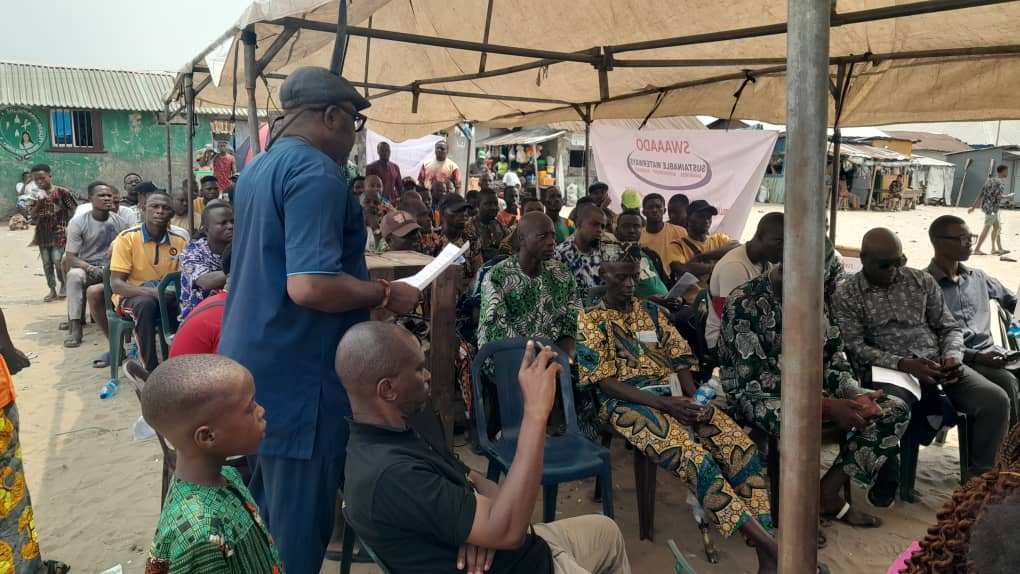
In recognition of the crisis, the Federal Government under President Bola Tinubu and the Ministry of Marine and Blue Economy have initiated reforms. The Inland Waterways Transportation Regulations 2023, launched in April 2024, represents a comprehensive framework for water transport safety. Under the leadership of NIWA’s Managing Director, Asiwaju Munirudeen Bola Oyebamiji (appointed in October 2023), the agency has deployed new equipment including:
- 3 surveillance boats to improve waterway visibility
- 5 enforcement boats for safety compliance monitoring
- 1 combat-ready 115-horsepower gun patrol boat for rapid security response
- 1 modern 62-seater passenger boat as a safer alternative to wooden canoes
- 3 fully equipped water ambulances for emergency response
- 2 hydrographic survey boats with advanced seafloor mapping technology
- Distribution of hundreds of life jackets across 12 riverine states
These efforts have yielded measurable results. NIWA reports fatalities dropped from an average of 330 annually (2021-2022) to 231 in 2024, representing a 30 percent reduction. The agency also points to improved rescue operations, noting successful rescues in May and August 2025 when 99 and 104 passengers respectively were saved from capsizing vessels without loss of life. The launch of NIWA’s Water Marshal Corps with 80 officers has proven effective in controlling boat loading and enforcing safety regulations at jetties.
Bode Animashaun covers maritime policy and blue economy development for waterwaysnews.ng
Pingback: Nigeria’s Waterway Crisis: Path to Safety and Sustainable Solutions - Water Ways News
Raymond Gold
February 16, 2026 at 2:48 am
Thank you for your very kind comments and commendations. We pray they listen.
Raymond Gold
February 17, 2026 at 12:38 am
Thank you for your very kind comments and commendations. We will continue to do our best in all that we so