
Maritime Labour and Trade Union
OPINION: When Seafarers Die, Condolences Are Not Enough — The World Must Do Better


OPINION: When Seafarers Die, Condolences Are Not Enough — The World Must Do Better
By Sunil Kapoor | Adapted for Waterways News
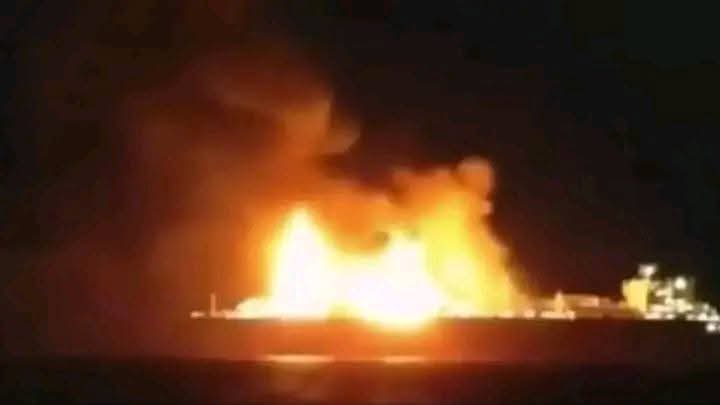
Merchant ships are burning at sea. Not warships. Not naval vessels. Ordinary commercial ships — carrying cargo that keeps the global economy turning — crewed by civilian seafarers simply doing their jobs.
Following the latest wave of attacks on merchant vessels in the Strait of Hormuz, IMO Secretary-General Arsenio Dominguez issued a statement expressing deep concern over seafarer casualties, reaffirming that attacks on innocent civilian shipping are unjustifiable under international maritime law. The words were appropriate. But they were also familiar.
Every time a merchant ship is attacked — every time a seafarer loses his life in someone else’s geopolitical conflict — the same kind of statements appear. What is never quite clear is what those statements mean for the man standing watch tonight on the bridge.

When the System Failed: Lessons from Covid
The pandemic offered a sobering preview of how badly the protective system around seafarers can break down under pressure.
Governments insisted that no seafarer could remain aboard beyond twelve months. Port state authorities enforced this strictly. Yet those same governments often refused to issue visas for incoming crew, or declined to allow serving crew to disembark. The result was an impossible catch-22: the rules demanded crew changes that the system made impossible to execute.
Ships began carrying relief crew who had joined but could not replace their predecessors — seafarers already beyond their contract limits continued sailing as unofficial “passengers.” On paper, compliance. In reality, a fiction everyone accepted.
One incident from that period stands as a symbol of the system’s failure. A vessel arrived in port carrying the body of a seafarer who had died onboard. His remains, kept in the ship’s freezer, were refused permission to be landed at port after port. The crew sailed on — carrying their dead colleague — while his family thousands of miles away waited for a funeral that could not happen.
War, Missiles, and the Weight on Nigerian Seafarers
When Russia invaded Ukraine, merchant vessels were suddenly trapped in Ukrainian ports as missiles fell around them. The crew aboard those ships were commercial seafarers — not soldiers. Yet the burden of getting them home fell almost entirely on ship managers and the seafarers themselves.
Today, the Strait of Hormuz has become a new crisis point. In March 2024, the bulk carrier True Confidence was struck by a missile off Yemen. Three seafarers were killed. They were not combatants. They were doing their jobs. The damaged vessel drifted for months before any port agreed to receive it.
Now more than 1,000 ships are reported stuck or transiting the strait under threat. Some political voices have publicly urged shipowners to show courage and sail through. But bravado spoken in political offices lands on the shoulders of masters and crew — people for whom the danger is not rhetorical.
When an incident happens and a seafarer dies, a basic question deserves an answer: who gave the order to sail? On what assessment was that instruction based? A vessel may be insured. Cargo may be insured. A human life cannot be replaced.
Nigeria Watch: What This Means for Our Maritime Sector
Nigeria has significant stakes in this conversation. A substantial number of Nigerian seafarers serve aboard international merchant vessels, including those transiting high-risk corridors like the Red Sea, the Gulf of Aden, and now the Strait of Hormuz. When geopolitical conflict puts commercial shipping in the crosshairs, Nigerian families are among those waiting at home.
Closer to our shores, the Gulf of Guinea has its own long record of attacks on merchant vessels — piracy, kidnapping for ransom, armed robbery at sea — where seafarers have repeatedly borne the human cost of systemic failures. NIMASA, the Nigerian Navy, and the Federal Ministry of Marine and Blue Economy have invested in frameworks like the Deep Blue Project to address maritime insecurity in our region. But the broader question raised by Kapoor applies here too: when seafarers are endangered, does the response match the rhetoric?
The industry has repeatedly demonstrated that it can organise practical solutions in emergencies — repatriating crew, rerouting vessels, supporting families — when official structures move too slowly. That should not be the norm.
Ninety percent of world trade moves by sea. Nigeria’s import-dependent economy, its crude oil exports, and its ambitions as a blue economy hub all rest on the safety and welfare of seafarers. Behind every crew list is a family waiting for a safe return.
Statements of concern will keep being issued after every tragedy. But for the families of seafarers who do not come home, the message from this industry must be unambiguous: statements are not enough.
Sunil Kapoor is a shipowner and maritime commentator. Thioriginal piece has been adapted for Waterways News readers by Raymond Gold, Co-publisher and Research Reporter for Waterways News


Editor Choice
WORKERS’ DAY SPECIAL REPORT: Between the Tide and the Struggle — The State of Nigeria’s Maritime Workers in 2026
WORKERS’ DAY SPECIAL REPORT: Between the Tide and the Struggle — The State of Nigeria’s Maritime Workers in 2026
A Waterways News Special Investigation | May 1, 2026
By Larry Osaweren | Waterways News
As the world marks International Workers’ Day, the men and women who keep Nigeria’s ports, terminals, and waterways moving remain among the most underserved labour forces on the continent. From the creeks of the Niger Delta to the crowded jetties of Apapa, their stories are ones of grit against institutional neglect, unpaid wages, and structural abandonment — set in sharp relief against a global maritime labour framework that Nigeria has ratified but struggles to enforce.
The Wage Gap That Indicts a System
Begin with the most basic measure of worker dignity: pay.
In April 2025, the International Labour Organization concluded minimum wage negotiations in Geneva, setting the global maritime floor at USD $690 per month for an able seafarer — effective January 2026, rising to $704 in 2027 and $715 in 2028. That figure, the product of decades of collective bargaining between the International Chamber of Shipping and the International Transport Workers’ Federation, represents the baseline below which no seafarer anywhere in the world should legally fall.
Nigerian seafarers fall below it routinely.
Testimonies gathered by industry investigators indicate that Nigerian seafarers earn five to seven times less than their international counterparts in comparable roles. One seafarer, speaking anonymously, confirmed that the minimum wage document — a tripartite instrument midwifed by the Nigerian Maritime Administration and Safety Agency (NIMASA) and the National Joint Industrial Council of the Federal Ministry of Labour — is routinely disregarded, with shipping companies paying figures well below what is stipulated. Calls for Nigerian seafarers to be paid in US dollars, in line with the global nature of the profession, have gone largely unanswered.
On land, Nigeria’s national minimum wage stands at ₦70,000 per month — roughly USD $45 — signed into law by President Bola Tinubu in July 2024. The average monthly salary across all sectors hovers around ₦339,000 (approximately $220). Against this already-depressed baseline, maritime workers on the waterways — canoe pilots, boat skippers, and jetty workers who move millions of Nigerians daily — frequently earn below even these modest benchmarks.
The Stranded Cadet Crisis
Nigeria’s maritime workforce challenge is not simply about low wages. At its core, it is a crisis of structural abandonment — one that wastes billions of naira in training investments and condemns thousands of qualified young Nigerians to idleness.
Across the country’s maritime training institutions — from the Maritime Academy of Nigeria (MAN) in Oron to private offshore training centres — hundreds of cadets graduate every year. They emerge certified, ambitious, and trapped. The bottleneck is sea-time: to become a licensed international seafarer, a cadet must complete mandatory onboard training. That requires vessels. And Nigeria, bluntly, lacks a meaningful national fleet.
The Cabotage Vessel Financing Fund (CVFF), established under the Cabotage Act of 2003 to help indigenous shipowners acquire vessels, sat largely un-operationalised for over two decades despite billions of naira in accumulated contributions — a damning verdict on successive administrations. NIMASA under Director-General Dr. Dayo Mobereola has taken visible steps to revive the CVFF, launching an application portal in January 2025, with meaningful disbursements to indigenous operators anticipated through 2026.
But the human cost of the delay is already tallied: over 4,000 trained Nigerian seafarers — deckhands, officers, cadets, and marine engineers — are currently adrift in the job market, qualified but largely idle. Meanwhile, industry insiders report that over 80 per cent of vessels flying the Nigerian flag or trading in Nigerian waters no longer carry Nigerian cadets. The roles are going to foreign nationals while Nigerian-trained talent withers on the vine.
The comparison is instructive. The Philippines exports over 400,000 seafarers globally and earns an estimated $6 to $7 billion yearly in remittances. Nigeria’s seafarers, with the country’s enormous coastline, river systems, and maritime heritage, represent one of the nation’s most squandered economic assets.
The Certificate Recognition Problem
A further dimension of the crisis is the global non-recognition of Nigerian maritime credentials. Certificates of Competency (CoC) issued by NIMASA are not widely accepted aboard international vessels, dramatically curtailing the professional reach of Nigerian seafarers compared to peers from India, Greece, or the Philippines.
Captain (Dr.) Abdulrasheed Onakoya, a researcher and member of the Nigerian Association of Master Mariners, has publicly highlighted that Nigeria’s maritime training institutions suffer from inadequate funding, outdated equipment, and limited access to sea-time — a combination that makes it difficult to meet standards set by the International Maritime Organization (IMO). Shipowners, aware of this gap, use it as justification to underpay or refuse to employ Nigerian seafarers altogether.
NIMASA has responded: the agency has dispatched over 235 cadets to premier institutions in India and Greece, and has integrated technology for verifying Certificates of Competency. These are the right moves. But they must be accelerated and matched with domestic sea-time opportunities at home.
MWUN: Progress, but Not Enough
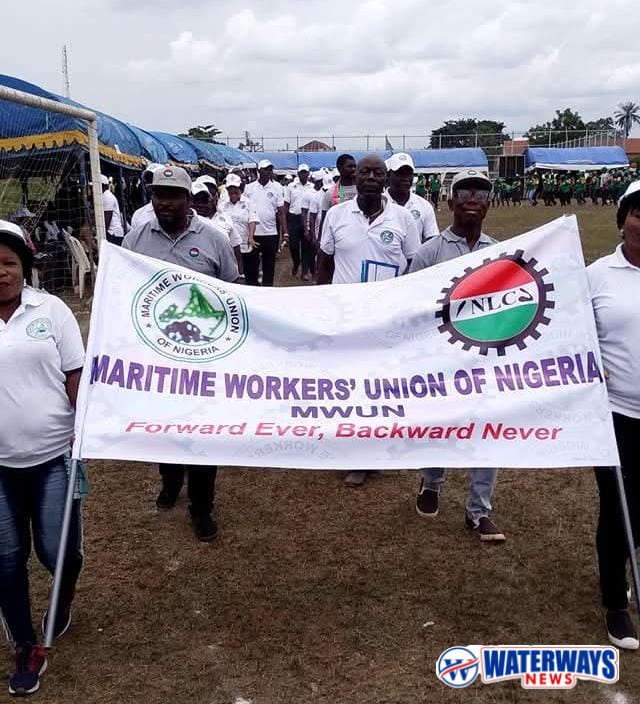
The Maritime Workers Union of Nigeria (MWUN) has recorded genuine milestones. Under President-General Comrade Francis Bunu, the union secured a landmark Collective Bargaining Agreement with shipping companies in August 2024 — the first meaningful minimum conditions framework in twenty years of failed negotiations with the Shipping Agencies, Clearing and Forwarding Employers Association. The agreement, brokered with the involvement of NIMASA and the Nigerian Shippers’ Council, established minimum standards covering wages, working hours, and health and safety.
In July 2025, MWUN also concluded a peace accord with Melsmore Marine Nigeria Limited following a protracted dispute over workers’ welfare and pension remittances, with Bunu declaring a “new dawn for Nigerian seafarers” and announcing full unionisation of Melsmore’s workforce.
These are genuine victories. But they remain islands of progress in a sea of structural deficit. Union penetration remains incomplete. Pension remittances by shipping companies to workers’ retirement savings accounts continue to be a site of dispute. And the broader Nigerian labour landscape — with over 75 million informal sector workers excluded from the Contributory Pension Scheme — means maritime workers outside the formal MWUN structure are particularly exposed.
The Inland Waterways: Nigeria’s Forgotten Workforce
Beyond the seafarers, there is a second maritime labour force even more invisible to policy: the operators of Nigeria’s inland waterways — the boat skippers, canoe pilots, and jetty workers who carry millions of Nigerians across rivers, creeks, and lagoons every day.
Nigeria’s approximately 10,000 kilometres of navigable waterways connect 28 of its 36 states and link to five neighbouring countries. This is an extraordinary geographic asset — one that remains criminally underutilised, and whose workers remain almost entirely unprotected.
The National Inland Waterways Authority (NIWA) has intensified training efforts, completing a three-day Boat Navigation and Safety Training for 75 operators from Lagos, Ogun, and Ondo states in December 2025, and distributing 42,000 life jackets across 12 riverine states. These are commendable steps. But NIWA remains overwhelmingly dependent on government grants and generates barely 20 per cent of its required funding — a structural fragility that constrains both infrastructure development and worker welfare.
Boat operators themselves have historically borne multiple, overlapping levies from competing agencies — a burden so contentious it required a Supreme Court judgment in January 2024 to settle the jurisdictional boundary between NIWA and the Lagos State Waterways Authority (LASWA).
Nigeria Watch: What Must Change
This Workers’ Day, Nigerian maritime labour stands at a crossroads. The legal architecture exists — Nigeria has ratified the Maritime Labour Convention (MLC) 2006 — but enforcement remains uneven and frequently dependent on the goodwill of individual shipping companies rather than institutional compulsion.
The path forward is clear, even if the political will to walk it is not yet assured. NIMASA must convert CVFF momentum into actual vessel acquisitions that create the sea-time berths stranded cadets desperately need. Training reform must be matched by domestic opportunity. MWUN must extend its reach to the informal and inland waterway operators who remain outside its protection. And the Federal Ministry of Marine and Blue Economy must treat maritime labour not as a residual concern, but as a strategic pillar of the blue economy agenda it has championed.
Nigeria’s waterway workers have kept the nation moving — through floods, fuel crises, and fiscal austerity. On this Workers’ Day, the question is not whether they deserve better. It is whether the institutions charged with their welfare will finally deliver it.
Waterways News | waterwaysnews.ng
Maritime Labour and Trade Union
MWUN Renews Grassroots Leadership Across Ten Lagos Waterway Units in Simultaneous Elections
MWUN Renews Grassroots Leadership Across Ten Lagos Waterway Units in Simultaneous Elections
Lagos Commercial Private Boat District conducts constitutional polls at key jetties from Mile 2-Mazamaza, through Liverpool-Apapa, to Ebute-Ero Lagos Island, ushering in fresh four-year mandates
By Oghenewoke Onoriode| Waterways News Reporter, Lagos | March 28, 2026
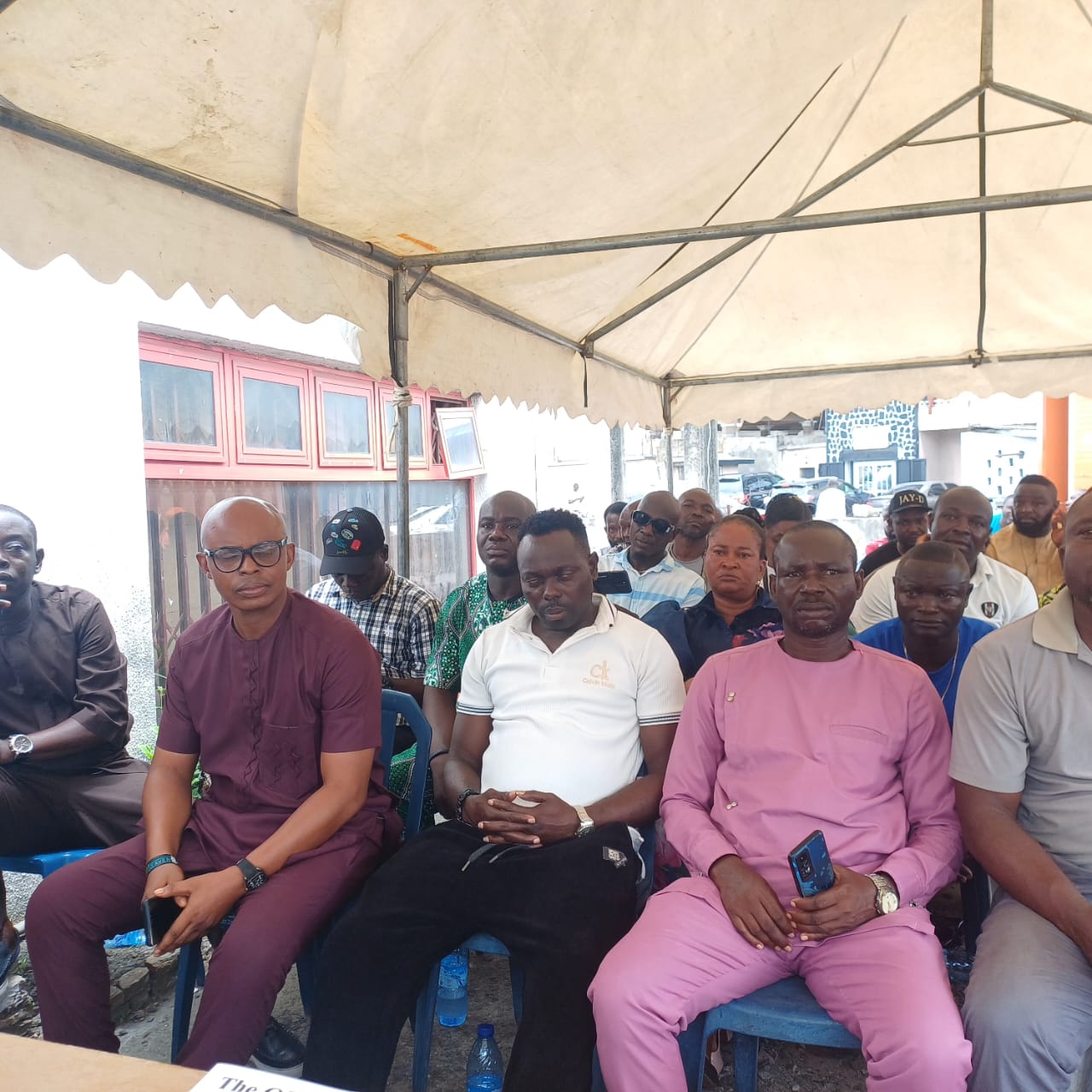
The Lagos Commercial Private Boat District of the Maritime Workers Union of Nigeria (MWUN) on Saturday 28 March 2026, conducted simultaneous elections across ten units and jetties on the Lagos inland waterways, producing new executive committees that will govern each unit for the next four years in line with the MWUN Constitution.
The exercise spanned some of the busiest waterfront communities in the state, covering Liverpool Jetty, Ejalonibu, Irede Jetty, Allens Jetty, Tie-Gate Jetty, Ebute-Ero Jetty, Ojo-Sifax Jetty, Coconut/Unity Jetty, Ijegun-Egba Jetty, and Mile 2-Mazamaza Jetty units.
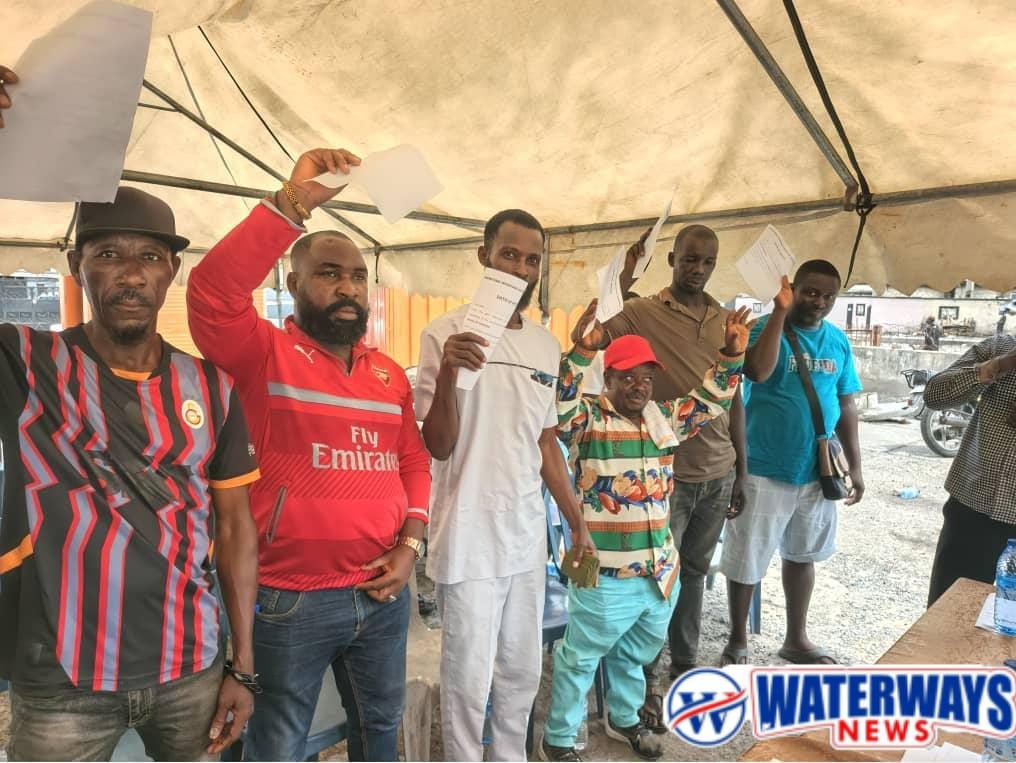
Elected officers of Coconut/Unity Jetty
Outgoing Structures Dissolved Before Polls
In a procedural step that set the tone for transparency, District Secretary Comrade Osaweren O. Larry formally moved to dissolve all existing executive committees ahead of the vote. The motion was proposed by Comrade Samuel Folarin, seconded by Comrade Babamagaji, and subsequently adopted — clearing the path for clean, unencumbered elections across all participating units.
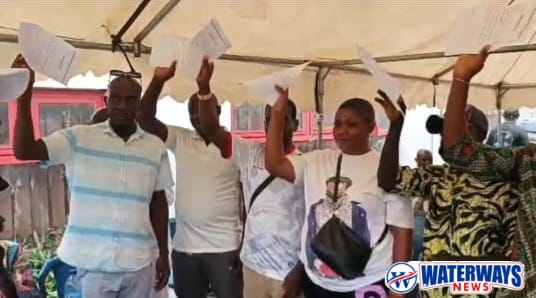
Irede Jetty Officers
For units not immediately prepared to proceed, Comrade Larry announced that caretaker committees would be constituted, with a firm three-month ceiling on their operation. Affected units must hold their elections within that window.
Chairman Calls for Integrity at the Helm
Delivering the opening address, District Chairman Comrade Omotayo Patrick Owolabi charged all emerging unit chairmen to lead with integrity, professionalism, and a clear sense of duty to their members. He urged incoming officers to subordinate personal interests to the welfare of the union and its rank and file as they settle into their new responsibilities.
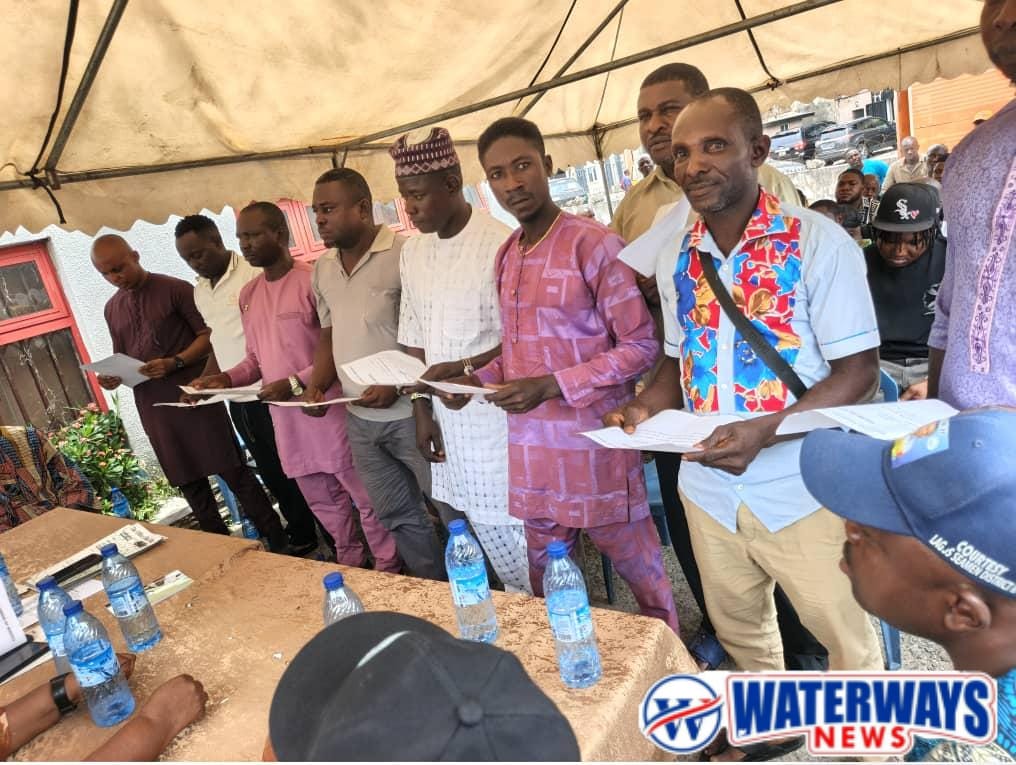
Elected officers of Liverpool Jetty
Why This Matters for the Lagos Waterways
The Lagos inland waterways are among the most heavily utilised transport corridors in West Africa, moving tens of thousands of commuters and cargo daily across a network of jetties that stretch from the Lagos Lagoon to the creeks of Ijegun-Egba and beyond. Unit-level leadership within MWUN is not ceremonial — these executives are the first line of advocacy for boat crew welfare, safety compliance at jetty terminals, and orderly day-to-day operations on the water.
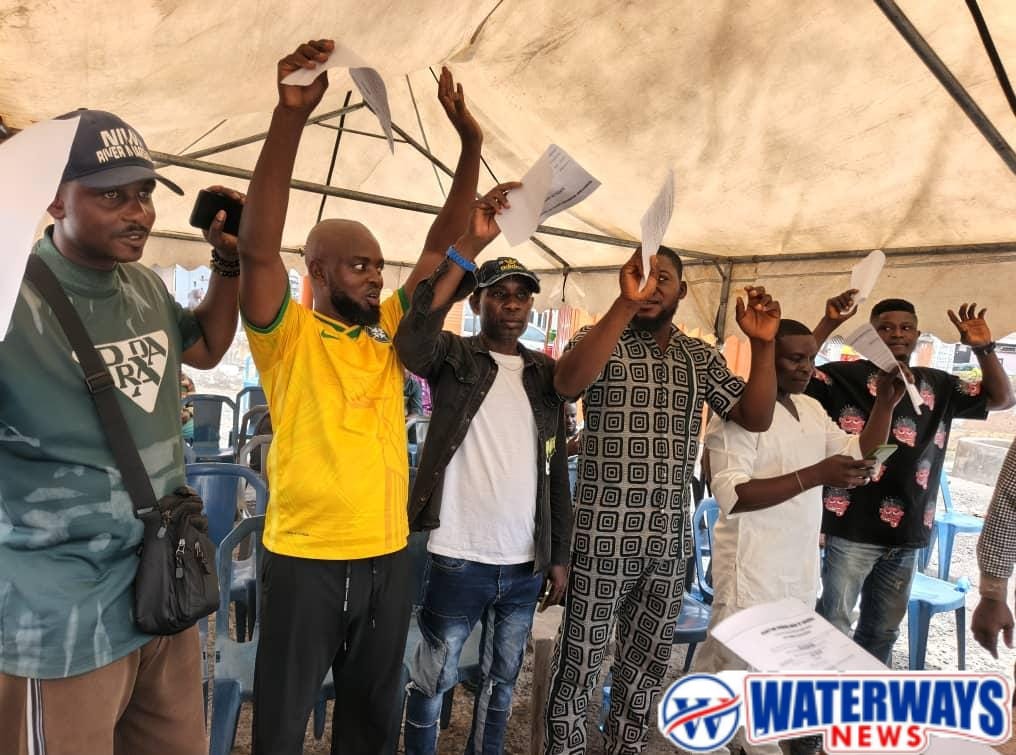
Elected officers of Tie-gate Jetty
With fresh mandates now in place, maritime stakeholders along the waterfront will be watching to see whether the new committees can drive stronger enforcement of safety protocols, sharper welfare representation, and better coordination with the Lagos State Waterways Authority (LASWA) and the National Inland Waterways Authority (NIWA) on operational matters.

Elected officers of Mile 2 Mazamaza Jetty, the District Chairman and Secretary
Nigeria Watch
The renewal of unit leadership within MWUN’s Lagos district comes at a moment of heightened attention on inland waterway governance. NIWA and LASWA have both signalled intentions to tighten regulation of commercial boat operations in Lagos, including vessel certification, operator licensing, and jetty safety standards. Strong, democratically legitimate union structures at the grassroots level will be essential counterparts in those regulatory conversations — giving boat workers a credible voice in policy processes that directly affect their livelihoods and the safety of the millions of Lagosians who rely on waterway transport daily.
A cross section of delegates
The Federal Ministry of Marine and Blue Economy will also be keen to see MWUN’s internal democracy functioning robustly, as any future push to expand the Cabotage framework or formalise inland waterway labour standards will require organised, accountable worker representation from the jetty level upward.
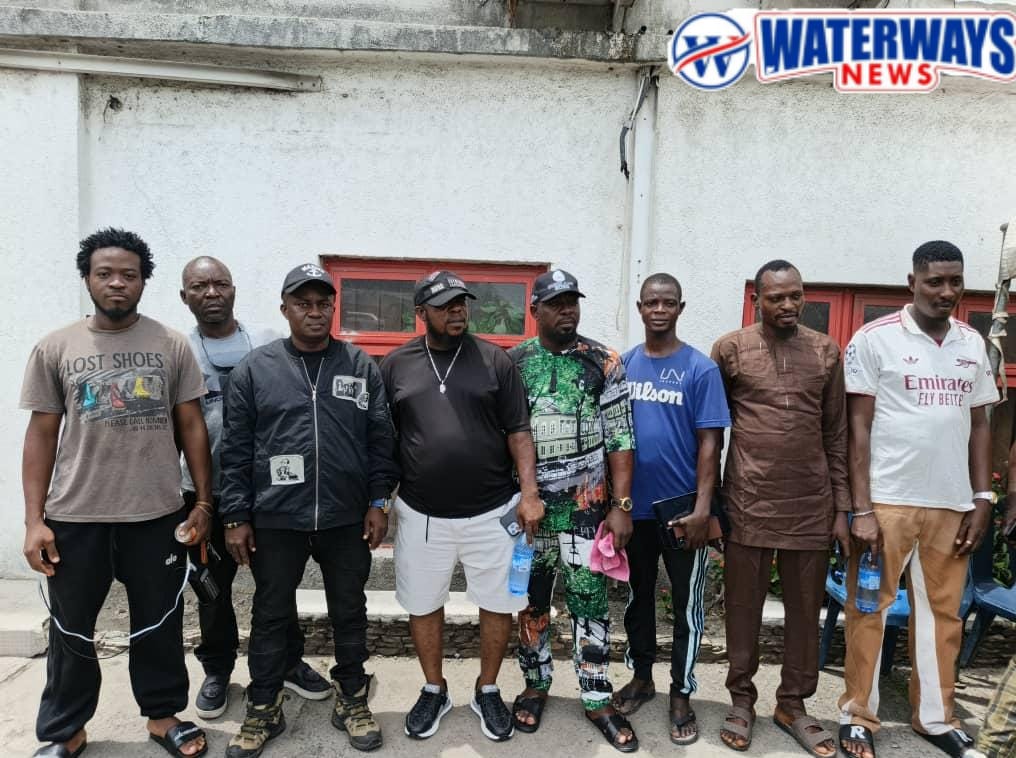
Allens Jetty Unit Officers
The elected officers across the Jetties are:
LIVERPOOL JETTY EXECUTIVES.
1. BABATUNDE WILSON.- CHAIRMAN
2. SAMUEL OLADIPUPO JOSEPH – VICE CHAIRMAN
3. AJIBULU STEVEN – SECRETARY
4. EGBAYELO DAISI – ASST. SECRETARY
5. NATHANIEL GBENGA OLAYUNJI – TREASURER
EJALONIBU UNIT EXECUTIVE
1. OKEBUKOLA OLATUNJI JAMES – CHAIRMAN
2. IDOWU S. ANTHONY – VICE CHAIRMAN
3. WILLIAMS A. MARY – SECRETARY
4. HUNSA EMMANUEL VIYON – ASST. SECRETARY
5. SILVANUS AGBESI ALFRED – TREASURER
IREDE JETTY UNIT EXECUTIVES
1. AKINGBADE MOSES ADETUNJI – CHAIRMAN
2. EMMANUEL BROWN – VICE CHAIRMAN
3. OLABIDE ATOYEGBE – SECRETARY
4. ADEYEMI MEDOYE – ASST. SECRETARY
5. UGBUDU ONYEKWA BENJAMIN – TREASURER.
ALLENS JETTY UNIT
1. STEPHEN MOMOH – CHAIRMAN
2. TONY TAOFIK SOFOLUWE – VICE CHAIRMAN
3. ADENIYI ADETUNJI – SECRETARY
4. ESE OTITE – ASST. SECRETARY
5. AYIN SOLOMON MCBLUE – TREASURER
TIE-GATE JETTY UNIT
1. OMOGBEMI JOSHUA – CHAIRMAN
2. HOUSA ALEX – VICE CHAIRMAN
3. AJAKA MONDAY – SECRETARY
4. AJIBADE DAMILARE – ASST SECRETARY
5. FOLARIN OLADEJI – TREASURER
EBUTE-ERO JETTY UNIT
1. SAMUEL OLUWASEYI – CHAIRMAN
2. GANIU YUSUF – VICE CHAIRMAN
3. KAFFO LATEEF – SECRETARY
4. MUSTAPHA TOYIN SANNI – ASST SECRETARY
5. HENRY NDUKA AGI – TREASURER
COCONUT/UNITY JETTY
1. OLAWALE EGBAYELO – CHAIRMAN
2. OROFIN BABATUNDE – VICE CHAIRMAN
3. EMEKA JONATHAN – SECRETARY
4. OLUWATOYIN ADEWALE – ASST SECRETARY
5. SUNDAY DAVID – TREASURER
IJEGUN-EGBA JETTY
1. KEHINDE KAREEM
2. TAOFIK RASAT – VICE CHAIRMAN
3. KAREEM ADEWALE IDOWU – SECRETARY
4. ORENO EZEKIEL – ASST SECRETARY
5. ADESHINA RIGALI – TREASURER
MILE 2 – MAZAMAZA JETTY
1. DEMEHIN SOJI MESSIAH – CHAIRMAN
2. BEWAJI OLAJUWON – VICE CHAIRMAN
3. SIMEON I. DEMEHIN – SECRETARY
4. FRANCIS O. TEMITOPE – ASST SECRETARY
OJO-SIFAX JETTY
1. DANIEL ABAYO – CHAIRMAN
2. AJEH NDIDI – SECRETARY
3. KUNUJI AMOS DAMILOLA – ASST SECRETARY
4. STEVE EZEKIEL – TREASURER
Waterwaysnews.ng remains committed to reporting the developments that shape Nigeria’s maritime industry and its workforce.

MWUN to Oyetola: Restore Tally Clerks, Gangway Guards or Risk Port Security Collapse
By Okeoghene Onoriobe | Waterways News Correspondent, Lagos
The Maritime Workers’ Union of Nigeria has urged the Federal Government to urgently reinstate tally clerks and gangway security personnel across the country’s seaports and jetties, warning that their continued absence is fuelling cargo under-declaration, contraband smuggling, and a creeping breakdown of port labour discipline.
In a petition addressed to the Minister of Marine and Blue Economy, Adegboyega Oyetola, MWUN Secretary-General Oniha Erazua described the situation as a critical challenge confronting Nigeria’s maritime sector — one with serious consequences for both national revenue and port security.
Operators Flouting Labour Laws
The union’s petition flagged the absence of tally clerks and gangway security men as the entry point for a wider compliance crisis. According to MWUN, the vacuum has allowed some terminal operators to sidestep the Stevedoring Regulations 2014 by deploying unregistered dockworkers — a practice the union says undermines the legal frameworks governing maritime labour.
The union warned that without tally clerks physically counting and verifying cargo manifests at berth, under-declaration of goods has become routine, resulting in substantial revenue losses to the Federal Government
Arms, Contraband Moving Freely
On the security front, MWUN’s alarm is equally stark. The petition states that the absence of gangway security personnel — whose role is to control vessel access and monitor crew and visitor movement — has enabled the unchecked flow of arms and contraband through port gates and vessel gangways.
The union disclosed that no fewer than 243 operational jetties across Nigeria are currently running without adequate supervision from either the Nigerian Ports Authority or the Nigerian Maritime Administration and Safety Agency — a figure that points to systemic regulatory failure well beyond the major commercial ports at Apapa and Tin Can.
A Central Labour Pool Under NIMASA
MWUN’s recommendations are specific. The union is calling on Minister Oyetola to initiate executive action for the immediate restoration of the affected workers across all ports and to establish a central labour pool — to be managed by NIMASA — for the structured engagement and deployment of tally clerks and gangway guards.
It also wants both NIMASA and NPA directed to recruit and deploy dedicated monitoring officers to enforce compliance across ports, dry ports, bonded terminals, and jetties nationwide.
Third Appeal in Four Years
The petition is not MWUN’s first. The union noted that similar representations were made in 2021 and 2023 through stakeholder memoranda and formal correspondences, but said the issue remains unresolved. The union expressed cautious optimism that the current minister would act where his predecessors have not.
Nigeria Watch (Maritime & Blue Economy Implications)
For port operators, terminal concessionaires, and freight forwarders, the MWUN petition puts a number — 243 unsupervised jetties — on what the industry has long known anecdotally: regulatory presence at Nigeria’s secondary and riverine ports is thin to nonexistent.
The tally clerk question is particularly consequential for cargo interests. Tally clerks serve as an independent check on vessel manifests, providing a human audit layer that customs declarations and electronic cargo tracking systems alone cannot replicate. Their absence creates conditions in which short-landing — the gap between what is manifested and what is physically delivered — goes undetected, with losses borne by importers, consignees, and ultimately the government’s import duty receipts.
For NIMASA, the call to manage a central labour pool represents both an opportunity and a test. The agency has been under sustained pressure to demonstrate operational relevance beyond regulatory enforcement. Taking on the coordination of a pooled workforce of tally clerks and gangway guards would expand its port-level footprint — but would require funding, administrative capacity, and political will that have historically been in short supply.
The gangway security dimension also intersects directly with NPA’s port access control mandate and with NIMASA’s obligations under the International Ship and Port Facility Security Code. If arms and contraband are moving through gangways at Nigerian ports with the frequency MWUN implies, the liability exposure — reputational and regulatory — extends beyond labour relations into Nigeria’s international maritime compliance standing.
Waterways News | Maritime. Shipping. Blue Economy.
-

 Oil and Gas2 months ago
Tantita’s Pipeline Deal: $144m Contract, Rising Output, and the Questions that Deserve Answers
-
 Blue Economy2 months ago
Nigeria’s Coast Guard Bill: A Solution in Search of a Problem?
-
 MARITIME TRADE & SHIPPING2 months ago
World’s Largest Container Ship Sets New Maritime Record with 22,233 TEUs on Single Voyage