

Top Stories
Oyetola Courts Investors to Nigeria’s Catfish Sector, Calls 2.2m-Tonne Fish Deficit a Big Business Opportunity

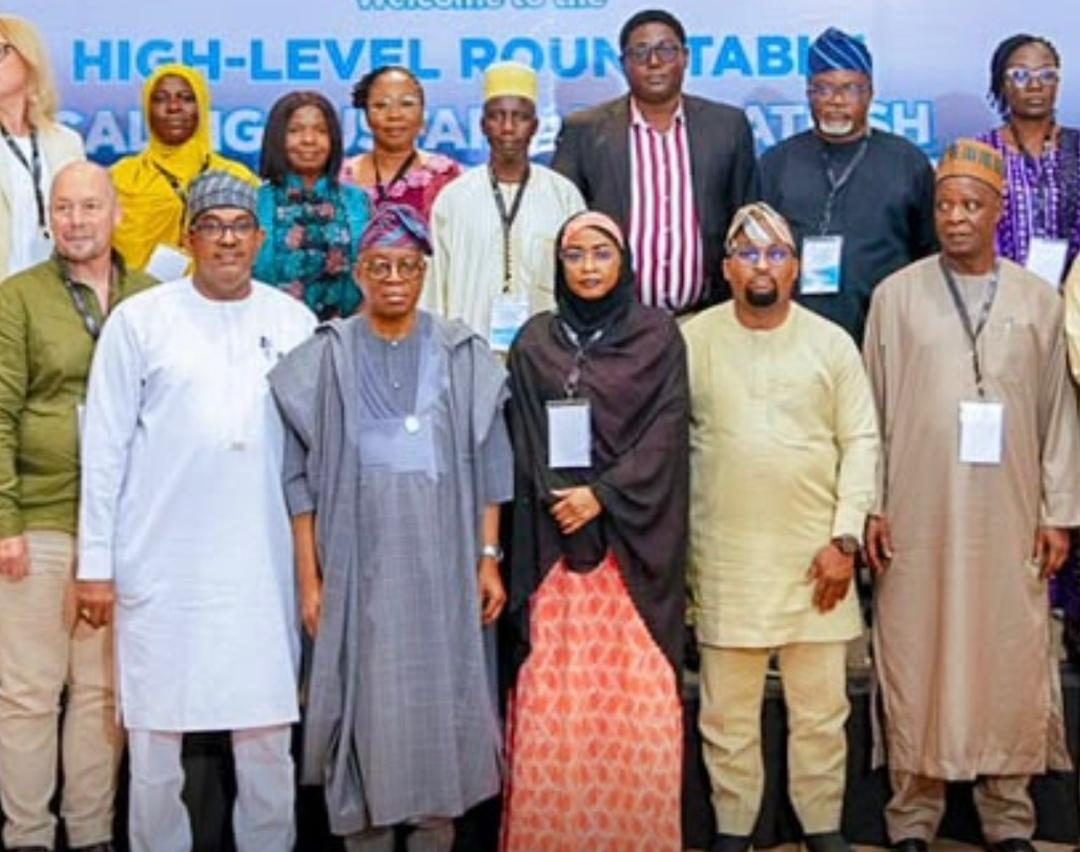

Oyetola Courts Investors to Nigeria’s Catfish Sector, Calls 2.2m-Tonne Fish Deficit a Big Business Opportunity
Considers Nigeria’s Fish Gap a Goldmine for Investors
By Ighoyota Onaibre | Waterways News
The Minister of Marine and Blue Economy, Dr. Adegboyega Oyetola, has urged investors and financial institutions to put money into Nigeria’s catfish industry, describing the country’s fish deficit as a chance to drive growth, food security and jobs.
He spoke on Wednesday in Abuja at the High-Level Roundtable on Scaling Sustainable Catfish Value Chain Transformation, organised under the Fisheries and Aquaculture for Africa, the Caribbean and the Pacific (FISH4ACP) programme.

Oyetola said Nigeria needs about 3.6 million metric tonnes of fish a year but produces only about 1.4 million from all sources. Local operators and new investors can fill that shortfall, he said. He argued that raising output is an economic and food security necessity that would cut import dependence and create enterprises.
He noted that Nigeria is Africa’s second-largest aquaculture producer and a leading producer of farmed African catfish. The opportunities, he said, go well beyond fish farming. They include hatcheries, feed mills, equipment fabrication, transport, processing, cold-chain services and trading.
The minister cautioned that closing the gap needs more than new ponds. He called for coordinated investment along the whole chain: quality fingerlings, affordable feed, suitable financing, fish health management, reliable markets and modern infrastructure.
On finance, he urged lenders to design credit around how fish farming actually works. Disbursement timing, repayment schedules and interest costs, he said, should match production cycles and cash flow.
He listed high feed and energy costs, erratic fingerling supply, weak fish health management and biosecurity, and thin processing and cold-storage capacity as the main constraints. He described each as an opening for investors, particularly in feed production, modern hatcheries, processing plants, cold chains and logistics.
Oyetola assured investors that the Federal Government will work more closely with state governments, regulators and the private sector. He also promised deeper engagement with development finance institutions on affordable credit, better sector data, research, quality assurance and technical support.
He also backed aquaculture clusters and cooperatives to cut operating costs and give farmers shared infrastructure and services. He called for deliberate inclusion of women, young people and small and medium-scale operators, with growth balanced against environmental sustainability.
He thanked the Food and Agriculture Organisation (FAO), the European Union and the German Government for supporting Nigeria’s catfish value chain. By his account, the programme has identified key constraints and tested practical fixes, including black soldier fly larvae as an alternative feed ingredient, hatchery management, broodstock improvement, business development and digital farm management.
FISH4ACP is an initiative of the Organisation of African, Caribbean and Pacific States (OACPS). FAO implements it with funding from the EU and Germany’s Federal Ministry for Economic Cooperation and Development (BMZ). It supports fisheries and aquaculture value chains in 12 countries, and in Nigeria it targets catfish.
NIGERIA WATCH
The numbers show a deficit of about 2.2 million tonnes, with local output meeting under 40 per cent of national demand. The minister’s pitch to investors comes after months of government activity on the same problem. In August, Oyetola inaugurated a Technical Committee on Accelerating Fish Production, gave it an eight-week deadline, and tasked it with turning recommendations from an October 2025 strategic roundtable into practical actions. Stakeholders will now ask what that committee has delivered and how this week’s investor appeal builds on it.
Investors have heard the financing complaints before. Oyetola’s call for credit that matches production cycles will only matter if banks and development finance institutions respond with real products. Waterways News will watch whether that happens, given the sector’s record of announced funds that never reach small operators.
The waterways angle also matters. Cold chains, feed and fingerling logistics, and moving fish from ponds and fishing communities to markets all depend on reliable transport, including inland water routes. Cooperatives and clusters, which the minister endorsed, are how small riverine and waterfront operators could access shared infrastructure.
Maritime Labour and Trade Union
MWUN Seals Improved Pay Deal for LTT Towage Workers, Third Major CBA Review in Three Months
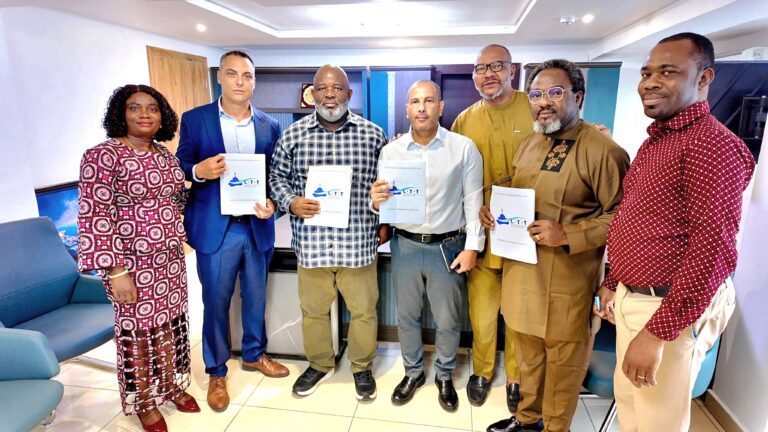
MWUN Seals Improved Pay Deal for LTT Towage Workers, Third Major CBA Review in Three Months
Union says the agreement reflects its drive to secure better welfare for members at companies serving the NPA
By Okeoghene Onoriobe | Waterways News
The Maritime Workers Union of Nigeria (MWUN) has signed an upward review of the Collective Bargaining Agreement (CBA) covering workers of LTT Coastal and Marine Services Ltd, the private firm that provides towage, mooring and pilot transport services to the Nigerian Ports Authority (NPA).
The signing took place on Monday, November 9. It was done by MWUN President General Comrade Francis Abi Bunu, the NPA Branch of the union led by Comrade Ajayi Bamidele Alex, and LTT management, represented by General Manager Capt. Liav Zilberman. The agreement now goes to management for implementation.
The union said the deal shows its commitment to workers’ welfare and to ensuring that maritime workers’ sacrifices are properly recognised and rewarded.
Bunu praised LTT’s Managing Director, Hilik Kalusky, as a man who keeps his word. He said the union expects more from him, adding that the union “will never disappoint him.”
The LTT agreement follows two other recent deals. In September 2026, MWUN signed a CBA with Julius Berger Nigeria Plc at its Lagos office, with the company’s team led by its Warri General Manager, Capt. Rainer Jensch. In August 2026, the union and the NPA Senior Staff Union signed a CBA with Lekki Freeport Terminal (LFT) that raised salaries and allowances by up to 150 per cent. It also improved overtime, weekend, public holiday, transport, feeding, housing, utility and hazardous allowances.
Bunu said these outcomes show what genuine negotiation and dialogue can achieve when workers’ welfare is at the centre.
NIGERIA WATCH
Three agreements, one pattern. In three months, MWUN has moved from the LFT terminal deal in August to the Julius Berger agreement in September and now LTT’s towage workforce. That pushes the union’s wage agenda beyond terminals into marine services that keep NPA channels working.
The numbers are missing. Neither the union nor the company has disclosed the size of the LTT increase or which allowances change. Unlike the LFT deal, where the 150 per cent figure was public, the extent of this review is unclear. Workers and industry observers will want those details.
Signing is not delivery. The agreement is for implementation “by management.” Waterways News will keep watching whether the new rates reach pay slips, given the long gap in the sector between agreements and what workers actually receive. MWUN has had to press other employers, including Sea Transport Manning Services Ltd in 2025, over expired or unsigned CBAs.
Why it matters for the NPA ecosystem. Towage, mooring and pilot transport are critical to vessel turnaround at Nigerian ports. Stable, fairly paid crews support safety and efficiency, which the NPA and shipping lines both depend on.
The wider question. Organised workers at ports, terminals and marine service firms are getting formal wage reviews. The informal inland waterway operators and boat crews we cover have no such protection, and that contrast remains part of this publication’s accountability agenda.
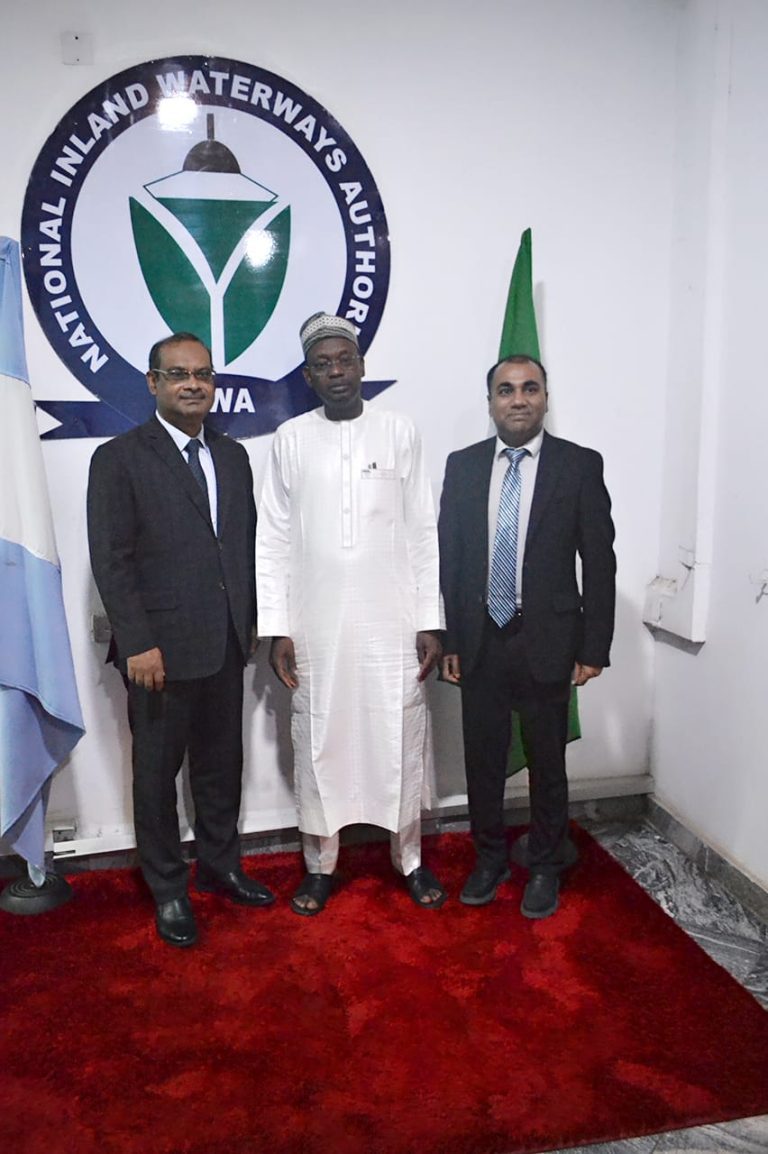
NIWA, Bangladesh Open Talks on Dredging, Boat-Building and River Port Cooperation
Dhaka’s envoy offers technical expertise and training to unlock the potential of Nigeria’s inland waterways
By Raymond Gold | Waterways News
The National Inland Waterways Authority (NIWA) has opened exploratory talks with Bangladesh on technical cooperation, infrastructure development and investment in inland water transport.
The talks followed a courtesy visit by Bangladesh’s High Commissioner to Nigeria, Miah Mohammad Mainul Kabir, to NIWA’s liaison office in Abuja. The proposed partnership would cover dredging, river port development, boat construction, marine equipment manufacturing and the management of passenger ferry services.
NIWA’s Acting Managing Director and CEO, Malam Umar Yusuf Girei, said the visit was a chance to build stronger institutional ties between two countries with extensive inland waterways. He said Bangladesh has made real progress in turning its waterways into a major transport network. By his account, its roughly 24,000 kilometres of waterways carry more than 25 per cent of passenger traffic, along with millions of tonnes of cargo.
Girei said Nigeria has about 10,000 kilometres of inland waterways. The Rivers Niger and Benue are the main routes, giving navigable access to about 28 of the country’s 36 states. He said Bangladesh’s experience offers useful lessons as the Federal Government pushes to maximise the economic benefits of the sector.
He named three areas for possible cooperation:
dredging, channel maintenance and year-round navigability
development and management of river ports and jetties
passenger ferry systems
Kabir said Bangladesh could share its expertise in dredging, boat construction and marine equipment manufacturing. He also stressed capacity building, with training and retraining of the people who operate, maintain and manage inland water transport infrastructure.
Both sides said they hoped the visit would lead to concrete cooperation and lasting institutional partnerships. The discussions remain exploratory, and no agreement, timeline or funding commitment has been announced.
NIGERIA WATCH
Talk is cheap until there’s an MoU. Nigeria has had similar overtures from Bangladeshi diplomats before, including a 2022 visit to NIWA’s then leadership. Stakeholders will want to see a signed agreement, a work plan and funding, not another round of courtesy calls.
Mind the numbers. The 24,000 km figure is Girei’s. World Bank material on Bangladesh gives it as the total length of rivers, streams and canals, while the navigable network is far smaller, at roughly 3,800 to 3,900 km.
The real lesson from Dhaka is sustained dredging and terminal investment: the World Bank committed $360 million in 2016 for the Chittagong–Dhaka–Ashuganj corridor, and Bangladesh now plans to re-dredge nearly 8,000 km of waterways.
Boat-building matters for operators. Bangladesh’s offer on boat construction comes as NIWA pushes the wooden boat phase-out. Operators in WABOTAN, and ATBOWATON have long asked who will pay for compliant vessels and engines. Any technology transfer should include affordable, locally buildable designs and financing for small operators, not only large-scale shipyards.
Jurisdiction. Ports, jetties and ferry systems sit where NIWA and LASWA have clashed since the Supreme Court ruling. Any partnership needs clear mandates, or the gains will be lost to turf disputes.
The people side. Training and retraining should reach boat drivers, engineers and jetty managers, not just agency staff.
Maritime Security and Safety
IMO Boss Demands Crackdown on False Flags, Substandard Ships as Hormuz Seafarer Death Toll Hits 25
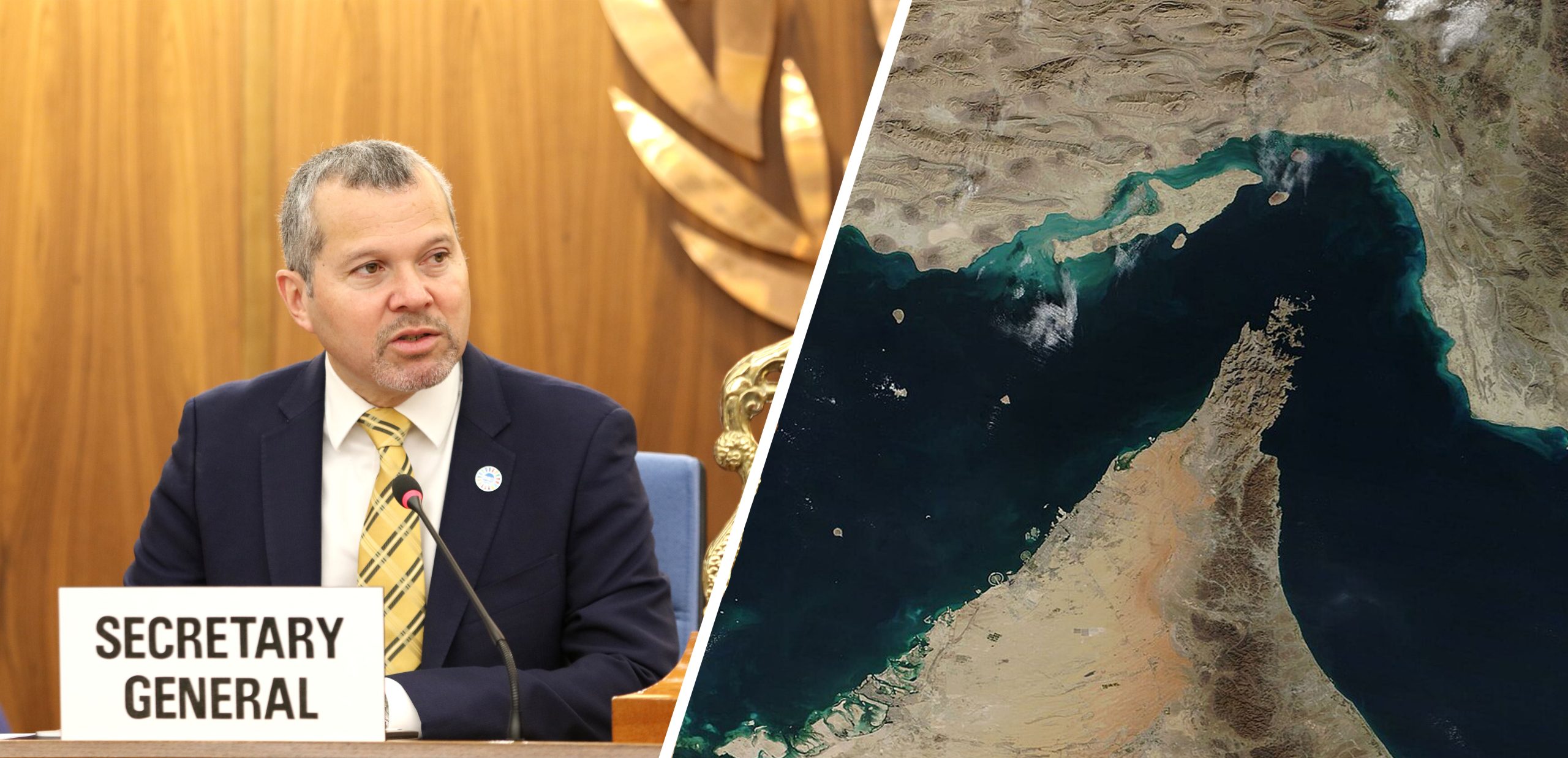
IMO Boss Demands Crackdown on False Flags, Substandard Ships as Hormuz Seafarer Death Toll Hits 25
Arsenio Dominguez Tells Governments to Enforce Safety Rules as Rogue Vessels Add to Seafarers’ Peril
By Okeoghene Onoriobe | Waterways News
The Secretary-General of the International Maritime Organization (IMO), Arsenio Dominguez, has called on governments to enforce international shipping regulations more strictly in the Strait of Hormuz. He warned that unsafe operating practices are adding to the dangers already facing seafarers in the conflict zone.
In a statement on Wednesday, Dominguez said some vessels are transiting the waterway without meeting basic safety requirements, including those under the International Convention for the Safety of Life at Sea (SOLAS).
The IMO has verified 133 incidents involving merchant ships since the conflict began on 28 February. As of 10 November, these incidents had killed 25 seafarers, with others injured or missing. The latest death followed an attack on the tanker M/T VELOS SAPPHIRE in the Strait on 5 November.
Dominguez singled out four practices: the use of substandard vessels, the concealment of IMO identification numbers, fraudulent ship registrations and false flags. He said they weaken maritime safety and make it harder to protect lives at sea.
“IMO’s technical and operational regulations are there to protect seafarers, ships and the marine environment,” he said. “They must be respected and enforced effectively.”
He urged flag, port and coastal states to act against violations within their jurisdictions, in line with international law. He also asked shipowners and operators to avoid commercial activity that exposes crews to unacceptable risk.
The statement follows the IMO Council session in London from 2 to 6 November. There, member states condemned attacks on merchant shipping and called for stronger protection of seafarers and for safe, uninterrupted navigation through vital international waterways. The IMO has also flagged a rise in piracy and armed robbery in the Western Indian Ocean and Gulf of Aden, with 17 attempted or actual incidents recorded since the start of 2026.
Dominguez renewed calls for a political resolution and for restoring a safe, internationally recognised framework for navigation through the Strait. He warned that the effects reach beyond shipping, threatening global trade and raising living costs for millions. “It is imperative for Governments to tackle the root causes of this conflict,” he said.
NIGERIA WATCH
Why this matters at home. Dominguez’s call to flag, port and coastal states lands squarely on Nigeria. It is an IMO Council member and a coastal state with its own flag, registry and port state control obligations. The concealed IMO numbers and false flags he described are the same grey-market tactics that make weak enforcement dangerous everywhere, including in Gulf of Guinea waters.
Council credibility is tested. Nigeria used the 138th Council session to press seafarer welfare and maritime security. A statement from the IMO’s own chief now puts the question of enforcement, not just advocacy, in front of every Council member.
Stakeholders should expect pressure on regulators like NIMASA to show that port state control inspections, ship registration vetting and flag state oversight are tight.
The cost reaches Nigerian shippers. The Hormuz crisis keeps driving up war-risk insurance, freight rates and cargo uncertainty. Importers and shippers already carrying those costs deserve clarity from NIMASA, the Nigerian Ports Economic Regulatory Authority and the Ministry of Marine and Blue Economy on what is being done to cushion them.
Nigerian seafarers are exposed too. Nigerians crew foreign-flagged vessels, and the question of who protects them when ships operate outside the rules cannot be left to shipowners alone.
The accountability question. Nigeria’s maritime leadership has been vocal at global forums. The test is whether that voice is matched by visible enforcement on Nigerian waters, where the same loopholes the IMO describes can be exploited.
Waterways News will keep tracking whether talk at the IMO becomes action at home.

 Oil and Gas8 months ago
Tantita’s Pipeline Deal: $144m Contract, Rising Output, and the Questions that Deserve Answers
 MARITIME TRADE & SHIPPING8 months ago
World’s Largest Container Ship Sets New Maritime Record with 22,233 TEUs on Single Voyage
 Blue Economy9 months ago
Nigeria’s Coast Guard Bill: A Solution in Search of a Problem?