Blue Economy
PARTNERS ON THE WATER: Maritime Workers’ Unions and the Battle to Develop Nigeria’s Inland Waterways Sector


PARTNERS ON THE WATER:Maritime Workers’ Unions and the Battle to Develop Nigeria’s Inland Waterways Sector
By the Nigerian Waterways News Special Investigations Desk, Lagos | February 20, 2026
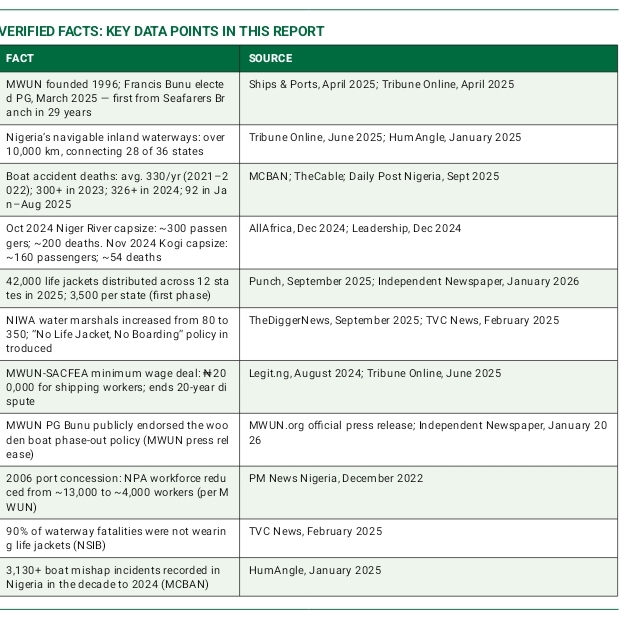
Nigeria’s inland waterways span more than 10,000 kilometers of rivers, creeks, and channels, connecting 28 of the country’s 36 states. They represent one of the most underutilized transport assets on the African continent. And as the Federal Government, through its newly established Ministry of Marine and Blue Economy, pushes to unlock that potential, the Maritime Workers’ Union of Nigeria (MWUN) — the country’s principal labour organization in the sector — has been working from multiple angles to shape, support, and at times challenge that effort.

This is a report about what that engagement looks like in practice: from wage negotiations and safety advocacy to partnerships with regulators and the challenge of absorbing a workforce that, for the most part, has never held a formal contract.
The Union and Its Sector
The Maritime Workers’ Union of Nigeria was formed in 1996, when the Federal Government merged four separate maritime labour organizations into a single industrial union.
Affiliated to the Nigeria Labour Congress (NLC), MWUN represents sailors, dockworkers, ferry operators, and port support staff across the country’s seaports and inland waterway terminals.
In March 2025, the union held its 6th Quadrennial National Delegates Conference at Festac Town, Lagos, at which Comrade Francis Abi Bunu was elected President-General, unopposed. Bunu succeeded Comrade Adewale Adeyanju, who had led the union for eight years. The election was notably the first time in MWUN’s 29-year history that a president-general had come from the Seafarers Branch of the union.
Bunu’s background is directly relevant to the inland waterways discussion. Before his election, he served as President of the Seamen/NIWA and Water Transportation Branch of MWUN — the branch that deals specifically with river and inland waterway workers. His ascent to the presidency was welcomed by the Barge Operators Association of Nigeria (BOAN), which had recently initiated a formal collaboration with MWUN to improve operations and strengthen engagement with government regulators, including NIWA and NIMASA.
The Scale of the Safety Crisis
Any honest discussion of MWUN’s role in developing Nigeria’s waterways must begin with the body count. Boat accidents on Nigeria’s inland waterways kill hundreds of people every year, and the data — such as it is — tells a grim story.According to the Marine Crafts Builders Association of Nigeria (MCBAN), the average annual death toll from boat accidents in 2021 and 2022 was approximately 330. In 2023, over 300 lives were lost, with Kwara and Anambra states recording the highest casualties, according to a report by The Cable.
The 2024 figures were no better: at least 326 confirmed deaths, an increase of 8.67 percent over 2023, according to The Cable’s count, with Niger and Kwara states leading casualties. Some accounts put the 2024 toll as high as 452, reflecting the difficulty of consistent data collection across remote riverine communities.
Among the most devastating single incidents in recent memory was the October 3, 2024, capsizing of a wooden dugout canoe on the River Niger — carrying an estimated 300 passengers — which resulted in nearly 200 deaths. A second major incident followed on November 29, 2024, on the Dambo-Ebuchi waterways in Kogi State, where a vessel with over 160 passengers capsized, killing approximately 54 and leaving an unknown number unaccounted for.
The root causes have been extensively documented: overloaded and poorly maintained wooden vessels, absent life jackets, unlicensed operators, no mandatory passenger manifests, night sailing on unmarked waterways, and chronic under-enforcement by regulatory agencies.
As the Independent Newspaper reported in October 2025, experts in the sector have consistently noted that NIWA, Marine Police, and State Waterways Authorities often operate in silos, with enforcement that is reactive rather than preventive.
MWUN’s Advocacy on Vessel Safety
MWUN has been publicly vocal on the need to modernise Nigeria’s waterway fleet. When Minister of Marine and Blue Economy Adegboyega Oyetola intensified his campaign in 2025 for state governments to phase out wooden commercial boats in favour of safer fibre-reinforced plastic and aluminium vessels, MWUN President-General Francis Bunu publicly endorsed the position. According to a press release published on the union’s official website, Bunu specifically lauded Oyetola’s stance on phasing out wooden boats as a necessary step toward curbing incessant waterways accidents.
“The safety of our citizens on water is not just a policy responsibility, it is a moral duty.” — Minister Adegboyega Oyetola, presenting the report of the Special Committee on the Prevention of Boat Mishaps, 2025
The Ministry of Marine and Blue Economy established a 16-member Special Committee on the Prevention of Boat Mishaps in February 2025, chaired by NIWA Managing Director Bola Oyebamiji. The committee’s recommendations fed into ongoing efforts to enforce the Inland Waterways Transportation Regulations 2023 — the Water Transportation Code — which was launched in April 2024 by Minister Oyetola at the NIWA headquarters in Lokoja.
NIWA’s enforcement response since 2023 has included increasing its water marshal deployment from 80 officers to 350; introducing mandatory passenger manifests at registered jetties; installing marine navigational buoys; and enforcing a “No Life Jacket, No Boarding” policy.
The Ministry distributed 42,000 life jackets across 12 riverine states in 2025, with each state receiving 3,500 in the first phase. The distribution began in Minna, Niger State. The results, while contested in their precise magnitude, show a measurable downward trend. Industry data shows fatalities dropped from the 2021–2022 average of 330 to 231 in 2024, and further to 92 in the first eight months of 2025 — a period during which NIWA claimed a reduction of up to 72 percent compared to the 2021–2022 baseline. Independent analysts have urged caution about the 72 percent figure, noting it compares eight months of 2025 data against a full-year baseline, and that late-year incidents typically account for a significant share of annual fatalities. A comparison between 2022 and 2024 yields a more defensible figure of approximately 30 percent reduction.
The 2025 Safety Sensitisation Campaign
Beyond endorsing government policy, MWUN has taken its own operational role in safety. In 2025, NIWA ran a waterways sensitization campaign under the theme “Safety and Safety Trip: Zero Tolerance to Boat Mishap, No Life Jacket, No Boarding.” A key highlight of the campaign was the inauguration of waterways marshals at the Zumba waterfront to enforce water transport regulations. MWUN’s network of members and branch structures in riverine communities has been identified as a channel through which safety messaging and compliance campaigns are amplified at the local level.
MWUN has also moved on its own account to bring previously non-unionised seafarers into the formal sector fold. Bunu led the union on a tour of Melsmore Marine Nigeria Limited at Ibeju Lekki in 2025 to sensitize workers there about unionization, flagging that many seafarers were working under hazardous conditions with inadequate health and safety provision. He noted that poor conditions on vessels had claimed the lives of crew members through communicable diseases contracted while at sea.
The Landmark Wage Agreement
On the labour relations front, MWUN achieved one of its most significant breakthroughs in recent years in 2024: the conclusion of a 20-year-old wage dispute in the maritime sector. The Shipping Agencies, Clearing and Forwarding Employers Association (SACFEA) and MWUN signed an agreement establishing a minimum wage of ₦200,000 for shipping industry workers employed by SACFEA members. The deal was brokered by Minister Oyetola and facilitated by the Nigerian Shippers’ Council.
Then-President-General Adewale Adeyanju, who was concluding his tenure as the deal was finalised, noted in his farewell briefing with journalists that Hull-Blyth Nigeria Limited initially declined to join the agreement, but subsequently agreed to pay the ₦200,000 minimum wage. The agreement is to be reviewed every two years.
“MWUN will always be open to any collaboration that will positively impact the industry.” — Comrade Francis Bunu, MWUN President-General, on the BOAN-MWUN partnership (Radarr Africa, May 2025)
MWUN and the Broader Development Agenda
MWUN has consistently framed waterways development as a national emergency, not merely an industry issue. During a National Executive Council meeting at Golden Tulip Hotel, Festac, Lagos, former President-General Adeyanju drew attention to the severe job losses from the 2006 port concession exercise — which he said reduced the NPA workforce from approximately 13,000 workers to just 4,000 — while calling on NIWA and NPA to urgently recruit more junior staff to man jetties and port terminals. NIWA’s then-Managing Director, Dr George Moghalu, confirmed at the same meeting that the authority was making preparations to expand its junior workforce.
The union has also called directly on the Federal Government to develop and fortify waterways as a means of effective transportation and employment generation, and to empower relevant agencies to regulate private boat operators and align their operations with economic development objectives.
MWUN’s position is that safety and development are inseparable: an unsafe waterways sector will never attract the investment or public confidence needed to grow.
On maritime security, Bunu has praised NIMASA’s achievements in combating piracy in the Gulf of Guinea — noting the improvement in safety and stability on Nigerian waters — and pledged that MWUN would mobilise its international affiliates to support Nigeria’s bid for a seat on the International Maritime Organization (IMO) Council. The union views Nigeria’s prominence in global maritime governance as directly linked to the credibility and development of its domestic waterways sector.
The BOAN-MWUN Partnership: A Model for Collaboration
One of the most concrete recent examples of union-industry collaboration is the partnership between MWUN and the Barge Operators Association of Nigeria. BOAN executives visited the newly elected President-General Bunu at MWUN’s offices in Apapa, Lagos, to formalise discussions on joint working, explicitly noting that MWUN’s scale and reach across the country’s maritime industry made it the natural partner for improving barge operations.
BOAN has been working in parallel with NIWA, NIMASA, the Nigerian Navy, the Nigeria Police, and the Lagos State Waterways Authority (LASWA) to improve coordination of waterway traffic. The partnership with MWUN adds a workforce dimension to that multi-agency framework. Observers have noted that if the BOAN-MWUN collaboration produces joint training programmes, improved communication between operators and workers, and better compliance with safety standards, it could serve as a replicable model for other segments of Nigeria’s inland waterways sector.
The Challenges That Remain
For all the genuine activity, the picture is far from resolved. Enforcement on Nigeria’s waterways remains chronically weak, even by the admission of regulatory officials. The National Safety Investigation Bureau (NSIB) has noted that more than two-thirds of all boat fatalities are drowning incidents, and that 90 percent of victims were not wearing life jackets at the time of their deaths — despite the existence of regulations mandating their use.
Nigeria recorded more than 3,130 incidents of boat mishaps in the ten years leading to 2024, according to data from the Marine Crafts Builders Association of Nigeria. The frequency of those incidents — on waterways that connect millions of Nigerians in communities where boats are the only viable means of transport — makes the pace of reform feel inadequate to many who live and work on those routes.The institutional fragmentation is also real. NIWA, state waterways authorities such as LASWA and RIWAMA, Marine Police, NEMA, and local government landing committees each have overlapping mandates and limited coordination. The union operates within that complexity, and its influence — though growing — cannot substitute for the institutional reform and sustained funding that the sector ultimately requires.
MWUN itself faces internal development challenges. The union’s new leadership under Bunu has inherited an organisation whose capacity to reach informal sector workers — the majority of those who operate on Nigeria’s inland waterways — remains limited. Formalisation of the workforce is a long-term project, and the economic precariousness of most informal boat operators makes the transition to structured employment genuinely difficult.
Conclusion: A Union at the Centre of a Necessary Conversation
Nigeria’s inland waterways development is not a single project — it is a decades-long national challenge involving infrastructure, regulation, workforce development, safety, and the economic inclusion of millions of riverine Nigerians.
The Maritime Workers’ Union of Nigeria is not the solution to that challenge. But the evidence of its activity — from the SACFEA minimum wage breakthrough, to Bunu’s public endorsement of the wooden boat phase-out, to MWUN’s partnership with BOAN, to its longstanding demands for NIWA and NPA recruitment — shows that the union is actively engaged with that challenge across multiple fronts.What the sector needs now, and what MWUN has begun to articulate with increasing clarity under its new leadership, is a framework in which the union’s knowledge of the workforce and the waterways is formally integrated into planning and development processes — not just consulted after decisions have been made, but engaged as a co-designer of the sector’s future. Nigeria’s rivers have been waiting long enough.

Blue Economy
Coastal Communities Key to Blue Economy Success, Says GMA Founder Onakughotor at Ondo Summit
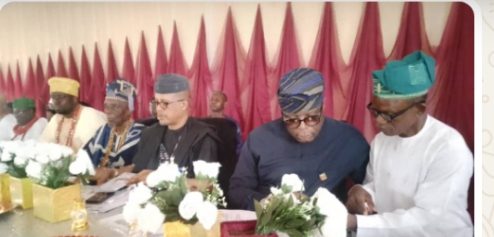
Coastal Communities Key to Blue Economy Success, Says GMA Founder Onakughotor at Ondo Summit
By Okeoghene Onoriobe | Waterways News Correspondent
The President and Founder of the Global Maritime Academy (GMA), Mr. Ejiro Dennis Onakughotor, has declared that Nigeria’s Blue Economy ambitions can only succeed if coastal communities are placed at the heart of its implementation — and not treated as afterthoughts.
Onakughotor made this assertion at the maiden Maritime Summit on Marine and Blue Economy held in Igboegunrin Kingdom, Ondo State, where traditional rulers, maritime experts, and key government stakeholders gathered to chart a new course for Nigeria’s ocean-based economic future.
Themed “The Marine and Blue Economy Policy and Its Implementation: The Game Changer to the Nigerian Economy,” the summit drew overwhelming support from participants who expressed readiness to help Nigeria harness its vast marine and coastal resources for sustainable national growth.
Grassroots-Driven Development
Describing coastal communities as “the heartbeat of Nigeria’s emerging ocean economy,” Onakughotor argued that investment in the Blue Economy must flow from the ground up. He stressed that the full implementation of Nigeria’s marine and ocean-based development policies must be community-driven to achieve genuine national economic transformation.”This gathering is more than a conference — it is a turning point for coastal development, economic diversification, and inclusive growth,” he said.
“This gathering is more than a conference — it is a turning point for coastal development, economic diversification, and inclusive growth”
He noted that the establishment of the Federal Ministry of Marine and Blue Economy marked a deliberate pivot away from Nigeria’s longstanding oil dependence, aligning the country with a global ocean economy valued at over $1.5 trillion.
Jobs, Infrastructure and Opportunity
Onakughotor cited Federal Government projections of creating three million jobs within four years across fisheries, aquaculture, shipping services, coastal tourism, and maritime security — sectors in which riverine and coastal communities like Igboegunrin stand to benefit most.
He also highlighted planned government investments in smart ports and the dredging of more than 2,000 kilometres of inland waterways, positioning host communities along Nigeria’s water corridors as emerging hubs for maritime transport and logistics.
Onakughotor urged youths in Igboegunrin Kingdom and other coastal areas to proactively acquire relevant skills and position themselves to take advantage of the opportunities ahead.
GMA’s Community-Driven Agenda
As a practical step toward capacity building, the Global Maritime Academy president unveiled a community-driven initiative that includes:
Vocational training for local cadets and youths in marine engineering, shipping management, logistics, and maritime security
Upskilling for artisanal fishers in modern aquaculture practices, sustainable fishing methods, and improved post-harvest handling
Coastal safety and surveillance training to strengthen waterway security for trade, tourism, and community wellbeing
Scholarships for deserving students from Igboegunrin Kingdom to access maritime education and vocational training
Onakughotor also made a passionate appeal to indigenes of Igboegunrin Kingdom — at home and in the diaspora — to support the establishment of a GMA Vocational Centre in the community, describing it as a future hub for skills acquisition, youth empowerment, and long-term economic transformation.
Sustainable Roadmap
The summit outlined a broader development roadmap anchored on integrated coastal management, digital inclusion through port automation and marine technologies, and community-owned eco-tourism designed to preserve local culture while generating income for households.
Closing his remarks, Onakughotor reminded participants that the Blue Economy is ultimately a people-centred agenda — one that directly affects fishermen, students, and local entrepreneurs. He called on all stakeholders to move beyond dialogue and take decisive action in unlocking shared prosperity along Nigeria’s coastlines.
Dignitaries
Prominent figures at the event included the Ondo State Governor, represented by his Senior Special Assistant on Marine and Blue Economy, Hon. Olugbemiro Aladenusi; the Chief of Staff to the Governor, Hon. Oluwasegun Omojuwa; and the royal host, Phillip Olatunji Kalejaye, the traditional ruler of Igboegunrin Kingdom.
Waterways News | Covering Nigeria’s Maritime and Inland Waterways Sector
Blue Economy
Warri Port Revival: Technical Challenges and Infrastructure Requirements for Alternative Maritime Gateway
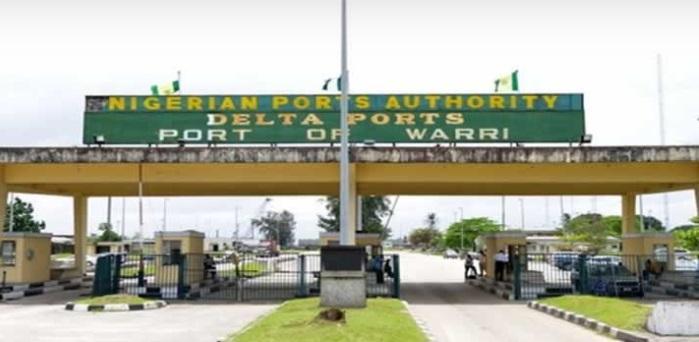
Warri Port Revival: Technical Challenges and Infrastructure Requirements for Alternative Maritime Gateway
By Oghenewoke Onoriode | WaterwaysNews.ng | March 6, 2026
As congestion at Lagos ports continues to impose significant costs on Nigeria’s trade infrastructure, a comprehensive analysis of Warri Port’s potential has revealed that its rehabilitation could provide an alternative maritime gateway for the country’s South-South and North-Central regions.
The underutilized facility in Delta State, which currently handles a fraction of its designed capacity, faces a combination of technical and operational challenges that experts say are solvable with coordinated interventions
Technical Challenges Documented
According to maritime infrastructure assessments, Warri Port operates under several constraints that limit its competitiveness. The port’s draft restrictions, currently at 6-7 meters during low tide, prevent larger commercial vessels from accessing the facility. Modern container ships typically require 12-14 meters of draft for safe navigation.
Siltation in the Escravos channel and approach routes has progressively reduced navigable depths, while deteriorated breakwater infrastructure has accelerated sediment accumulation in the port basin. Industry observers note that these conditions create operational difficulties for vessels attempting to access the facility.
The port’s cargo handling equipment, installed decades ago, operates below the efficiency standards that have become industry benchmarks at modernized facilities. Terminal operators report that aging cranes and handling systems affect vessel turnaround times, a critical factor in shipping line route planning decisions.
Infrastructure Investment Requirements
Engineering estimates for addressing these technical constraints suggest capital dredging of the Escravos Bar, approach channels, and port basin would require substantial investment, with ongoing maintenance dredging necessary to sustain navigable depths.
Breakwater rehabilitation, which engineers say would protect dredging investments and reduce long-term siltation rates, would require extended construction periods to restore structural integrity.
Maritime infrastructure specialists indicate that achieving a minimum draft of 9-10 meters would open the port to Panamax-class vessels and modern feeder ships operating West African routes.
Policy Options Under Discussion
Industry stakeholders have identified several policy mechanisms that could enhance Warri Port’s competitiveness during a rehabilitation phase.
Graduated tariff incentives have been discussed as a potential tool to attract initial traffic while infrastructure improvements proceed. Similar approaches have been implemented at other Nigerian ports during development phases, though specific waiver structures would require Nigerian Ports Authority board approval and federal government policy alignment.
Terminal concession models, comparable to those implemented at Lagos facilities, represent another option for equipment modernization. Private sector participation in port operations has historically transferred capital investment requirements from government budgets while introducing operational efficiency improvements.
Cargo Generation Potential
Geographic analysis indicates Warri Port’s proximity to several cargo-generating regions currently reliant on Lagos facilities. Manufacturing centers in Edo State, agricultural production zones in Delta and Edo States, and industrial activity in the Mid-Western region represent potential traffic sources.
The port’s location also positions it for petroleum products distribution, potentially reducing the concentration of such cargo at Lagos terminals. Regional shipping services connecting West African ports present additional traffic opportunities.
Trade data shows that businesses in states including Delta, Edo, Kogi, and Benue currently route imports and exports through Lagos, incurring additional inland transportation costs that alternative port access could reduce.
Hinterland Connectivity Requirements
Transportation infrastructure connecting Warri Port to its potential hinterland represents a critical component of competitiveness assessments. The Warri-Benin-Ore Road corridor provides an alternative to Lagos-bound routes, though current road conditions affect transit efficiency.
Rail connectivity through the Itakpe-Warri railway, with potential extensions to Benin City and connections to planned coastal rail infrastructure, has been identified in transportation planning documents as infrastructure that would enhance port accessibility.
Inland Container Depot development in cities including Benin and Asaba would provide cargo consolidation points that reduce port dwell times and improve logistics efficiency.
Institutional Coordination Challenges
Implementation of comprehensive port rehabilitation requires coordination among multiple government levels and agencies. The Nigerian Ports Authority, Federal Ministry of Transportation, Delta State Government, and private sector terminal operators each control different aspects of port development and operations.
Historical port development projects have faced challenges related to budget allocation consistency, policy continuity across political administrations, and alignment between federal infrastructure priorities and state-level complementary investments.
Stakeholder engagement mechanisms that include shipping lines, freight forwarders, manufacturing associations, and chambers of commerce in cargo-generating regions have been identified as components of successful port development initiatives in other locations.
Regional Context
Nigeria’s port infrastructure currently concentrates the majority of maritime traffic at Lagos facilities, despite the existence of functional ports in Calabar, Port Harcourt, and Onne. This concentration has generated recurring congestion issues that affect trade facilitation efficiency.
The Lekki Deep Sea Port, which became operational in recent years, provides additional Lagos-area capacity but does not directly serve cargo generators in Nigeria’s Mid-Western and North-Central regions.
Regional ports in West Africa have competed for transshipment traffic and hinterland cargo by investing in infrastructure improvements and implementing competitive tariff structures. Ghana’s Tema Port and Togo’s Port of Lomé have attracted cargo that might otherwise route through Nigerian facilities.
Free Trade Zone Integration
The Warri Export Processing Zone, located adjacent to port facilities, represents potential for integrated industrial and maritime logistics development. Free trade zones at other Nigerian ports have generated guaranteed port traffic through manufacturing and processing activities that require import and export services.
Operational activation of the Warri zone, with appropriate customs facilitation and business incentive structures, could provide an anchor tenant base for port services while generating industrial employment in Delta State.
Infrastructure Financing Models
Port infrastructure development in Nigeria has utilized various financing approaches, including direct government budgetary allocations, public-private partnerships, concessional development finance from multilateral institutions, and private sector terminal concessions with investment requirements.
Maritime infrastructure projects in other countries have demonstrated that coordinated public investment in channels, breakwaters, and approach infrastructure can catalyze private sector investment in terminal equipment and operations when combined with credible policy commitments.
Comparative Investment Analysis
Recent port development initiatives in Nigeria have involved substantial capital commitments for new facilities. Rehabilitation of existing infrastructure at underutilized ports represents an alternative investment approach with different risk-return profiles.
Port economics analysis typically evaluates marginal returns on infrastructure investment, comparing the costs of expanding existing facilities versus developing new capacity. Warri Port’s existing infrastructure base, despite requiring rehabilitation, reduces total capital requirements compared to greenfield port development.
Next Steps and Policy Processes
Port development initiatives typically require coordination through Nigeria’s budget planning processes, Nigerian Ports Authority strategic planning, and state government infrastructure prioritization.
Federal transportation policy documents, including the National Transport Master Plan, provide frameworks for multi-modal infrastructure investment decisions. Port-specific development plans require Nigerian Ports Authority board consideration and Federal Executive Council approval for major capital expenditures.
Environmental impact assessments, marine engineering studies, and economic feasibility analyses represent standard preliminary requirements for major port rehabilitation projects. International development finance institutions typically require such documentation for project financing consideration.
About This Analysis
This report synthesizes information from maritime infrastructure assessments, port engineering studies, and transportation planning documents. Technical specifications reflect maritime engineering industry standards and comparable port rehabilitation projects in West Africa.
Stakeholder perspectives incorporated in this analysis include views from shipping industry associations, port economics specialists, logistics service providers, and regional business organizations. Government policy options described represent approaches implemented at other ports and do not constitute confirmation of specific planned initiatives.
WaterwaysNews.ng provides coverage of maritime infrastructure, shipping, and water transport operations across Nigeria’s waterways. For questions regarding this report, contact our editorial desk.
EDITOR’S NOTE: This analysis is based on publicly available information, industry assessments, and expert consultations. Specific policy decisions regarding Warri Port development remain with relevant government authorities and the Nigerian Ports Authority. Readers are encouraged to consult official sources for current project status and policy positions.
CONTACT: WaterwaysNews.ng welcomes responses from the Nigerian Ports Authority, Federal Ministry of Marine and Blue Economy, Delta State Government, and other stakeholders regarding port infrastructure development initiatives. Comments can be submitted to editorial@waterwaysnews.ng
Blue Economy
NSW LAUNCH ON MARCH 27: GBAJABIAMILA SAYS SINGLE WINDOW WILL REVOLUTIONIZE NIGERIA’S PORTS AND TRADE OPERATIONS AS TOP OFFICIALS PLEDGE FULL SUPPORT
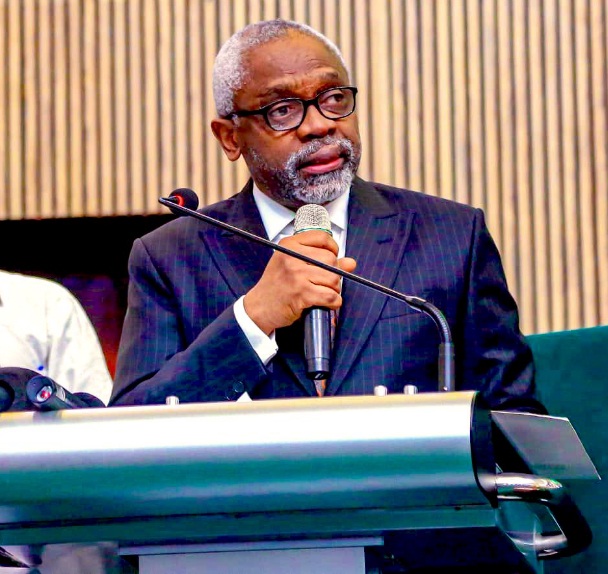
NSW LAUNCH ON MARCH 27: GBAJABIAMILA SAYS SINGLE WINDOW WILL REVOLUTIONIZE NIGERIA’S PORTS AND TRADE OPERATIONS AS TOP OFFICIALS PLEDGE FULL SUPPORT
By Okeoghene Onoriobe | Waterways News Correspondent | Lagos
Nigeria is set to go live with its long-awaited National Single Window (NSW) platform on March 27, in a move that promises to fundamentally reshape how cargo is processed at the country’s seaports, airports, and border points.
Chief of Staff to the President, Femi Gbajabiamila, who made the announcement at a high-level stakeholders’ meeting at the State House, Abuja, described the initiative as a “monumental” fiscal reform that will streamline trade procedures, close efficiency gaps, and sharpen Nigeria’s competitive edge in maritime commerce.
The meeting, attended by ministers, agency heads, and key government officials, was convened to review progress made so far and secure firm commitments from all agencies ahead of the go-live date.
“We are about to launch yet another reform, fiscal reform by this administration, which in its nature will be very transformational,” Gbajabiamila said, adding that the NSW replaces the current fragmented system of multiple single windows with one unified national platform.
“We are about to launch yet another reform, fiscal reform by this administration, which in its nature will be very transformational” Gbajabiamila
For Nigeria’s ports and maritime sector, the implications are significant. The Nigerian Ports Authority (NPA) and the Nigerian Maritime Administration and Safety Agency (NIMASA) — both central to cargo clearance operations — were among the agencies represented at the meeting and are key participants in the first phase of the rollout.
NSW Coordinator, Mr Tola Fakolade, told the gathering that the platform’s first phase will enable online processing of import permits, electronic submission of cargo manifests, and the deployment of a centralised risk management system. Critically for port operators and shipping agents, cargo manifests will be submitted electronically and automatically transmitted to all relevant agencies — eliminating the current burden of manual, duplicated documentation.
“Documents will be submitted once and shared with all relevant agencies without duplication,” Fakolade said, noting that nationwide user training is underway and pilot testing is imminent to ensure a seamless rollout.
He urged agencies to intensify their support in the remaining 23 days before launch, describing this final stretch as the most critical phase of implementation.
Coordinating Minister of the Economy and Finance Minister, Wale Edun, reaffirmed government backing, calling the NSW “a growth-enhancing and growth-enabling project.” Minister of Industry, Trade and Investment, Jumoke Oduwole, described it as a long-overdue pillar of the Renewed Hope Agenda and pledged to spend the next three weeks sensitizing traders, importers, and exporters on the new system.
Central Bank Governor Olayemi Cardoso pledged the bank’s full support, stressing the urgency of closing Nigeria’s trade facilitation gap with peer economies. Nigeria Revenue Service Chairman Zacch Adedeji called for stronger political will and coordination, while Comptroller-General of Customs, Bashir Adeniyi, described the NSW as a historic milestone and committed to direct stakeholder engagement to guarantee its success.
At the close of the meeting, Minister Oduwole was formally mandated to lead the 23-day implementation phase through to the March 27 launch.
Beyond NPA and NIMASA, other agencies represented at the meeting included the Standards Organisation of Nigeria (SON), the National Agency for Food and Drug Administration and Control (NAFDAC), the Federal Airports Authority of Nigeria (FAAN), the Nigeria Agricultural Quarantine Service (NQS), and the National Environmental Standards and Regulations Enforcement Agency (NESREA).
The NSW, first initiated by President Bola Ahmed Tinubu nearly two years ago, is widely regarded in the maritime and trade community as one of the most consequential digital reforms to hit Nigeria’s ports in decades.