
Top Stories
Remain an elder statesman Datti tells Atiku

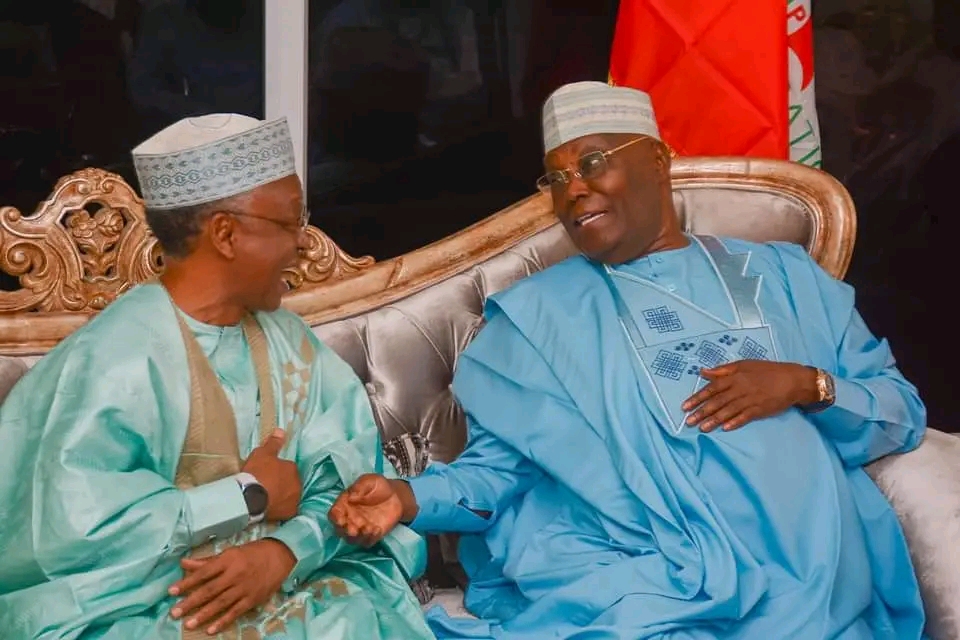

In a significant political development within Nigeria’s political landscape, Garba Datti Muhammad, the National Vice Chairman (North West) of the ruling All Progressives Congress (APC), has issued thoughtful advice to two prominent political figures—former Vice President Atiku Abubakar and former Kaduna Governor Nasir Ahmed El-Rufai—regarding their political futures as the nation looks toward the 2027 general elections.
Muhammad, who previously served in the House of Representatives, directed particularly pointed counsel to Atiku Abubakar, suggesting that the former Vice President should reconsider his apparent presidential ambitions. “As we approach the next general elections, you are at it again,” Muhammad noted, referencing what he perceives as Atiku’s strategic maneuvering within and potentially beyond his current party, the People’s Democratic Party (PDP).
The APC leader’s concern stems from indicators that Atiku may be contemplating coalition-building with “aggrieved politicians” to mount a challenge against incumbent President Bola Ahmed Tinubu in the upcoming 2027 elections. Muhammad frames his advice to Atiku in terms of both personal and national interest, noting that by the next presidential election, Atiku would have reached 80 years of age—suggesting that maintaining his current role as an elder statesman might better serve both him and the nation.
To reinforce this perspective, Muhammad invoked the example of former Vice President Muhammad Namadi Sambo, who has maintained a dignified elder statesman position since completing his term in 2015, implying this represents a more appropriate post-service role.

Muhammad’s counsel extends beyond age considerations to question what new policy approaches Atiku might offer, particularly noting that Atiku himself has historically advocated for subsidy removal policies similar to those currently being implemented. The APC official pointedly referenced Atiku’s leadership role in privatization initiatives during the Obasanjo administration, when he chaired the privatization committee while El-Rufai served as Director General of the Bureau for Public Privatization.
In addressing former Governor El-Rufai, Muhammad expressed profound disappointment regarding his departure from the APC, particularly given El-Rufai’s foundational role in establishing the party and his eight-year governance under its banner. Muhammad highlighted an apparent contradiction between El-Rufai’s current actions and his previous statement in 2022 that leaving the APC would mean quitting politics altogether—suggesting El-Rufai should either reconcile with the party or honor his earlier commitment to exit politics completely.
The APC leader further questioned El-Rufai’s transition to critic of the current administration, noting that El-Rufai himself had previously declared disinterest in positions within President Tinubu’s government. “Why should you turn to a critic overnight just because you perceived things were not going your way when you had unfettered access to the leadership of the party and the President?” Muhammad asked.
On broader strategic political considerations, Muhammad cautioned against what he termed potential “political miscalculations,” particularly speculating about party defections. He specifically addressed rumors about PDP governors potentially joining the Social Democratic Party (SDP), arguing that established political structures would likely prevent such movements: “No PDP governor will join the SDP because their party already has a structure on the ground. Who will leave certainty for uncertainty?”
Muhammad also emphasized the importance of regional rotation principles in Nigerian politics, suggesting that as someone who supported shifting the presidency to the South in 2023, El-Rufai should now support allowing the South to complete a full eight-year tenure before advocating for returning the presidency to the North.
The APC official concluded his address by highlighting what he characterized as significant achievements under President Tinubu’s administration, particularly noting unprecedented representation of the North West in national leadership positions. He detailed the region’s current prominence, including holding both the Speaker of the House of Representatives position (from Kaduna State) and the Deputy President of the Senate position (from Kano State)—marking the first time in Nigerian history that two presiding officers of the National Assembly have come from the same geopolitical zone.
Muhammad further cataloged numerous ministerial appointments from the North West region, including leadership of critical ministries such as Defense, Budget and National Planning, and Environment, along with key military appointments like the Chief of Defense Staff and Chief of Air Staff.
In his regional assessment, Muhammad highlighted specific developments in Kaduna State, including the establishment of seven higher education institutions and approval of a metro rail line valued at approximately 250 billion Naira, which he suggested would significantly improve transportation challenges for Kaduna residents.
His statement concluded with a positive assessment of the Tinubu administration’s economic policies, noting strengthening of the Naira currency, decreasing food prices, and what he characterized as a gradually improving economic outlook following subsidy removal policies.

Blue Economy
NSW LAUNCH ON MARCH 27: GBAJABIAMILA SAYS SINGLE WINDOW WILL REVOLUTIONIZE NIGERIA’S PORTS AND TRADE OPERATIONS AS TOP OFFICIALS PLEDGE FULL SUPPORT

NSW LAUNCH ON MARCH 27: GBAJABIAMILA SAYS SINGLE WINDOW WILL REVOLUTIONIZE NIGERIA’S PORTS AND TRADE OPERATIONS AS TOP OFFICIALS PLEDGE FULL SUPPORT
By Okeoghene Onoriobe | Waterways News Correspondent | Lagos
Nigeria is set to go live with its long-awaited National Single Window (NSW) platform on March 27, in a move that promises to fundamentally reshape how cargo is processed at the country’s seaports, airports, and border points.
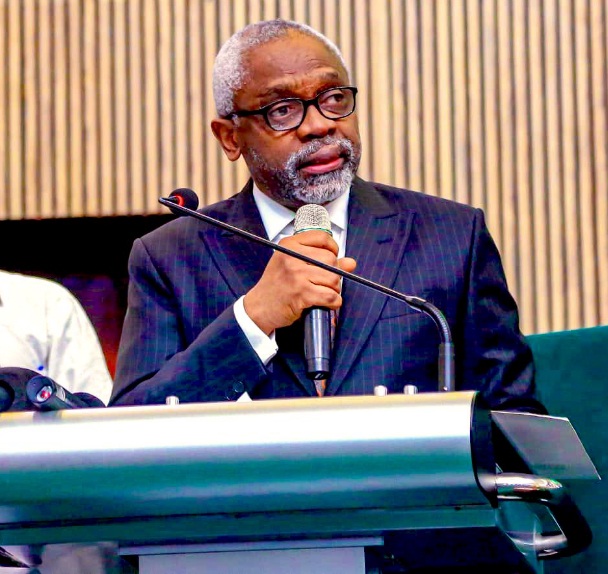
Chief of Staff to the President, Femi Gbajabiamila, who made the announcement at a high-level stakeholders’ meeting at the State House, Abuja, described the initiative as a “monumental” fiscal reform that will streamline trade procedures, close efficiency gaps, and sharpen Nigeria’s competitive edge in maritime commerce.
The meeting, attended by ministers, agency heads, and key government officials, was convened to review progress made so far and secure firm commitments from all agencies ahead of the go-live date.
“We are about to launch yet another reform, fiscal reform by this administration, which in its nature will be very transformational,” Gbajabiamila said, adding that the NSW replaces the current fragmented system of multiple single windows with one unified national platform.
“We are about to launch yet another reform, fiscal reform by this administration, which in its nature will be very transformational” Gbajabiamila
For Nigeria’s ports and maritime sector, the implications are significant. The Nigerian Ports Authority (NPA) and the Nigerian Maritime Administration and Safety Agency (NIMASA) — both central to cargo clearance operations — were among the agencies represented at the meeting and are key participants in the first phase of the rollout.
NSW Coordinator, Mr Tola Fakolade, told the gathering that the platform’s first phase will enable online processing of import permits, electronic submission of cargo manifests, and the deployment of a centralised risk management system. Critically for port operators and shipping agents, cargo manifests will be submitted electronically and automatically transmitted to all relevant agencies — eliminating the current burden of manual, duplicated documentation.
“Documents will be submitted once and shared with all relevant agencies without duplication,” Fakolade said, noting that nationwide user training is underway and pilot testing is imminent to ensure a seamless rollout.
He urged agencies to intensify their support in the remaining 23 days before launch, describing this final stretch as the most critical phase of implementation.
Coordinating Minister of the Economy and Finance Minister, Wale Edun, reaffirmed government backing, calling the NSW “a growth-enhancing and growth-enabling project.” Minister of Industry, Trade and Investment, Jumoke Oduwole, described it as a long-overdue pillar of the Renewed Hope Agenda and pledged to spend the next three weeks sensitizing traders, importers, and exporters on the new system.
Central Bank Governor Olayemi Cardoso pledged the bank’s full support, stressing the urgency of closing Nigeria’s trade facilitation gap with peer economies. Nigeria Revenue Service Chairman Zacch Adedeji called for stronger political will and coordination, while Comptroller-General of Customs, Bashir Adeniyi, described the NSW as a historic milestone and committed to direct stakeholder engagement to guarantee its success.
At the close of the meeting, Minister Oduwole was formally mandated to lead the 23-day implementation phase through to the March 27 launch.
Beyond NPA and NIMASA, other agencies represented at the meeting included the Standards Organisation of Nigeria (SON), the National Agency for Food and Drug Administration and Control (NAFDAC), the Federal Airports Authority of Nigeria (FAAN), the Nigeria Agricultural Quarantine Service (NQS), and the National Environmental Standards and Regulations Enforcement Agency (NESREA).
The NSW, first initiated by President Bola Ahmed Tinubu nearly two years ago, is widely regarded in the maritime and trade community as one of the most consequential digital reforms to hit Nigeria’s ports in decades.
Blue Economy
CAUGHT IN THE CROSSFIRE: How the US-Israel War on Iran Is Shaking Nigeria’s Shipping Sector
CAUGHT IN THE CROSSFIRE: How the US-Israel War on Iran Is Shaking Nigeria’s Shipping Sector
Joint US-Israeli strikes launched on February 28 under Operation Epic Fury — condemned internationally as attacks launched while nuclear negotiations were ongoing — have shuttered the Strait of Hormuz, rerouted the world’s shipping fleets around Africa, and set freight costs on course for a sharp climb. Nigerian importers, exporters, and port operators are now assessing what comes next.
By the Maritime Affairs Desk, waterwaysnews.ng
Lagos | March 3, 2026
The world did not see it coming — or at least, the world had reason to believe it would not. The United States and Israel launched coordinated air strikes on Iran on February 28, 2026, targeting military facilities, nuclear sites and national leadership in what Washington designated Operation Epic Fury. The strikes came, Al Jazeera reported, even as US-Iran nuclear negotiations were ongoing through Omani mediators in Geneva — a fact that drew immediate, sharp condemnation from governments across the globe and left the United Nations Secretary-General António Guterres calling for an immediate cessation of hostilities. For Nigeria’s maritime sector, the diplomatic and legal controversies of how the war began matter less, right now, than its hard economic consequences — consequences that are already materialising at the docks of Apapa, Tin Can Island, and Onne.
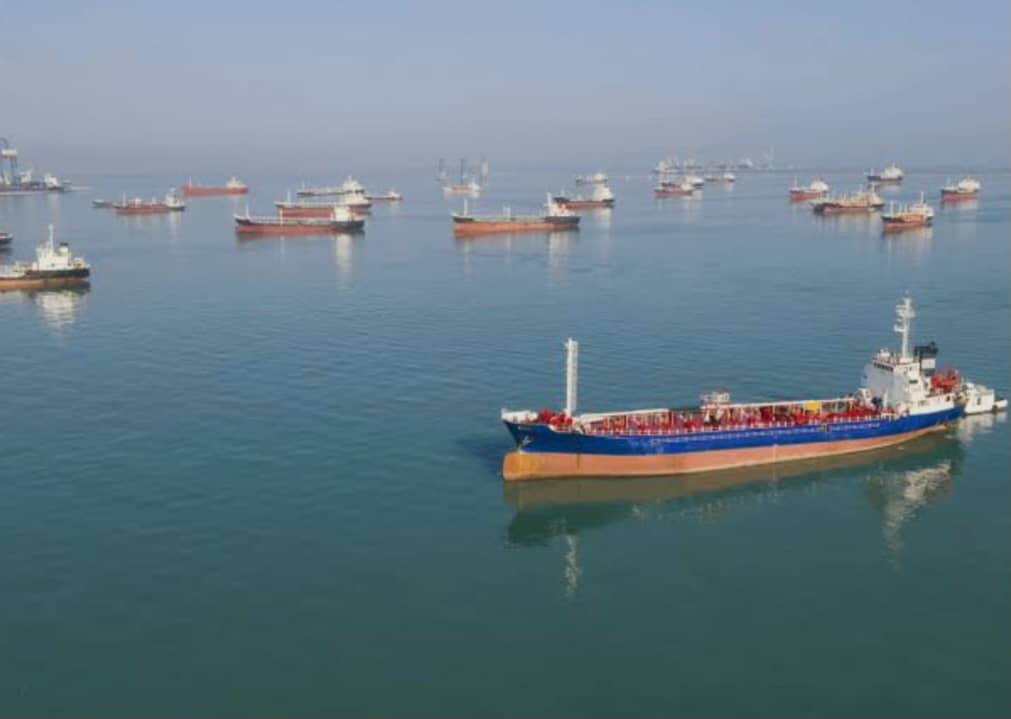
The war is now in its third day. Iran’s Islamic Revolutionary Guard Corps (IRGC) has declared the Strait of Hormuz closed, transmitting warnings via VHF radio to vessels in the waterway that no ship is permitted to pass. Though no formal blockade has been declared, the impact has been equivalent to one. Ship-tracking data shows tanker traffic has dropped by approximately 70 percent, with over 150 ships anchored outside the strait. At least five tankers have been damaged. Two crew members have been killed. The world’s largest shipping companies — Maersk, MSC, Hapag-Lloyd, and CMA CGM — have all suspended operations through the waterway and pivoted their fleets toward a longer, costlier alternative: the Cape of Good Hope, around the southern tip of Africa.
That rerouting is not merely a logistical inconvenience. It is a structural shock to global trade — and Nigeria sits squarely in its path.
THE STRIKES THAT STARTED A WAR
Al Jazeera’s reporting on the origins of the conflict is unambiguous in its framing: the US and Israel launched their offensive while nuclear talks were still under way. Omani mediators had announced progress in Geneva negotiations, where Iran had reportedly agreed to zero uranium stockpiling and full verification by the International Atomic Energy Agency (IAEA). Washington’s decision to strike regardless drew Oman’s public dismay, with its foreign minister urging Washington ‘not to get sucked in’ further and calling on the UN Security Council to convene an emergency meeting. The EU urged ‘maximum restraint,’ and the UN’s Guterres stated plainly that the US and Israeli use of force — and Iran’s subsequent retaliatory strikes — ‘undermine international peace and security.’
Iran’s retaliation has been extensive. Since February 28, Tehran has launched waves of missiles and drones at Israeli territory and at US military assets in Bahrain, Kuwait, Qatar, Saudi Arabia, the UAE, and Iraq. The IRGC has attacked 27 bases where US troops are deployed. Iran’s Supreme Leader Ali Khamenei and the head of the IRGC were confirmed killed in the opening strikes. Four US service members have been killed in action. Explosions have been reported in Dubai, Cyprus, and across the wider Gulf region. Qatar — host to the Al Udeid Air Base and one of the world’s largest LNG exporters — has suspended all air navigation and grounded all Qatar Airways flights indefinitely.
FREIGHT COSTS: THE IMMEDIATE BLOW TO NIGERIA
Nigerian shippers are already bracing for significant pain. Aminu Umar, president of the Nigerian Chamber of Shipping, was among the first in the sector to sound the alarm in the hours after the strikes began.
“We are going to see longer days of cargo arrivals, and a very high freight rate coming up from tomorrow. If oil price jumps, which is most likely, there is no way freight will not go up, because bunker prices will also rise.”
— Aminu Umar, President, Nigerian Chamber of Shipping (BusinessDay)
His warning is being confirmed in real time. According to BusinessDay, container rates for cargo into Nigeria are set at $4,600 for a 20-foot dry van container and $5,600 for a 40-foot container from March 10 through at least March 21. These are not the final figures: the Sea Empowerment and Research Center (SEREC), a Nigerian maritime research organisation, has warned that global freight rates could surge by as much as 40 percent. Even more alarming, SEREC has cautioned that marine war-risk insurance could spike by as much as 400 percent in high-risk corridors.
Hapag-Lloyd has already introduced a War Risk Surcharge (WRS) of $1,500 per 20-foot equivalent unit (TEU) on all cargo to and from the Arabian Gulf. CMA CGM has slapped an Emergency Conflict Surcharge of up to $3,000 on 40-foot containers. Hapag-Lloyd has gone further, suspending all bookings from African countries — including Nigeria — to the Upper Gulf region, covering the UAE, Iraq, Kuwait, Qatar, and parts of Saudi Arabia. MSC has suspended all worldwide cargo bookings headed to the Middle East entirely.
For Nigerian exporters — who rely on Gulf ports, particularly Jebel Ali in Dubai, as transshipment hubs to reach Asian markets — the suspension of these bookings is a direct blockage of trade routes, not simply a cost increase. The Upper Gulf region is a vital destination for Nigerian crude oil, LNG, sesame seeds, gold, and various agricultural commodities. With those routes shut, shippers face the choice of either finding alternative transshipment points or absorbing indefinite delays.
“They always take advantage. They charge more. If they charge more, nobody, no shipper has any other alternative but to pay. Naturally, that affects our competitiveness.”
— Nigerian shipper, quoted by BusinessDay
THE SUEZ ROUTE AND THE CAPE DETOUR
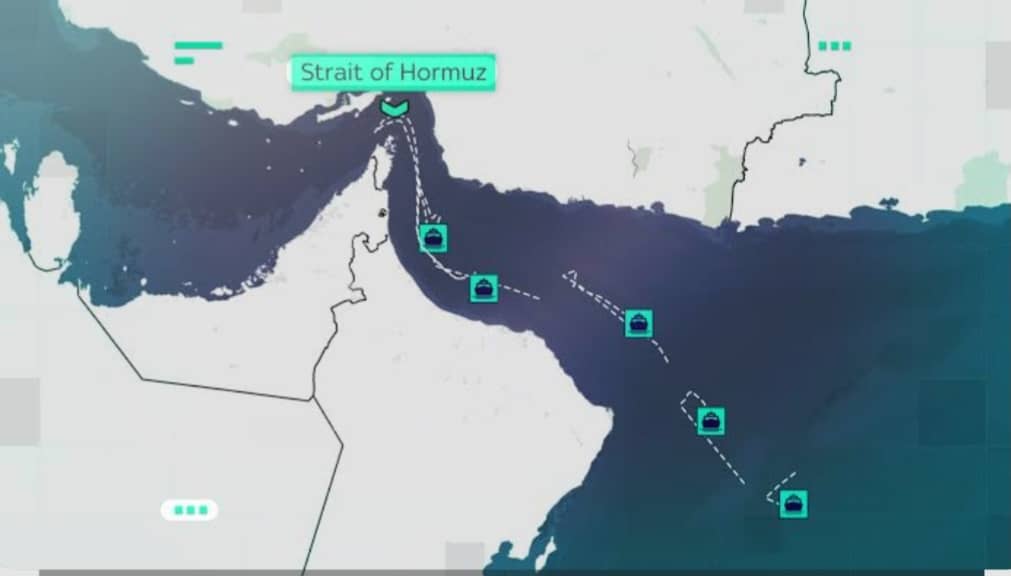
The core logistical problem for Nigerian shippers is the collapse of the Suez Canal-Red Sea route. This corridor — the fastest sea link between West Africa and Asia — typically takes 30 to 35 days. The alternative, rerouting around Africa’s Cape of Good Hope, adds roughly two additional weeks to transit time, while burning millions of dollars in additional fuel per vessel.
Nigeria was doubly exposed because the conflict arrived just as the industry had appeared to stabilise. Just days before the US-Israeli strikes, CMA CGM had announced plans to resume full Suez Canal operations in the second quarter of 2026 — itself a recovery from the 2023–2025 Red Sea disruptions caused by Iran-backed Houthi attacks on shipping. The outbreak of this new, larger conflict immediately reversed that plan. Xeneta chief analyst Peter Sand said the war has ‘shattered hopes of a large-scale return of container shipping to the Red Sea in 2026,’ with any plans for a phased return now shelved.
The absorption effect of Cape rerouting further compounds the problem. Xeneta estimates that the longer voyage distances required by the Cape of Good Hope route will absorb approximately 2.5 million TEU of global shipping capacity — as each vessel completes fewer annual round trips over longer distances. This structural capacity squeeze means elevated freight rates are likely to persist well beyond any eventual ceasefire or diplomatic de-escalation.
THE LNG DISRUPTION AND NIGERIA’S EXPORT OPPORTUNITY
Qatar, the world’s largest LNG producer, has been forced to pause LNG production at its Ras Laffan and Mesaieed industrial facilities following Iranian missile strikes. Qatar’s civil aviation authority has suspended all air navigation, Qatar Airways has grounded flights, and public Ramadan gatherings have been suspended. Rachel Ziemba, a senior adjunct fellow at the Center for a New American Security, told Al Jazeera: ‘There has definitely been an escalation overnight, with pressure on energy infrastructure in the Gulf and Qatar pre-emptively pausing LNG production.’
For Nigeria LNG Limited (NLNG), operating from Bonny Island in Rivers State, this disruption to the world’s largest LNG supplier creates a potential market opening. With Qatari volumes offline and Atlantic basin buyers — particularly European utilities — scrambling for alternative cargoes, Nigerian LNG may command premium spot prices in the coming weeks. The Strait of Hormuz, through which one-fifth of the world’s LNG supply ordinarily flows, is now effectively closed to commercial shipping. That volume has to come from somewhere else.
Nigeria’s position as an oil producer also brings a mixed set of consequences. Brent crude has risen by 10 to 13 percent since the outbreak of the conflict, with analysts at Barclays and Goldman Sachs forecasting potential rises toward $100 per barrel or beyond if the disruption persists. Higher crude prices would increase revenue for NNPCL and independent oil producers — but the same price spike that boosts upstream revenues will also feed through into higher costs for refined petroleum products, which Nigeria continues to import.
THE INTERNATIONAL LAW DIMENSION
Al Jazeera’s coverage has consistently framed this conflict not merely as a geopolitical crisis, but as a question of international legality. The US and Israel struck Iran while nuclear negotiations were at an advanced stage — a context that leading international legal scholars have described as a fundamental challenge to the UN Charter’s prohibition on the use of force except in self-defence or with Security Council authorisation. Lebanon’s Hezbollah described the attacks as a ‘blatant violation of international law and the United Nations Charter.’ The International Committee of the Red Cross president, Mirjana Spoljaric, warned of ‘a dangerous chain reaction of military escalation with potentially devastating consequences for civilians.’
These are not merely abstract ethical concerns for Nigeria’s maritime community. The legal status of the conflict shapes the political durability of any ceasefire, the willingness of Gulf states to host diplomatic talks, and the credibility of any eventual reconstruction of Gulf shipping corridors. A war initiated in breach of international law — and one in which a mediating state, Oman, publicly expressed dismay — is a war whose political resolution faces higher diplomatic obstacles.
WHAT PORT OPERATORS AND SHIPPERS MUST DO NOW
The Nigerian Ports Authority (NPA) and the Nigeria Shippers Council (NSC) face immediate operational questions. With Jebel Ali Port in the UAE — one of the world’s busiest transshipment hubs — having experienced a temporary suspension and remaining under uncertainty, cargo originally destined for onward movement through the Gulf will need to find alternative routing. Port operators at Apapa and Tin Can Island should assess their capacity to handle increased vessel calls should Cape of Good Hope rerouting bring more Atlantic traffic past Nigeria’s coastline.
For shippers, logistics firm Flexport has advised businesses to ‘prepare for longer lead times, tight capacity, elevated rates, and continued volatility across both ocean and air networks.’ DSV, the freight forwarder, has recommended that customers share updated shipment forecasts immediately, confirm bookings early to secure space, factor congestion into safety stock assessments, and consider alternatives where feasible. Businesses relying on air freight through Gulf hubs will find that option equally disrupted: FedEx has suspended flights to and from Bahrain, Iran, Iraq, Israel, Jordan, Kuwait, Lebanon, Oman, Qatar, the UAE and Saudi Arabia.
| KEY IMPACTS ON NIGERIAN SHIPPING — AT A GLANCE | |
| Freight rates | Container rates to/from Nigeria rising; 20ft containers at $4,600, 40ft at $5,600 from March 10. Industry warns of up to 40% surge. |
| War-risk insurance | SEREC warns premiums in high-risk corridors could spike by 400%. Hapag-Lloyd WRS: $1,500 per TEU. |
| Booking suspensions | Hapag-Lloyd has suspended all Nigeria-to-Gulf bookings. MSC has halted global bookings to the Middle East. |
| Transit time | Cape of Good Hope rerouting adds ~2 weeks to Asia-Nigeria journeys vs the Suez Canal route. |
| Capacity squeeze | Xeneta: Cape rerouting absorbs ~2.5 million TEU of global shipping capacity. |
| LNG exports | Qatari LNG production halted; NLNG may see improved spot pricing opportunities. |
| Oil revenue | Brent crude up 10–13%; potential upside for NNPCL if prices sustain toward $100/bbl. |
| Air freight | Gulf hubs disrupted; FedEx has suspended flights across the Middle East region. |
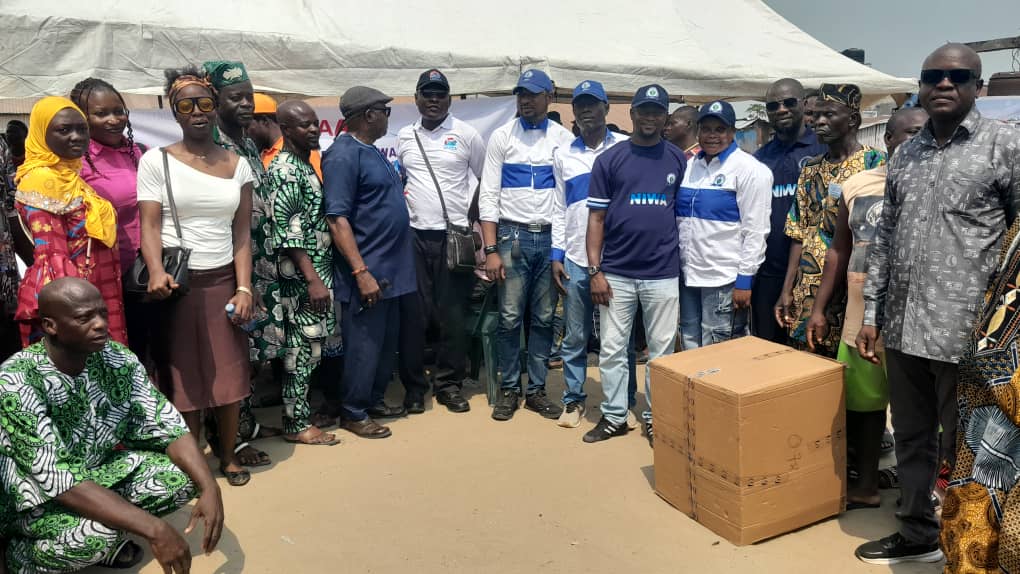
SWAAADO Launches 2026 Waterways Safety Sensitization Campaign in Lagos Waterfront Communities
Onisiwo Island, Lagos State
– The Sustainable Waterways Awareness Advancement and Advocacy Organization (SWAAADO), supported by key industry stakeholders, today conducted a comprehensive waterways safety sensitization campaign at Bishop-Kodji and Whala-Kodji communities on Onisiwo Island, Lagos. The event brought together over 120 community members and representatives from key maritime regulatory agencies.
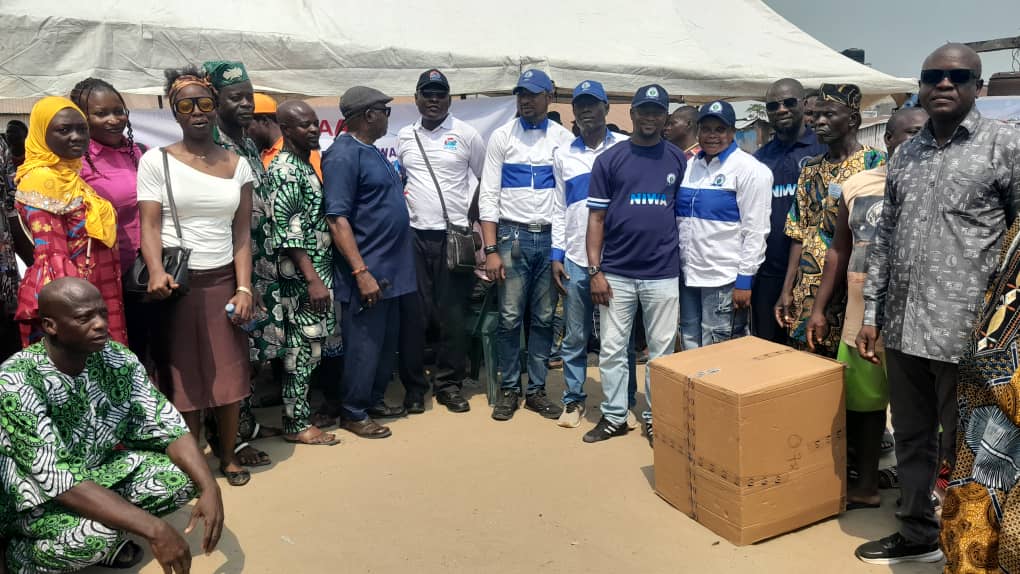
The event, tagged “Waterways Safety Sensitization Campaign for Waterfront Communities and Waterways Users in Lagos State,” drew participation from the Nigerian Inland Waterways Authority (NIWA), Lagos State Waterways Authority (LASWA), SWYRE Marine, and the Maritime Workers Union of Nigeria (MWUN).
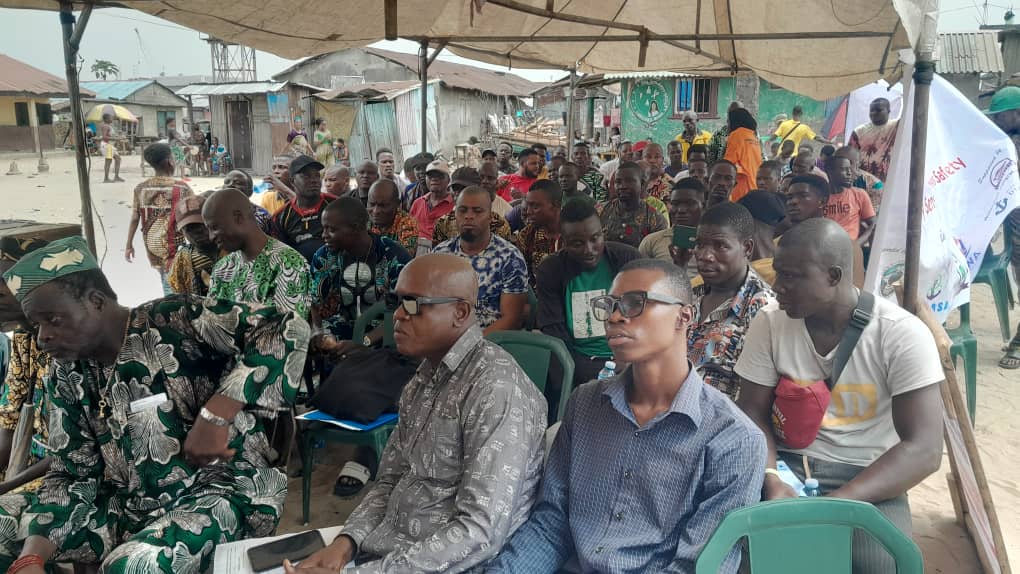
The campaign is supported by key industry leaders committed to advancing waterways safety across Nigeria. Supporting organizations include Simtop Ventures International Limited, Best-Time Global Logistics and Solutions Ltd, SWYRE Marine, Waterways Integrated Synergy Limited, and Nigeria Waterways Directory, demonstrating strong private sector commitment to maritime safety advocacy.
Chief Raymond Gold, Head of Corporate Communication and Strategy at SWAAADO, unveiled the organization’s ambitious plan to train 5,000 boat skippers across Nigeria’s eight coastal states and five inland states. Lagos State will account for 300 trainees, while the other seven coastal states will receive 200 trainees each, with the remaining slots distributed among the five inland states.
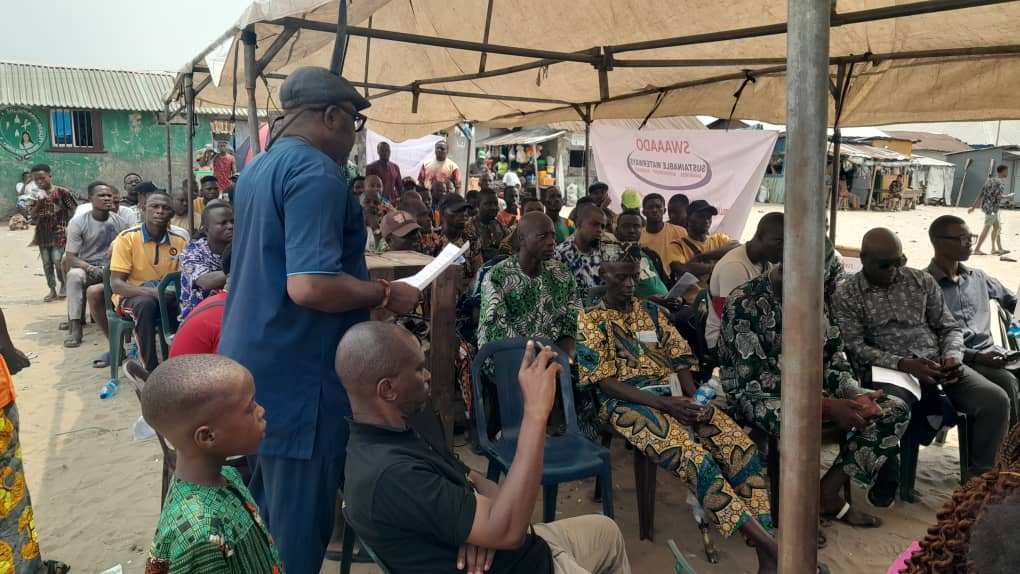
“This initiative was born out of the tragic boat mishaps that happened in the mid northern part of the country, where many lives were lost due to lack of waterways safety awareness,” Chief Gold explained during the event.
SWAAADO’s intervention follows extensive research into the root causes of recurrent boat accidents across Nigerian waterways. The organization has developed a multi-pronged approach that includes community awareness campaigns, professional training for boat operators, and the creation of a regulatory support platform.
Central to this strategy is the Nigeria Waterways Directory (www.nigeriawaterwaysdirectory.com), an online publication that is registered with the National Library (EISSN: 3122-0045). The platform is designed to list trained and certified boat operators while providing regulatory authorities with the capability to blacklist non-compliant operators.
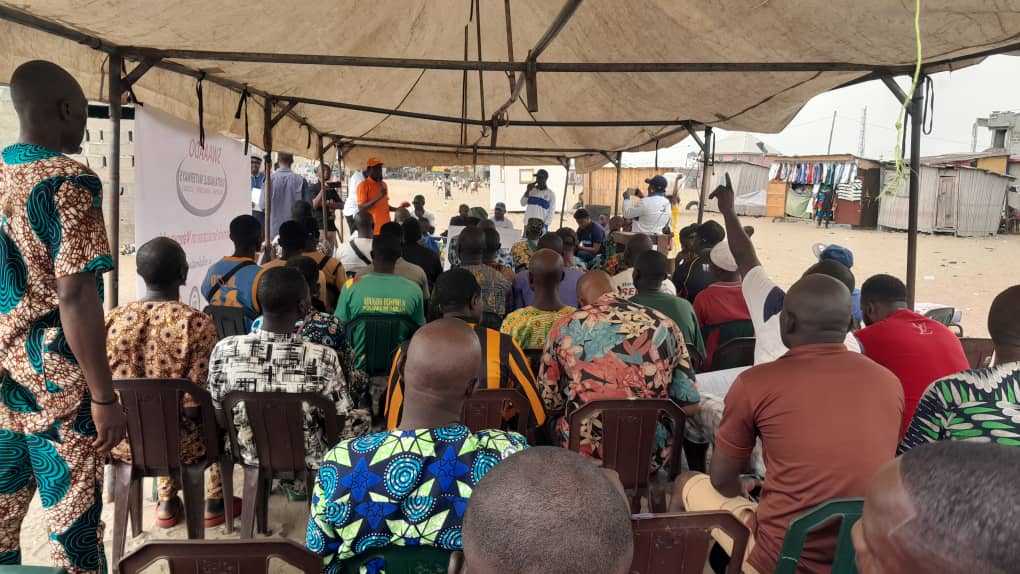
Engr. Sola Fumilugba delivered a lecture on waterways safety codes and enforcement, emphasizing the critical need for boat operators to obtain proper licensing. His presentation highlighted regulatory requirements that many operators currently overlook.
Mr. Shittu Oladimeji, representing LASWA, outlined the Lagos State Government’s ongoing efforts to ensure waterways safety and urged all waterways users to maintain constant safety consciousness.
Mrs. Ada Okpanige Agbo of SWYRE Marine, a NIMASA-accredited training institution (ATI) and key partner of the initiative, stressed on the importance of professional training, certification and licensing for boat skippers, explaining the standards required for proper licensing.
Comrade Owolabi Omotayo, newly elected Chairman of Lagos Commercial Private Boat District of the Maritime Workers Union of Nigeria-MWUN, provided candid advice to boat workers on safety compliance and licensing requirements before operating vessels.
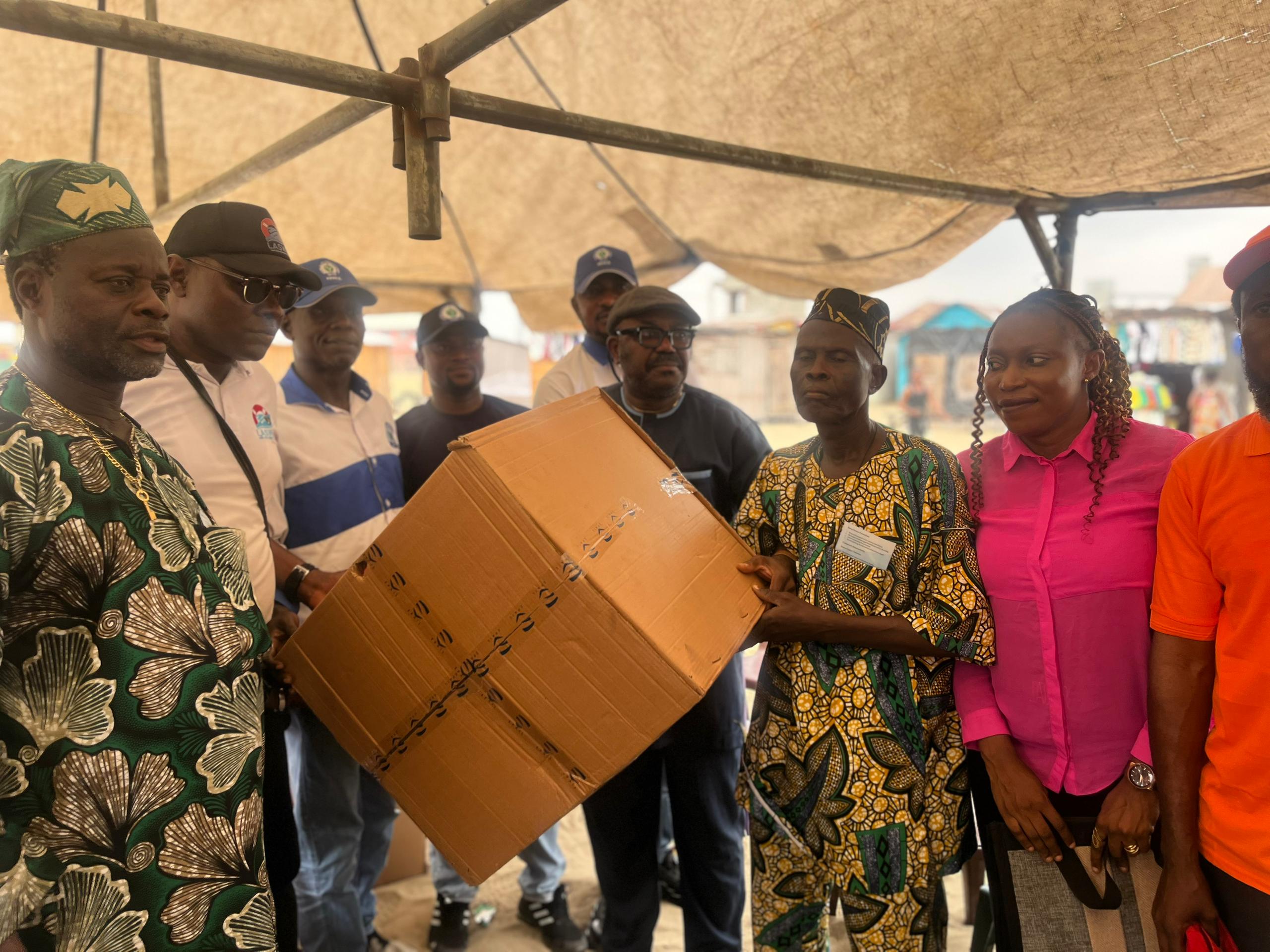
Comrade Osaweren O. Larry, representing the Waterfront Boat Owners and Transporters Association of Nigeria (WABOTAN), reinforced the message of safety code compliance while clarifying the distinct roles of the Maritime Workers Union and various boat owners associations.
The sensitization campaign concluded with concrete results: five waterways safety volunteers were identified for interviews and subsequent training, life jackets were distributed to attendees, and campaign materials were shared among all participants.
The event represents a significant step in SWAAADO’s broader mission to reduce waterways accidents through education, training, and improved regulatory compliance across Nigerian waterways, bolstered by the commitment of its industry partners.
For more information about SWAAADO’s initiatives, visit www.swaaado.org
For information on how to list your business or skill on the Nigeria Waterways Directory visit www.nigeriawaterwaysdirectory.com
Supporting Partners: Simtop International Limited | Best-Time Global Logistics and Solutions Ltd | SWYRE Marine | Waterways Integrated Synergy Limited | Nigeria Waterways Directory
-

 Oil and Gas2 months ago
Tantita’s Pipeline Deal: $144m Contract, Rising Output, and the Questions that Deserve Answers
-
 Blue Economy2 months ago
Nigeria’s Coast Guard Bill: A Solution in Search of a Problem?
-
 MARITIME TRADE & SHIPPING2 months ago
World’s Largest Container Ship Sets New Maritime Record with 22,233 TEUs on Single Voyage