
Tourism
Safeguarding Nigeria’s Wildlife Haven: The Story of Yankari Game Reserve.

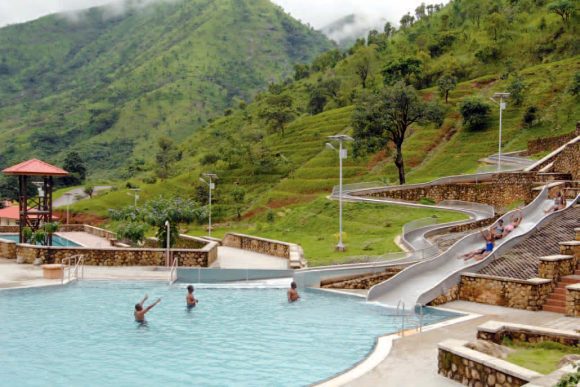
A Natural Treasure in Nigeria’s Heartland

Nestled in the northeastern region of Nigeria, Yankari Game Reserve stands as a testament to West Africa’s remarkable biodiversity. Spanning 2,244 square kilometers in Bauchi State, this protected area represents Nigeria’s most precious wildlife sanctuary—a verdant oasis teeming with life in a region increasingly challenged by habitat fragmentation and human pressure.
Yankari’s significance extends far beyond its boundaries. The reserve shelters between 100-150 elephants, which may seem modest by East African standards, but represents the only viable elephant population remaining in Nigeria and one of the most important in West Africa. These majestic creatures share their home with the critically endangered West African lion—remarkably, Yankari harbors one of only four known surviving populations of this distinct lion subspecies.
The diversity doesn’t end there. African buffalo graze across the savanna landscapes, while hippopotamuses cool themselves in the waterways. Roan antelope and hartebeest represent just a fraction of the antelope species that dart through the grasslands. Together, these animals form a complex ecosystem that has persisted despite mounting pressures.
Yankari’s journey as a protected area began in 1956 when it was established as a game reserve. In recognition of its ecological importance, it was elevated to national park status in 1991 and placed under the management of Nigeria’s National Parks Service. However, in 2006, management responsibility transferred back to Bauchi State Government—a pivotal moment that would later prove challenging for conservation efforts.

Today, Yankari has emerged as one of Nigeria’s premier tourism destinations. Visitors from across the country and beyond come to experience its natural splendor, contributing to its growing popularity and economic significance for the region.
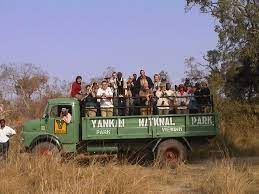
The Shadow of Extinction: Conservation Challenges
The transfer of management to Bauchi State Government in 2006 marked the beginning of a difficult period for Yankari. Insufficient funding and management neglect created vulnerabilities that poachers were quick to exploit. The situation deteriorated to the point where poachers operated with alarming boldness—sometimes even near the tourist camp at the reserve’s heart.
Elephants, with their ivory tusks, became prime targets. Unverified reports suggest that substantial numbers were killed to supply Nigeria’s illegal ivory trade—a devastating blow to an already vulnerable population. The crisis extended beyond direct poaching as human-wildlife conflict intensified along the reserve’s boundaries.
When elephants ventured beyond the protected area and damaged crops, affected communities understandably grew resentful. This tension eroded local support for conservation efforts and sometimes led communities to assist poachers from outside the region—creating a dangerous cycle that threatened the elephant population’s survival.
The reserve’s other large mammals faced similar pressures as they were hunted to supply the lucrative bushmeat trade. Beyond the immediate conservation concern, this poaching undermined Yankari’s ecotourism potential by reducing wildlife sightings—a critical factor for visitor satisfaction and the reserve’s economic sustainability.
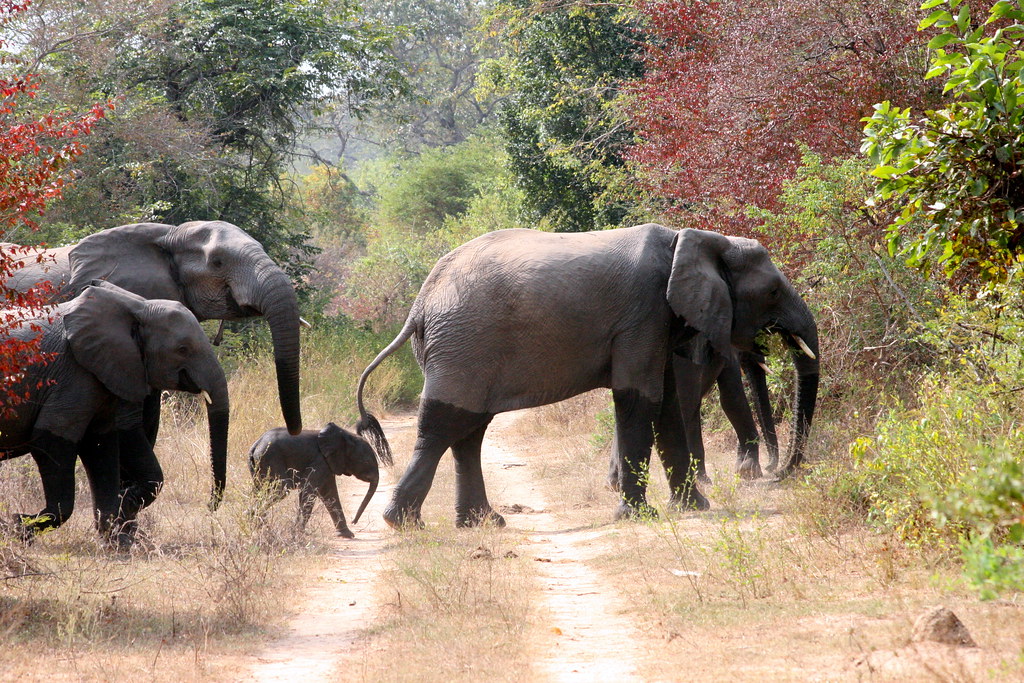
Turning the Tide: A Collaborative Conservation Approach
A significant turning point came in 2014 when the Wildlife Conservation Society (WCS) entered into a Memorandum of Understanding with Bauchi State Government for the co-management of Yankari. This partnership granted WCS full responsibility for the ranger program—a critical element in any protected area’s defense system.
The results were remarkable. Protection levels improved significantly, and both hunting and illegal livestock grazing decreased dramatically. This success stemmed from a comprehensive approach that addressed multiple aspects of conservation management:
Enhanced Ranger Operations
At the core of Yankari’s resurgence lies the implementation of SMART-based ranger patrols (Spatial Monitoring and Reporting Tool). This system represents more than just technology—it’s a comprehensive approach to protected area management that combines software, training methodologies, and standardized practices.
WCS revitalized the ranger force through intensive training programs, strict supervision protocols, and improved working conditions. Rangers received essential field equipment, camping allowances, and field rations. To boost morale and effectiveness, an incentive system included arrest bonuses that rewarded diligent protection efforts.
These changes curtailed opportunities for corruption while simultaneously boosting morale and discipline throughout the ranger force. As patrol effectiveness increased, hunting levels declined, allowing wildlife populations to stabilize and begin recovering.
Technological Innovations
The conservation team didn’t rely solely on ground patrols. They integrated aerial support for surveillance, creating a multilayered protection system. These aerial patrols detected illegal activities that might escape ground teams and guided law enforcement efforts more efficiently.
Perhaps most innovative was the deployment of GPS/satellite collars on elephants. This technology established real-time monitoring of elephant movements, allowing rangers to anticipate where protection was most needed. Rather than stretching limited resources across the entire reserve, patrols could be directed to areas frequented by elephant herds—a strategic approach that maximized impact.
Community Engagement
Recognizing that long-term conservation success depends on local support, WCS initiated conservation education programs in communities surrounding Yankari. The approach was elegantly simple yet profound: provide opportunities for local schoolchildren to visit the reserve.
Remarkably, many children living along Yankari’s boundaries had never entered the protected area despite its proximity. By experiencing the reserve firsthand, these young people could develop personal connections to their natural heritage. This strategy plants seeds for generational change in attitudes toward conservation and wildlife protection.
The Road Ahead
As successful as these interventions have been, the work continues. WCS maintains its commitment to supporting Bauchi State Government in protecting Yankari Game Reserve and its irreplaceable biodiversity. The focus remains on safeguarding elephant and lion populations while ensuring the reserve’s broader ecological health.
Yankari’s story illustrates both the challenges and possibilities in African conservation. Despite facing serious threats, collaborative efforts between government authorities, conservation organizations, and local communities have begun to reverse the decline. With continued dedication and support, this wildlife haven may not only survive but thrive as a cornerstone of Nigeria’s natural heritage for generations to come.
For the elephants that trumpet across its savanna and the lions that roar in its night, Yankari represents their last, best hope in Nigeria—a responsibility that conservationists carry with determination and growing optimism.


News
Lake Nwonyo Roars Back to Life: Ibi Fishing Festival Draws Presidents, ₦15m in Prize Money, and a Global Spotlight on Nigeria’s Inland Waters

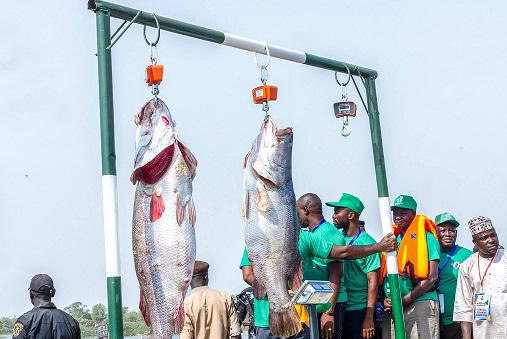
Lake Nwonyo Roars Back to Life: Ibi Fishing Festival Draws Presidents, ₦15m in Prize Money, and a Global Spotlight on Nigeria’s Inland Waters and Water Tourism
By Laraba Haruna | Waterways News | Jalingo
The ancient waters of Lake Nwonyo became the centre of the world on April 18, 2026, as the historic fishing community of Ibi, Taraba State, hosted the grandest edition yet of the Nwonyo International Fishing Festival — a century-old tradition that is fast cementing Nigeria’s inland waterways as a serious draw for culture, diplomacy, and blue economy investment.
From first light, the lakeside buzzed with the kind of energy that only water can generate. Decorated canoes cut elegant arcs across the lake in a colourful boat regatta, while traditional horsemen staged a full durbar on the banks and young swimmers competed in contests that drew roaring applause from thousands of spectators. For a publication dedicated to Nigeria’s waterways, Nwonyo is not merely a cultural event — it is proof that the nation’s rivers and lakes hold untapped economic and diplomatic power.
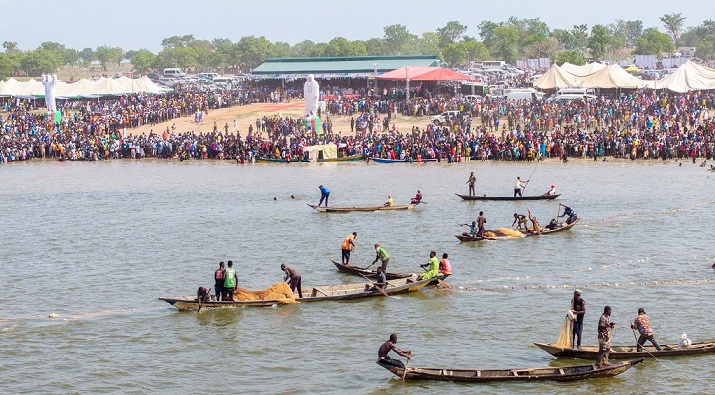
The festival attracted a roster of dignitaries that underscored its growing international weight. President Bola Ahmed Tinubu was represented by the Minister of Tourism. President Dickon Mitchell of Granada attended in person. Ghanaian President John Dramani Mahama sent a representative. Elder statesman General Theophilus Yakubu Danjuma was represented by Plateau State Governor Caleb Mutfwang. Also present were Senator David Jimkuta and host Governor Agbu Kefas of Taraba State, alongside traditional rulers and stakeholders from across the country.
At the heart of the festival, as always, was the fishing competition itself — the symbolic act that gives Nwonyo its soul. Participants cast their nets into the famed lake in a contest that is as much about identity and heritage as it is about catch weight. This year, the Taraba State Government put up ₦15 million in prize money, sending a clear signal that the state is serious about monetising its waterways assets.
Haruna Saleh Busara took the top prize of ₦10 million after hauling in an impressive 55.5 kilograms of fish. Samaila Yakubu followed in second place with 52.6 kilograms, earning ₦3 million, while Emmanuel Daniel rounded out the podium with 18.2 kilograms and a ₦2 million reward.
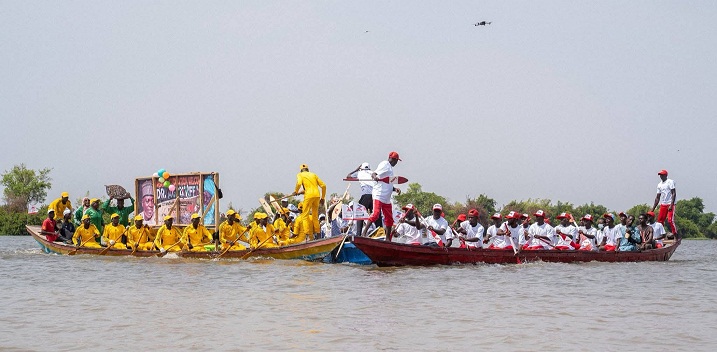
President Tinubu, speaking through his representative, described the festival as a mirror of Nigeria’s unity in diversity and a key driver of tourism. He reaffirmed the Federal Government’s commitment to leveraging culture as an economic engine — a message that resonates directly with ongoing national conversations about the blue economy.
Governor Kefas used the occasion to pitch Taraba State as safe, open, and investment-ready, announcing plans to expand the festival’s global footprint. For a state endowed with rivers, lakes, and fertile fishing grounds, the Nwonyo festival is a flagship opportunity to position those waterways as engines of growth rather than mere geographic features.
General Danjuma, also represented, called the festival a symbol of unity in diversity, noting its enduring role in preserving cultural identity and fostering national cohesion. Senator Jimkuta echoed that sentiment, pointing to the economic ripple effects felt by local traders, transporters, and hospitality operators whenever thousands of visitors descend on the lakeside community.
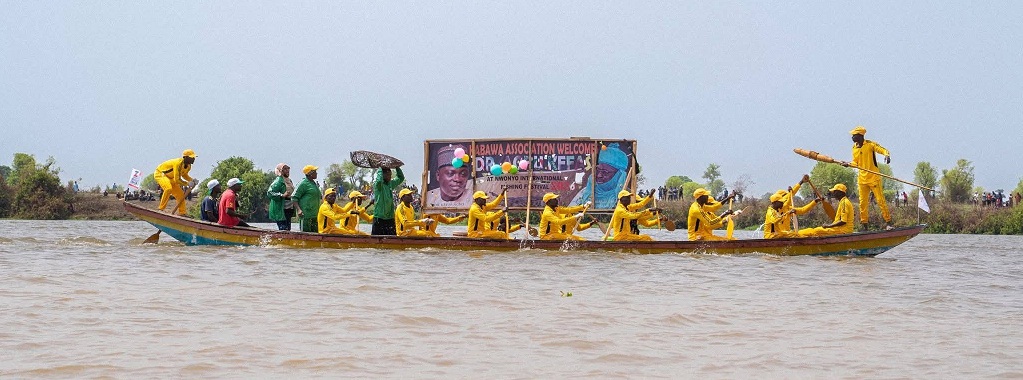
Those economic benefits were visible this year. Markets swelled, boat operators were in high demand, and guesthouses reported full capacity — a microcosm of what Nigeria’s inland water communities can achieve when their natural assets are properly showcased.
The Nwonyo International Fishing Festival has been held for more than a century, evolving from a local Jukun fishing tradition into an internationally recognised cultural institution. Its trajectory is a reminder that Nigeria’s waterways — so often discussed in terms of security threats, oil spills, or flooding — are also sites of living heritage, ecological wealth, and considerable economic promise.
The 2026 edition has placed Taraba State firmly on the global cultural map. But for the waterways community, the larger story is this: when Nigeria’s inland waters are celebrated, managed, and invested in, everyone benefits — from the fisherman hauling his catch at dawn to the diplomat watching from the lakeside.
Adapted from a report by Laraba Haruna
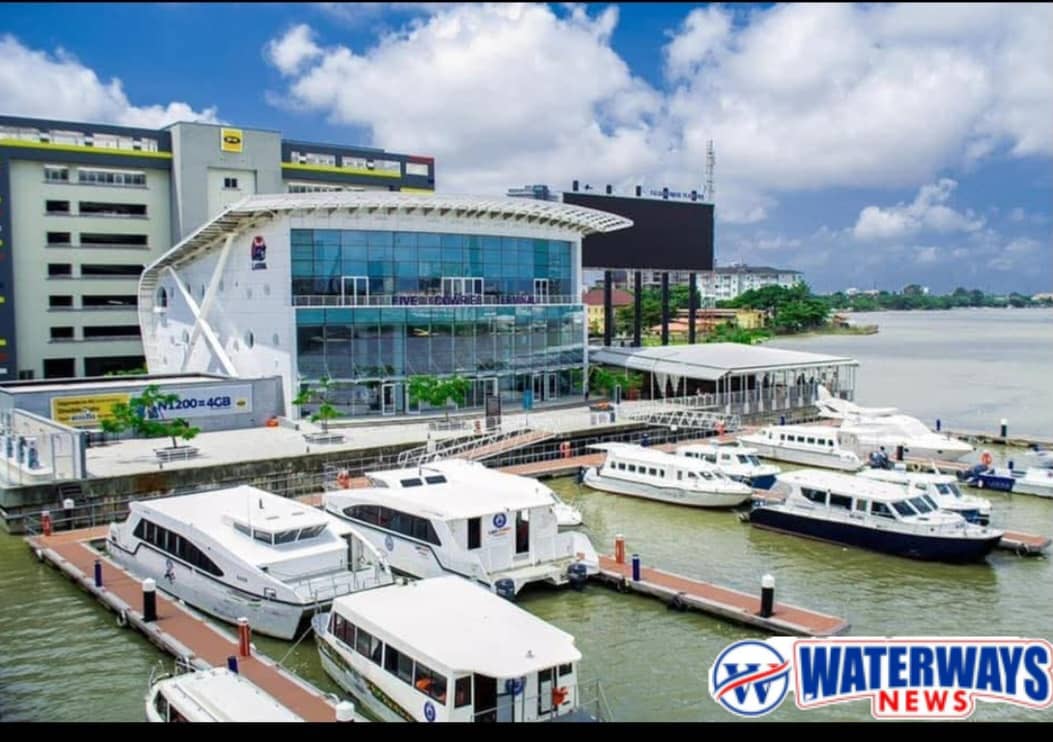
Lagos to Close Jetties, Terminals on Five Cowries Creek for E1 Championship
By Waterwaysnews.ng
The Lagos State Waterways Authority (LASWA) has announced a four-day partial closure of all private and commercial jetties and terminals along the Five Cowries Creek to accommodate the E1 Championship powerboat racing event.The closure, scheduled from Thursday, October 2 to Sunday, October 5, 2025, will facilitate the hosting of the world’s first all-electric powerboat racing tournament, with Lagos serving as one of the championship’s host cities.
In a statement released Tuesday by its Public Relations Unit, LASWA outlined a phased closure schedule to minimize disruption while ensuring safety during the event.
On Thursday, October 2, a partial closure will affect the stretch from Falomo Bridge to Oriental Hotel between 10:00 AM and 6:00 PM. The following day, Friday, October 3, will see a total closure from Oriental Hotel to Mekwen Bridge during the same hours.The most extensive restrictions will occur over the weekend, with a total closure from Falomo Bridge to Oriental Hotel enforced between 8:00 AM and 6:00 PM on both Saturday, October 4, and Sunday, October 5.
LASWA emphasized that the waterways restriction is a critical safety and security measure designed to ensure seamless event operations, protect lives, and showcase Lagos as a world-class venue for international sporting events.
Normal ferry operations on the affected routes are expected to resume on Monday, October 6, 2025. The authority has urged waterway users to plan ahead and utilize alternative ferry routes during the closure period.
“The Lagos State Government appreciates your patience and understanding as we work together to deliver this historic world championship,” the statement concluded.
Blue Economy
Nigeria’s 853km Coastline Remains Underutilized Despite Billion-Naira Tourism Potential
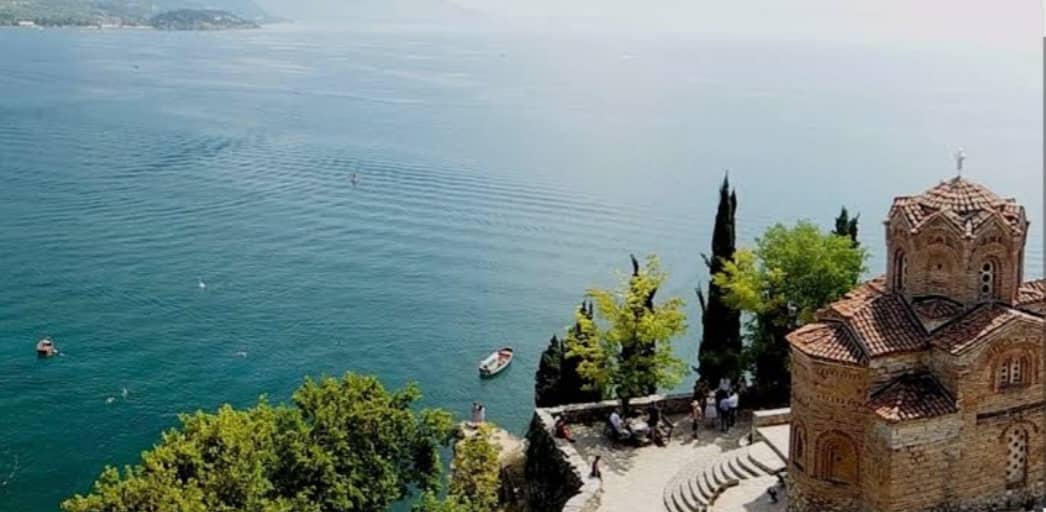
Nigeria’s 853km Coastline Remains Underutilized Despite Billion-Naira Tourism Potential
By Waterways News
Published: September 23, 2025
Nigeria is hemorrhaging billions of naira annually due to its failure to harness the immense potential of its maritime tourism sector, with industry experts warning that the country’s 853-kilometer coastline remains grossly underutilized despite its vast economic promise.
Recent analyses reveal that Nigeria is losing estimated N20 billion revenue annually from failing to develop tourism infrastructure along its extensive coastline. This figure represents just a fraction of the broader maritime sector losses, as the country loses over $3 billion every year to smuggling and illicit activities alone in the maritime domain.
The untapped potential extends beyond tourism, with maritime experts arguing that the nation can generate N7 trillion annually through the enormous potential inherent in the blue economy sector. However, Nigeria’s maritime tourism remains stunted by a constellation of challenges that have persisted for decades.
Infrastructure Deficit Hampers Development
Poor road networks, unreliable transportation services, and limited access to essential amenities such as clean water and electricity pose significant obstacles to tourism development, according to recent industry assessments. The infrastructure challenges are particularly acute in coastal areas, where water-based tourist destinations experience lack of infrastructure, most especially functional ferries or other water transport, piers, canoes and boats for pleasure activities.
The lack of critical infrastructure, including poor road networks, inadequate airports, unreliable intercity transport, and erratic power supply, has hindered the growth of the tourism economy, making it increasingly difficult for the country to attract both domestic and international tourists to its coastal regions.
Security Concerns Compound Challenges
Beyond infrastructure deficits, security challenges continue to plague Nigeria’s maritime tourism development. Many areas with rich natural and cultural attractions remain underdeveloped due to security concerns, further limiting the sector’s growth potential.
Industry analysts note that Nigeria’s challenge of tourism is not the absence of tourist locations or captivating cultures, it is rather a case of poor infrastructure, insecurity, inadequate funding, corruption and the lack of implementation of comprehensive development plans.
Broader Maritime Sector Losses
The maritime tourism deficit forms part of a larger pattern of unrealized potential in Nigeria’s maritime economy. The shipping sector alone accounts for significant losses, with Nigeria losing a staggering $9 billion annually due to the absence of functional ocean-going vessels for affreightment, particularly for crude oil.
Additionally, the country loses over $23 billion to untapped blue economy potential when accounting for various maritime activities including shipping, fishing, and offshore oil operations.
Path Forward Requires Integrated Approach
Maritime industry stakeholders emphasize that unlocking Nigeria’s coastal tourism potential requires an integrated policy approach that aligns with Nigeria’s Vision 2050 and the Sustainable development framework. This includes addressing the fundamental challenges of policy gaps, inadequate infrastructure, and limited access to financing.
Recent studies suggest that tourism can diversify revenue away from oil, boosting employment and infrastructure development, making it a critical component of Nigeria’s economic diversification strategy.
Government Response Needed
Industry experts call for immediate government intervention to address the systemic challenges preventing the realization of Nigeria’s maritime tourism potential. Without decisive action, the country risks continuing to lose billions in potential revenue while coastal communities remain economically marginalized.
The development of Nigeria’s maritime tourism sector represents not just an economic opportunity but a strategic imperative for a nation seeking to reduce its dependence on oil revenues and create sustainable employment for its growing population.
For more waterways and maritime news, visit waterwaysnews.ng
-

 Oil and Gas2 months ago
Tantita’s Pipeline Deal: $144m Contract, Rising Output, and the Questions that Deserve Answers
-
 Blue Economy2 months ago
Nigeria’s Coast Guard Bill: A Solution in Search of a Problem?
-
 MARITIME TRADE & SHIPPING2 months ago
World’s Largest Container Ship Sets New Maritime Record with 22,233 TEUs on Single Voyage