
Editor's Choice
UAE Accuses Iran of “Acts of Piracy” After Missile Strike on ADNOC Vessel


UAE Accuses Iran of “Acts of Piracy” After Missile Strike on ADNOC Vessel
By Raymond Gold | Waterways News
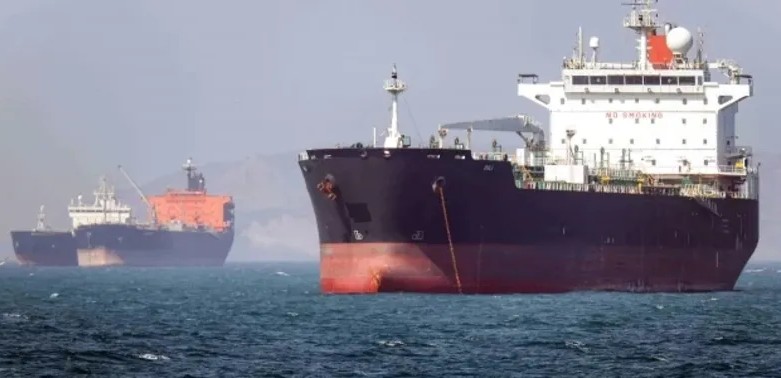
The United Arab Emirates has formally accused Iran of committing “acts of piracy” following a missile attack on a vessel linked to state oil company ADNOC while the ship was transiting the Strait of Hormuz.
ADNOC confirmed on Saturday that one of its vessels was struck by a missile early in the day, adding that the situation was brought under control and that no injuries were recorded. Neither the company nor UAE authorities disclosed the identity of the vessel, its cargo, or the scale of damage sustained.
In a strongly worded statement, the UAE Foreign Ministry described the incident as a “hostile Iranian attack” and said it breached a United Nations Security Council resolution guaranteeing freedom of navigation. The ministry further accused Iran’s Islamic Revolutionary Guard Corps of deliberately targeting commercial shipping to exert economic pressure through the strategic waterway, and called on Tehran to halt the attacks and fully reopen the Strait of Hormuz.

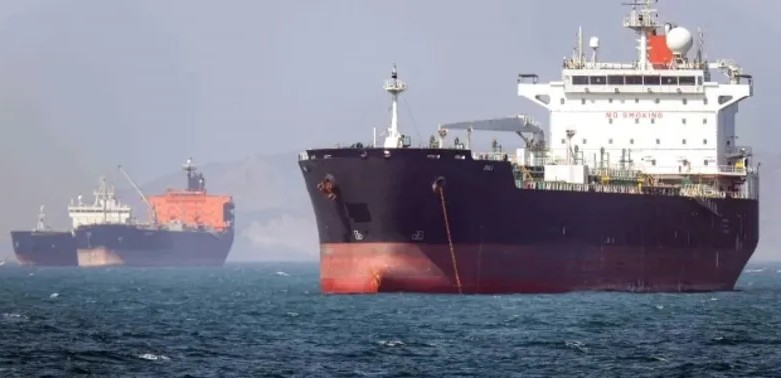
The strait, which lies between Iran and Oman, had carried about one-fifth of global oil and liquefied natural gas shipments before the US-Israeli strike on Iran on February 28. Since the wider conflict began, shipping through the corridor has faced repeated disruption, pushing up freight rates and heightening security concerns across the sector. Iran’s Revolutionary Guards have repeatedly threatened action against vessels linked to countries it considers hostile, or those that fail to comply with its directives.
ADNOC said separately on Friday that it had been significantly affected by what it called “unprovoked attacks” on its personnel and assets, even as it continued to meet customer demand in an “exceptionally challenging environment.” The company disclosed that 15 of its vessels had been struck by missiles and drones while transiting the strait since the conflict began, including three attacks in the past week alone. One crew member was killed and 20 others injured in the strikes.
ADNOC, based in Abu Dhabi, ranks among the world’s largest energy producers, exporting crude oil, natural gas and refined petroleum products to global markets.
NIGERIA WATCH
The missile strikes rattling the Strait of Hormuz may feel geographically distant from the creeks of Lagos and the Niger Delta, but their tremors reach Nigerian shores faster than most realise. Roughly a fifth of the world’s seaborne oil and LNG once passed through that narrow corridor before hostilities escalated in February and every disruption there ripples straight into the cost structure of vessels calling at Apapa, Tin Can Island, Onne and Lekki.
For Nigeria, a nation that imports the bulk of its refined petroleum products despite its crude wealth, sustained instability in Hormuz translates directly into higher freight and war-risk premiums, both of which are ultimately passed down to Nigerian shippers, importers and, inevitably, consumers at the pump. The Nigerian Shippers’ Council and NIMASA would do well to keep close watch on how these premiums are being priced into charter agreements affecting Nigerian-bound cargo, and to press for transparency where insurers may be padding margins under cover of a crisis thousands of nautical miles away.
There is also a sobering safety lesson embedded in ADNOC’s disclosure that a crew member was killed and twenty others injured across a string of attacks on its fleet. Nigerian seafarers serving on international vessels, many of them Nigerians building careers through NIMASA’s seafarer certification and Malta ship registry partnership pipelines, are not insulated from geopolitical flashpoints like Hormuz simply by virtue of flag or nationality. As Nigeria pushes to expand its seafarer deployment pipeline and strengthen the Seafarer Discharge Book portal, welfare and hazard-pay protocols for Nigerian crew serving in conflict-adjacent waters deserve the same urgency as domestic waterway safety campaigns.
Finally, the UAE’s invocation of “piracy” as a legal and diplomatic label is instructive for Nigeria’s own maritime governance conversation. Nigeria has spent years working to shed its reputation as a piracy hotspot in the Gulf of Guinea, standing up the Combined Maritime Task Force and reclaiming its seat on the IMO Council after fourteen years away.
Watching how the international community responds, or fails to respond, to state-linked shipping attacks in Hormuz offers a live case study in how seriously the “freedom of navigation” principle is actually enforced when powerful interests are involved.
Nigerian policymakers should take note as they continue to advocate for the same protections in the Gulf of Guinea, where local operators and fishing communities have far less diplomatic weight than a state oil major like ADNOC.

Between Safety and Survival: Inside NIWA’s Uneasy Push to Modernise Nigeria’s Waterways
By Oghenewoke Osaweren | Waterways News
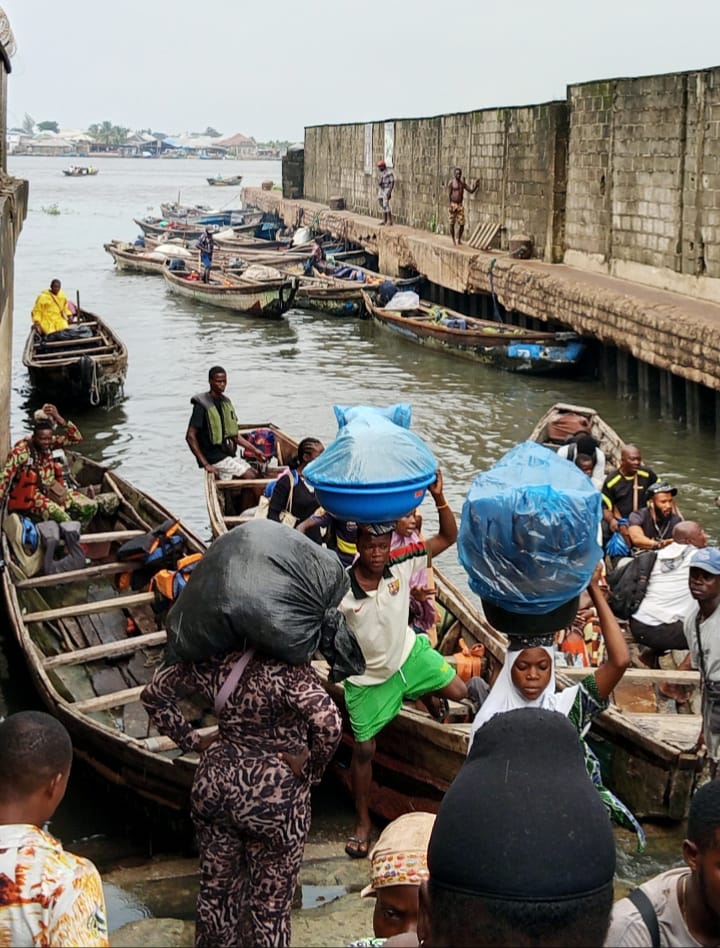
The arithmetic driving federal policy is grim: wooden boats make up more than 90 percent of vessels on Nigeria’s inland waterways, and they account for the majority of the accidents that keep claiming lives from Niger State to Kogi to Yobe. For the men and women who own, build, and pilot those same boats, the arithmetic looks different. It is the difference between feeding a family this week and not.
That tension sits at the centre of one of the most consequential regulatory shifts facing Nigeria’s inland waterways sector: a federally-backed campaign to phase wooden boats out of commercial water transportation altogether. Nearly two years after it was first floated, the policy is still gradual, still underfunded from the operators’ point of view, and now being carried forward by a leadership at the National Inland Waterways Authority (NIWA) that looks markedly different from the one that started it.
A policy that has outlasted its author
The phase-out campaign was launched in October 2024 by then NIWA Managing Director Bola Oyebamiji, who told journalists in Lagos that wooden boats, despite constituting the overwhelming majority of the fleet, were disproportionately responsible for accidents, driven less by the material itself than by disregard for basic rules: night travel, overloading, and non-use of life jackets. Oyebamiji took the campaign further in subsequent months, taking NIWA management to London to explore partnerships with a ferry company for the supply of standard fibre boats, and opening talks with an indigenous manufacturer to produce fibre and aluminium vessels locally.
Oyebamiji, however, is no longer running NIWA. He resigned as Managing Director on November 15, 2025, to pursue the All Progressives Congress governorship ticket in Osun State, for the August 15, 2026 off-cycle election, a race in which Minister of Marine and Blue Economy Adegboyega Oyetola has publicly backed him, citing his NIWA reform record. In his absence, Umar Yusuf Girei, formerly NIWA’s General Manager for Finance, has run the authority in an acting capacity since late 2025, and it is Girei’s administration that has inherited and continued the wooden boat phase-out drive. NIWA also now has a substantive Governing Board, chaired by Barrister Mukhtar Shehu Shagari, which was inaugurated earlier in 2026 and has since toured Lagos facilities reaffirming the commitment to replacing “unsafe vessels” and rehabilitating dilapidated jetties nationwide.
The throughline across both administrations has been consistent even as the faces changed: safety first, wooden boats out, but not overnight. NIWA’s Lagos Area Manager, Engr. Sarat Braimah, has been the most candid public voice on pacing, telling journalists this year that “it is not something that can happen overnight,” and that the authority is working to “meet operators halfway” as safer boats are phased in. This is language that acknowledges, even from inside the regulator, how disruptive an outright ban would be to the informal economy built around wooden hulls.
The operators’ dilemma: capital, not principle
Boat owners are not opposing safety in principle. Where their voice has surfaced publicly, the message has been less “leave our boats alone” and more “help us change them.” Tope Fajemirokun, President of the Waterfront Boat Owners and Transporters Association of Nigeria (WABOTAN), has repeatedly linked compliance to government support, arguing that eliminating wooden and “banana” boats will only be realistic if the state backs the transition with real investment, a position echoed in Lagos and riverine communities where wooden boats remain the dominant, and often only, means of daily transport and commerce. The crux of operator anxiety today is capital.
A standard wooden passenger boat can be built or repaired locally at a fraction of the cost of an aluminium or fibreglass alternative, using skills and materials that have sustained riverine boatbuilding communities for generations. Asking an operator already squeezed by rising fuel costs to self-finance a switch to modern hulls is, in practice, asking many of them to exit the trade entirely.
The government’s own promised bridge, a Federal Ministry of Marine and Blue Economy-backed fund of roughly N14.6 billion for the purchase of standard boats and ferries for riverine states including Niger, Benue, Kogi, Kwara, and Kebbi, has been public knowledge for months, but operators are still waiting. As of June 2026, WABOTAN’s Fajemirokun was still calling for soft loans to be carved out of the approved funds so operators could actually acquire modern vessels, citing fuel costs and broader economic pressure as barriers to self-financing the transition. Separately, NIWA’s own 2026 capital budget earmarked N16 billion for waterways maintenance, boat procurement, and related capital projects, a sum equal to the agency’s combined capital allocations for 2022, 2023, and 2024, but one that Daily Trust and other outlets have noted has not yet translated into a visible reduction in fatal boat crashes.
A test of governance, not just carpentry
There is also a quieter unease among operators about how the phase-out will be enforced and who decides its pace. With wooden boats forming the overwhelming majority of the fleet, a poorly sequenced rollout risks stranding thousands of small operators, many with limited formal education, as NIWA’s own former leadership has pointedly noted, without a bridge into the formal, regulated fleet the government envisions.
Whether the policy becomes a managed transition or another top-down mandate that outruns the capacity of those it targets will be measured less in press statements from Abuja and Lagos than in whether the fibreglass and aluminium boats promised actually reach the jetties. Nigeria’s waterways governance has a long record of ambitious safety directives that stall at the point of implementation, leaving enforcement to fall unevenly on the smallest operators while larger interests adapt more easily. The leadership transition at NIWA, an acting MD, a newly inaugurated board, a former champion of the policy now running for governor, adds a further variable: continuity of political will through a change of guard that has, so far, kept the phase-out on the agenda but has not accelerated the disbursement operators say they need.
Nigeria Watch
For Waterways News readers tracking the sector closely, three threads are worth following in the coming months. First, whether the N14.6 billion vessel procurement fund, approved but still largely not disbursed as of mid-2026, begins reaching operators directly or continues to move at the pace of ministerial announcements. Second, whether NIWA’s new Governing Board under Shagari, having completed its facility inspection tour, converts its stated commitments into a published timeline with short, medium, and long-term milestones, as originally promised by Oyebamiji in 2024. Third, whether the acting MD arrangement under Girei persists through and beyond the Osun election, or whether a substantive appointment brings fresh priorities that could either accelerate or stall the transition.
For WABOTAN, ATBOWATON, other organized operators, and the riverine communities they serve, the difference between a “phase-out” and a “wipe-out” will be decided in the disbursement ledgers, not the press briefings.
Waterways News will continue to track the phase-out timeline, budgetary commitments, and operator response as the policy moves from directive to implementation.
NIMASA, AMANO Chart Fresh Collaboration Path as Mobereola Reaffirms Reform Commitment
By Okeoghene Onoriobe | Waterways News
The Director-General of the Nigerian Maritime Administration and Safety Agency (NIMASA), Dr Dayo Mobereola, has reaffirmed the agency’s commitment to deepening reforms, strengthening regulatory oversight and building closer ties with industry stakeholders as it works to reposition Nigeria’s maritime administration for global competitiveness.
Mobereola gave the assurance in Lagos while receiving the leadership of the Alumni Association of the Maritime Academy of Nigeria (AMANO), led by its President, Emmanuel Maiguwa, during a courtesy visit to the agency’s headquarters.
The NIMASA boss said the agency remained focused on building an administration that is efficient, transparent and globally competitive, in line with the policy direction of the Federal Ministry of Marine and Blue Economy under Minister Adegboyega Oyetola.
“Our vision is to build a maritime administration that is efficient, transparent and globally competitive,” Mobereola told the delegation, adding that NIMASA would continue to pursue reforms that strengthen regulatory oversight, promote innovation and expand opportunities for Nigerian seafarers.
He described the maritime sector as a critical driver of Nigeria’s economic growth and identified AMANO and other industry associations as indispensable partners in shaping policies capable of unlocking the sector’s full potential, stressing that sustained collaboration between the regulator and industry remains essential.
In his remarks, Maiguwa commended NIMASA for the successful deployment of its electronic platform for the issuance of Seafarers’ Certificates, describing the digital initiative as a significant milestone that has improved efficiency, transparency and accessibility in the certification process for Nigerian seafarers.
The AMANO president also used the occasion to press for continued engagement on a set of priorities affecting the welfare and career prospects of Nigerian seafarers. These include expansion of the Nigerian Seafarers Development Programme (NSDP), greater stakeholder input in maritime policy formulation, stronger implementation of the International Convention on Standards of Training, Certification and Watchkeeping for Seafarers (STCW), improved protection for seafarers against abandonment, and the establishment of a sustainable pension and welfare framework for maritime professionals.
Nigeria Watch
For Nigeria’s seafaring community, the substance of this visit lies less in the pleasantries exchanged than in the agenda Maiguwa laid on the table. The digitised Seafarers’ Certificate platform NIMASA rolled out addresses a problem that has quietly undermined Nigerian seafarers for years: manual certification processes vulnerable to delay and forgery, which foreign shipowners and port state control officers abroad have long cited as grounds for distrust of Nigerian-issued documents.
An instantly verifiable digital credential is a credibility upgrade that could open more berths on foreign-flagged vessels for Nigerian ratings and officers, provided the platform is properly maintained and internationally recognised.
But AMANO’s wish list is the more consequential story. Seafarer abandonment, where crew are left stranded on vessels without pay, provisions, or a route home, often for months, remains a persistent complaint from Nigerian maritime labour circles, and NIMASA has faced criticism in the past for slow intervention in such cases. A pension and welfare framework for seafarers is also long overdue in a sector where retirement security for ratings and junior officers has historically lagged behind that of shore-based civil servants.
The call for stronger STCW implementation deserves particular attention against the backdrop of the IMO’s move toward risk-based continuous monitoring under IMSAS from 2027. As Nigeria’s certification and training regime comes under sharper international scrutiny, gaps in STCW compliance, whether in training standards at maritime academies or in certificate issuance integrity, could affect the country’s standing with the IMO and the employability of its seafarers on the international market. AMANO’s push for a seat at the policy table is, in effect, a push to ensure these compliance gaps are closed with input from those who feel their consequences most directly.
Whether NIMASA’s warm words translate into disbursed funding, a functioning abandonment-response mechanism and a concrete pension scheme, rather than another round of courtesy-visit commitments, is what will determine whether this engagement moves the needle for Nigerian seafarers.
Blue Economy
Water Transport Operators Push For Recognition At The Table As FTAN Demands Tourism Policy Reforms
Water Transport Operators Push For Recognition At The Table As FTAN Demands Tourism Policy Reforms
By Okeoghene Onoriobe | Waterways News
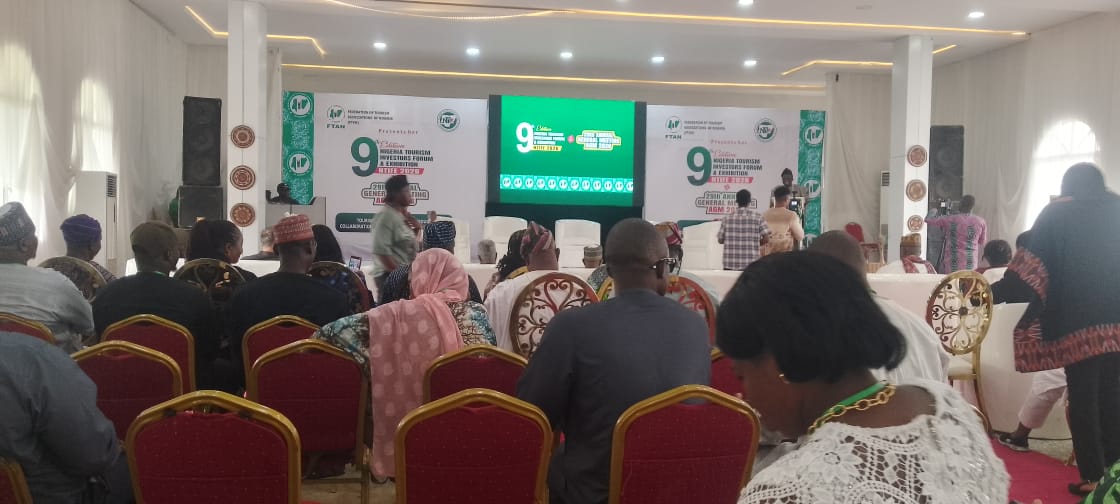
Nigeria’s tourism sector needs urgent policy reform, stronger collaboration and fresh investment to compete globally and water transport operators who are members of the Federation of Tourism Associations of Nigeria (FTAN) want that conversation to include the boats, ferries and waterway routes that move millions of Nigerians and could move even more tourists.
That was the underlying idea raised by Comrade Babatope Fajemirokun National President of Waterfront Boat Owners and Transporters Association of Nigeria (WABOTAN) represented by Chief Raymond Gold, National PRO of WABOTAN, at the ninth Nigeria Tourism Investors Forum and Exhibition (NTIFE), held over two days in Abuja under the theme “Tourism Transformation Through Collaboration, Policy Alignment and Investment.” The events took place between Thursday 30 to Friday 31 of July 2026. Waterfront Boat Owners and Transporters Association of Nigeria (WABOTAN), is a corporate member of FTAN
The forum drew policymakers, investors, tourism operators and development partners.
FTAN President Dr Aliyu Badaki used his welcome remarks to press the Federal Government to overhaul tourism-related laws and regulatory frameworks that he said breed duplication, institutional conflict and legal uncertainty for operators. He said the federation’s newly developed Tourism Transformation Mandate (TTM) is meant to unify every segment of the tourism value chain.
Babatope Fajemirokun, through Chief Gold emphasizes the fact that this value chain for Nigeria’s coastal cities, riverine communities and inland waterway corridors, runs directly through water transport.
Badaki argued that fragmented efforts and weak coordination have held back the sector for years, and called for regulation that enables rather than inhibits growth.
Minister of Art, Culture, Tourism and Creative Economy, Hannatu Musawa, who declared the forum open, described tourism as a strategic pillar for economic diversification. She said government cannot finance tourism transformation alone and that private capital must lead, with government’s role limited to creating an enabling environment for investors.
In his keynote address, Sen. Ibrahim Ida called for stronger collaboration among government, the private sector and host communities, saying tourism can generate jobs, foreign exchange and diversification if properly harnessed.
Panel sessions, moderated by Justina Ovat of Calabar Hospitality House Limited, featured Nigeria Tourism Development Authority (NTDA) Director-General Dr Ola Awakan, who called for policy consistency and investor-friendly incentives, and Dr Philip Maga of the National Institute for Hospitality and Tourism (NIHOTOUR), who flagged the need for stronger workforce training to close skills gaps across the hospitality industry.
Hospitality entrepreneur Lanre Balogun urged investors to prioritise disciplined, long-term planning.
Nigeria Watch
For Nigeria’s water transport sector, NTIFE’s reform push is not a side conversation. Rather, it is a direct stakeholder issue. FTAN’s corporate membership includes Waterfront Boat Owners and Transporters Association of Nigeria (WABOTAN) and the Association of Tourist Boat Operators and Water Transporters of Nigeria (ATBOWATON), both drawn from the ranks of operators who run the boats, ferries and water taxis that already serve Lagos’s creeks, the Niger Delta’s riverine towns and coastal leisure routes. Their presence inside FTAN means the federation’s demand for regulatory clarity and coordinated policy carries an inland-waterways and blue-economy dimension that goes beyond hotels and heritage sites.
That matters because water tourism sits at an awkward regulatory junction in Nigeria. A tourist boat operator answers not only to tourism authorities but potentially to NIWA, LASWA (in Lagos) and NIMASA on safety standards, and state government tourism boards, precisely the kind of overlapping jurisdiction Badaki described as breeding “duplication, institutional conflicts… and operational uncertainty.”
The 2026 Supreme Court ruling affirming NIWA’s regulatory authority over inland waterways nationwide, following the NIWA-LASWA jurisdictional dispute, is a live example of the kind of institutional friction FTAN’s Tourism Transformation Mandate is meant to resolve, at least on the tourism side.
Musawa’s call for private capital to lead tourism investment also lands squarely on water transport operators’ desks. Vessel acquisition, safety retrofitting, jetty infrastructure and life-jacket compliance all require capital that small-scale operators, including WABOTAN’s member-cooperative structure, have struggled to access, a gap that echoes the long-running CVFF disbursement failure in the cabotage shipping sector and underscores why financing bottlenecks are not unique to cargo and passenger shipping alone.
If FTAN’s push for policy alignment succeeds in drawing water transport formally into Nigeria’s tourism investment architecture, operators like WABOTAN and ATBOWATON could gain a stronger claim to inclusion in infrastructure programmes such as the Omi-Eko electric ferry project and LASWA’s ferry safety development initiatives, turning routine commuter water transport into a recognised leisure and tourism asset, not just a transportation afterthought.
For a sector accustomed to being regulated but rarely consulted, this call by Babatope Fajemirokun is a modest but meaningful call.

 Oil and Gas5 months ago
Tantita’s Pipeline Deal: $144m Contract, Rising Output, and the Questions that Deserve Answers
- MARITIME TRADE & SHIPPING5 months ago
World’s Largest Container Ship Sets New Maritime Record with 22,233 TEUs on Single Voyage
- Blue Economy6 months ago
Nigeria’s Coast Guard Bill: A Solution in Search of a Problem?