Blog
GHOST TANKER ON THE RUN: How U.S. Navy SEALs Hunted Down the Marinera Across the Atlantic — And What It Means for Nigeria

GHOST TANKER ON THE RUN: How U.S. Navy SEALs Hunted Down the Marinera Across the Atlantic — And What It Means for Nigeria
A Weeks-Long High Seas Chase, a Daring Pre-Dawn Boarding, and a Bold New Era of Global Oil Sanctions Enforcement
By Oghenewoke Osaweren, Research Reporter | WaterwaysNews.ng | March 25, 2026
In the early morning darkness of January 7, 2026, United States Navy SEALs descended from military helicopters onto the deck of a rust-streaked oil tanker cutting through the frigid North Atlantic — roughly 190 miles off the coast of Iceland. The dramatic boarding was the culmination of a weeks-long maritime chase that had gripped global shipping circles, strained U.S.-Russia diplomatic relations, and pulled the shadowy world of illicit oil trafficking into the full glare of international scrutiny.
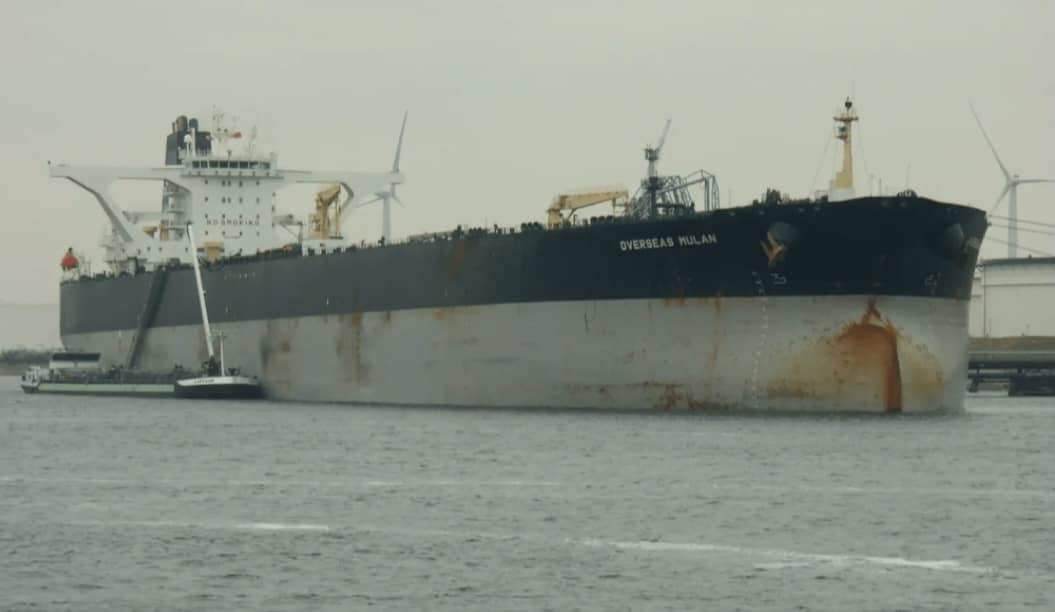
The vessel — originally named the Bella 1, hastily renamed the Marinera mid-voyage in a desperate bid to escape American jurisdiction — had spent months ferrying sanctioned crude oil for Venezuela, Iran, and Russia. It routinely switched off its tracking transponders and painted over its hull markings to evade detection. On that January morning, north of Iceland, its luck ran out.



A Tanker Born in the Shadows
The Bella 1 had a deeply troubled history long before it became the centrepiece of an international crisis. U.S. authorities classify vessels like it as part of a “shadow fleet” — a network of aging, poorly maintained tankers used by sanctioned nations to move crude oil in defiance of international restrictions.
Analysis of Automatic Identification System (AIS) tracking data showed the Bella 1 first departing Iran’s exclusive economic zone in February 2025, sailing through the Strait of Malacca before heading toward South America. The vessel went completely dark between legs of its journey — switching off its AIS transponder off the coast of Sri Lanka on March 24, 2025, only to reappear in Iranian waters on July 1, 2025. During that blackout period, analysts recorded 379 AIS “pings” while the ship lingered in Iranian coastal waters, with its transmitter switched off no fewer than 17 times — a pattern strongly consistent with clandestine ship-to-ship oil transfers designed to disguise the cargo’s origin.
The U.S. Treasury Department sanctioned the Bella 1 in June 2024, citing its role in transporting illicit oil for companies linked to Hezbollah, the Iran-backed Lebanese militant organisation. The designation cut the tanker off from the international financial system — but did not stop it from sailing.
December 2025: The Caribbean Standoff
By late 2025, the Bella 1 had joined a growing fleet of sanctioned tankers quietly loading crude at Venezuelan state oil terminals. The U.S. under President Donald Trump — who had returned to the White House in January 2025 — had adopted an aggressive posture toward Venezuelan President Nicolás Maduro’s government, reimposing sweeping sanctions and pressing allies to sever economic ties with Caracas.
On December 10, 2025, Washington made its first move, seizing a tanker called the Skipper in the Caribbean Sea. A week later, the U.S. formally announced a maritime blockade — declaring its intention to intercept all sanctioned tankers moving oil to and from Venezuela, anywhere on the world’s oceans.
The Bella 1, then sailing under a Guyanese flag, was named a priority target. When the U.S. Coast Guard cutter USCGC Munro attempted to board her in Caribbean waters, the crew refused. Rather than comply, the vessel made an abrupt turn away from Venezuelan waters — and ran for the open Atlantic.
The chase was on.

Flags, Names, and Disguises Across the Atlantic
What followed over the next three weeks captivated maritime observers worldwide. AIS data showed the vessel zigzagging across the Atlantic, taking evasive courses and intermittently going dark. Analysts flagged a particularly suspicious seven-hour window on December 9, 2025, during which the tanker’s AIS vanished mid-ocean, only for the ship to reappear barely one nautical mile from where it had disappeared.
More dramatically, the crew physically transformed the vessel’s identity at sea — reportedly painting a Russian flag onto the hull. By December 24, maritime registries showed the ship sailing under a new name, the Marinera, and a new flag: Russia’s. Moscow’s Maritime Register of Shipping confirmed a “temporary permission” had been granted for the vessel to sail under the Russian state flag, registered out of Sochi on the Black Sea.
Russia simultaneously submitted a formal diplomatic note demanding Washington cease its pursuit — a significant escalation signalling that Moscow viewed the chase as a direct challenge to its sovereign authority over ships flying its flag.
The legal stakes were considerable. Under the United Nations Convention on the Law of the Sea (UNCLOS), a vessel is treated as the sovereign territory of the state whose flag it flies, making any unauthorised boarding a potential act of aggression. The U.S. countered that the rapid flag change was illegitimate — international law prohibits mid-voyage flag switches without a genuine transfer of ownership, a requirement Russia’s last-minute registration almost certainly did not meet. White House Press Secretary Karoline Leavitt told reporters the Marinera had been “deemed stateless” after flying what Washington considered a false flag, and that a U.S. federal court had already issued a judicial seizure warrant.
Russia Deploys a Submarine
As the Marinera neared the strategically critical passage between Iceland and Scotland, intelligence reports surfaced that Russia had dispatched a submarine and a naval surface vessel to escort the tanker — an extraordinary show of military force in support of what Moscow maintained was an ordinary civilian merchant ship.
The United States had quietly pre-positioned its own forces. Navy SEALs and personnel from the elite 160th Special Operations Aviation Regiment — the “Night Stalkers” — had been moved to bases in Scotland. The U.S. Air Force deployed a Boeing P-8 Poseidon maritime patrol aircraft, a Lockheed AC-130J gunship, and a Pilatus U-28A Draco surveillance aircraft. Britain contributed Royal Air Force surveillance planes and the Royal Fleet Auxiliary vessel RFA Tideforce.
The Marinera appeared to be making for a Russian Arctic port. The Iceland-Scotland passage offered no clean escape.
January 7, 2026: The Seizure
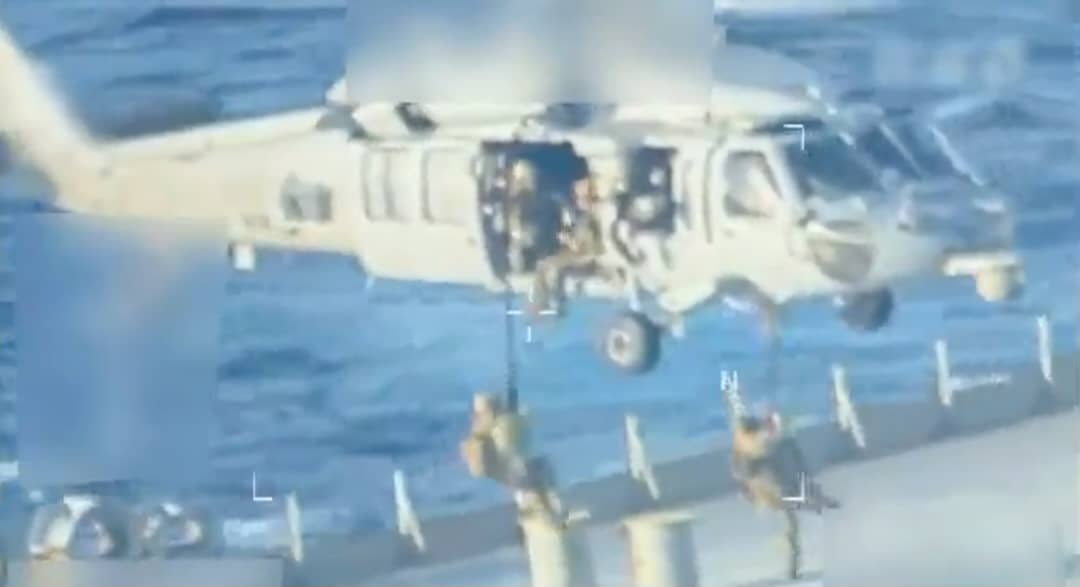
Shortly before dawn, Night Stalker helicopters approached the Marinera through the darkness. SEALs fast-roped onto the deck and within minutes the tanker was under American control. U.S. European Command described the action as a law enforcement operation executed under a federal court warrant for violations of U.S. sanctions law.
Russia’s Transport Ministry confirmed it had lost all contact with the vessel following the boarding, condemning the action as a violation of freedom of navigation. The Russian Foreign Ministry demanded the humane treatment and immediate return of Russian nationals aboard.
U.S. Defence Secretary Pete Hegseth declared: “The blockade of sanctioned and illicit Venezuelan oil remains in FULL EFFECT — anywhere in the world.”
In a striking detail, the Marinera was carrying no oil at all — its holds were entirely empty. Hours after the seizure, U.S. Southern Command announced the simultaneous interception of a second vessel, the M/T Sophia, found in the Caribbean Sea carrying approximately two million barrels of Venezuelan crude.
Aftermath: Scotland, the Crew, and a Captain in Custody
After the seizure, the Marinera was moored on January 13 in the Moray Firth, northeastern Scotland — a port call Scotland’s First Minister said he had received no advance warning of. London explained the stop was for humanitarian purposes: restocking supplies for the crew. Of the 26 crew members aboard, five voluntarily travelled to the United States; the remainder were allowed to return to their home countries. By January 28, Russia confirmed two of its sailors had been released and were en route home following Moscow’s diplomatic intervention.
The ship’s captain — Avtandil Kalandadze, a Georgian national — and his first officer faced a sterner outcome. On January 27, both were transferred to the USCGC Munro and placed in U.S. custody for transport to America to face criminal prosecution. The move immediately triggered a legal challenge: Kalandadze’s wife filed an emergency petition before Edinburgh’s Court of Session, and a Scottish judge issued an interim order prohibiting his removal. The United States proceeded with the transfer regardless — overriding the Scottish court’s ruling, a decision that drew sharp criticism and raised pointed questions about the limits of American unilateral power even within allied jurisdictions.
The Marinera itself was taken to the United States to undergo judicial forfeiture proceedings, through which Washington will seek permanent legal title to the vessel.
Operation Southern Spear: The Bigger Picture
The Marinera seizure formed part of a sweeping campaign called Operation Southern Spear, launched in December 2025 to dismantle Venezuela’s oil export infrastructure. The operation’s most dramatic development came on January 3, 2026, when U.S. forces seized Venezuelan President Nicolás Maduro — a move that sent shockwaves through Latin America and accelerated the flight of tankers from Venezuelan ports. Intelligence sources reported that at least 16 tankers fled Venezuelan waters within 48 hours of Maduro’s capture, many disabling their AIS systems to evade the maritime quarantine.
The scramble proved largely futile. U.S. officials confirmed that 15 of the 16 vessels were already under prior sanctions, and at least six carried a combined estimated cargo of nearly nine million barrels of crude. By March 2026, Venezuela’s crude exports had declined sharply. Secretary of State Marco Rubio described the “tremendous leverage” Washington now held over Venezuela’s oil sector, and the President announced that Caracas had agreed to hand over between 30 and 50 million barrels of sanctioned oil to the U.S. government.
What the Marinera Case Means for Nigeria and West Africa
The Marinera affair carries direct and immediate implications for Nigeria and the broader West African maritime domain.
Nigeria, as Africa’s largest oil producer, operates a significant tanker fleet and has long faced the challenge of distinguishing legitimate commerce from illicit maritime activity in its coastal waters. The U.S. campaign against shadow fleet operators demonstrates that the international community now deploys sophisticated tools — AIS analytics, satellite surveillance, multi-agency intelligence fusion, and cross-border law enforcement coordination — to track and interdict sanctions-evading vessels.
Nigeria’s maritime security authorities — including the Nigerian Maritime Administration and Safety Agency (NIMASA) and the Nigerian Navy — would be well served to study the Marinera case closely and assess how such enforcement architecture could be applied in the Gulf of Guinea, where illicit bunkering, cargo theft, and flag-of-convenience abuse remain persistent threats.
Equally significant are the reputational and legal risks now confronting any Nigerian-linked shipping entity — whether operator, charterer, flag state, or port of call — that facilitates the movement of illicit oil cargoes. As the United States demonstrates its readiness to enforce sanctions far beyond the Western Hemisphere, companies and states that enable shadow fleet operations face the real and growing prospect of secondary sanctions, vessel seizures, and criminal prosecution.
A New Era of High-Seas Enforcement
The seizure of the Marinera marks a genuine turning point in the enforcement of international oil sanctions. For decades, shadow fleet operators exploited the legal complexity of high-seas jurisdiction, the opacity of ship registries, and the reluctance of major powers to conduct overt operations against commercial vessels. The Marinera seizure signals that Washington, under the current administration, is prepared to break those informal conventions — regardless of which flag a vessel is flying or which power is flying it.
An aging, rust-streaked tanker that began its fateful voyage in Iranian waters in early 2025 ended it at the foot of a Navy SEAL fast-rope line in the freezing North Atlantic, watched by submarines, warplanes, and a global audience.
As of March 2026, the Marinera remains in U.S. custody pending judicial forfeiture. Captain Kalandadze and his first officer await trial. Operation Southern Spear continues — more tankers seized, more cargoes confiscated, and Washington showing no signs of easing its maritime pressure.
For Nigeria’s shipping community, the message is clear: the age of consequence-free shadow fleet participation may be coming to an end.
Oghenewoke Osaweren is a Research Reporter for WaterwaysNews.ng. Additional reporting by the WaterwaysNews.ng Investigative Desk.
WaterwaysNews.ng | Nigeria’s Leading Maritime News Platform | March 25, 2026