Special Report
NIGERIA’S MARINE ECONOMY CRISIS: CAN ₦10.5B SAVE A SECTOR THAT HANDLES 90% OF TRADE? 2

Minister Oyetola’s Budget Plea Exposes Decade of Systematic Neglect
A Waterways News Special Report
Abuja, February 11, 2026
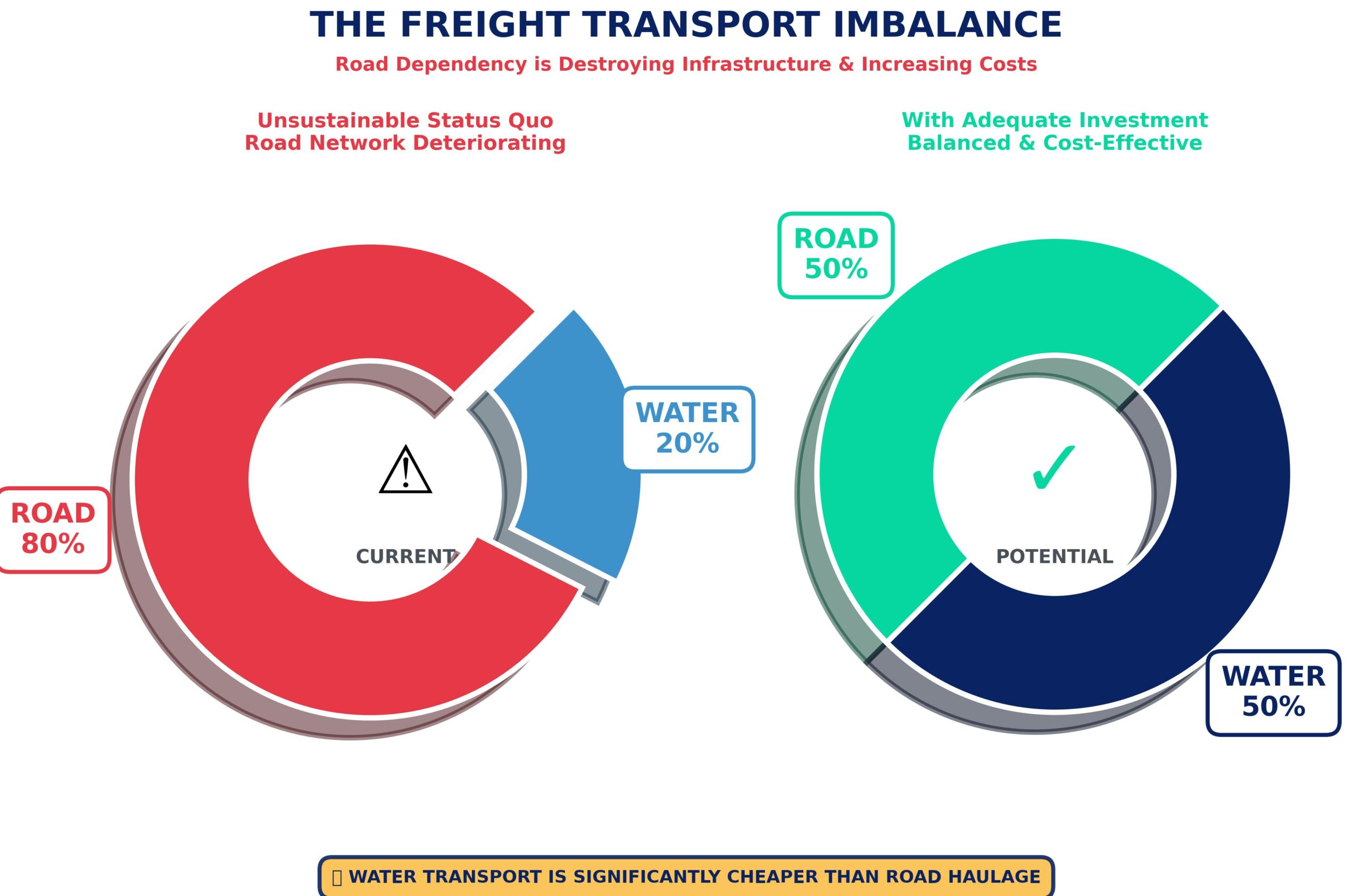
THE INLAND WATERWAYS OPPORTUNITY: CHEAP, SAFE, IGNORED
Nigeria’s heavy reliance on road transport for over 80 percent of freight movement is both economically irrational and infrastructurally destructive. Water transport is globally recognized as significantly cheaper than road haulage, yet Nigeria’s inland waterways remain chronically underfunded, unsafe, and underutilized.
The minister’s appeal for increased waterways funding was framed around safety—curbing accidents and loss of lives. But the economic argument is equally compelling. Shifting even 20 percent of current road freight to waterways would:


- Reduce road deterioration, extending the lifespan of highway infrastructure
- Lower logistics costs for manufacturers and distributors
- Decrease carbon emissions from heavy truck traffic
- Ease urban congestion in cities along major freight corridors
- Create new economic activity around river ports and inland terminals
Yet year after year, waterways receive token allocations that barely cover operational costs, much less the investment needed to make them viable alternatives. The proposed 2026 budget continues this pattern of benign neglect.
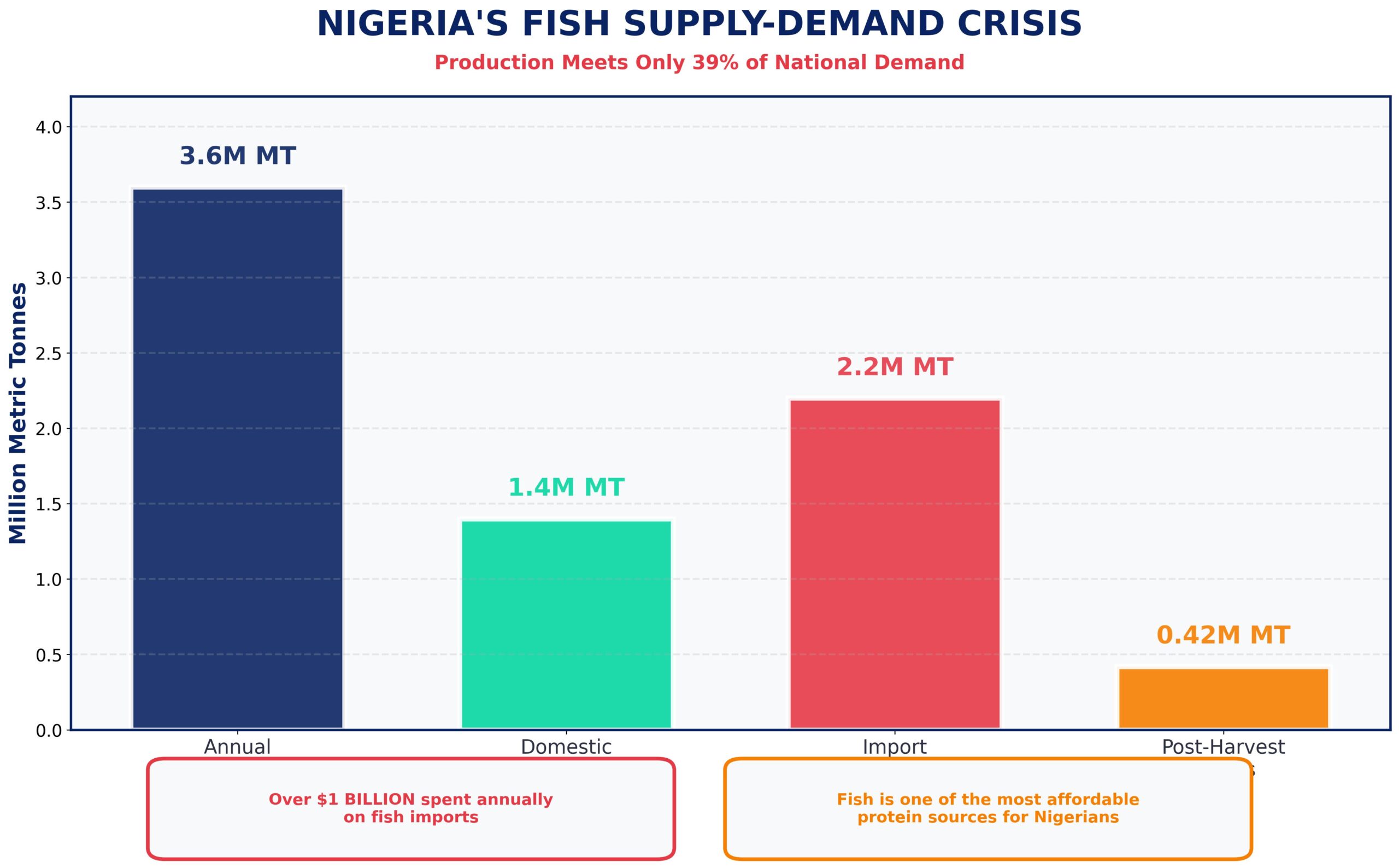
THE FISH IMPORT TRAP: FOOD SECURITY MEETS FOREX DRAIN
Nigeria’s fish sector presents one of the clearest cases for urgent investment. Annual demand exceeds 3.6 million metric tonnes. Domestic production struggles to reach 1.4 million metric tonnes. The deficit—over 2.2 million metric tonnes—is met through imports valued at more than one billion dollars annually.
This is not a luxury import situation. Fish is one of the most affordable sources of animal protein for Nigerian households, particularly in coastal and riverine communities. Yet the country spends over $1 billion yearly to import what it could theoretically produce domestically.
The situation is made worse by post-harvest losses of up to 30 percent, which further reduce already inadequate supply. These losses stem from poor storage facilities, inadequate cold chain infrastructure, and inefficient processing methods—all problems that require capital investment to solve.
The minister assured the committee that the ministry is “working hard to increase local fish production and reduce importation.” But without substantial budgetary support, such assurances ring hollow. You cannot build cold storage facilities, establish fish processing plants, or develop aquaculture infrastructure without capital.
The math is brutal but simple: spending ₦10.5 billion domestically to build fish production capacity makes far more economic sense than spending $1 billion (roughly ₦1.5 trillion at current exchange rates) annually on imports. Yet the budget reflects no such strategic thinking.
WHAT THIS BUDGET CAN ACHIEVE: A REALISTIC ASSESSMENT
If the ₦10.5 billion is approved and—critically—actually released, what might the ministry accomplish?
Minimal operational continuity is the minister’s own assessment, and there is no reason to dispute it. The budget allows for:
- Basic administrative functions: Paying salaries, maintaining offices, conducting routine oversight
- Essential maintenance: Keeping existing infrastructure from complete collapse
- Selective interventions: Perhaps a handful of small-scale pilot projects in priority areas
- Crisis management: Responding to immediate problems as they arise
What the budget cannot achieve:
- Meaningful port modernization to reduce congestion and improve efficiency
- Waterways infrastructure development to shift freight from road to water
- Aquaculture expansion to meaningfully close the fish production gap
- Maritime safety upgrades beyond bare-minimum equipment replacement
- Regulatory capacity building to match international standards
- Blue economy initiatives to tap ocean resources sustainably
In essence, this is a budget for survival, not growth. It keeps the ministry alive but does not enable it to fulfill its mandate. For a sector handling 90 percent of international trade, this represents a catastrophic failure of prioritization.
CRITICAL OVERSIGHTS: WHAT THE BUDGET IGNORES
Several glaring omissions undermine the budget’s already limited potential:
1. No Strategy for Reversing Agency Revenue Deductions
The budget proposal identifies excessive deductions as a core problem but offers no mechanism or dedicated allocation to negotiate, compensate for, or legally challenge these deductions. The agencies will continue bleeding revenue.
2. Insufficient Allocations for Safety and Emergency Response
Given the minister’s emphasis on waterways safety and recurring accidents, the budget should have included dedicated safety infrastructure spending—life jackets, rescue boats, communication equipment, training programs. These appear absent or inadequately funded.
3. No Meaningful Aquaculture Investment
Closing a 2.2 million metric tonne fish deficit requires industrial-scale aquaculture development. This demands hatcheries, feed mills, extension services, and farmer financing programs. The capital allocation shows no evidence of such ambition.
4. Port Technology Deficits Unaddressed
Modern ports run on digital systems—automated cargo handling, electronic documentation, real-time tracking. Nigeria’s ports lag decades behind. The budget includes no visible allocation for technology upgrades that could radically improve efficiency.
5. Climate Adaptation Ignored
As a maritime and fisheries ministry, climate change should be central to planning. Rising sea levels, ocean warming, and weather pattern changes directly affect all subsectors. The budget reflects no climate adaptation or mitigation strategy.
6. Private Sector Partnership Mechanisms Absent
Given fiscal constraints, the ministry should be aggressively pursuing public-private partnerships for infrastructure development. The budget includes no dedicated allocation for PPP structuring, feasibility studies, or transaction advisory services.
7. Human Capital Development Overlooked
Maritime expertise—naval architects, marine engineers, aquaculture specialists, port managers—requires continuous training and development. There is no evidence of a robust capacity-building allocation.
THE BOTTOMLINE: A SECTOR TOO CRITICAL TO FAIL, TOO NEGLECTED TO SUCCEED
Minister Oyetola’s budget presentation was, in essence, a cry for help dressed in bureaucratic language. Behind the technocratic terminology and fiscal jargon lies a stark reality: Nigeria is systematically undermining one of its most strategically vital sectors.
The marine and blue economy is not a discretionary concern. It is the foundation upon which Nigeria’s trade, commerce, and food security rest. When 90 percent of international trade moves through your ports, maritime efficiency becomes synonymous with economic competitiveness. When over 40 million people depend on fishing for livelihood, aquaculture becomes a matter of social stability.
Yet the budget treats this sector as an afterthought—not because policymakers are ignorant of its importance, but because immediate fiscal pressures consistently override long-term strategic thinking. The federal government’s approach resembles a homeowner who, facing a cash crunch, stops paying for roof repairs while the ceiling leaks. The short-term savings are real; the long-term costs are catastrophic.
Three fundamental truths emerge from this budget crisis:
First, the current model of funding the maritime sector is economically irrational. Self-funding agencies that generate substantial revenue should not be bled dry through excessive deductions. They should be strengthened, allowed to retain more of their earnings, and encouraged to expand operations. The federal government’s current approach is like taxing a successful business into bankruptcy.
Second, the disconnect between budget approval and budget release has become a farce. When only 1.7 percent of capital allocations actually reach the implementing ministry, the budget process itself loses credibility. Either approve realistic budgets and release funds, or stop pretending the paper allocations mean anything.
Third, the ministry needs at minimum a ten-fold budget increase to begin addressing its mandate seriously. ₦100 billion annually would still be modest for a sector of this importance, but it would at least enable strategic interventions rather than mere survival.
Senator Wasiu Eshilokun’s assurance that the National Assembly will “carefully examine the proposals” is welcome, but examination alone will not solve the underlying structural problems. The Senate and House committees have an opportunity—perhaps an obligation—to fundamentally rethink how Nigeria funds its maritime sector.
This might mean:
- Legislation protecting self-funding agency revenues from excessive deductions
- Multi-year funding commitments for major infrastructure projects
- Automatic budget release mechanisms tied to fiscal performance indicators
- Establishment of a dedicated blue economy development fund with guaranteed annual allocations
- Congressional oversight of the Accountant-General’s deduction policies
Without such structural reforms, the ₦10.5 billion budget—whether approved or not, whether released or not—will remain what Minister Oyetola himself acknowledged: enough to survive, insufficient to succeed.
Nigeria’s maritime sector deserves better. More importantly, Nigeria’s economy requires better. The question is whether those holding the purse strings will recognize this reality before the cost of neglect becomes insurmountable.
The minister has done his job. He has sounded the alarm, presented the evidence, and made the case. Now the responsibility shifts to the National Assembly and, ultimately, to the presidency.
Will they respond with the urgency this crisis demands, or will they approve another aspirational budget that remains largely unimplemented, consigning the marine and blue economy to another year of “minimal operational continuity”?
The answer to that question will reverberate far beyond the ministry’s offices. It will be felt in every port, on every waterway, in every fishing community, and ultimately, in the price Nigerians pay for goods and food.
The time for carefully examining proposals has long passed. The time for decisive action is now.
A Waterways News Special Report
Abuja, February 11, 2026