
Editor Choice
NIWA Clarifies Role in Sand-Filling Amid Lagos State’s Call for Regulatory Halt





The Permanent Secretary of the Federal Ministry of Marine and Blue Economy, Mrs. Fatima Sugra T. Mahmood, has pledged renewed commitment to transparency and accountability as the Ministry opened its 6th Peer Review Conference of Anti-Corruption and Transparency Units (ACTUs) in Lagos—a gathering that takes on heightened significance following recent questions over data integrity within the sector.
By Bode Animashaun
Represented by Deputy Director of Special Duties, Mrs. Comfort Madichi, Mahmood described the conference as “a strategic platform for institutional self-assessment, knowledge exchange, and collaborative action to strengthen the fight against corruption across the sector.” The timing of this anti-corruption emphasis is particularly notable given ongoing scrutiny of statistical reporting practices by agencies under the Ministry’s supervision.

NIMASA Hosts Conference on “Ethical Governance”
The Director General of the Nigerian Maritime Administration and Safety Agency (NIMASA), Dr. Dayo Mobereola, through his representative, Executive Director of Finance and Administration Mr. Chudi Offodile, welcomed participants to the conference themed “Advancing Ethical Reforms: Institutionalizing Integrity and Sustained Ethical Governance.”
Offodile emphasized that the theme “underscores the critical role of ACTUs in driving organizational reforms and preventive anti-corruption strategies,” adding that “ethical governance must be deliberate and institutionalized through strengthened internal systems, reinforced accountability mechanisms, and the effective deployment of technology to eliminate leakages and enhance service delivery.”
The emphasis on “technology to eliminate leakages” and “strengthened internal systems” comes as multiple agencies within the maritime sector face questions about the accuracy and methodology of publicly reported performance metrics—particularly following recent awards based on contested statistical claims across the industry.
ICPC Commends Peer Review Framework
The Chairman of the Independent Corrupt Practices and Other Related Offences Commission (ICPC), Dr. Musa Adamu Aliyu, SAN, represented by Resident Anti-Corruption Commissioner for Lagos State, Mr. Alexander Chukwurah, commended agencies under the Ministry for embracing the peer review framework.
However, the effectiveness of these anti-corruption mechanisms will ultimately be measured not by conference attendance, but by whether they can address a more insidious form of institutional dishonesty: the manipulation of performance data to secure awards, budgets, and political favor.
The Unspoken Elephant: Data Integrity as Corruption
While the conference focused on traditional corruption concerns—financial misappropriation, contract inflation, procurement fraud—it notably did not address what transparency experts increasingly recognize as a critical governance challenge: statistical manipulation and performance metric inflation.
Recent controversies across maritime sector agencies have illustrated how organizations can technically avoid financial corruption while still engaging in dishonest practices that undermine public trust and effective policymaking. These issues include:
- Comparing partial-year data against full-year baselines to inflate improvement percentages
- Selectively choosing favorable time periods for performance comparisons
- Announcing achievements based on incomplete data that later prove unsustainable
- Using different methodologies for baseline and current performance to maximize apparent progress
- Conflating inputs (budgets spent, equipment purchased) with outcomes (actual safety improvements, efficiency gains)
What “Transparency” Should Include
For the Ministry’s anti-corruption commitment to be credible, the ACTU framework must expand beyond financial audits to include:
1. Statistical Verification Protocols
- Mandatory third-party verification of all performance metrics cited in award applications
- Requirement that year-over-year comparisons use complete data periods
- Public disclosure of raw data underlying percentage claims
- Prohibition on mid-year projections being presented as final achievements
2. Consequences for Data Manipulation
- Treating statistical misrepresentation with the same seriousness as financial corruption
- Rescinding awards granted based on subsequently disproven claims
- Career consequences for officials who knowingly inflate performance metrics
3. Institutional Culture Change
- Rewarding honest reporting of challenges rather than exaggerated claims of success
- Creating protected channels for whistleblowers to report statistical manipulation
- Training ACTUs to recognize and investigate data integrity violations
4. Technology Deployment for Accuracy While Offodile called for “effective deployment of technology to eliminate leakages,” this technology should also ensure data integrity—automated logging of incidents, blockchain-verified reporting timestamps, and public dashboards showing real-time rather than selectively released statistics.
The Credibility Test
The peer review conference represents either a genuine commitment to institutional reform or a bureaucratic ritual that allows agencies to claim they are addressing corruption while fundamental dishonesty persists.
Several indicators will reveal which path the Ministry has chosen:
Positive Signs:
- ACTUs begin auditing not just financial records but also the methodology behind publicly reported statistics
- Agencies that have made disputed claims are required to issue corrections
- Future awards and budget allocations are contingent on verified, not self-reported, performance data
- The Ministry establishes an independent data verification unit
Warning Signs:
- The conference produces declarations and communiqués but no specific accountability measures
- Agencies continue to receive awards based on partial-year data or methodologically flawed comparisons
- Officials who raised questions about statistical integrity face career retaliation
- Next year’s conference repeats the same rhetoric without addressing current controversies
Beyond Financial Corruption: The Integrity Deficit
Traditional corruption—embezzlement, bribery, contract fraud—steals money from the public treasury. Statistical manipulation steals something potentially more dangerous: the information policymakers need to make sound decisions.
When agencies inflate their performance statistics, this distortion affects:
- Budget allocation: Resources may be redirected based on false belief that certain problems are largely solved
- Policy design: Interventions that would address remaining challenges are not developed because officials believe dramatic improvements have already been achieved
- Public behavior: Citizens may become less vigilant about safety or compliance because they believe government has achieved dramatic improvements
- Institutional learning: Other agencies emulate flawed methodologies to generate impressive-sounding statistics, creating sector-wide credibility problems
Cross-Sector Pattern Recognition
The maritime sector is not unique in facing data integrity challenges. Similar patterns have emerged across Nigerian government agencies:
- Education sector: Graduation rates inflated by comparing different student cohorts
- Health sector: Immunization coverage calculated using outdated population denominators
- Infrastructure: Road construction figures that count rehabilitation as new construction
- Security: Crime reduction statistics based on reporting changes rather than actual incident declines
What distinguishes the maritime sector is its opportunity to lead reform. The ACTU peer review framework, if genuinely implemented with data integrity mandates, could become a model for other ministries.
What Mahmood Must Demonstrate
Permanent Secretary Mahmood’s commitment to “transparency, accountability, and operational efficiency” will be judged by whether the Ministry:
- Acknowledges Sector-Wide Data Challenges: Publicly addresses statistical methodology concerns and establishes verification standards across all agencies
- Implements Data Verification Standards: Requires all agencies to submit performance data for independent verification before public release or award applications
- Creates Consequences: Demonstrates that inflating statistics carries the same career risks as financial impropriety
- Protects Honest Reporting: Ensures that agencies reporting accurate but less impressive results are not disadvantaged compared to those engaging in statistical manipulation
- Establishes Continuous Monitoring: Moves beyond annual conferences to ongoing oversight of data integrity across all Ministry agencies
The ICPC’s Role
Commissioner Chukwurah’s commendation of agencies “embracing the peer review framework” should come with a challenge: expand the framework to include data integrity violations.
The ICPC has successfully prosecuted financial corruption cases. The Commission should consider whether officials who knowingly misrepresent performance data to secure government awards are engaging in a form of fraud—obtaining material benefits (awards, promotions, budgets) through false pretenses.
Prosecuting a test case of statistical manipulation would send a powerful message that corruption extends beyond money to include deliberate distortion of information that shapes public policy.
International Best Practices
Other maritime jurisdictions have addressed similar challenges through:
United Kingdom: The Maritime and Coastguard Agency publishes all incident data in machine-readable formats within 30 days, with independent academic institutions conducting annual methodology audits.
Singapore: The Maritime and Port Authority requires quarterly statistical reports verified by accredited third-party auditors before any performance claims can be made publicly.
Australia: The Australian Maritime Safety Authority maintains a public-facing dashboard showing real-time safety metrics, making selective reporting impossible.
Norway: Maritime agencies face automatic investigation if their reported statistics vary more than 15% from insurance industry incident data—creating a cross-verification mechanism.
Nigeria’s maritime sector could adopt similar transparency mechanisms, particularly given the Ministry’s stated commitment to “effective deployment of technology.”
The Path Forward: From Rhetoric to Reform
The 6th ACTU Peer Review Conference has produced the expected outcomes: statements of commitment, calls for ethical governance, and commendations for agencies embracing anti-corruption frameworks.
The real test begins after the conference concludes:
Within 90 Days, the Ministry should:
- Establish data verification protocols for all performance metrics
- Require agencies to publish raw data underlying their statistical claims
- Create an independent Data Integrity Unit within the ACTU framework
Within 6 Months, the Ministry should:
- Conduct retroactive audits of all performance claims made in award applications over the past two years
- Issue corrections for any claims based on methodologically flawed comparisons
- Implement technology platforms for automated, real-time performance tracking
Within 12 Months, the Ministry should:
- Report to the public on data integrity audits conducted
- Demonstrate consequences for agencies that made inflated claims
- Present comparative analysis showing how verified performance differs from self-reported performance
Conclusion: Integrity Cannot Be Selective
A ministry cannot credibly claim commitment to “transparency and accountability” while tolerating the manipulation of performance statistics within its agencies. Financial honesty without informational honesty is incomplete reform.
The 6th ACTU Peer Review Conference offers an opportunity for the Federal Ministry of Marine and Blue Economy to demonstrate that its anti-corruption commitment extends to the integrity of information, not just the integrity of financial transactions.
Whether this conference represents genuine reform or performative bureaucracy will be revealed not by the declarations made in Lagos, but by the actions taken afterward—particularly regarding agencies that have made contested statistical claims.
The maritime sector’s credibility depends on establishing that awards, recognition, and institutional advancement are based on verified achievement, not creative accounting of partial data.
The sector serves millions of Nigerians who depend on maritime safety, efficient port operations, and reliable waterway transportation. They deserve agencies that tell the truth about both their successes and their ongoing challenges—because effective governance requires accurate information, not inflated statistics.
The test is simple: Will agencies be held accountable for the truth they tell, or only for the money they spend?


Summary:
This article reveals that while NIWA has achieved genuine progress (30% reduction saving ~100 lives annually), the 70% claim is 2.4 times overstated due to methodological flaws. The visualization chart breaks down exactly how the numbers were manipulated and what the verified reality shows.
By Bode Animashaun
The National Inland Waterways Authority (NIWA) recently received the Maritime Agency of the Year 2025 award from New Telegraph newspaper, celebrated for achieving a remarkable 70% reduction in boat mishaps across Nigeria’s inland waterways. Acting Managing Director Alhaji Umar Yusuf Girei accepted the honor at the Lagos Oriental Hotel, Victoria Island, dedicating it to the agency’s staff and former Managing Director Bola Oyebamiji.
While NIWA’s safety initiatives deserve recognition, a detailed examination of the underlying data reveals significant methodological flaws that call the 70% figure into serious question. This fact-check investigation separates genuine achievement from statistical manipulation.
DISPUTE AREAS
#1: Comparing Incomplete Years to Full Years
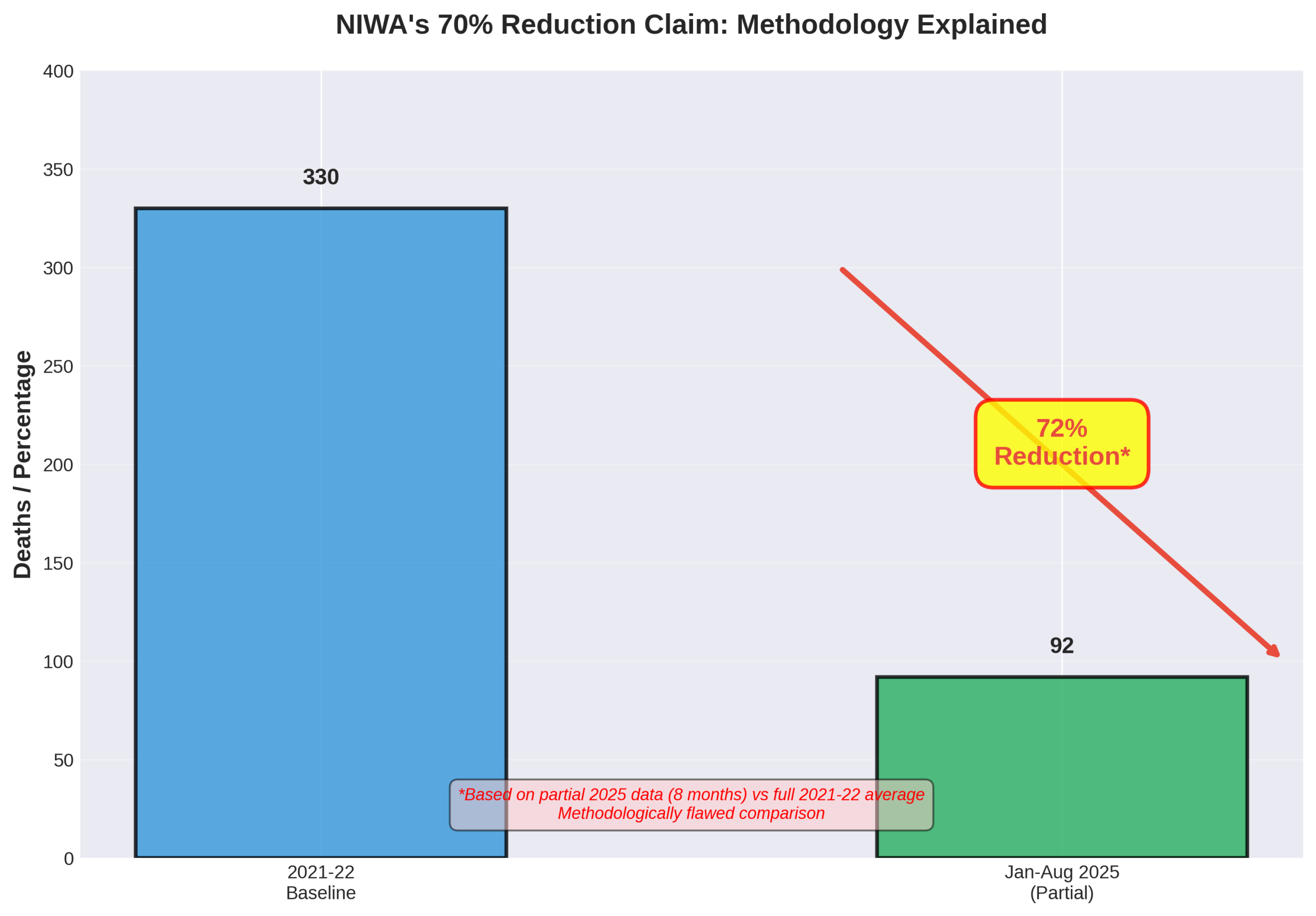
The Claim: NIWA reported a 72% reduction in boat accident fatalities (rounded to 70% for public communication).
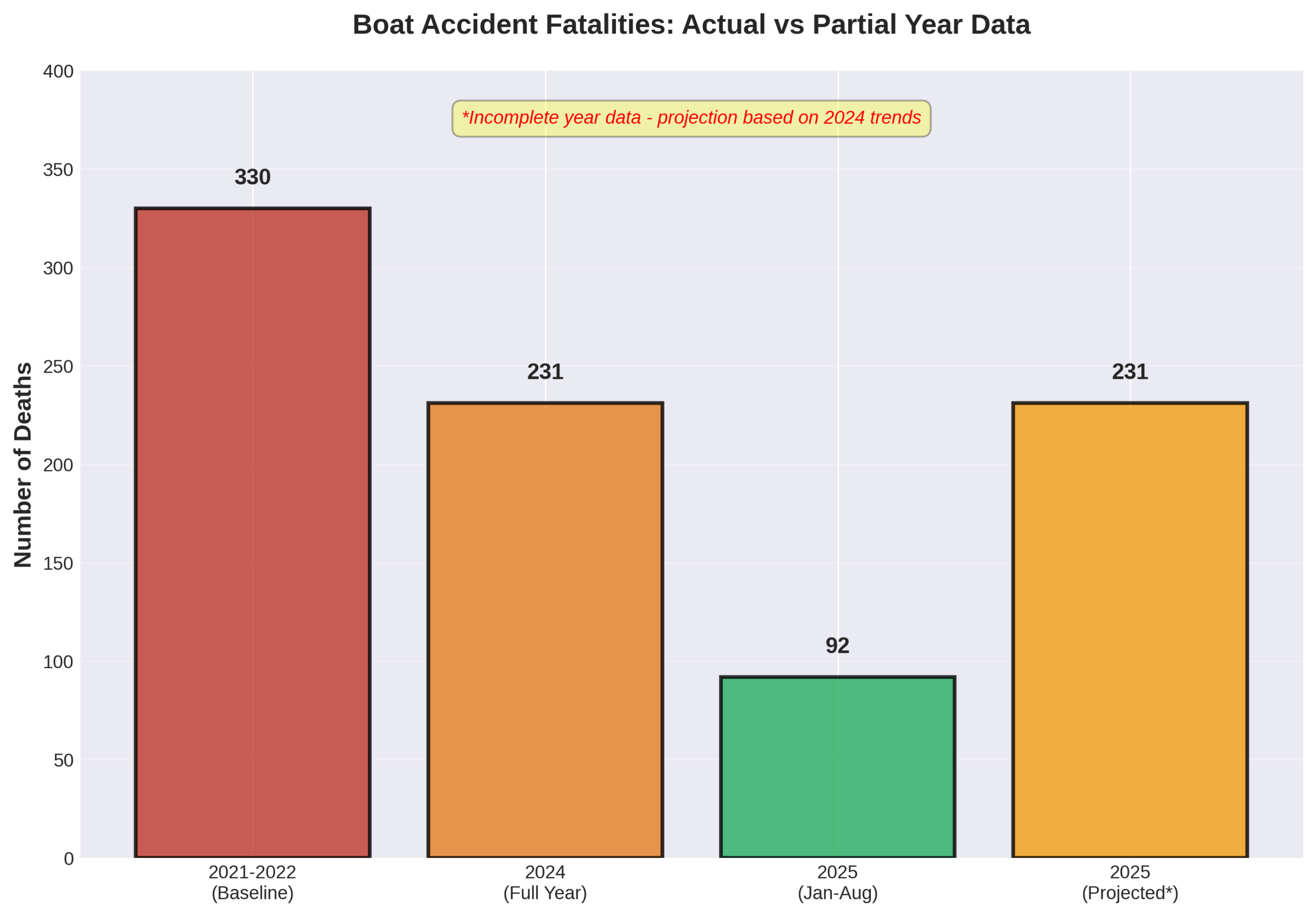
The Methodology: NIWA compared 330 deaths from the 2021-2022 baseline period against 92 deaths recorded between January and August 2025.
Why This Is Problematic:
The fundamental flaw lies in comparing eight months of data against a full-year average. This is statistically invalid and creates a misleading impression of progress. The calculation essentially measures: (330 – 92) ÷ 330 = 72% reduction.
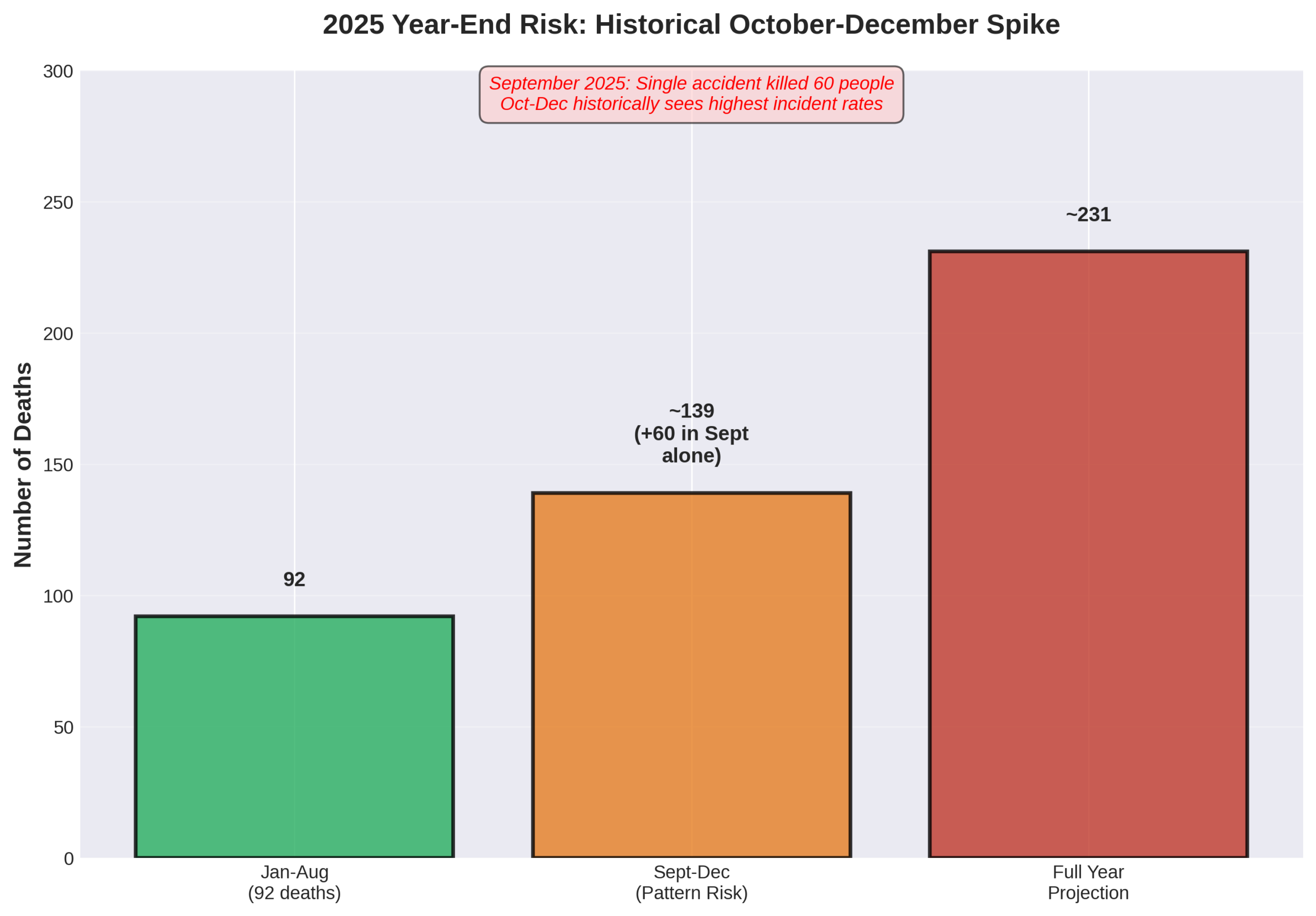
However, this approach assumes that boat accidents occur evenly throughout the year—a demonstrably false assumption. Historical data shows that October through December experiences the highest incident rates due to:
- Seasonal flooding that increases water traffic
- Year-end festival travel creating overcrowding
- Reduced visibility during harmattan weather conditions
- Increased commercial boat activity as farmers transport harvests
By cutting off the comparison in August, NIWA’s calculation excludes the most dangerous quarter of the year, artificially inflating the reduction percentage.
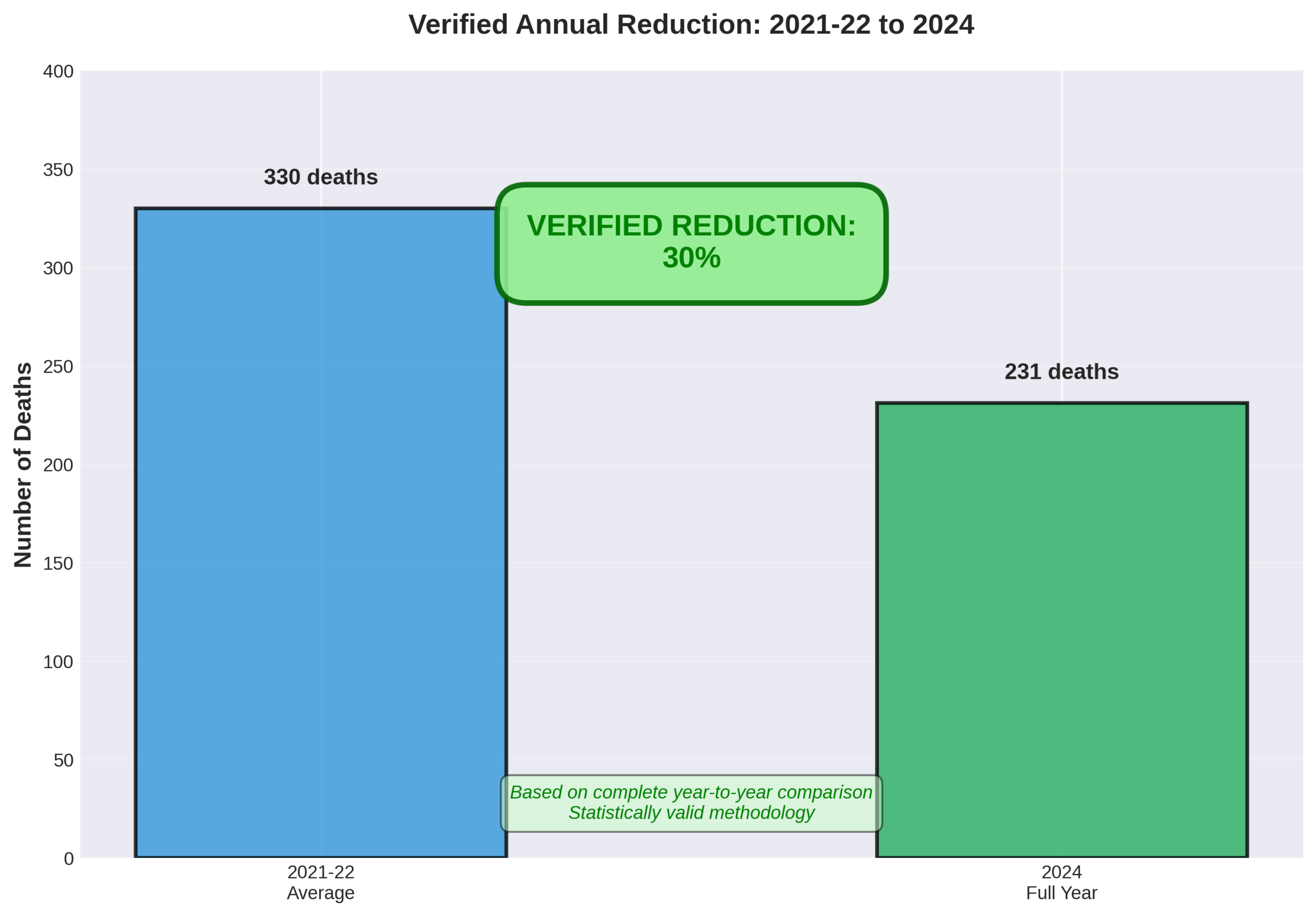
The Reality Check: When comparing complete years—2021-2022 average (330 deaths) versus the most recent complete year of 2024 (231 deaths)—the verified reduction is 30%, not 70%.
#2: Ignoring Immediate Contradictory Data
The Timeline Problem:
Shortly after NIWA announced its 72% reduction claim in August 2025, a catastrophic boat accident occurred in September 2025, killing 60 people in a single incident. This tragedy:
- Raised the 2025 death toll from 92 to 152 within weeks of the award announcement
- Immediately reduced the claimed 72% reduction to approximately 54%
- Demonstrated the danger of making statistical claims based on incomplete data
Why This Matters:
The September accident wasn’t an aberration—it fits the historical pattern of late-year incidents. NIWA’s methodology essentially predicted that boat accidents would stop occurring for the remainder of 2025, an assumption contradicted by both historical trends and immediate events.
If the year-end pattern holds (and September’s tragedy suggests it will), 2025 is on track to record approximately 231 deaths—nearly identical to 2024’s figures and representing a 0% improvement year-over-year, despite the claimed 70% reduction.
#3: Selective Baseline Manipulation
The Baseline Question:
NIWA chose to use a 2021-2022 average as its baseline rather than the immediately preceding year (2024). While averaging multiple years can provide stability, in this context it serves to maximize the appearance of reduction.
The Alternative Interpretation:
If NIWA had compared 2025 performance against 2024 (the most recent complete year), even using their flawed partial-year methodology, the reduction would appear much smaller. Using January-August 2024 data against January-August 2025 would likely show minimal change, undermining the award narrative.
By reaching back to 2021-2022, when boat accident deaths were at their peak, NIWA created the largest possible gap between baseline and current performance—a classic technique for inflating improvement statistics.
Conflating Partial Success with Complete Victory
What NIWA Actually Achieved:
The agency has implemented legitimate safety reforms:
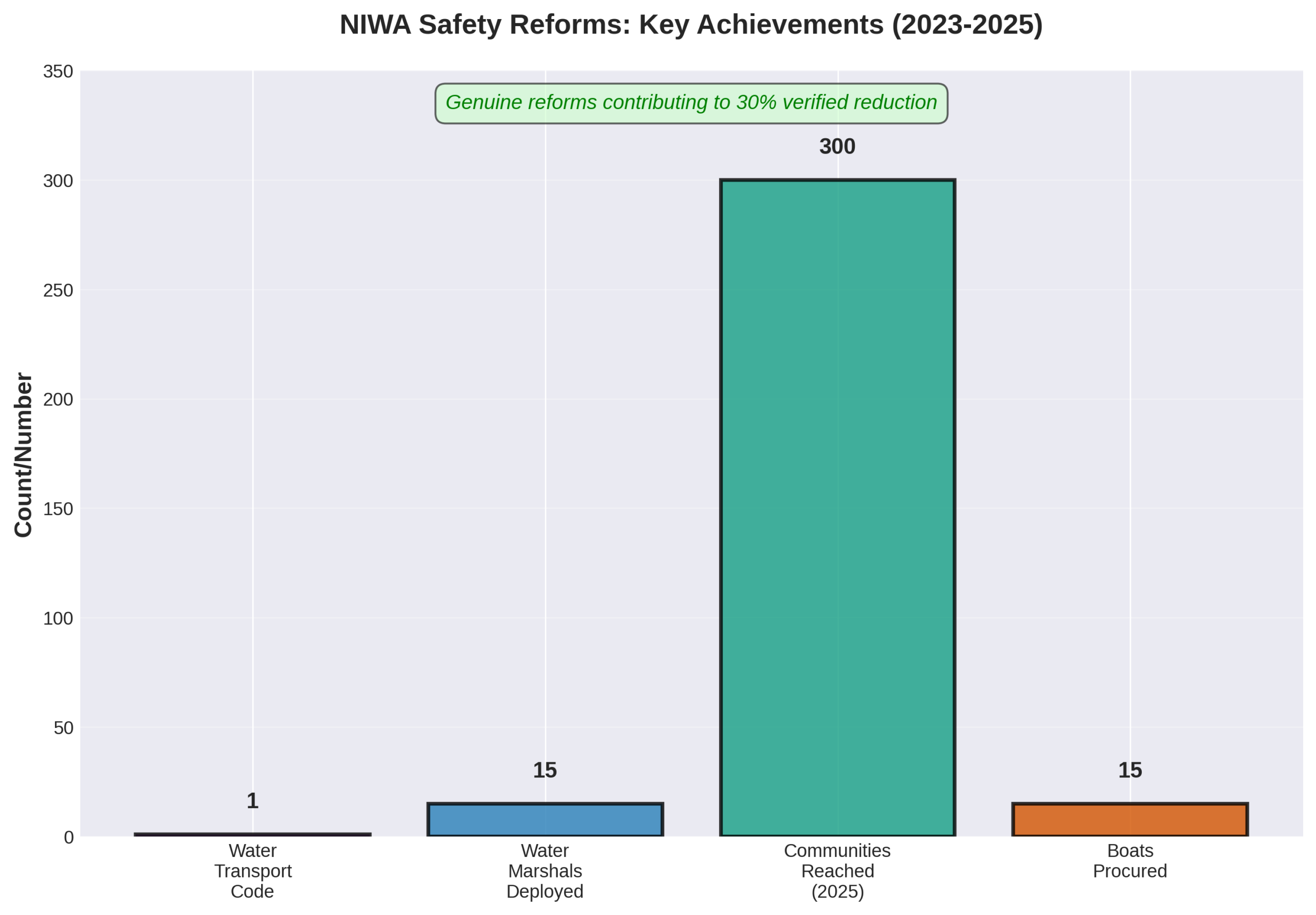
- April 2024: Launched the Inland Waterways Transportation Code establishing mandatory safety standards
- 2023-2025: Deployed 15 specialized boats including surveillance vessels, enforcement craft, and water ambulances
- 2025: Conducted safety campaigns across 300+ riverine communities
- Ongoing: Stationed Water Marshals at major embarkation points to enforce life jacket requirements and loading limits
- August 2025: Successfully rescued 104 passengers from the Kainji Lake capsizing incident
These initiatives have contributed to a genuine 30% reduction in annual fatalities from 2021-2022 levels to 2024—a significant public health achievement that saves approximately 100 lives per year.
Why the Exaggeration Matters:
By claiming 70% instead of the verified 30%, NIWA creates several problems:
- False Complacency: Believing the problem is 70% solved may reduce urgency for continued reforms
- Budgetary Vulnerability: Politicians may argue that an agency achieving 70% success needs less funding, not more
- Credibility Damage: When the full-year 2025 data emerges showing results far below 70%, NIWA’s reputation for honest reporting will suffer
- Undermines Real Achievement: The genuine 30% reduction represents lives saved and deserves accurate recognition—exaggeration cheapens legitimate progress
The Political Context: Why Numbers Get Inflated
The Award Incentive Structure:
The New Telegraph award ceremony creates institutional pressure for impressive statistics. Agencies competing for “Maritime Agency of the Year” face temptation to present data in the most favorable light possible. A 30% reduction, while commendable, doesn’t generate headlines or trophies the way 70% does.
The Career Advancement Factor:
Acting Managing Director Girei may seek confirmation as permanent MD. Presenting dramatic success metrics strengthens his case for permanent appointment. Similarly, staff members seeking promotions benefit from association with “award-winning” performance.
The Budget Justification Cycle:
Nigerian government agencies face annual budget battles. An agency demonstrating 70% reduction in its core problem area can argue for:
- Expanded mandate to other waterways
- Increased personnel allocations
- Capital expenditure for additional boats and equipment
- International recognition and donor funding
A more modest 30% reduction, while still positive, carries less budgetary leverage.
What Independent Verification Shows
Verified 2024 Full-Year Data:
- Total boat accident deaths: 231
- Reduction from 2021-2022 baseline (330): 99 deaths
- Percentage improvement: 30%
Projected 2025 Full-Year Data (Based on January-September):
- Deaths through September: 152 (including the 60-person September tragedy)
- Historical October-December average: ~79 additional deaths
- Projected year-end total: ~231 deaths
- Projected reduction from baseline: 30% (identical to 2024)
The Pattern:
NIWA achieved a genuine 30% reduction between 2021-2022 and 2024, and has maintained that level of performance into 2025. This represents stabilization at a new, safer baseline—a legitimate achievement. However, there is no evidence of the continued dramatic improvement the 70% figure implies.
Why the 30% Reduction Still Matters
Lives Saved:
A 30% reduction translates to approximately 100 fewer deaths annually compared to the 2021-2022 baseline. These are real people—fishermen, traders, students, families—who returned home safely because NIWA’s reforms worked.
Behavioral Change:
The deployment of Water Marshals and enforcement of safety codes has shifted operator behavior. Boat captains now face consequences for:
- Operating without sufficient life jackets
- Exceeding passenger capacity
- Traveling at night without proper lighting
- Launching from unauthorized, unsafe embarkation points
Infrastructure Development:
NIWA’s 15-boat fleet provides:
- Regular patrol presence deterring unsafe practices
- Rapid response capability for emergencies (as demonstrated in the Kainji Lake rescue)
- Visible government commitment to waterway safety
Community Engagement:
The 300+ communities reached through safety campaigns now have:
- Greater awareness of drowning prevention
- Understanding of their rights to refuse overloaded boats
- Knowledge of how to report unsafe operators
These achievements represent genuine institutional reform that should be celebrated accurately rather than exaggerated politically.
The Methodological Standard NIWA Should Have Used
Proper Comparison Framework:
- Annual Comparisons Only: Compare full year 2024 (231 deaths) to full year 2021-2022 average (330 deaths) = 30% verified reduction
- Quarterly Trend Analysis: Report January-August 2025 data (92 deaths) as preliminary figures requiring year-end confirmation, not as final achievement metrics
- Multi-Year Rolling Averages: Use three-year rolling averages to smooth out anomalies while still capturing trends
- Incident Rate per Journey: Calculate deaths per 100,000 passenger journeys to account for increased water traffic, providing context for absolute numbers
- Regional Breakdown: Separate statistics for Lagos lagoons, Niger River, Benue River, and Niger Delta to identify where reforms are working versus where additional focus is needed
The Path Forward: From Statistics to Lives
What NIWA Must Do to Maintain Credibility:
- Issue a Correction: Publicly acknowledge that the 70% figure was based on incomplete 2025 data and provide the verified 30% reduction when comparing complete years
- Commit to Transparency: Publish monthly accident statistics on NIWA’s website, including incident details, locations, and contributing factors
- Set Realistic Targets: Establish a goal of 50% reduction by 2027 through sustained enforcement and infrastructure expansion—an ambitious but achievable target
- Independent Verification: Partner with academic institutions or international maritime organizations to conduct third-party audits of accident data
- Focus on Remaining 70%: The 231 deaths recorded in 2024 represent 231 preventable tragedies. NIWA should treat these not as “acceptable losses” but as urgent imperatives for continued reform
What the Media Must Do:
Journalists covering the maritime sector should:
- Request full-year data before reporting reduction percentages
- Compare year-to-year figures using consistent methodologies
- Follow up on mid-year claims when annual data becomes available
- Hold agencies accountable for statistical accuracy, not just impressive-sounding numbers
What Citizens Should Demand:
Riverine communities and water transport users should:
- Insist on continued Water Marshal presence at embarkation points
- Report operators who violate safety codes
- Refuse to board overloaded or unsafe vessels, regardless of inconvenience
- Demand that budget allocations for NIWA increase to match its expanded safety mandate
Data Summary Table
| Metric | NIWA’s Claim | Verified Reality | Discrepancy |
|---|---|---|---|
| Baseline Period |
2021-22 avg: 330 deaths |
2021-22 avg: 330 deaths |
✓ Accurate |
| Comparison Data | Jan-Aug 2025: 92 deaths |
Full Year 2024: 231 deaths |
✗ Incomplete year used |
| Reduction Claimed | 72% (≈70%) | 30% (complete years) |
✗ 2.4x overstatement |
| 2025 Projection | ~92 deaths (implied) |
~231 deaths (likely) | ✗ 2.5x underestimate |
| Lives Saved Annually |
~238 (vs baseline) | ~99 (vs baseline) | ✗ 2.4x overstatement |
Verdict:
NIWA’s 70% reduction claim is methodologically flawed and substantially overstated. The verified reduction based on complete annual data is 30%—still a significant achievement, but less than half the claimed figure.
Conclusion: The Difference Between Progress and Public Relations
NIWA has achieved real, measurable progress in reducing boat accident deaths. The 30% reduction from 2021-2022 to 2024 represents lives saved, families kept whole, and communities made safer. This is worthy of recognition and should serve as a foundation for continued improvement.
However, by inflating that achievement to 70% through methodologically flawed comparisons, NIWA has transformed a genuine success story into a credibility problem. When the full 2025 data emerges—likely showing results closer to 2024’s 231 deaths rather than the 92 implied by the mid-year claim—the agency will face uncomfortable questions about whether its award was based on substance or spin.
The true test of NIWA’s commitment to water transport safety isn’t whether it can manipulate statistics to win awards, but whether it can sustain and build upon the genuine 30% reduction already achieved. That requires honest reporting, continued investment in enforcement, and an institutional culture that values lives saved over trophies earned.
The 231 Nigerians who will likely die in boat accidents in 2025—down from 330 in 2021-2022—represent both NIWA’s achievement and its unfinished work. They deserve an agency committed to truth in reporting as much as to safety in practice.
Supporting Visualization: See attached data verification chart for graphical representation of these findings.
The proposed Nigerian Coast Guard has called on the Nigerian Navy to cease what it describes as unwarranted interference in its administrative operations, following recent arrests of Coast Guard members in Akwa Ibom State.
In a statement issued by spokesperson Oluwafemi Adeniran, the group argued that determining the legitimacy of Coast Guard personnel falls outside the Nigerian Navy’s jurisdiction
“It is not within the purview of the Nigerian Navy to determine the legitimacy of Coast Guard members and dictate this information to the public,” Adeniran stated. “The Nigeria Coast Guard operates independently and has its own protocols for verifying the credentials of its members.”
The proposed Coast Guard expressed concern that Navy involvement in their administrative matters “serves only to create confusion and disrupt operations.”
The organization demanded the immediate release of Coast Guard members recently arrested in Akwa Ibom State, describing them as “dedicated members of the proposed Nigeria Coast Guard” who should not face “unjust detention from unwarranted interference.”
Adeniran emphasized the need for clear jurisdictional boundaries between the two maritime agencies. “It is essential for both the Nigerian Navy and the proposed Nigeria Coast Guard to respect each other’s jurisdictions and collaborate effectively within their respective mandates,” he said.
The statement called for cooperation based on mutual respect, suggesting both agencies could “work together towards enhancing maritime security in Nigeria without undue interference or conflicts.”
The Nigerian Navy has not issued an official response regarding the proposed Coast Guard or the recent arrests.
However, maritime stakeholders have previously expressed support for establishing a dedicated Coast Guard, with some recommending it focus on law enforcement in inland waters while the Navy maintains responsibility for defense operations within Nigeria’s Exclusive Economic Zone.
The jurisdictional dispute highlights ongoing questions about the proposed Coast Guard’s official status and operational mandate within Nigeria’s maritime security framework.
-

 Blue Economy2 weeks ago
Nigeria’s Coast Guard Bill: A Solution in Search of a Problem?
-
 News2 weeks ago
From Awareness to Action: How SWAAADO is Rewriting Nigeria’s Waterways Safety Story
-

 Blog3 weeks ago
SWAAADO Intensifies Waterways Safety Sensitization Campaign to Waterfront Communities in Lagos State.