Tourism
Safeguarding Nigeria’s Wildlife Haven: The Story of Yankari Game Reserve.


A Natural Treasure in Nigeria’s Heartland
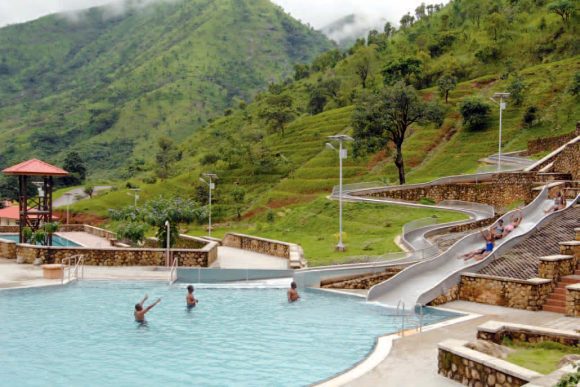
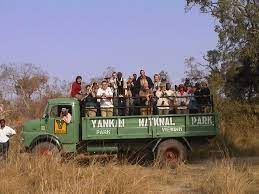
Nestled in the northeastern region of Nigeria, Yankari Game Reserve stands as a testament to West Africa’s remarkable biodiversity. Spanning 2,244 square kilometers in Bauchi State, this protected area represents Nigeria’s most precious wildlife sanctuary—a verdant oasis teeming with life in a region increasingly challenged by habitat fragmentation and human pressure.
Yankari’s significance extends far beyond its boundaries. The reserve shelters between 100-150 elephants, which may seem modest by East African standards, but represents the only viable elephant population remaining in Nigeria and one of the most important in West Africa. These majestic creatures share their home with the critically endangered West African lion—remarkably, Yankari harbors one of only four known surviving populations of this distinct lion subspecies.
The diversity doesn’t end there. African buffalo graze across the savanna landscapes, while hippopotamuses cool themselves in the waterways. Roan antelope and hartebeest represent just a fraction of the antelope species that dart through the grasslands. Together, these animals form a complex ecosystem that has persisted despite mounting pressures.
Yankari’s journey as a protected area began in 1956 when it was established as a game reserve. In recognition of its ecological importance, it was elevated to national park status in 1991 and placed under the management of Nigeria’s National Parks Service. However, in 2006, management responsibility transferred back to Bauchi State Government—a pivotal moment that would later prove challenging for conservation efforts.
Today, Yankari has emerged as one of Nigeria’s premier tourism destinations. Visitors from across the country and beyond come to experience its natural splendor, contributing to its growing popularity and economic significance for the region.

The Shadow of Extinction: Conservation Challenges
The transfer of management to Bauchi State Government in 2006 marked the beginning of a difficult period for Yankari. Insufficient funding and management neglect created vulnerabilities that poachers were quick to exploit. The situation deteriorated to the point where poachers operated with alarming boldness—sometimes even near the tourist camp at the reserve’s heart.
Elephants, with their ivory tusks, became prime targets. Unverified reports suggest that substantial numbers were killed to supply Nigeria’s illegal ivory trade—a devastating blow to an already vulnerable population. The crisis extended beyond direct poaching as human-wildlife conflict intensified along the reserve’s boundaries.
When elephants ventured beyond the protected area and damaged crops, affected communities understandably grew resentful. This tension eroded local support for conservation efforts and sometimes led communities to assist poachers from outside the region—creating a dangerous cycle that threatened the elephant population’s survival.
The reserve’s other large mammals faced similar pressures as they were hunted to supply the lucrative bushmeat trade. Beyond the immediate conservation concern, this poaching undermined Yankari’s ecotourism potential by reducing wildlife sightings—a critical factor for visitor satisfaction and the reserve’s economic sustainability.

Turning the Tide: A Collaborative Conservation Approach
A significant turning point came in 2014 when the Wildlife Conservation Society (WCS) entered into a Memorandum of Understanding with Bauchi State Government for the co-management of Yankari. This partnership granted WCS full responsibility for the ranger program—a critical element in any protected area’s defense system.
The results were remarkable. Protection levels improved significantly, and both hunting and illegal livestock grazing decreased dramatically. This success stemmed from a comprehensive approach that addressed multiple aspects of conservation management:
Enhanced Ranger Operations
At the core of Yankari’s resurgence lies the implementation of SMART-based ranger patrols (Spatial Monitoring and Reporting Tool). This system represents more than just technology—it’s a comprehensive approach to protected area management that combines software, training methodologies, and standardized practices.
WCS revitalized the ranger force through intensive training programs, strict supervision protocols, and improved working conditions. Rangers received essential field equipment, camping allowances, and field rations. To boost morale and effectiveness, an incentive system included arrest bonuses that rewarded diligent protection efforts.
These changes curtailed opportunities for corruption while simultaneously boosting morale and discipline throughout the ranger force. As patrol effectiveness increased, hunting levels declined, allowing wildlife populations to stabilize and begin recovering.
Technological Innovations
The conservation team didn’t rely solely on ground patrols. They integrated aerial support for surveillance, creating a multilayered protection system. These aerial patrols detected illegal activities that might escape ground teams and guided law enforcement efforts more efficiently.
Perhaps most innovative was the deployment of GPS/satellite collars on elephants. This technology established real-time monitoring of elephant movements, allowing rangers to anticipate where protection was most needed. Rather than stretching limited resources across the entire reserve, patrols could be directed to areas frequented by elephant herds—a strategic approach that maximized impact.
Community Engagement
Recognizing that long-term conservation success depends on local support, WCS initiated conservation education programs in communities surrounding Yankari. The approach was elegantly simple yet profound: provide opportunities for local schoolchildren to visit the reserve.
Remarkably, many children living along Yankari’s boundaries had never entered the protected area despite its proximity. By experiencing the reserve firsthand, these young people could develop personal connections to their natural heritage. This strategy plants seeds for generational change in attitudes toward conservation and wildlife protection.
The Road Ahead
As successful as these interventions have been, the work continues. WCS maintains its commitment to supporting Bauchi State Government in protecting Yankari Game Reserve and its irreplaceable biodiversity. The focus remains on safeguarding elephant and lion populations while ensuring the reserve’s broader ecological health.
Yankari’s story illustrates both the challenges and possibilities in African conservation. Despite facing serious threats, collaborative efforts between government authorities, conservation organizations, and local communities have begun to reverse the decline. With continued dedication and support, this wildlife haven may not only survive but thrive as a cornerstone of Nigeria’s natural heritage for generations to come.
For the elephants that trumpet across its savanna and the lions that roar in its night, Yankari represents their last, best hope in Nigeria—a responsibility that conservationists carry with determination and growing optimism.
Blue Economy
Water Transport Operators Push For Recognition At The Table As FTAN Demands Tourism Policy Reforms

Water Transport Operators Push For Recognition At The Table As FTAN Demands Tourism Policy Reforms
By Okeoghene Onoriobe | Waterways News
Nigeria’s tourism sector needs urgent policy reform, stronger collaboration and fresh investment to compete globally and water transport operators who are members of the Federation of Tourism Associations of Nigeria (FTAN) want that conversation to include the boats, ferries and waterway routes that move millions of Nigerians and could move even more tourists.
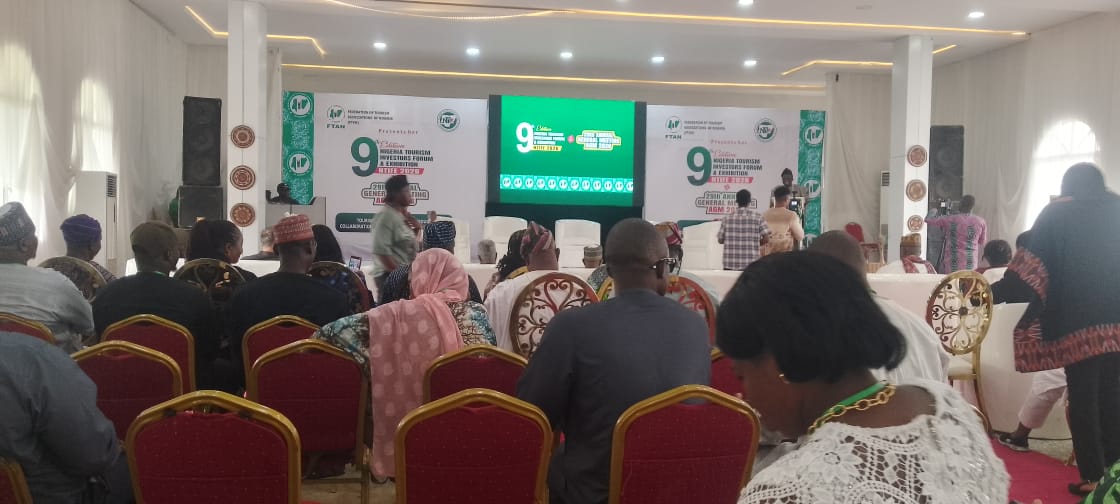
That was the underlying idea raised by Comrade Babatope Fajemirokun National President of Waterfront Boat Owners and Transporters Association of Nigeria (WABOTAN) represented by Chief Raymond Gold, National PRO of WABOTAN, at the ninth Nigeria Tourism Investors Forum and Exhibition (NTIFE), held over two days in Abuja under the theme “Tourism Transformation Through Collaboration, Policy Alignment and Investment.” The events took place between Thursday 30 to Friday 31 of July 2026. Waterfront Boat Owners and Transporters Association of Nigeria (WABOTAN), is a corporate member of FTAN
The forum drew policymakers, investors, tourism operators and development partners.
FTAN President Dr Aliyu Badaki used his welcome remarks to press the Federal Government to overhaul tourism-related laws and regulatory frameworks that he said breed duplication, institutional conflict and legal uncertainty for operators. He said the federation’s newly developed Tourism Transformation Mandate (TTM) is meant to unify every segment of the tourism value chain.
Babatope Fajemirokun, through Chief Gold emphasizes the fact that this value chain for Nigeria’s coastal cities, riverine communities and inland waterway corridors, runs directly through water transport.
Badaki argued that fragmented efforts and weak coordination have held back the sector for years, and called for regulation that enables rather than inhibits growth.
Minister of Art, Culture, Tourism and Creative Economy, Hannatu Musawa, who declared the forum open, described tourism as a strategic pillar for economic diversification. She said government cannot finance tourism transformation alone and that private capital must lead, with government’s role limited to creating an enabling environment for investors.
In his keynote address, Sen. Ibrahim Ida called for stronger collaboration among government, the private sector and host communities, saying tourism can generate jobs, foreign exchange and diversification if properly harnessed.
Panel sessions, moderated by Justina Ovat of Calabar Hospitality House Limited, featured Nigeria Tourism Development Authority (NTDA) Director-General Dr Ola Awakan, who called for policy consistency and investor-friendly incentives, and Dr Philip Maga of the National Institute for Hospitality and Tourism (NIHOTOUR), who flagged the need for stronger workforce training to close skills gaps across the hospitality industry.
Hospitality entrepreneur Lanre Balogun urged investors to prioritise disciplined, long-term planning.
Nigeria Watch
For Nigeria’s water transport sector, NTIFE’s reform push is not a side conversation. Rather, it is a direct stakeholder issue. FTAN’s corporate membership includes Waterfront Boat Owners and Transporters Association of Nigeria (WABOTAN) and the Association of Tourist Boat Operators and Water Transporters of Nigeria (ATBOWATON), both drawn from the ranks of operators who run the boats, ferries and water taxis that already serve Lagos’s creeks, the Niger Delta’s riverine towns and coastal leisure routes. Their presence inside FTAN means the federation’s demand for regulatory clarity and coordinated policy carries an inland-waterways and blue-economy dimension that goes beyond hotels and heritage sites.
That matters because water tourism sits at an awkward regulatory junction in Nigeria. A tourist boat operator answers not only to tourism authorities but potentially to NIWA, LASWA (in Lagos) and NIMASA on safety standards, and state government tourism boards, precisely the kind of overlapping jurisdiction Badaki described as breeding “duplication, institutional conflicts… and operational uncertainty.”
The 2026 Supreme Court ruling affirming NIWA’s regulatory authority over inland waterways nationwide, following the NIWA-LASWA jurisdictional dispute, is a live example of the kind of institutional friction FTAN’s Tourism Transformation Mandate is meant to resolve, at least on the tourism side.
Musawa’s call for private capital to lead tourism investment also lands squarely on water transport operators’ desks. Vessel acquisition, safety retrofitting, jetty infrastructure and life-jacket compliance all require capital that small-scale operators, including WABOTAN’s member-cooperative structure, have struggled to access, a gap that echoes the long-running CVFF disbursement failure in the cabotage shipping sector and underscores why financing bottlenecks are not unique to cargo and passenger shipping alone.
If FTAN’s push for policy alignment succeeds in drawing water transport formally into Nigeria’s tourism investment architecture, operators like WABOTAN and ATBOWATON could gain a stronger claim to inclusion in infrastructure programmes such as the Omi-Eko electric ferry project and LASWA’s ferry safety development initiatives, turning routine commuter water transport into a recognised leisure and tourism asset, not just a transportation afterthought.
For a sector accustomed to being regulated but rarely consulted, this call by Babatope Fajemirokun is a modest but meaningful call.
NATOP to Spotlight Water Tourism, Blue Economy Integration as Part of 10th AGM
By Okeoghene Onoriobe | Waterways News
The Nigerian Association of Tour Operators (NATOP) has signalled a stronger pivot towards waterfront tourism and blue economy integration as it prepares to host its landmark 10th Annual General Meeting in Lagos from July 8 to 10, 2026. One of the event’s significant talking points is a NIWA-backed waterways clean-up initiative.
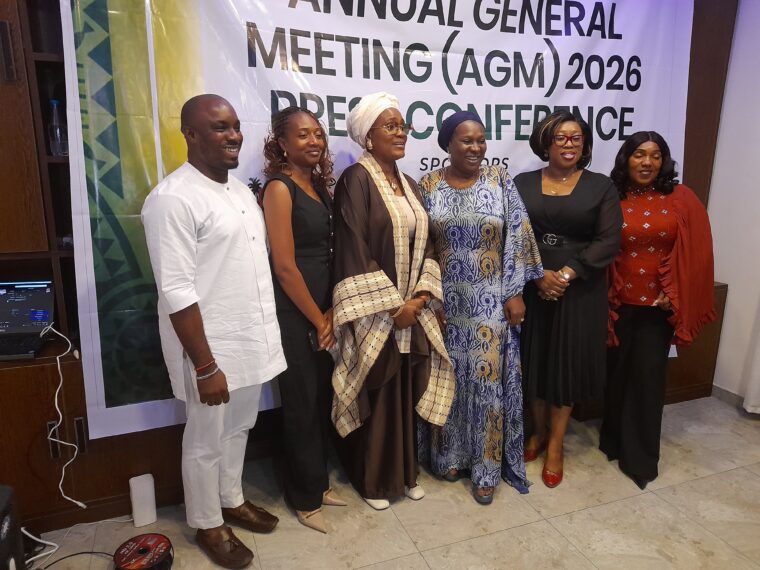
NATOP President Hajia Bolaji Mustapha, speaking at a pre-event press conference in Ikeja, Lagos, said the association deliberately chose to return the anniversary edition of its AGM to Lagos given the state’s central role in Nigeria’s tourism promotion architecture and its expanding waterfront economy. She disclosed that delegates and stakeholders attending the three-day event will participate in a waterways cruise and beach tourism experience as part of a structured programme designed to give industry operators hands-on exposure to marine and coastal tourism opportunities within the Lagos corridor.
Representing the Lagos State Government, Permanent Secretary of the Ministry of Tourism, Arts and Culture, Mrs. Bopo Oyekan-Ismaila, reaffirmed the state’s commitment to environmental sustainability and destination development. She described Lagos as Nigeria’s foremost tourism hub and underlined the need for all stakeholders to take collective responsibility for protecting the waterfront assets that underpin that standing. Tourism, she noted, remains a strategic pillar within Governor Babajide Sanwo-Olu’s THEMES development agenda, with waterfront leisure among its priority segments.
Mrs. Joy Alexander-Oziegbe, Chairman of the 2026 AGM Planning Committee, said the conference which is being organized under the theme “Unlocking Nigeria’s Tourism Potential: Strengthening Tour Pillars for Sustainable Destination Development”, would provide a platform to reframe Nigeria’s tourism narrative. “There are many positive stories about Nigeria that need to be told. Through this AGM, we want to demonstrate that tourism remains a sustainable sector capable of generating jobs, attracting investment, and driving economic development,” she said.
Project Manager of the NATOP Secretariat, Mr. Uche Chinonso, announced that the association will formally commission its first permanent national secretariat on July 8 as part of the annual general meeting activities. The facility, a three-bedroom office complex currently at finishing stage, ends over a decade of the association operating from rented venues, giving NATOP a fixed institutional base for stakeholder engagement, industry meetings, and tourism promotion coordination.
On the waterways dimension, one of the event’s sponsors and Chief Executive Officer of Parts Central Limited, Mr. Henry Olaoluwa Onifade, disclosed that his company has signed an agreement with the National Inland Waterways Authority (NIWA) to undertake a comprehensive clean-up of Nigeria’s inland waterways. Onifade said the initiative targets the environmental degradation that has long constrained water-based transportation, recreation, and tourism activity, and called on the Lagos State Government to collaborate with the company to drive the programme’s success.
The AGM is expected to draw tour operators, travel professionals, hospitality operators, investors, government agencies, and development partners from across Nigeria.
Nigeria Watch: When Tourism Discovers the Waterways
The announcement by Parts Central Limited of a NIWA-backed waterways clean-up agreement, surfacing at a tourism industry event, is the kind of development that deserves more than a footnote. It points to something important: the convergence, long overdue, between Nigeria’s inland waterways governance agenda and the commercial tourism sector that has every incentive to see that agenda succeed.
Nigeria’s inland and coastal waterways are simultaneously among its most neglected and most valuable assets. The Lagos waterfront alone, from the Bight of Benin coastline to the network of creeks threading through the metropolis — represents tourism potential that most peer cities would have monetised decades ago. Instead, those same waterways carry the weight of decades of environmental neglect: plastic waste, hydrocarbon discharge, illegal sand mining, and encroachment that has degraded water quality, narrowed navigable channels, and reduced what should be scenic and commercially productive corridors to hazards.
NIWA has repeatedly acknowledged the clean-up challenge. The authority has launched initiatives, signed memoranda, and articulated policy frameworks around environmental management of Nigeria’s 10,000-kilometre inland waterway network. What has been consistently absent is sustained, funded, private-sector-driven execution on the ground. If Parts Central’s agreement with NIWA translates into verifiable, systematic clean-up operations, rather than a corporate social responsibility announcement that fades after the press conference, it would represent meaningful progress.
The NATOP angle matters here for a specific reason. Tour operators are among the most commercially sensitive observers of waterway quality. When waterways are polluted, cruise routes become unmarketable. Beach tourism loses its premium positioning. The economic argument for clean waterways, which NIWA has sometimes struggled to communicate to the federal budget process, becomes self-evident when private tourism investors start losing money on dirty creeks. Bringing tourism operators into the waterways governance conversation, even informally through events like this AGM, creates a constituency for environmental protection that complements the regulatory function of NIWA and the Lagos State Waterways Authority.
The Lagos State Government’s participation through the Ministry of Tourism, Arts and Culture is also worth noting. Tourism and waterways management have largely operated in separate policy silos in Lagos, with LASWA focused on transport regulation and concession management, and the tourism ministry focused on events and destination promotion. A closer alignment between the two, such as the proposed NATOP AGM waterways cruise, isn’t just symbolic but serve both mandates. A cleaner, better-regulated waterfront is a tourism asset. And a commercially active waterfront tourism sector generates the political and economic pressure needed to sustain waterway maintenance and investment.
The test, as always, will be what comes after the AGM is over and the cruise boats return to the jetties.
Waterways News — waterwaysnews.ng
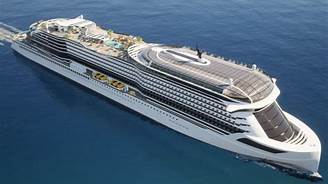
Meyer Werft’s All-Electric Cruise Ship Sets New Course for Maritime Decarbonisation
German shipbuilder targets 95% emissions cut with battery-powered vessel; no engine room, no emissions — and a deadline of 2031
By Ighoyota Onaibre | Waterways News Correspondent
German shipbuilding giant Meyer Werft has unveiled plans to construct what would be the world’s first fully battery-powered cruise ship, a project that maritime observers say could redefine the economics and engineering of green cruising and send a powerful signal to shipping nations still wrestling with decarbonisation commitments.
The project, developed under what the company calls Project Vision, is designed to slash greenhouse gas emissions by up to 95% compared to conventional cruise vessels — a target that places the concept well ahead of the IMO’s revised GHG Strategy, which mandates a net-zero trajectory for international shipping by 2050.
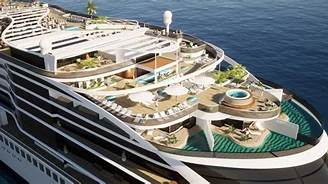
A Ship Without an Engine Room
At the heart of the design is a radical departure from conventional cruise ship architecture. Rather than an engine room, the vessel would house a large-scale battery facility drawing on technology already proven in electric ferry operations across northern Europe. The battery system has been developed by Corvus Energy, a firm whose solutions currently power zero-emission passenger ferries in Norway and beyond.
Project engineer Johannes Bade explained the rationale in straightforward terms: “Batteries are now in a state — with the energy density and other aspects, safety, life cycle and so on — where we say, now this is the most energy-efficient way to do cruises.”
The ship would recharge at port between voyages, functioning, in essence, as the world’s largest floating electric vehicle. Meyer Werft says the technology is ready and that the vessel could be delivered by 2031, provided a commercial contract is secured before the end of 2026.
Infrastructure: The Critical Bottleneck
The ambition, however, runs ahead of the infrastructure. Of the roughly 1,500 ports that cruise ships call at globally each year, only 41 currently have the shore-power capacity to recharge a large battery-powered vessel. Meyer Werft acknowledges the gap but points to momentum building in Europe, estimating that approximately 100 European ports could be shore-power ready by 2030.
Industry voices have also weighed in on what the breakthrough represents for the broader net-zero puzzle. Charles “Bud” Darr of Cruise Lines International Association noted that achieving net-zero by 2050 would require a diverse portfolio of solutions: “It is going to take a mosaic or bundle of solutions to get to net zero for 2050. So every innovation is something that we add to that mosaic.”
Darr identified routes in the Mediterranean, Northern Europe, the Norwegian fjords, the Baltic Sea, and the Florida-Bahamas corridor as best suited for fully electric operations, given the shorter distances between port calls.
Nigeria Watch
What Meyer Werft’s all-electric cruise ship means for Nigeria’s blue economy
The announcement from Meyer Werft may appear distant from Nigerian maritime realities, but policymakers, port operators, and blue economy advocates would be wrong to dismiss it as a purely European affair.
Nigeria sits at a critical juncture. The country’s ports — primarily Apapa and Tincan in Lagos, with deep seaport projects at Olokola, Badagry, Ibom, Bakassi, and Bonny at varying stages of development — are being designed and concessioned in the same decade that global ship technology is pivoting fundamentally away from fossil fuel propulsion. The shore-power infrastructure gap identified in the Meyer Werft project is precisely the kind of planning detail that can determine whether a port remains competitive in the next generation of maritime trade or finds itself stranded with yesterday’s specifications.
Nigeria’s National Ports Authority (NPA) and NIMASA must begin factoring electric vessel readiness into port masterplanning now, not when the first battery-powered liner appears at the horizon. The broader cruise economy — underdeveloped in Nigeria compared to the potential offered by the country’s Atlantic coastline, the Niger Delta waterways, and proximity to Gulf of Guinea island nations like São Tomé — also deserves serious attention. A future in which West Africa becomes a cruise destination of any scale will require the port infrastructure to support it.
There is also a domestic angle. Nigeria’s inland waterway operators and short-sea shipping sector, chronically burdened by fuel costs and ageing diesel-powered fleets, have every reason to track the rapid maturation of large-scale maritime battery technology. What works for a 300-passenger cruise ship in European waters today may well define the economics of a Warri-to-Lagos waterway shuttle or a Lagos Harbour ferry concession within this decade.
The National Inland Waterways Authority (NIWA) and Lagos State Waterways Authority (LASWA) should be monitoring these developments closely.
The IMO’s decarbonisation clock is ticking for all flag states and port nations — Nigeria included. The question is not whether electric propulsion will transform global shipping, but whether Nigeria will be positioned to benefit when it does.
Waterways News Maritime Technology Desk

 Oil and Gas7 months ago
Tantita’s Pipeline Deal: $144m Contract, Rising Output, and the Questions that Deserve Answers
- MARITIME TRADE & SHIPPING7 months ago
World’s Largest Container Ship Sets New Maritime Record with 22,233 TEUs on Single Voyage
- Blue Economy7 months ago
Nigeria’s Coast Guard Bill: A Solution in Search of a Problem?