
Blue Economy
THE 22-YEAR WAIT: A CHRONOLOGY OF BROKEN PROMISES

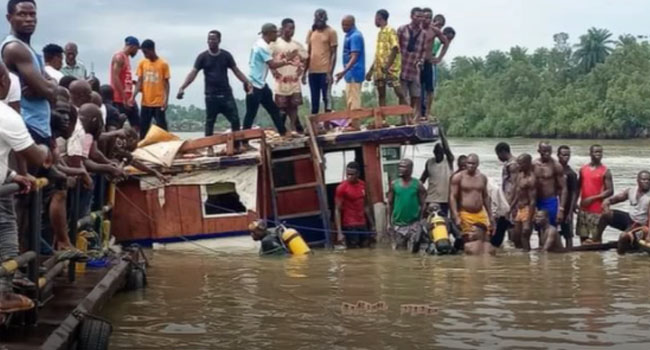
The Stalled Dream and What Hangs in the Balance

By Bode Animashaun, Nigeria Waterways Maritime Correspondent
2003: The Cabotage Act is enacted.

May 2004: The CVFF begins collecting contributions—a 2% surcharge on all cabotage-protected trade. Billions begin accumulating.
2010–2015: Maritime stakeholders grow restless. Public calls for the fund to be activated. Government cites “structural constraints.” No action.
2017–2018: A 2019 maritime industry analysis finds that Nigerian boat owners have lost billions due to government inaction on CVFF. National Assembly holds hearings. NIMASA drafts operational frameworks. Internal disputes over interest rates, fund structure, and eligibility criteria stall progress.
December 2022: The President approves CVFF disbursement. Five commercial banks are appointed as Primary Lending Institutions (PLIs):
- Union Bank
- Zenith Bank
- Polaris Bank
- United Bank for Africa (UBA)
- Jaiz Bank
What happened next? Silence. No disbursements.
April 2023: The National Assembly formally approves CVFF disbursement. Six shipping companies are recommended for funding.
What happened next? More silence. Disputes erupted over interest rates. The PLIs proposed 8.5%, but internal wrangling over fund administration stalled everything.
2023–2024: Maritime organizations—the Ship Owners Association of Nigeria (SOAN), the Chamber of Shipping, maritime law groups—issue repeated press releases, petitions, and warnings. A Federal High Court in Lagos orders NIMASA to disclose full details of CVFF accruals after shipowners question where the money went.
January 2026: Minister Adegboyega Oyetola launches a digital application portal. He pledges that disbursement will commence. NIMASA issues Marine Notices. The government promises “strict governance and transparency.”
It is the fourth formal announcement since 2022.
WHAT’S AT STAKE FOR WATER TRANSPORT USERS
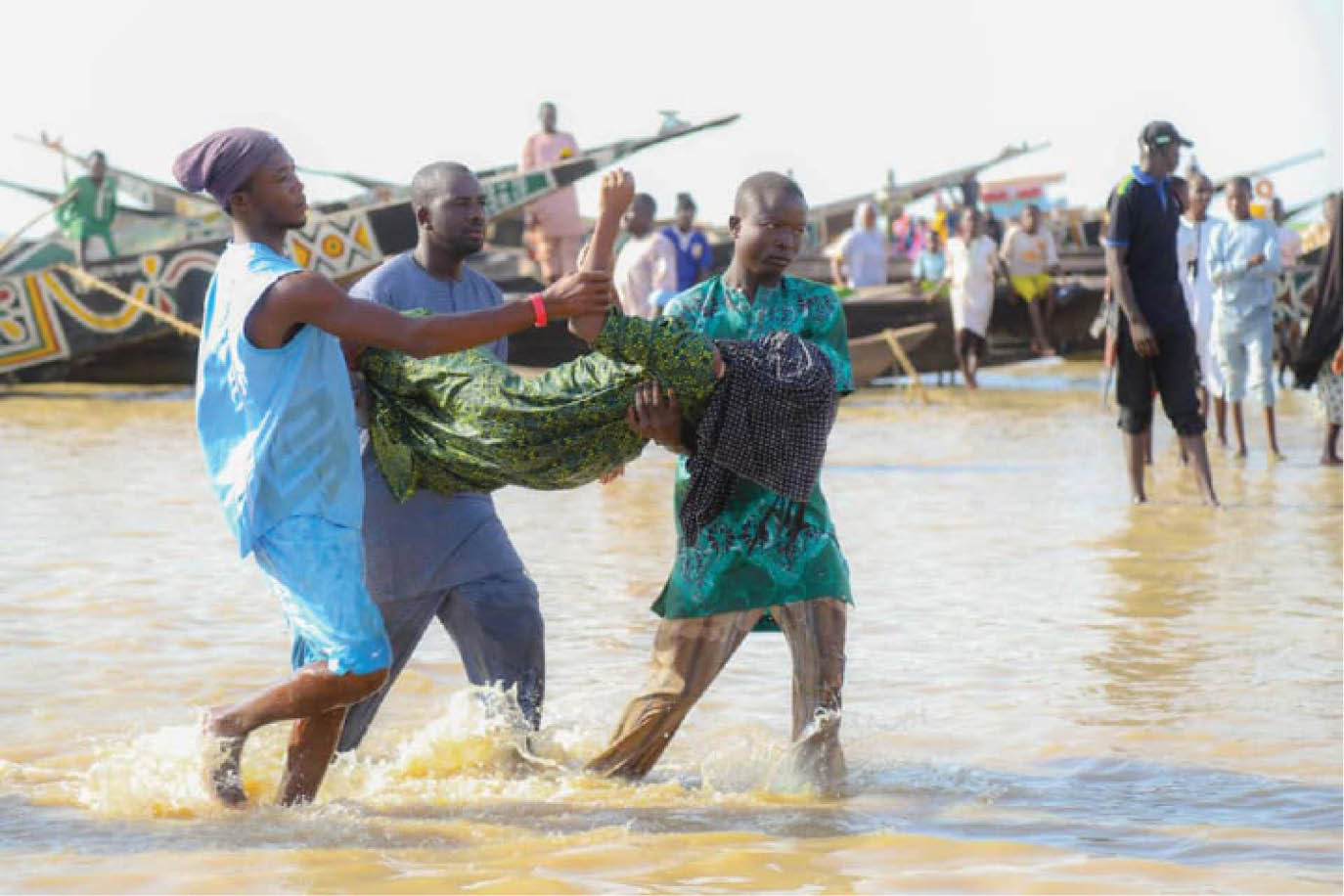
For the average Nigerian depending on waterways for daily mobility, the CVFF delays have translated into tangible hardship.
When Nigerian boat owners cannot access capital, they cannot buy new vessels. When they cannot buy new vessels, they cannot enter markets or expand routes. When they cannot expand routes, foreign operators fill the gap through waivers or illegal operations. When foreign operators dominate, prices remain high and service remains poor.
The mathematics are simple:
- High fares: A passenger traveling between creeks in the Niger Delta might pay rates set without genuine local competition.
- Poor schedules: Routes lack sufficient capacity, forcing commuters to wait hours or accept overcrowded conditions.
- Safety risks: Without a robust domestic fleet, safety standards on local waterways remain weak.
- Limited economic opportunity: Communities dependent on water transport remain disconnected from regional trade.
If the CVFF finally works, the reverse should happen: Nigerian boat owners enter protected markets with new, financed vessels. Competition increases. Fares drop. Services improve. Safety standards rise.
But that is a massive if.
THE SKEPTICISM IS EARNED
Captain Obi’s skepticism is not paranoia. It is the reasonable response of someone who has watched four government announcements produce zero results.
Ask any maritime lawyer, shipowner, or maritime journalist covering the sector, and you will hear variations of the same concern:
Does this government actually intend to follow through, or is this another cycle of announcements designed to mollify the maritime lobby while maintaining the status quo?
The evidence for skepticism is substantial:
- A 22-year track record of inaction—the longest delays in African cabotage financing anywhere on the continent.
- Bureaucratic letharness—Multiple agencies (NIMASA, Finance Ministry, Commercial Banks) must align. Without sustained executive pressure, delays cascade.
- Political prioritization—Maritime development, while important, has never been a top budget priority relative to oil, roads, or power.
- Financing constraints—The 50% NIMASA subsidy requires government funds. If fiscal pressures hit (lower oil revenues, exchange rate crises), the fund could be starved of resources.
- Banker foot-dragging—The five PLIs agreed to participate in 2022 but have not demonstrated urgency in loan processing or competitive interest rates.
- Trust deficit—A 2021 court order demanding NIMASA disclose CVFF accruals signaled that boat owners did not trust the agency’s stewardship of the fund.
Still on CVFF:
CVFF: THE CRITICAL PERIOD AHEAD
THE LOAN THAT COULD CHANGE EVERYTHING—WHY BOAT OWNERS REMAIN SKEPTICAL
HOW THE CVFF APPLICATION AND DISBURSEMENT PROCESS WORKS
© waterwaysnews.ng | Part 2 of 4-Part Investigation


NIMASA, WMU Renew Four-Year Partnership to Train Ten Officers Annually
The Nigerian Maritime Administration and Safety Agency (NIMASA) has renewed its capacity development partnership with the World Maritime University (WMU) in Malmö, Sweden, signing a fresh four-year Memorandum of Understanding that commits the agency to sponsoring at least ten officers annually for a postgraduate programme at one of the world’s foremost maritime institutions.
The renewed MoU, covering the 2026–2029 intake period, builds on an earlier agreement first executed in 2022 and extends NIMASA’s investment in maritime human capital through the 14-month Master of Science programme at WMU, as well as sponsorship of at least one officer for the Master of Philosophy (MPhil) programme delivered jointly by WMU and the International Maritime Law Institute (IMLI) in Malta.
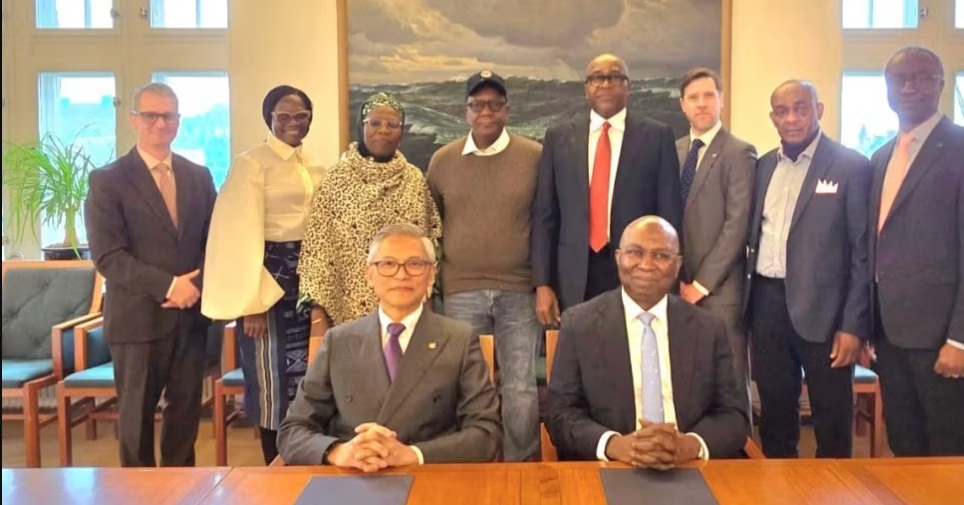
Seated: Director General, Nigerian Maritime Administration and Safety Agency, NIMASA, Dr Dayo Mobereola (right) and President of World Maritime University, WMU, Professor Maximo Q. Mejia Jr. Back row: Director, Legal Services, NIMASA, Heaky Dimowo; (2nd right); Registrar of WMU, Mr. Peter Marriott (3rd right); Executive Director, Finance and Administration, Chudi Offodile (4th right); Director, Administration and Human Resources, NIMASA, Moji Jimoh (3rd left); Head of Training, NIMASA, Oluwseun Olufunke and others during the renewal of its Memorandum of Understanding, MoU on strategic capacity development between NIMASA and theWorld Maritime University (WMU), in Malmö, Sweden
Speaking at the signing ceremony, NIMASA Director General Dr. Dayo Mobereola described the partnership as central to the agency’s capacity development framework, noting that officers trained through the WMU collaboration have strengthened Nigeria’s technical capabilities across maritime safety administration, environmental compliance, maritime law, and shipping management. He added that WMU-trained personnel have also bolstered Nigeria’s representation and engagement at the International Maritime Organization (IMO) and other international forums.
Beyond degree programmes, the renewed agreement covers distance learning, executive professional development, research collaboration, and technical assistance spanning maritime safety, environmental management, seafarer certification, and implementation of international maritime instruments. WMU has also committed to pursuing additional fellowship opportunities from international donors on behalf of qualified NIMASA candidates.
The MoU was endorsed by Dr. Mobereola for NIMASA and by WMU President Professor Maximo Q. Mejia Jr., with NIMASA Executive Director of Finance and Administration Chudi Offodile and WMU Registrar Peter Marriott signing as witnesses.
Established in 1983 under the mandate of the IMO to strengthen global maritime capacity — particularly in developing nations — WMU has since become a globally recognised centre of excellence. Nigeria’s sustained engagement with the university through NIMASA continues to yield a cadre of technically proficient officers driving improvements in national maritime governance and international compliance.
Blue Economy
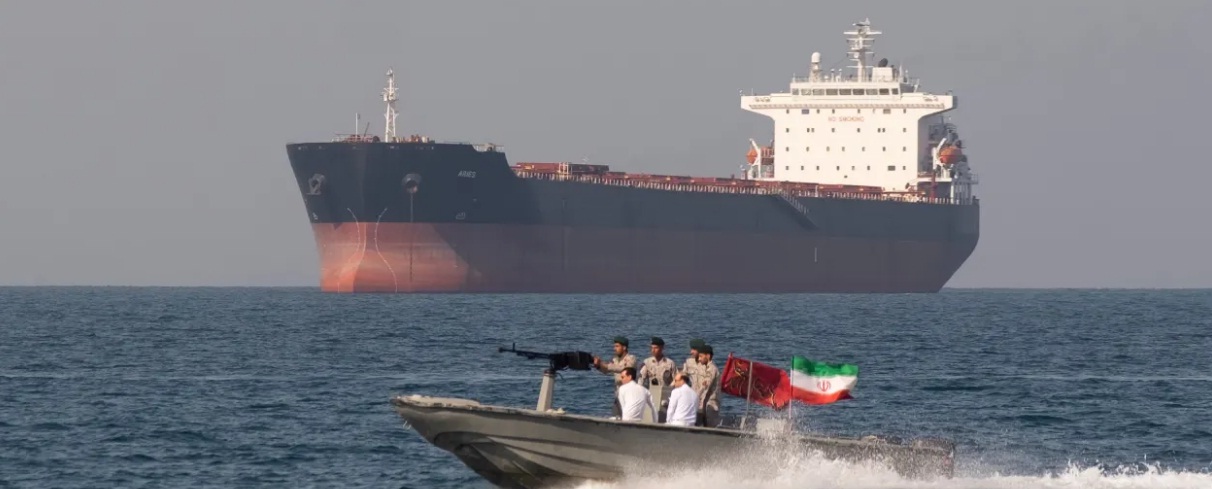
HORMUZ IN FLAMES: HOW THE US-IRAN WAR IS CLOSING THE WORLD’S MOST CRITICAL OIL CORRIDOR — AND WHAT IT MEANS FOR NIGERIA

HORMUZ IN FLAMES: HOW THE US-IRAN WAR IS CLOSING THE WORLD’S MOST CRITICAL OIL CORRIDOR — AND WHAT IT MEANS FOR NIGERIA
By Waterways News Correspondent, Okeoghene Onoriobe
The escalating military conflict in the Middle East has sent shockwaves through global shipping, with the Strait of Hormuz — the narrow waterway through which nearly a fifth of the world’s oil supply passes — now effectively off-limits to commercial vessels.
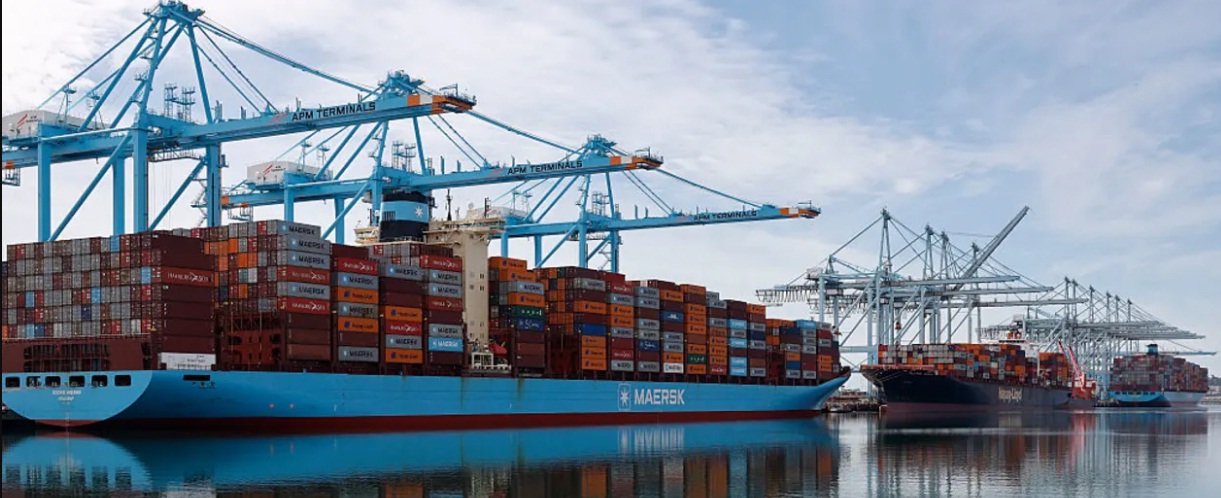
Following joint U.S.-Israeli strikes on Iran over the weekend, the world’s biggest container lines have suspended operations through the strait and are rerouting vessels thousands of kilometres around the Cape of Good Hope. Maersk, Hapag-Lloyd, CMA CGM, and MSC — the four giants that together control the bulk of global container capacity — have all issued emergency advisories pulling their fleets out of the Persian Gulf.
For Nigeria, the consequences are immediate and real. Every tanker carrying crude out of the Gulf, every container ship moving goods into West African ports, and every LNG cargo heading to European buyers now faces longer voyages, higher fuel costs, and inflated freight rates. Nigerian importers — already under pressure from a weakened naira — can expect further cost shocks on goods, machinery, and fuel.
A Choke Point the World Cannot Afford to Lose
The Strait of Hormuz, squeezed between Oman and Iran, is the single most important oil corridor on earth. In 2023, an average of 20.9 million barrels of oil passed through it daily, accounting for roughly 20 percent of global petroleum consumption. Alongside it, the Bab el-Mandeb Strait — the narrow passage connecting the Red Sea to the Gulf of Aden — handled an estimated 12 percent of global seaborne oil trade and eight percent of LNG flows in the same period.
Both waterways are now effectively suspended for major commercial operators.
Maersk confirmed it has halted all vessel crossings through the Strait of Hormuz until further notice, warning that ports in the Persian Gulf, including transshipment hubs Jebel Ali and Khor Fakkan, may face serious delays. The Danish giant has also paused all trans-Suez sailings through the Bab el-Mandeb, rerouting Middle East–India services entirely around the African continent.
“No Real Alternative” — Industry Sounds the Alarm
Peter Sand, chief analyst at global freight benchmarking firm Xeneta, warned that higher container shipping rates must now be factored in across the Middle East region for as long as the conflict continues — adding bluntly that there is “no real alternative” to ocean freight.
“The risk of geopolitics has shown its ugly face with higher frequency and more severity over the past years than ever before,” Sand said. “There is a little bit of fatigue in the industry — you draw 10 contingency plans only to tear them all up because there is a new twist and a new angle to it.”
Energy market analysts say the more pressing threat is not a full closure of the strait — which analysts believe the U.S. and Israel would rapidly neutralise — but the cumulative effect of sporadic attacks on tankers making markets too nervous to operate normally.
“While we are not saying the strait is going to get closed, what the U.S. will not be able to do is control these one-off attacks on tankers,” said Amrita Sen, founder and director of Energy Aspects. “That is enough to make the market extremely cautious about sending vessels in — and that’s what creates the disruptions.”
Nigeria: Caught in the Crossfire
With Nigeria deepening its integration into global maritime trade ahead of the Lagos Blue Economy Investment Summit in March, the timing of this crisis is particularly uncomfortable. Nigerian importers reliant on Persian Gulf transshipment hubs for goods arriving from Asia will be among the first to feel the pinch as rerouting adds days and cost to supply chains.
For a country working to position its ports — Apapa, Tin Can Island, Lekki — as serious players in West African transshipment, the lesson from this crisis is stark: Nigeria’s maritime infrastructure must be resilient enough to adapt when global corridors go dark.
The Ministry of Marine and Blue Economy has not yet issued a formal response to the crisis. Waterways News will continue to monitor developments.
Tags: Strait of Hormuz, Maersk, Nigeria Shipping, Blue Economy, Maritime Security, Persian Gulf, Global Trade
Blue Economy
CAUGHT IN THE CROSSFIRE: How the US-Israel War on Iran Is Shaking Nigeria’s Shipping Sector
CAUGHT IN THE CROSSFIRE: How the US-Israel War on Iran Is Shaking Nigeria’s Shipping Sector
Joint US-Israeli strikes launched on February 28 under Operation Epic Fury — condemned internationally as attacks launched while nuclear negotiations were ongoing — have shuttered the Strait of Hormuz, rerouted the world’s shipping fleets around Africa, and set freight costs on course for a sharp climb. Nigerian importers, exporters, and port operators are now assessing what comes next.
By the Maritime Affairs Desk, waterwaysnews.ng
Lagos | March 3, 2026
The world did not see it coming — or at least, the world had reason to believe it would not. The United States and Israel launched coordinated air strikes on Iran on February 28, 2026, targeting military facilities, nuclear sites and national leadership in what Washington designated Operation Epic Fury. The strikes came, Al Jazeera reported, even as US-Iran nuclear negotiations were ongoing through Omani mediators in Geneva — a fact that drew immediate, sharp condemnation from governments across the globe and left the United Nations Secretary-General António Guterres calling for an immediate cessation of hostilities. For Nigeria’s maritime sector, the diplomatic and legal controversies of how the war began matter less, right now, than its hard economic consequences — consequences that are already materialising at the docks of Apapa, Tin Can Island, and Onne.
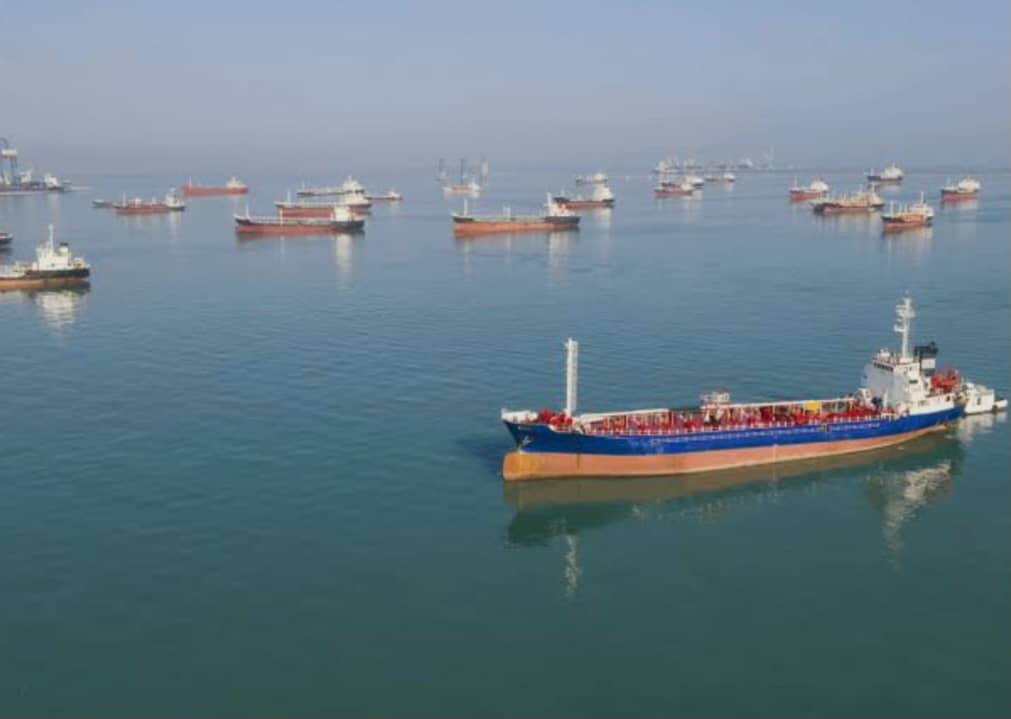
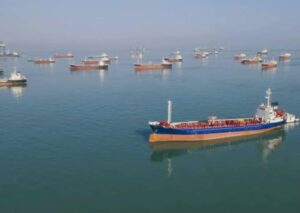
The war is now in its third day. Iran’s Islamic Revolutionary Guard Corps (IRGC) has declared the Strait of Hormuz closed, transmitting warnings via VHF radio to vessels in the waterway that no ship is permitted to pass. Though no formal blockade has been declared, the impact has been equivalent to one. Ship-tracking data shows tanker traffic has dropped by approximately 70 percent, with over 150 ships anchored outside the strait. At least five tankers have been damaged. Two crew members have been killed. The world’s largest shipping companies — Maersk, MSC, Hapag-Lloyd, and CMA CGM — have all suspended operations through the waterway and pivoted their fleets toward a longer, costlier alternative: the Cape of Good Hope, around the southern tip of Africa.
That rerouting is not merely a logistical inconvenience. It is a structural shock to global trade — and Nigeria sits squarely in its path.
THE STRIKES THAT STARTED A WAR
Al Jazeera’s reporting on the origins of the conflict is unambiguous in its framing: the US and Israel launched their offensive while nuclear talks were still under way. Omani mediators had announced progress in Geneva negotiations, where Iran had reportedly agreed to zero uranium stockpiling and full verification by the International Atomic Energy Agency (IAEA). Washington’s decision to strike regardless drew Oman’s public dismay, with its foreign minister urging Washington ‘not to get sucked in’ further and calling on the UN Security Council to convene an emergency meeting. The EU urged ‘maximum restraint,’ and the UN’s Guterres stated plainly that the US and Israeli use of force — and Iran’s subsequent retaliatory strikes — ‘undermine international peace and security.’
Iran’s retaliation has been extensive. Since February 28, Tehran has launched waves of missiles and drones at Israeli territory and at US military assets in Bahrain, Kuwait, Qatar, Saudi Arabia, the UAE, and Iraq. The IRGC has attacked 27 bases where US troops are deployed. Iran’s Supreme Leader Ali Khamenei and the head of the IRGC were confirmed killed in the opening strikes. Four US service members have been killed in action. Explosions have been reported in Dubai, Cyprus, and across the wider Gulf region. Qatar — host to the Al Udeid Air Base and one of the world’s largest LNG exporters — has suspended all air navigation and grounded all Qatar Airways flights indefinitely.
FREIGHT COSTS: THE IMMEDIATE BLOW TO NIGERIA
Nigerian shippers are already bracing for significant pain. Aminu Umar, president of the Nigerian Chamber of Shipping, was among the first in the sector to sound the alarm in the hours after the strikes began.
“We are going to see longer days of cargo arrivals, and a very high freight rate coming up from tomorrow. If oil price jumps, which is most likely, there is no way freight will not go up, because bunker prices will also rise.”
— Aminu Umar, President, Nigerian Chamber of Shipping (BusinessDay)
His warning is being confirmed in real time. According to BusinessDay, container rates for cargo into Nigeria are set at $4,600 for a 20-foot dry van container and $5,600 for a 40-foot container from March 10 through at least March 21. These are not the final figures: the Sea Empowerment and Research Center (SEREC), a Nigerian maritime research organisation, has warned that global freight rates could surge by as much as 40 percent. Even more alarming, SEREC has cautioned that marine war-risk insurance could spike by as much as 400 percent in high-risk corridors.
Hapag-Lloyd has already introduced a War Risk Surcharge (WRS) of $1,500 per 20-foot equivalent unit (TEU) on all cargo to and from the Arabian Gulf. CMA CGM has slapped an Emergency Conflict Surcharge of up to $3,000 on 40-foot containers. Hapag-Lloyd has gone further, suspending all bookings from African countries — including Nigeria — to the Upper Gulf region, covering the UAE, Iraq, Kuwait, Qatar, and parts of Saudi Arabia. MSC has suspended all worldwide cargo bookings headed to the Middle East entirely.
For Nigerian exporters — who rely on Gulf ports, particularly Jebel Ali in Dubai, as transshipment hubs to reach Asian markets — the suspension of these bookings is a direct blockage of trade routes, not simply a cost increase. The Upper Gulf region is a vital destination for Nigerian crude oil, LNG, sesame seeds, gold, and various agricultural commodities. With those routes shut, shippers face the choice of either finding alternative transshipment points or absorbing indefinite delays.
“They always take advantage. They charge more. If they charge more, nobody, no shipper has any other alternative but to pay. Naturally, that affects our competitiveness.”
— Nigerian shipper, quoted by BusinessDay
THE SUEZ ROUTE AND THE CAPE DETOUR
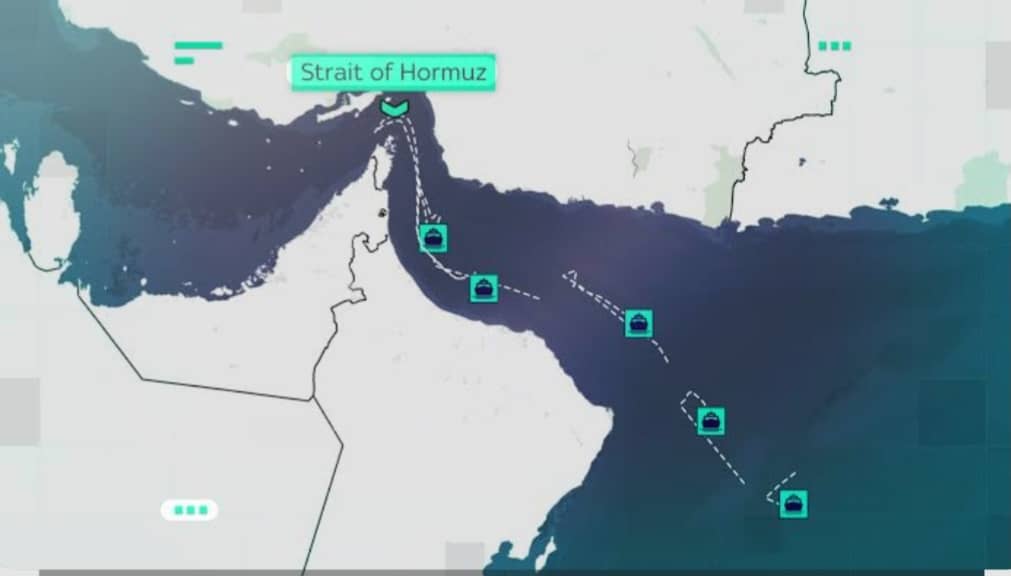
The core logistical problem for Nigerian shippers is the collapse of the Suez Canal-Red Sea route. This corridor — the fastest sea link between West Africa and Asia — typically takes 30 to 35 days. The alternative, rerouting around Africa’s Cape of Good Hope, adds roughly two additional weeks to transit time, while burning millions of dollars in additional fuel per vessel.
Nigeria was doubly exposed because the conflict arrived just as the industry had appeared to stabilise. Just days before the US-Israeli strikes, CMA CGM had announced plans to resume full Suez Canal operations in the second quarter of 2026 — itself a recovery from the 2023–2025 Red Sea disruptions caused by Iran-backed Houthi attacks on shipping. The outbreak of this new, larger conflict immediately reversed that plan. Xeneta chief analyst Peter Sand said the war has ‘shattered hopes of a large-scale return of container shipping to the Red Sea in 2026,’ with any plans for a phased return now shelved.
The absorption effect of Cape rerouting further compounds the problem. Xeneta estimates that the longer voyage distances required by the Cape of Good Hope route will absorb approximately 2.5 million TEU of global shipping capacity — as each vessel completes fewer annual round trips over longer distances. This structural capacity squeeze means elevated freight rates are likely to persist well beyond any eventual ceasefire or diplomatic de-escalation.
THE LNG DISRUPTION AND NIGERIA’S EXPORT OPPORTUNITY
Qatar, the world’s largest LNG producer, has been forced to pause LNG production at its Ras Laffan and Mesaieed industrial facilities following Iranian missile strikes. Qatar’s civil aviation authority has suspended all air navigation, Qatar Airways has grounded flights, and public Ramadan gatherings have been suspended. Rachel Ziemba, a senior adjunct fellow at the Center for a New American Security, told Al Jazeera: ‘There has definitely been an escalation overnight, with pressure on energy infrastructure in the Gulf and Qatar pre-emptively pausing LNG production.’
For Nigeria LNG Limited (NLNG), operating from Bonny Island in Rivers State, this disruption to the world’s largest LNG supplier creates a potential market opening. With Qatari volumes offline and Atlantic basin buyers — particularly European utilities — scrambling for alternative cargoes, Nigerian LNG may command premium spot prices in the coming weeks. The Strait of Hormuz, through which one-fifth of the world’s LNG supply ordinarily flows, is now effectively closed to commercial shipping. That volume has to come from somewhere else.
Nigeria’s position as an oil producer also brings a mixed set of consequences. Brent crude has risen by 10 to 13 percent since the outbreak of the conflict, with analysts at Barclays and Goldman Sachs forecasting potential rises toward $100 per barrel or beyond if the disruption persists. Higher crude prices would increase revenue for NNPCL and independent oil producers — but the same price spike that boosts upstream revenues will also feed through into higher costs for refined petroleum products, which Nigeria continues to import.
THE INTERNATIONAL LAW DIMENSION
Al Jazeera’s coverage has consistently framed this conflict not merely as a geopolitical crisis, but as a question of international legality. The US and Israel struck Iran while nuclear negotiations were at an advanced stage — a context that leading international legal scholars have described as a fundamental challenge to the UN Charter’s prohibition on the use of force except in self-defence or with Security Council authorisation. Lebanon’s Hezbollah described the attacks as a ‘blatant violation of international law and the United Nations Charter.’ The International Committee of the Red Cross president, Mirjana Spoljaric, warned of ‘a dangerous chain reaction of military escalation with potentially devastating consequences for civilians.’
These are not merely abstract ethical concerns for Nigeria’s maritime community. The legal status of the conflict shapes the political durability of any ceasefire, the willingness of Gulf states to host diplomatic talks, and the credibility of any eventual reconstruction of Gulf shipping corridors. A war initiated in breach of international law — and one in which a mediating state, Oman, publicly expressed dismay — is a war whose political resolution faces higher diplomatic obstacles.
WHAT PORT OPERATORS AND SHIPPERS MUST DO NOW
The Nigerian Ports Authority (NPA) and the Nigeria Shippers Council (NSC) face immediate operational questions. With Jebel Ali Port in the UAE — one of the world’s busiest transshipment hubs — having experienced a temporary suspension and remaining under uncertainty, cargo originally destined for onward movement through the Gulf will need to find alternative routing. Port operators at Apapa and Tin Can Island should assess their capacity to handle increased vessel calls should Cape of Good Hope rerouting bring more Atlantic traffic past Nigeria’s coastline.
For shippers, logistics firm Flexport has advised businesses to ‘prepare for longer lead times, tight capacity, elevated rates, and continued volatility across both ocean and air networks.’ DSV, the freight forwarder, has recommended that customers share updated shipment forecasts immediately, confirm bookings early to secure space, factor congestion into safety stock assessments, and consider alternatives where feasible. Businesses relying on air freight through Gulf hubs will find that option equally disrupted: FedEx has suspended flights to and from Bahrain, Iran, Iraq, Israel, Jordan, Kuwait, Lebanon, Oman, Qatar, the UAE and Saudi Arabia.
| KEY IMPACTS ON NIGERIAN SHIPPING — AT A GLANCE | |
| Freight rates | Container rates to/from Nigeria rising; 20ft containers at $4,600, 40ft at $5,600 from March 10. Industry warns of up to 40% surge. |
| War-risk insurance | SEREC warns premiums in high-risk corridors could spike by 400%. Hapag-Lloyd WRS: $1,500 per TEU. |
| Booking suspensions | Hapag-Lloyd has suspended all Nigeria-to-Gulf bookings. MSC has halted global bookings to the Middle East. |
| Transit time | Cape of Good Hope rerouting adds ~2 weeks to Asia-Nigeria journeys vs the Suez Canal route. |
| Capacity squeeze | Xeneta: Cape rerouting absorbs ~2.5 million TEU of global shipping capacity. |
| LNG exports | Qatari LNG production halted; NLNG may see improved spot pricing opportunities. |
| Oil revenue | Brent crude up 10–13%; potential upside for NNPCL if prices sustain toward $100/bbl. |
| Air freight | Gulf hubs disrupted; FedEx has suspended flights across the Middle East region. |


Pingback: HOW THE CVFF APPLICATION AND DISBURSEMENT PROCESS WORKS - Water Ways News
Pingback: CVFF: THE CRITICAL PERIOD AHEAD - Water Ways News